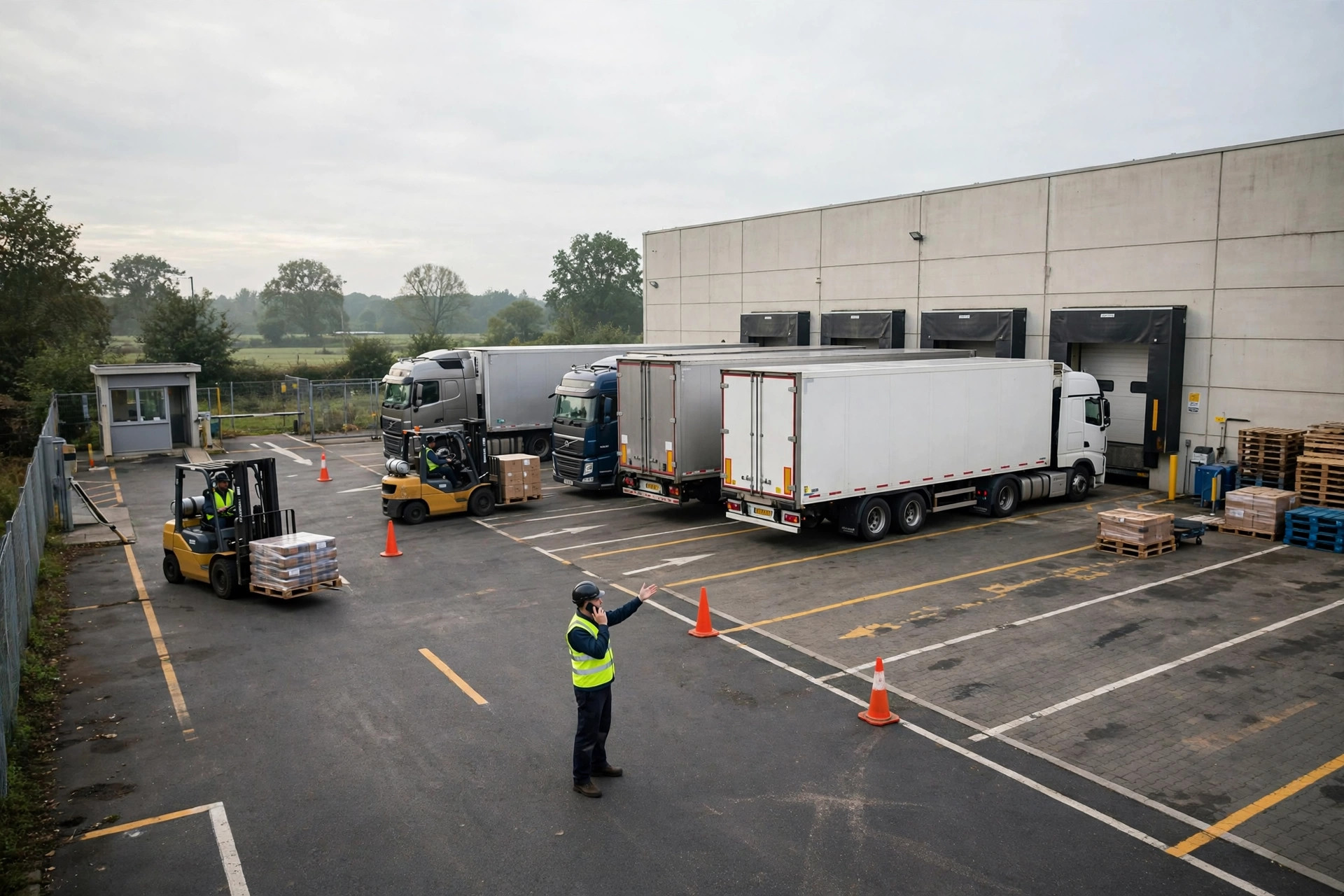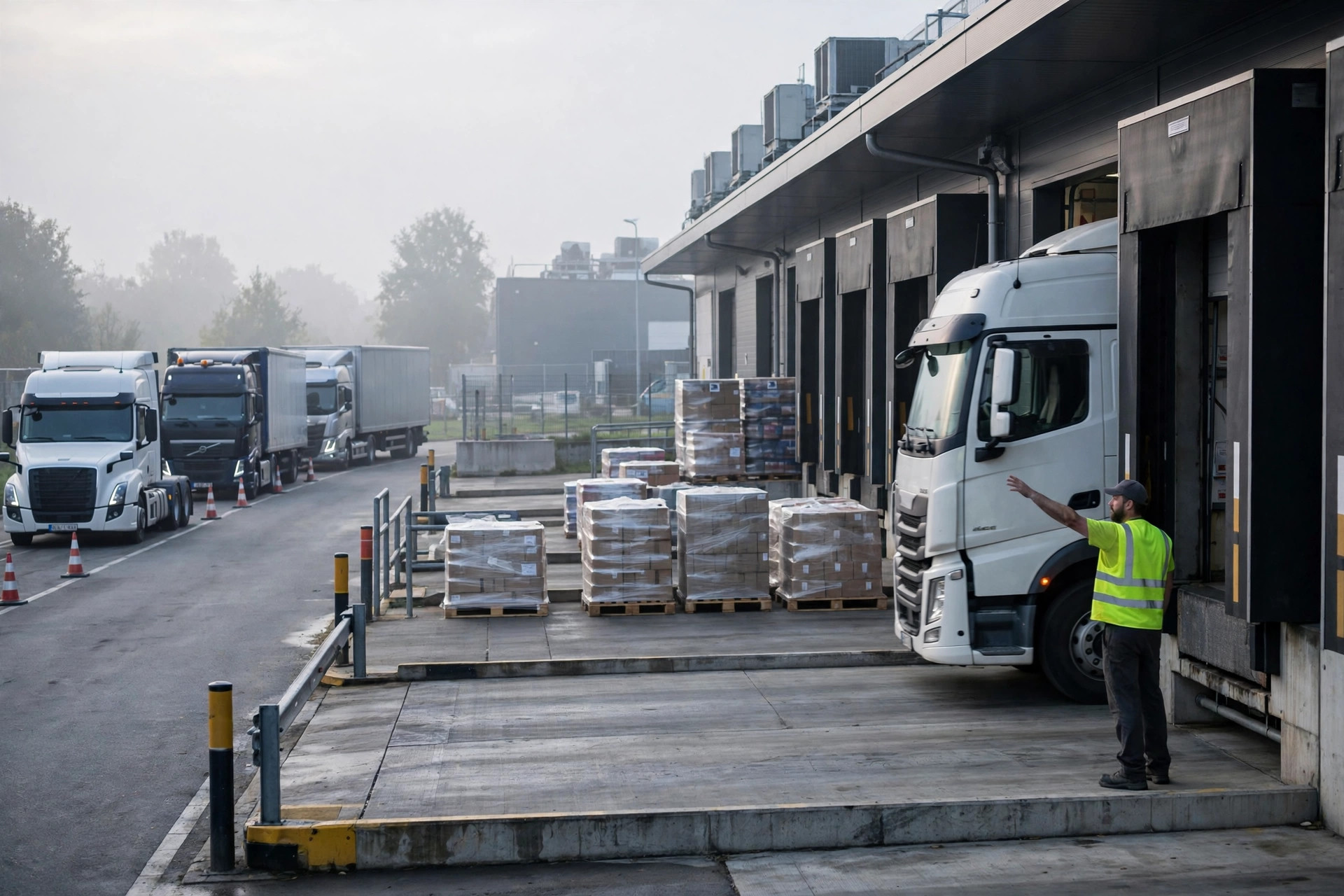
Let me tell you something. After all these years on the road, the thing I dread most is not traffic. It is pulling up to a warehouse gate and seeing seven or eight trucks already waiting for the same dock door. You can smell it right away: everybody booked the morning again.
One fall morning a couple of years back, I was delivering home goods to a shipper's warehouse, booked for a morning arrival. I got there at 8:40 and found six trucks ahead of me: one with cartons, one with finished furniture, and a reefer idling while it waited. Only two dock doors were unloading, forklifts were running back and forth, and a single receiving clerk was working through three stacks of paperwork. I did not get unloaded until close to noon. When dispatch called to ask why I was two hours late, I told them straight: I was not late. Everybody was booked for the morning.
That tells you where the problem really sits. The morning pile-up is not the drivers' fault. Drivers want to arrive early, unload early, and get moving. Shippers want freight in by morning so it can be put away in the afternoon. Everybody picks the same window, and the result is a dock jammed in the morning and empty in the afternoon. Warehouse inbound arrival smoothing exists to fix exactly that peak.
Here is a counterintuitive point worth sitting with: a dock that looks short on doors is often just short on spread-out time. I have seen warehouses with plenty of doors where, from nine to eleven every morning, every parking spot was full and every forklift and worker was squeezed into the same two hours. By two in the afternoon, the doors were empty, the people were idle, and the equipment was idle too. If you only count doors, you will never understand the problem. You have to count how many trucks arrive each hour, how long each one takes to unload, and how many people are on shift. Flatten the peak and the same doors suddenly work fine.
Start arrival smoothing with appointment windows
The first step in arrival smoothing is to cut the day into appointment windows and stop letting everyone pile into the morning. The method is simple enough: divide the day by the hour, set a cap for each hour, and when a window fills up, push the next booking later. The cap has to reflect real unloading capacity, not a guess. How long does a furniture load take versus a carton load? Does a reefer need priority? Those answers set the cap.
I once talked with a warehouse manager whose team used to book by phone, first caller getting the morning. They switched to booking windows in a system: two trucks per hour in the morning, three in the afternoon, and one emergency window in the evening. At first some shippers pushed back, saying afternoon arrival would delay putaway. The manager walked them through it: two hours waiting in a morning queue versus arriving in the afternoon and unloading right away. Which is actually faster? Once they did that math, most of them got it.
When you talk to carriers about off-peak windows, do not just send a notice. Give them something real. An off-peak truck could get priority for a dock door, or move one place forward in the unloading queue. Drivers notice that. Arriving early does not always mean unloading early, but a booked off-peak window that actually unloads on time beats a hundred reminders. Windows also need slack. Traffic jams and a slow unload at the previous stop are everyday facts. If the rules are too rigid, one late truck throws the whole day off. A half-hour buffer keeps the whole schedule more reliable, not less.
Labor and yard space have to follow the arrival smoothing windows
Once the windows are spread out, labor and yard space have to spread out too. Plenty of operations change the appointment sheet but not the staffing sheet, so the same few people are still grinding through the morning while the afternoon crew stands around with no trucks. That is only half a change.
How do you spread labor? Start from the arrivals in each window, then staff receivers and forklift operators to match. After the morning peak is flattened, work that once needed six people in the morning might need five across the whole day, with no overtime. Yard space works the same way: entry spots, waiting spots, and unloading spots need separate counts. Waiting trucks must not block the entrance, and an unloaded truck needs to move off promptly instead of lingering at the door.
One point that gets missed too often: arrival smoothing has to connect with putaway planning. Freight that arrives in the morning needs to be put away in the afternoon. Freight that arrives in the afternoon needs to be ready for outbound the next morning. If putaway cannot keep up, flattening arrivals just moves the jam from the gate into the warehouse. So when you set windows, staff receiving, inspection, and putaway together, not receiving alone.
I have seen a smaller warehouse do this in a plain, practical way: every afternoon at four, the warehouse manager called dispatch and walked through the next day's windows. Which shipper might run late, which load was heavy enough to need an extra hand, all of it settled in advance. They checked again the next morning and adjusted any window that had changed. One phone call, and waiting time dropped visibly.
There is also a trap to avoid. Smoothing does not mean pushing drivers into the night. Some operations hear "spread it out" and stretch windows into the middle of the night, thinking more spread is always better. That backfires. Night unloading needs extra staff, lighting, and attention to neighbors, and it costs more. Drivers who have already run all day are tired, and safety and speed both suffer. The right move is to spread arrivals across the working day, not to move the peak from morning to midnight.
Another backfire I have seen: windows cut so tight that a truck ten minutes late loses its slot and has to rebook. Drivers, afraid of losing the slot, then show up two or three hours early and wait at the gate. The queue comes right back. Rules need a human touch: if a truck is within half an hour late, keep the slot and slide it one place back. If it really cannot make it, a phone call to rebook beats a no-show. The more humane the rule, the better it actually gets followed.
Put plainly, there is a trade-off here. Finer windows give a tighter plan but less flexibility. Coarser windows give more flexibility but make the peak harder to flatten. In my experience, hourly windows are the sweet spot. They are easy to remember, easy to book, and easy to adjust, for drivers and warehouses alike.
Three pieces of advice for shippers and warehouses
First, stop assuming the morning is always the best arrival time. Morning arrivals mean longer queues and slower unloading. If you can book the afternoon, book the afternoon, and then actually show up on time. No-shows wreck the plan for everyone else.
Second, warehouses should leave slack in the schedule and keep their word. If you booked a truck for a certain time, unload it at that time, and do not leave a driver waiting at the gate. Once carriers trust that an off-peak booking means an on-time unload, they will cooperate with smoothing.
Third, smoothing is not a one-time fix. Check the numbers every week: which window is still crowded, which one sits empty, whether the caps need adjusting. When volumes change, windows have to change with them.
In the end, arrival smoothing is not about equipment. It is about whether drivers, shippers, and warehouses are all willing to spread the time out. When all three sides give a little, the dock stops jamming. As the old saying goes, a good road is not ruined by distance, only by everybody crowding onto the same lane.
By Shifu Zhao, Trucking Veteran (15 yrs)