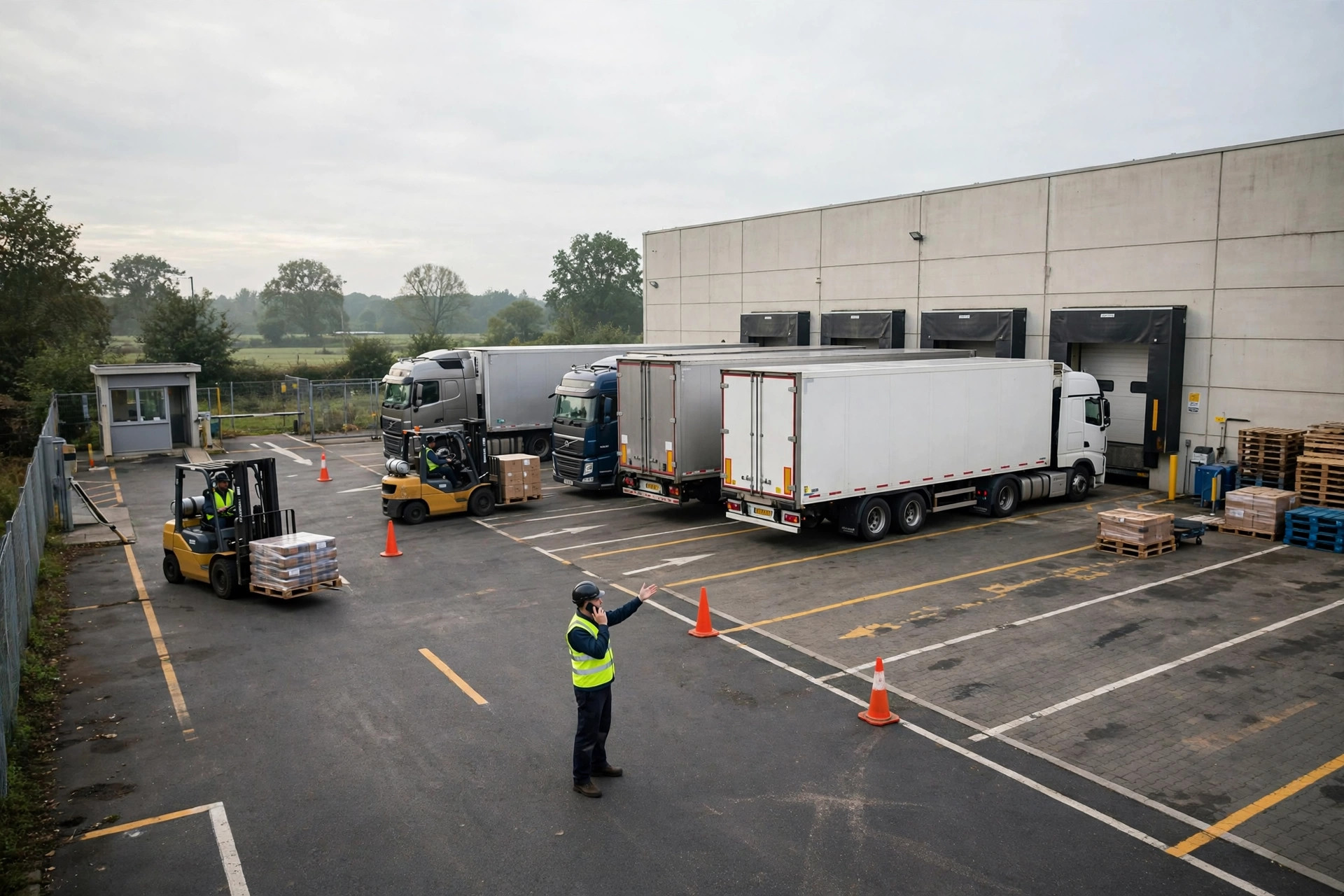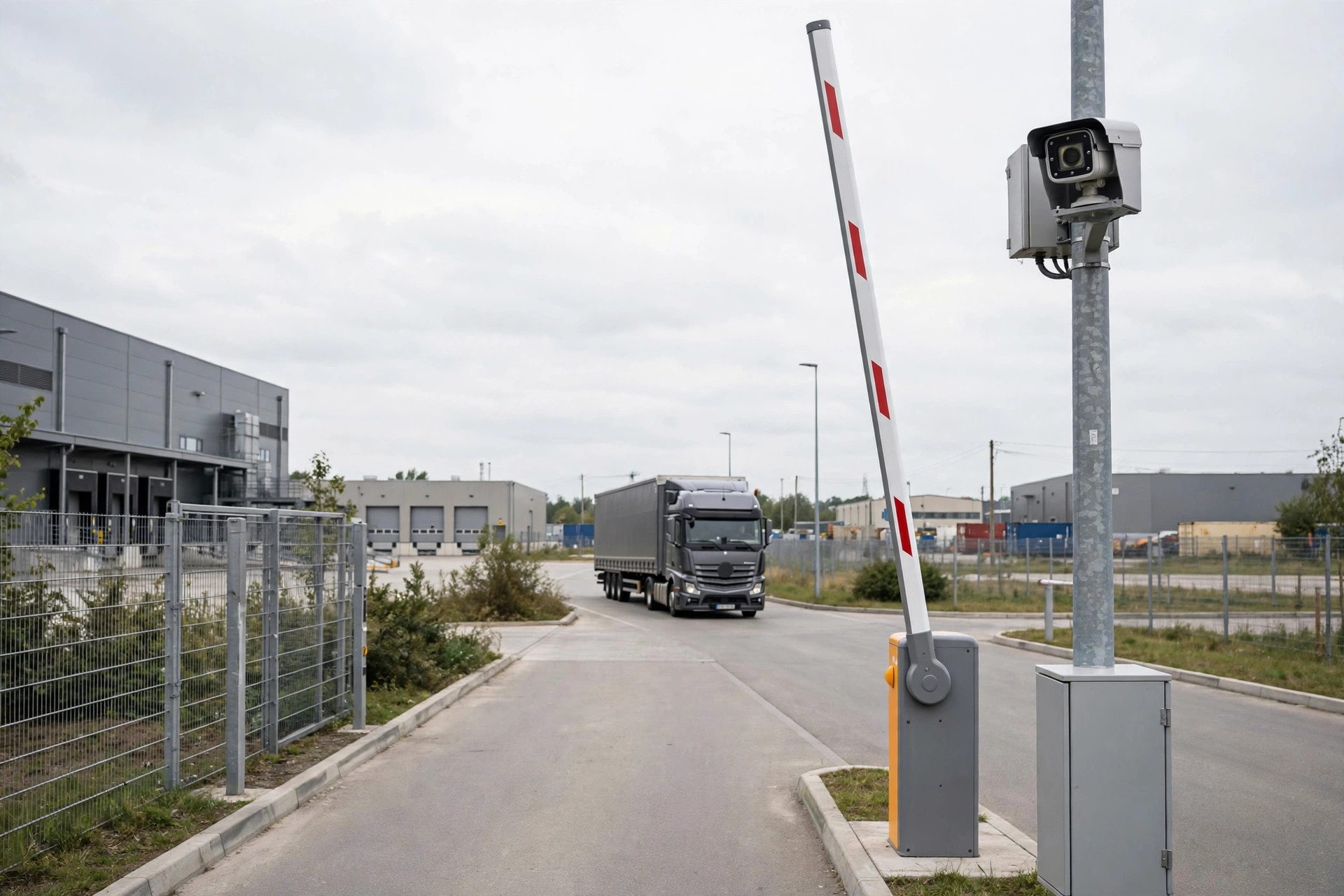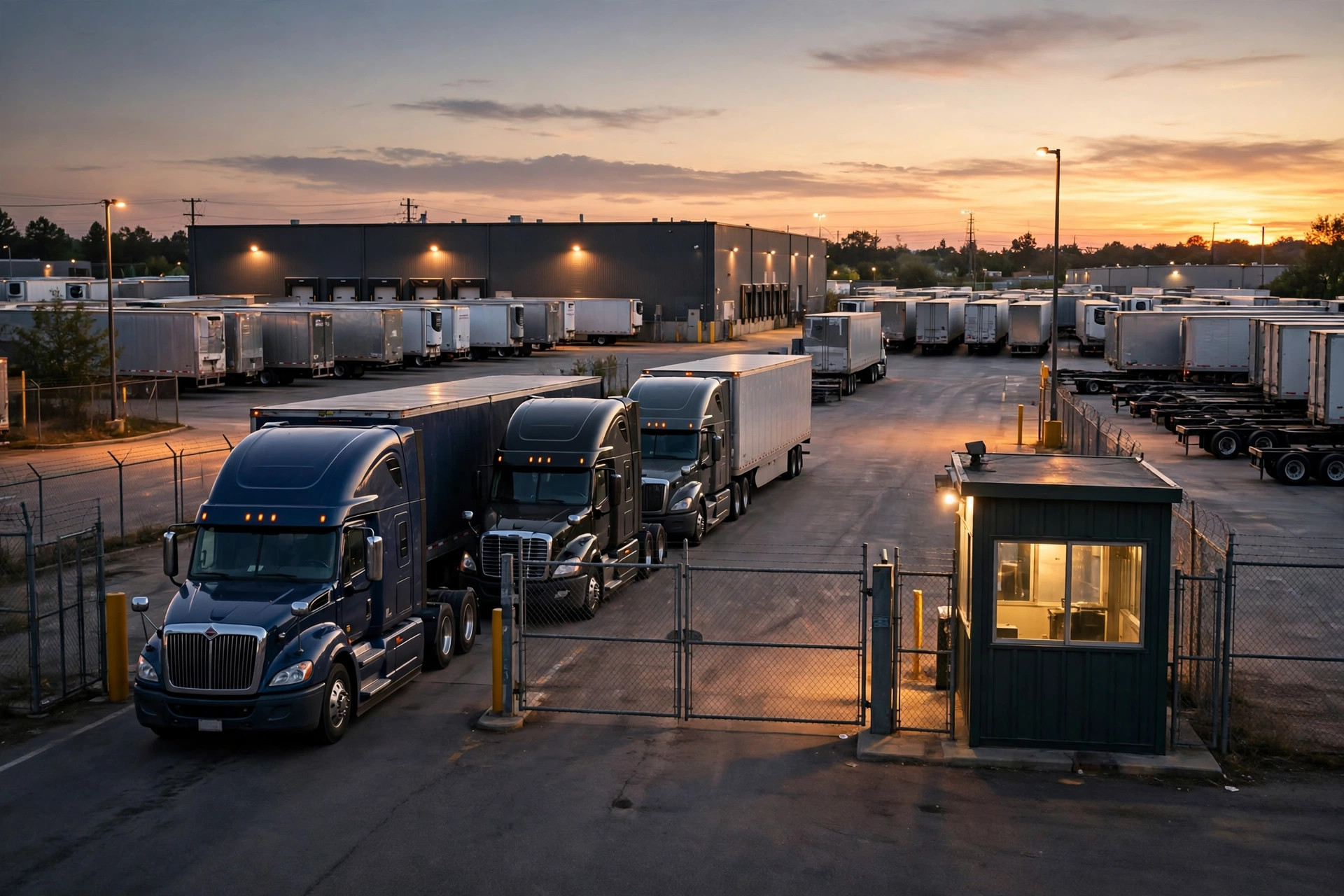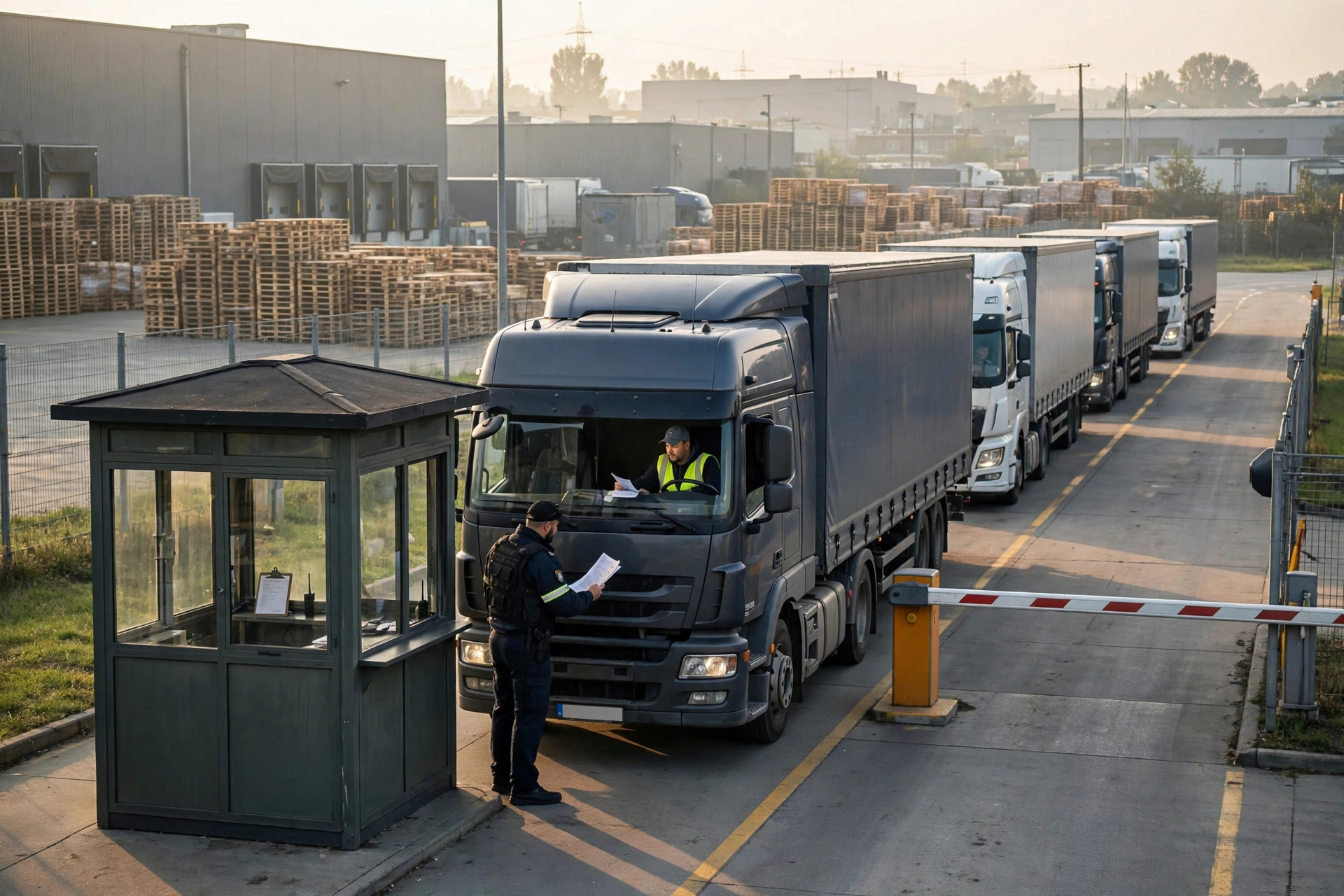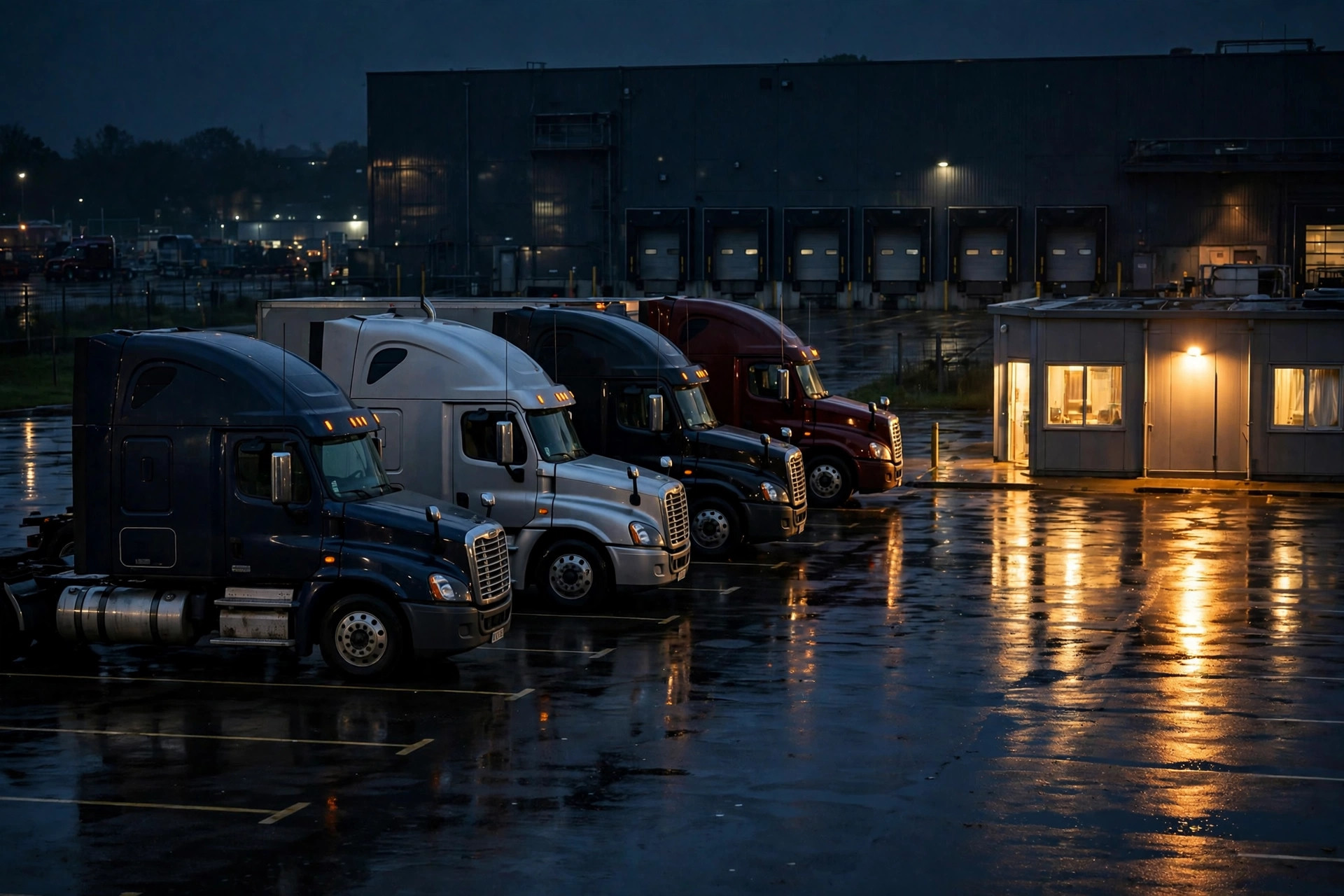
I'm telling you, one night in November 2024, outside a distribution center in Ohio, I watched a whole drama play out at the gate. A driver in a sleeper-cab tractor wanted to park inside the yard overnight. The guard just waved him off: "No overnight parking here. There's a truck stop 3 miles up the road." The driver got heated: "I've got 40 minutes left on my 14-hour clock. If I drive out and there's no spot, I'm running illegal!" The guard wouldn't budge, so the driver rolled out into the dark. It was 21°F that night, the truck stop was full, and he ended up wedged in the fuel lane of a gas station, afraid to even lock his doors properly.
Fifteen years behind the wheel, I've seen this scene more times than I can count. So today let me break it down properly: why drivers end up needing to spend the night at your facility, and how a warehouse should actually manage it.
What this really means: the driver isn't freeloading — the law won't let him leave
First the regulations, so nobody thinks drivers are making excuses. Under the U.S. Federal Motor Carrier Safety Administration's Hours of Service rules, a property-carrying driver faces hard limits: after 10 consecutive hours off duty, a maximum of 11 hours of driving; a 14-hour on-duty window that starts the moment the driver goes on duty and cannot be paused — when it closes, the wheels stop, even with driving hours unused; a 30-minute break required after 8 cumulative hours of driving; a 60-hour cap over 7 days (or 70 over 8 days); and a 34-hour restart to reset the weekly clock. Check the FMCSA website for the latest official wording, but these limits are set in stone.
Think about that 14-hour window for a second. It starts ticking at the first on-duty minute — loading, waiting on an appointment, sitting in traffic all burn it down, and it never pauses. Plenty of drivers roll up to your facility in the evening with an appointment at 8 the next morning. If he turns around to hunt for a truck stop, that's an hour of driving, the window dies, and with the nationwide truck parking shortage there's a real chance of no spot at all — leaving him to park illegally. The next day you have to rebook his appointment anyway, and your dock plan is wrecked. So when a driver asks to stay the night, he's not after your free parking. He's choosing between breaking the law and losing his job.
The other common case: the driver arrived early. Every shipper loves an early driver — but six hours early means the 14-hour window is bleeding out while he sits at your gate doing nothing. If you won't even give him a place to spend the night, will that driver — or his fleet — ever take your load again?
A second road story: kicking the overnight driver out costs you more
Back in the summer of 2023, a food distribution warehouse in Texas learned this the hard way, and it stuck with me. Their yard policy was "everyone out before dark." A driver coming in from California arrived at 5 PM with a 4 AM unload appointment. The guard followed policy and sent him away. He circled the area twice, found nothing, and ended up on a county road where local police ticketed him overnight. The next morning he showed up 40 minutes late out of pure spite, the dock sat idle, and a reefer full of product baked in the sun for 40 extra minutes. The cost of that one delay would have built that warehouse ten driver rest rooms.
Now the good example. An auto parts warehouse in Indiana set aside 8 overnight spots — lit, camera-covered — with a driver lounge carrying restrooms, a microwave, and drinking water. In their YMS they created a dedicated vehicle status, "Overnight," logging plate number, driver phone, and expected departure. The rule for the next morning was simple: trucks that spent the night on the yard get dock priority. The result? Drivers arrived early, slept soundly, and by 6 AM there were rested drivers waiting at the gate for the first shift. Morning dock utilization went up, not down. Word spread through driver group chats, and that warehouse became the favorite delivery point on the whole lane — come peak season, they booked trucks easier than anyone else.
Overnight parking: three suggestions for shippers and warehouses
First, mark the spots. Even four to six will do — but lighting, cameras, and level pavement are non-negotiable. Keep them reasonably close to the docks, and don't make drivers back a rig across the entire yard to get there. Safety first.
Second, give people a place to be human. Restrooms, drinking water, somewhere to sit down with a hot meal — and a shower if you can swing it. A driver spending 10 hours at your facility with nowhere to use the bathroom is a story that travels, and it travels with your name on it.
Third, manage overnights in the YMS. Add an "overnight" flag at gate check-in: plate, driver phone, appointment number, expected departure. When the next day's dock schedule is built, the principle is one line: trucks that spent the night on your yard go first. Why? They handed you their 10 hours — making them wait another 3 for a door is just wrong. And a rested driver is the most cooperative driver you'll meet all day; unloading goes faster.
Here's the counterintuitive part: plenty of warehouses treat "no overnights" as the easy policy, when it's actually the most expensive one. A driver who sleeps well at your gate shows up on time and works with your dock crew — that is the cheapest dock efficiency money can buy. Kicking one driver out saves you a patch of asphalt and costs you your reputation across every driver on that lane.
There's an old saying: make things easy for others, and things get easy for you. Let a driver sleep safely in your yard tonight, and he'll hand you an on-time dock tomorrow. That's a trade worth making.
By Shifu Zhao, Trucking Veteran (15 yrs)