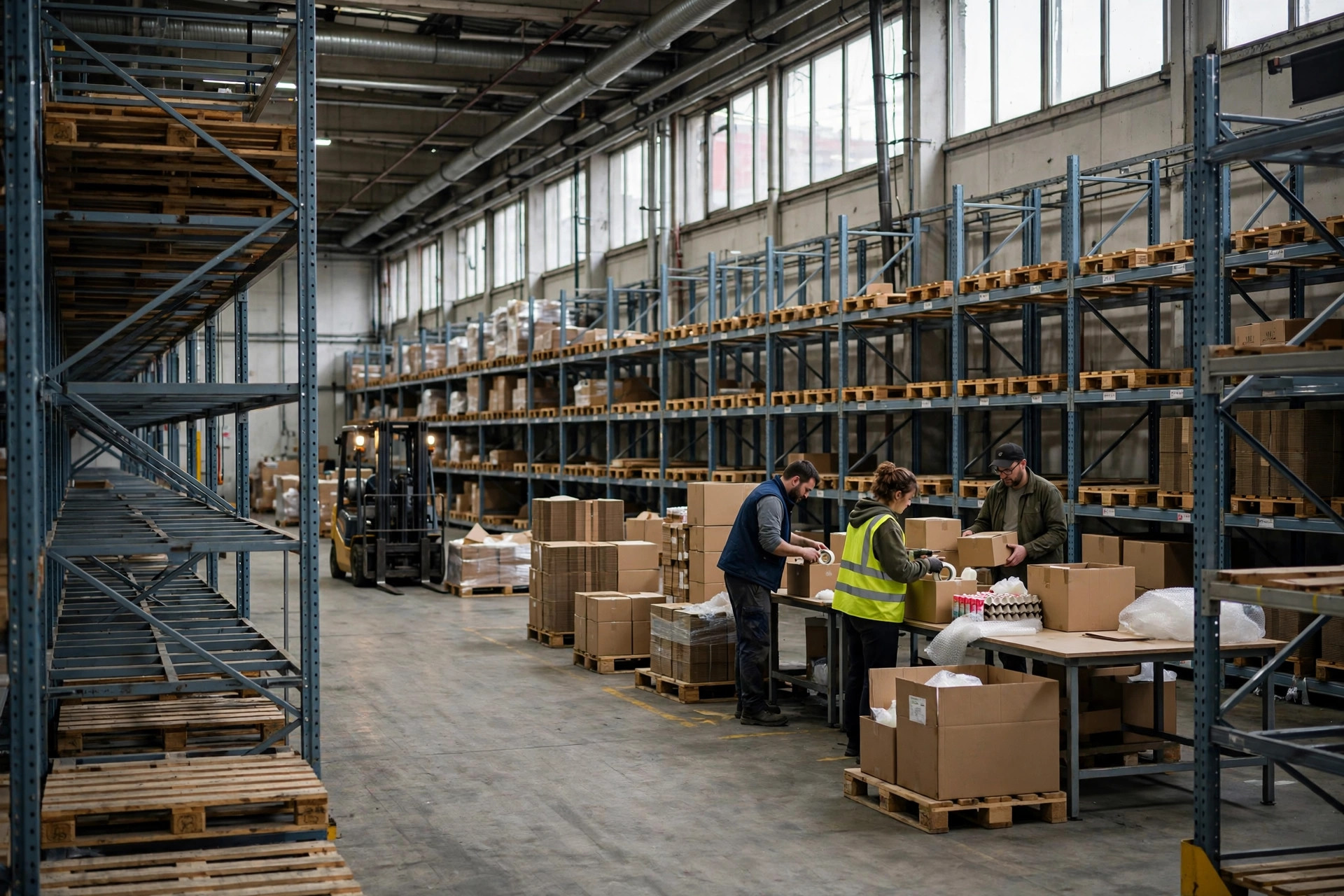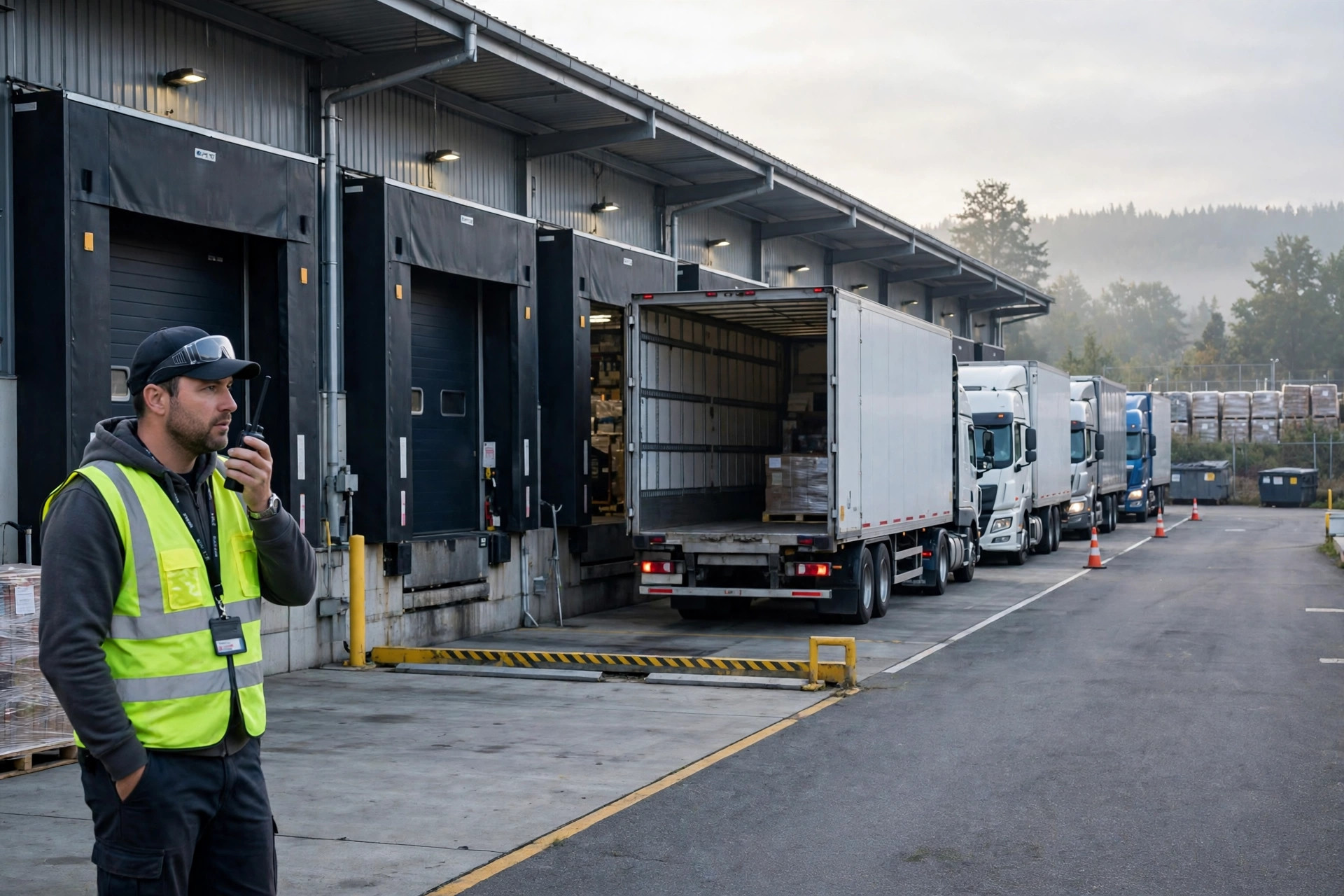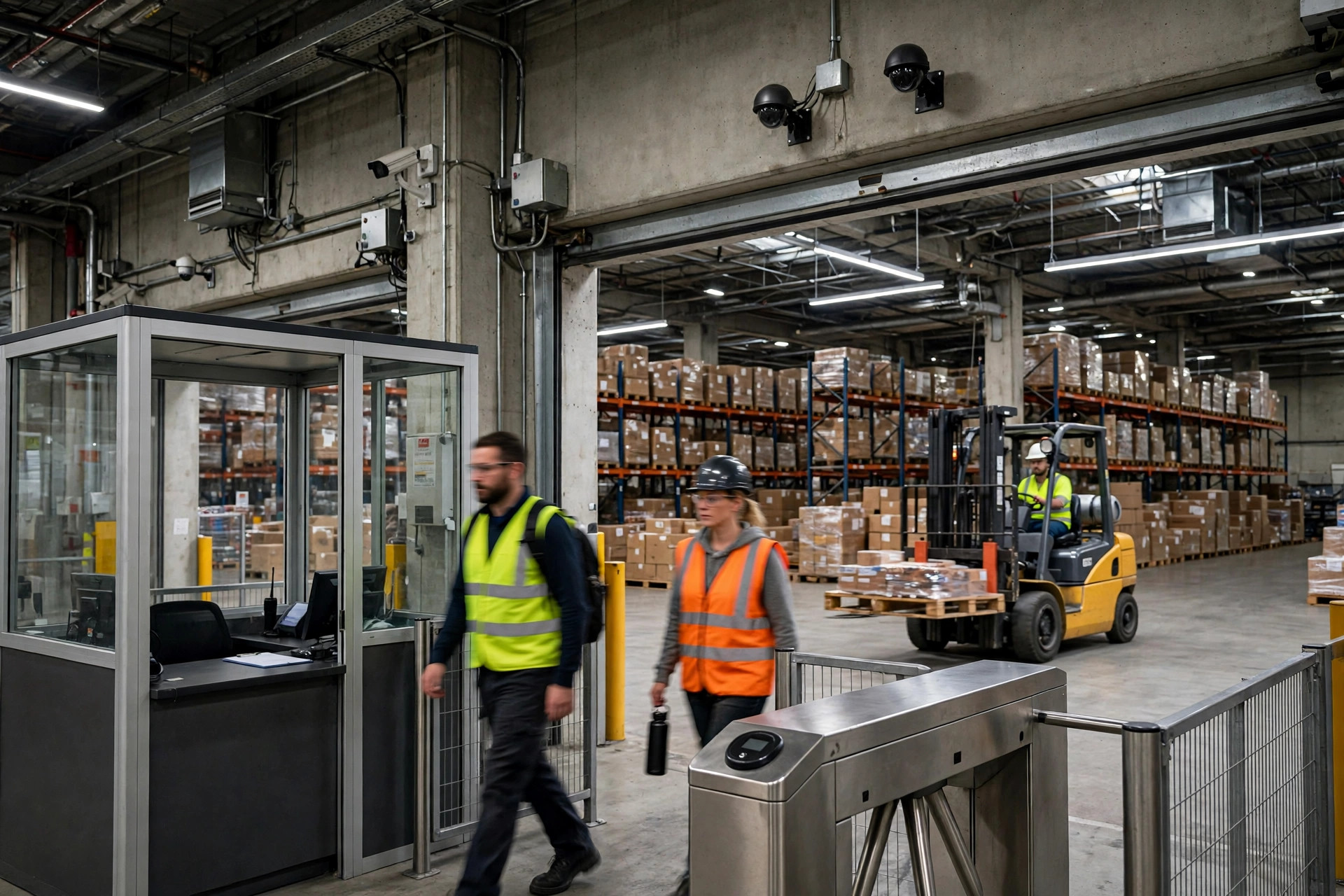
We had a client, a 3PL in California's Inland Empire, running a warehouse of a little over a hundred thousand square feet. And yet the place was in real trouble at night. A handful of residents in the neighborhood next door wrote a joint letter to the city saying the warehouse kept them awake with overnight unloading noise. The industrial park forwarded the letter to my client with a pointed note: sort this out, or it will come up at renewal time. My client's first instinct was panic. His second was to spend money — a quote for a sound wall, starting in the tens of thousands of dollars, with no guarantee the complaints would stop. I told him to hold off. A warehouse noise complaint has to be worked in order: find the sources, measure them properly, and only then decide what to spend. Get the order wrong and you pay for the wall while the complaints keep coming.
This is the full playbook for a warehouse noise control complaint fix: how to hunt down the sources, how to measure in a way that counts, how to rank the fixes by payback, and what to negotiate with the neighbors and the park.
Start with the warehouse noise sources: what the complaint letter says isn't always the culprit
We had a client who, after the first complaint, sent someone to stand at the fence line overnight and report back that "it didn't sound that bad." What you hear on your own fence line and what a resident hears lying in bed are two different things. Sound travels farther at night, low-frequency hum goes through walls, and what residents complain about is rarely one machine acting alone — it's several sources stacked together.
I have clients walk this checklist, once by day and once at night:
- Conveyors and sortation equipment: rollers, belt joints, pallets thudding along the line.
- Forklift backup alarms: the single most complained-about item.
- Roof fans and exhaust units:
- Overnight loading and unloading: dock doors slamming, pallets dropping, trucks idling and reversing, workers shouting over radios.
- Refrigeration units and backup generators: if the building has cold storage, the plant runs all night, and it shows up in complaints far more often than operators expect — mostly because the people inside stopped noticing it years ago.
The Inland Empire client worked through the list and found the real culprits weren't the conveyors at all. They were the forklift backup alarms at the night dock, plus pallets dropping on concrete. You can't find that during the day, when the whole park is moving and every sound blends together. Only after eleven at night, standing on the residents' side, could you hear the pattern from the complaint letter: bursts, over and over.
Measure it right: measure from the complainants' ears, not your fence
Sources identified, the next step is measurement. This is where most warehouses stumble, because "measured" and "measured in a way that counts" are different things.
Location first. Plenty of clients first measure inside their own fence line, then present the numbers to residents as proof: "Look, we're compliant at our boundary." Residents don't care. They care about the level outside their bedroom window, not inside your fence. A measurement that counts is taken where the complainants actually experience the noise: outside the residential wall, outside the bedroom window, at the boundary between the park and the neighborhood.
Then timing. Noise limits differ between day and night, and the exact limits vary by jurisdiction — I won't quote specific decibel numbers here, because they differ from place to place and you should always check the latest local regulations. What matters is measuring during the hours people actually complained about. A daytime-only survey proves nothing, and the Inland Empire client's first survey proved exactly that: clean daytime numbers, complaints unchanged. The second survey, from eleven at night to three in the morning, made the whole problem visible.
One more detail: log the operating conditions while you measure. Was there a night shift? How many trucks were loading? How many fans were running? Without that record the numbers can't be reproduced, and they won't hold up when the park or the regulator asks questions.
Here's the counterintuitive part, and it's worth saying plainly: most warehouses lose the noise fight because they genuinely believe they're not that loud. You've spent all day inside the building; your ears are dulled to it. The resident was woken up at 2 a.m. Those are two different sensitivities. The first step in a fix isn't convincing the neighbors it's not loud. It's accepting that their experience is real, and then answering with data.
The warehouse noise fix, in payback order: schedule first, small fixes second, walls last
| Fix | Cost scale | How fast it bites | When it fits | | Adjust operating hours (shift night peaks earlier, swap backup alarms for flashing-light alerts in the most sensitive hours) | Almost nothing — mostly scheduling and management effort | Complaints drop within a week or two | Night loading is the main source | | Small retrofits (dock cushioning pads, conveyor dampening, fan vibration mounts, lower-volume alarm models) | Thousands to low tens of thousands of dollars | Visible within a month | A specific source has been identified | | Sound walls, dock enclosures, full equipment replacement | Tens of thousands of dollars and up, plus a long build | Slow, but definitive | The first two tiers weren't enough, or the park explicitly requires it |
The Inland Empire client followed that order. First the schedule: the heaviest reversing work moved out of the most sensitive overnight hours, and the backup alarms were swapped for lower-volume models with flashing-light alerts. Then the dock got drop-cushioning pads and the conveyor joints got dampening. Complaints fell by more than half within two weeks, and the sound wall that eventually went up was smaller than the original quote.
The second client is the cautionary tale. A cold-storage warehouse in the same park, residents complaining about an "all-night hum," went straight for a roof sound enclosure. Serious money, complaints unchanged. A second survey found the real problem: the refrigeration fans' vibration mounts had aged out, and vibration was traveling through the building structure. The enclosure blocked airborne sound but not structure-borne sound. New mounts and isolated fan supports fixed it. The lesson: sound insulation and vibration isolation are two different jobs, and a wall can't fix a vibration problem.
There's one more line item people leave out of the math: the cost of doing nothing. It's not just the risk of a fine. A complaint on file becomes leverage at renewal time, and it scares off prospective tenants — what shipper wants to lease space in a warehouse the neighbors are fighting? One client of mine walked into a renewal negotiation a month after a complaint landed, and the whole conversation tilted.
The negotiation: at the table, data beats attitude
In the end, a noise complaint is usually a negotiation problem, not an engineering problem. Here's the insider part most vendors won't tell you: the park management's real fear isn't the noise itself, it's escalation. Once residents take it to the city, every tenant in the park feels it.
Three things I tell clients:
First, visit before you write. When the complaint letter lands, go in person first, with a measurement plan — not a lawyer's letter. Residents usually don't want compensation; they want to know you're taking it seriously. One client of mine showed up with nothing but a notebook and a willingness to listen, and the residents' representative softened on the spot.
Second, negotiate with data, not feelings. Put the survey, the operating logs, and a dated fix schedule on the table: which source gets which fix, and when.
Third, write the fix into the contract. This is the 3PL sales director's home turf: who pays for the retrofit, what happens if the schedule slips, what the park contributes (night speed limits on shared roads, its own sound treatment on common areas) — all of it belongs in writing. When a complaint collides with a renewal negotiation, a fix commitment is tradable: you solved the park's complaint problem, the park gives something on rent. Quietly absorb the whole cost without a word in the contract, and you've handed the park a favor for free.
Next time you're at the negotiating table, ask these three questions: What is the park's complaint escalation process, and at what point does it affect renewal? What will the park contribute to noise treatment on shared areas — and how much? And how will the fix be verified — measured at the fence, or at the residents' side, and under which day and night standards? Ask those three and the other side knows you're not there to argue. You're there to solve the problem.
By Susan, 3PL Sales Director