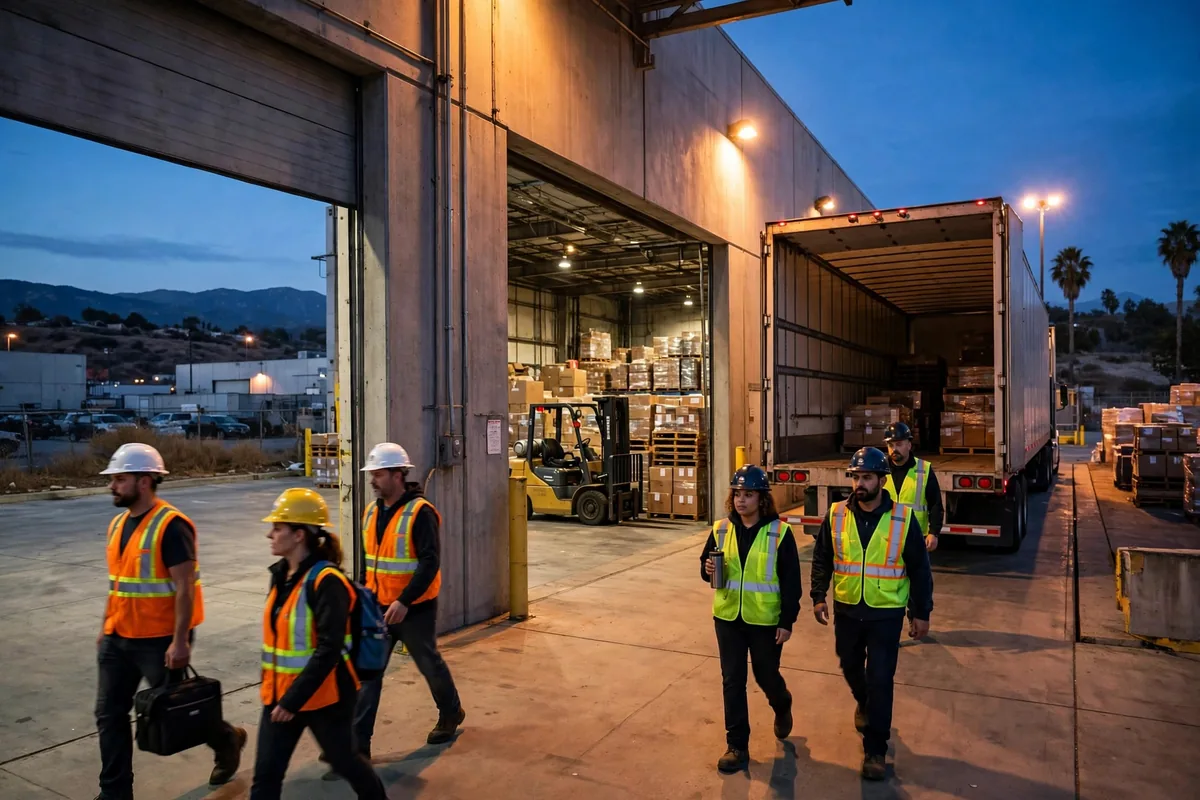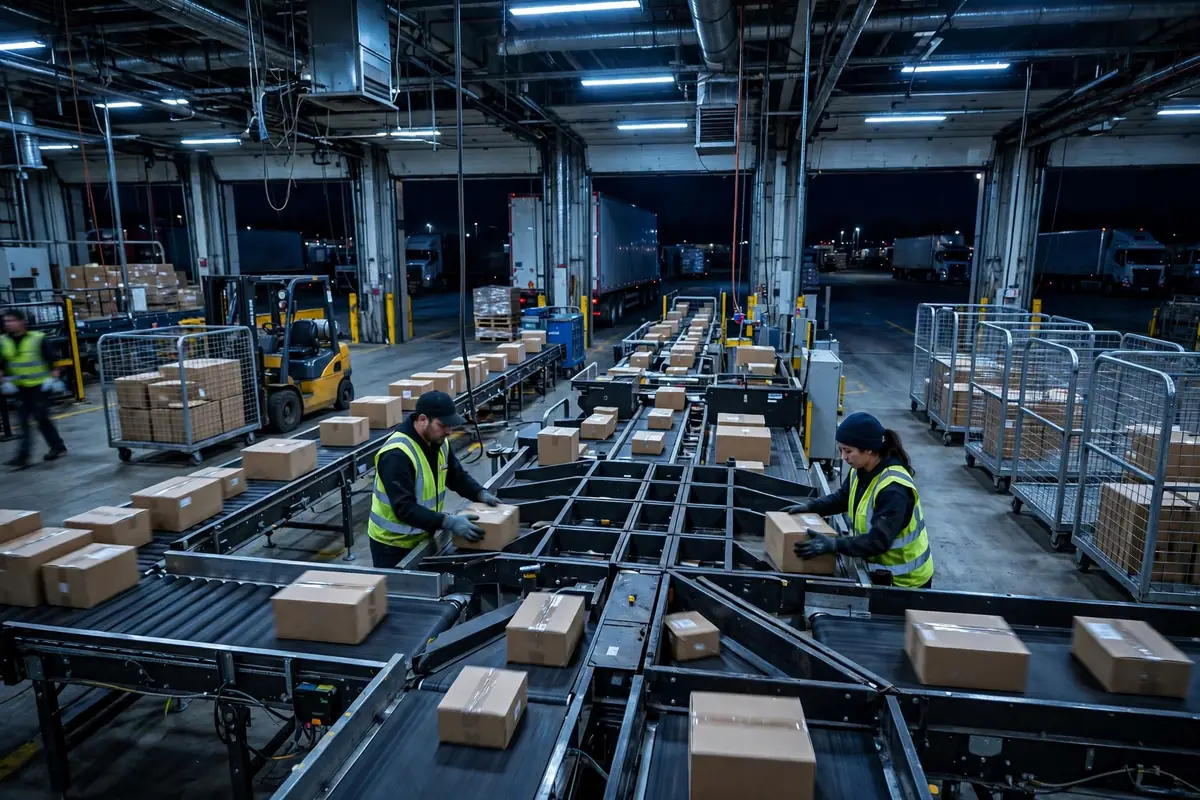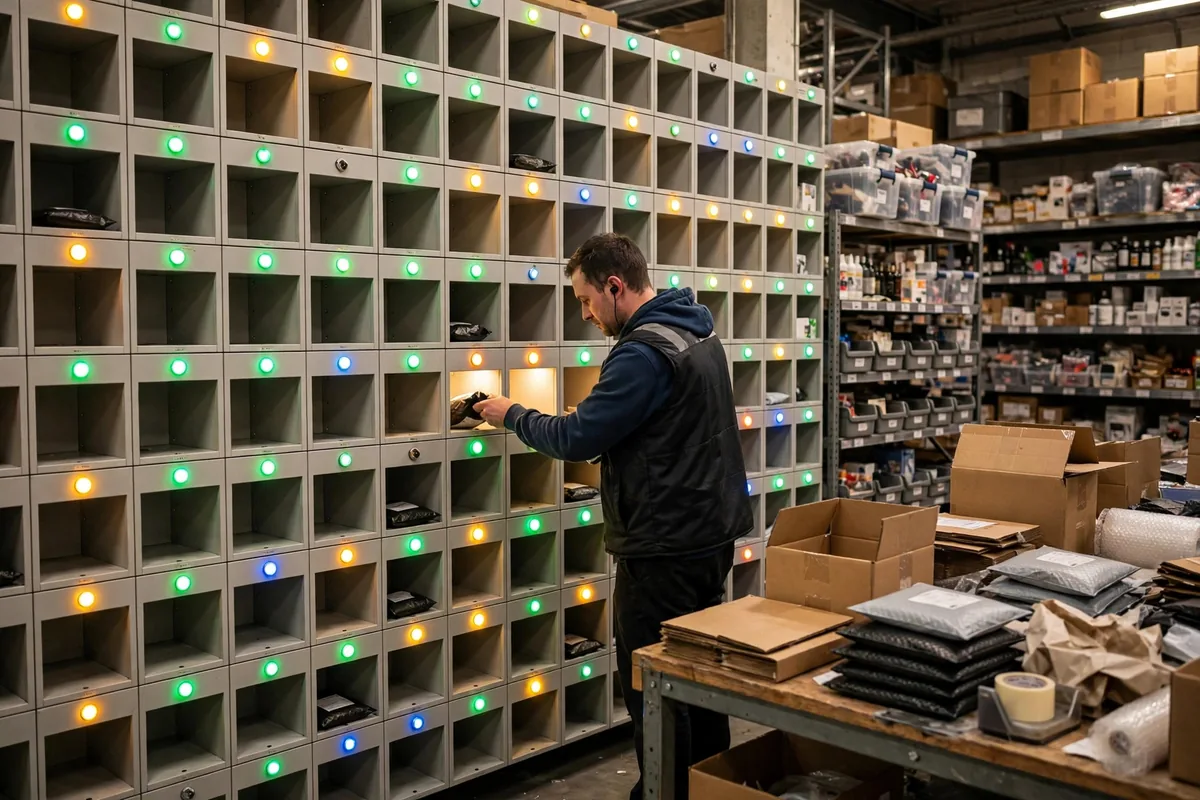
It was two in the morning. I was standing in the picking area, watching Xiao Li stare at an order. The bin was on a high shelf, and the lift truck the day shift had used was sitting there dead, uncharged. He waited twenty minutes for a working one. On the same night, Lao Wang hit an empty shelf halfway through an order. The night shift had one replenishment worker, and that worker was unloading at the far end of the building. The replenishment ticket waited an hour. That night our warehouse night shift productivity was 70% of the day shift. In the meeting someone said the night crew was lazy. I pushed back on the spot. Let me be straight with you: when warehouse night shift productivity drops, it is not always the workers' fault.
I have run warehouses for years, including a site with 200 people, and I know the night shift well. Day and night look like the same process on paper, but they are two different worlds. During the day there are plenty of people. Stock runs out, someone refills it. Equipment breaks, someone fixes it. The supervisor is right there. At night? Half the people, none of the support. Every small hole in the process grows into a big problem after midnight.
Three Time Wasters Behind Low Warehouse Night Shift Productivity
The first is waiting for equipment. Forklifts, order pickers, scanners. The day shift leaves them wherever they stop, and the night crew discovers dead batteries, no signal, or a stuck wheel. In the winter of 2024, our night output stayed low for three weeks straight. We checked, and it was not slow people. The crew was losing about 40 minutes a night waiting for equipment and swapping batteries. So we made a rule: before the day shift clocks out, every machine goes back to its charging spot, every scanner goes back in its cradle, and the handover sheet lists anything broken. One month later, waiting time had fallen by more than half.
The second is waiting for replenishment. The day shift had four replenishment workers. The night shift had one. The day crew picks fast, shelves empty fast, and at night the refills cannot keep up. Pickers end up standing in front of empty bins. During peak season in 2023, seven pickers stood waiting for replenishment for almost half an hour on one night. That month we changed the rhythm: one hour before the night shift starts, the day crew tops up the fast movers for the night, and the night replenishment worker handles emergencies only. When the fast movers never run dry, picking never stops.
The third is waiting for an answer. An odd order, a damaged item, a system error at night, and there is no supervisor around. The picker calls someone, nobody answers, and the order sits. By morning there are a dozen stuck orders, and the day shift has to rework them. My fix was an exception card on the picking wall: common problems, how to handle each one, who can decide, and whose phone to call. The night lead got the authority to decide on the spot. Nobody should wait half the night on a phone call for a small decision.
People Are Not Machines, and 3 a.m. Is the Hardest Hour
Let me be straight with you: part of the drop is genuinely physical. Research on shift work confirms that attention and reaction speed fall at night, and daytime sleep between night shifts typically runs 1 to 4 hours shorter than normal sleep, so sleep debt piles up over consecutive nights. The hours around 3 a.m. are the worst, and that is when errors climb. We used to spread the hardest orders evenly across the night. Then we changed it: around 3 a.m. the crew only gets simple, repetitive tasks, and the complex orders go in the first half of the night. It cost nothing. The mis-pick rate fell that same month.
Rotating shifts hurt more than fixed nights. One week on days, one week on nights, and the body barely adapts before it has to flip again. Fixed night workers who stay on nights for months find some kind of rhythm, and their output steadies. So do not rotate just because it is easy to schedule. Keep nights fixed where you can, and where you cannot, give people full recovery days between rotations.
Night Shift Productivity: Is the Premium Worth It?
The table below is a hypothetical example, built to help you judge whether night staffing is worth the money. It does not describe any real warehouse.
| Option | Hypothetical scenario | What happens |
|---|---|---|
| Add people, change nothing | Night crew grows from 12 to 16 | Output rises about 10%, but waiting for equipment and replenishment rises too |
| Fix the process, add nobody | Charged handover, early replenishment, exception card | Output rises about 20%, mis-picks fall |
| Cancel nights, run two day shifts | All orders squeezed into daytime | Peak season cannot fit, delivery promises break |
Here is the counterintuitive part: hiring four more people for the night shift buys less than fixing the three holes the day shift leaves behind. More people just means more people waiting for equipment. The real cost of low warehouse night shift productivity is not the pay premium. It is the price of daytime process gaps showing up after midnight. Pay the premium, by the way. Night workers are burning their bodies, and that money should not be cut. But paying the premium without fixing the process is just paying people to wait together in the dark.
How We Run Nights Now
Thirty minutes before the night shift starts, the lead walks the floor: equipment charge, fast-mover bins, stuck orders. Three checks, then we start. Hard orders go in the first half of the night. Simple tasks fill the hours around 3 a.m. Replenishment happens an hour early, and the night worker handles emergencies only. The exception card hangs on the picking wall, and the lead can decide on the spot. Fixed nights get scheduled first, and rotating shifts get real recovery days.
We have run it this way for two years. Night output has held steady, and mis-picks have come down. The most honest change is this: the night crew no longer feels like they are just toughing it out until morning. When the process runs smoothly, the people stop feeling exhausted for no reason.
Next time someone in a meeting says low night output is the workers' fault, ask them three questions. Was the equipment charged before the night shift started? Were the fast movers topped up? Could anyone on the floor make a decision when something went wrong? If the answer to any of those is no, do not blame the people yet. The night shift is not the problem. What the night shift exposes is the problem, and that is what needs fixing.
By Chen Feng, Warehouse Operations Manager