Machine vision 2d vs 3d camera selection is where small sellers burn money first.
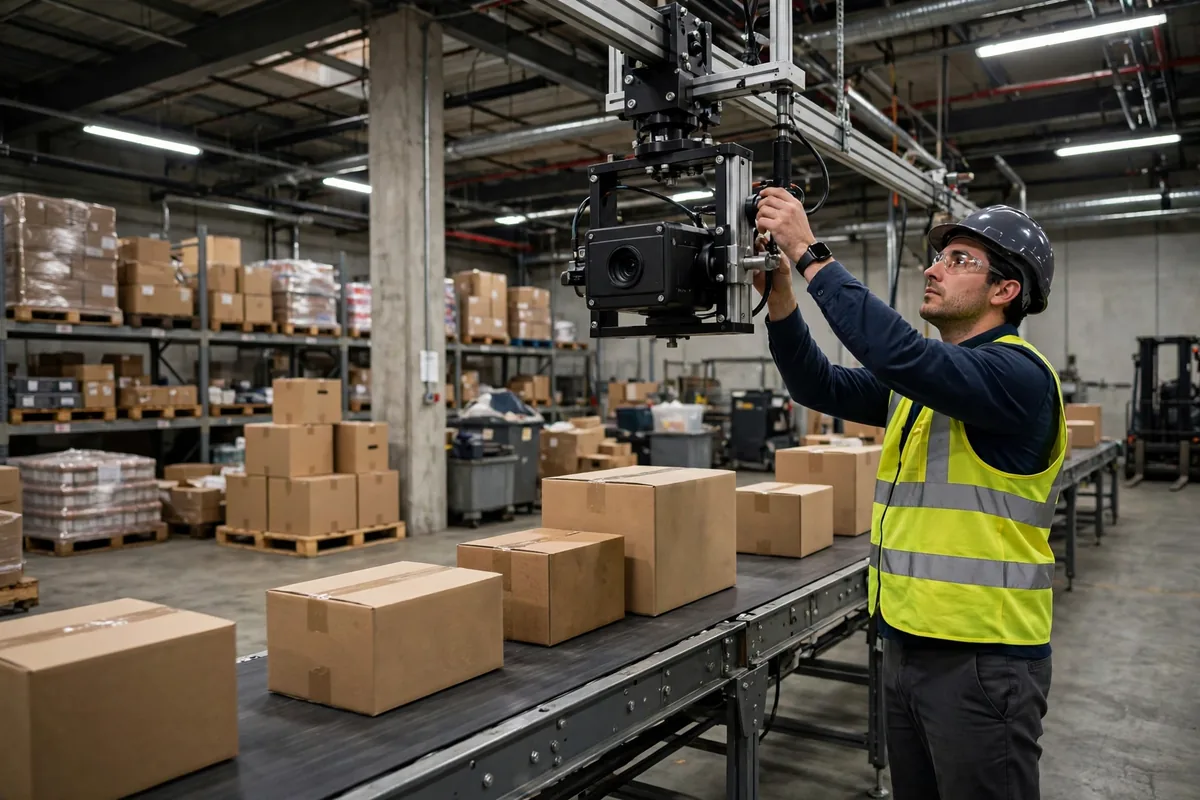
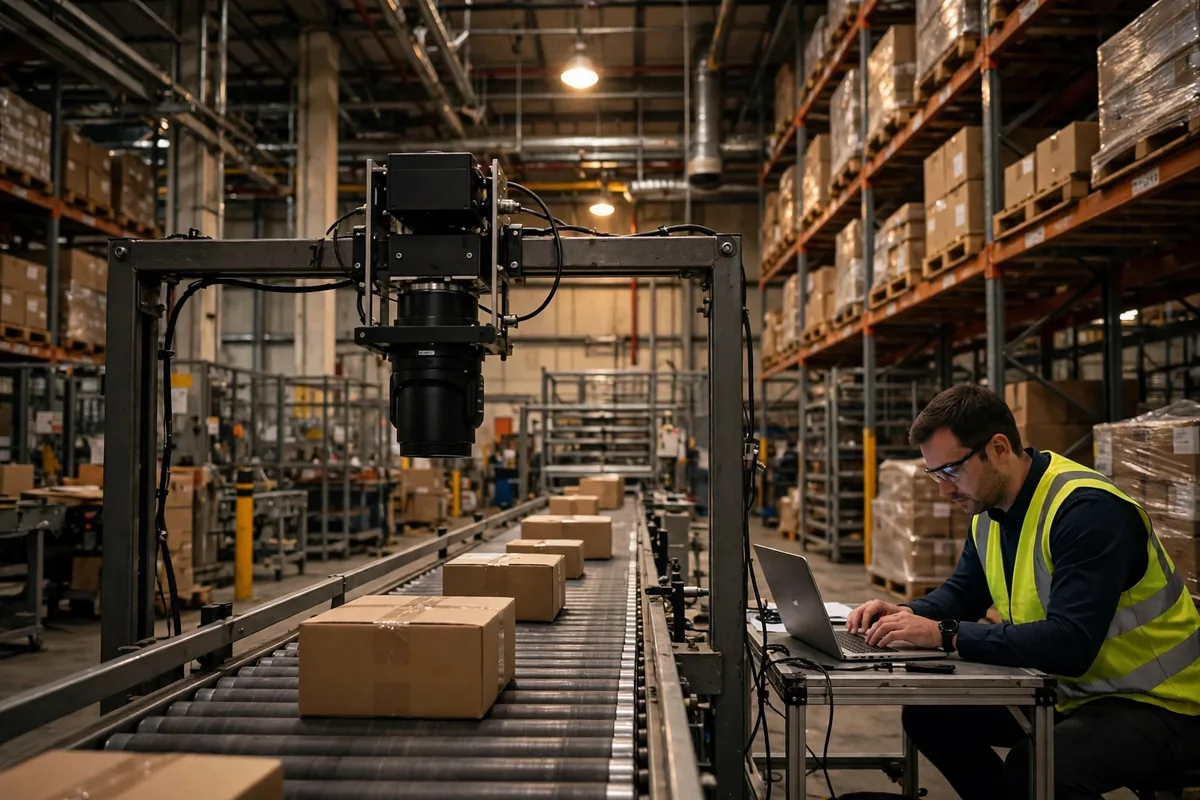
Last year I visited a friend who sells home goods. He had just installed a top-of-the-line 3D camera above his conveyor, and its daily job was scanning barcodes. I stood there staring at it. A handheld scanner could have done that job. That is the trap in machine vision 2d vs 3d camera decisions: the most expensive camera is not the best camera. The right question is what you actually need it to see.
I fell into the same trap myself. Back in 2024, when my little warehouse put in its first automated sorting line, the vendor pushed a 3D package and the quote made my hands shake. I asked one question: my daily work is reading barcodes and checking labels, so why do I need depth? Three seconds of silence, and the vendor switched me to a 2D setup at a fraction of the price. Lesson learned. Before you buy anything, write your jobs on paper, one by one, and match each job to a camera.
I know the vendor script by heart now: "future-proof," "buy once, cry once." It all sounds right until you do the math. Buying for the future means spending three years of budget today, and if the business changes next year, the camera changes with it. My rule is to buy for the most painful job I have right now, keep the interfaces open, and add hardware when a new need actually shows up. A camera is a tool, not furniture. You do not need the full set on day one.
Machine Vision 2D vs 3D Camera: The One Question That Decides It
A 2D camera takes a flat picture. It sees length and width, and it works off contrast, color, and pattern. Reading barcodes, checking labels, verifying printed dates — 2D does those jobs fast and cheap, often processing a frame in under 50 milliseconds, keeping up with any conveyor speed. A 3D camera adds depth. It builds a point cloud or height map and asks a different question: is this thing shaped right? Volume measurement, a bulging carton, a robot reaching into a bin — 2D simply cannot see those, no matter how good the lens is.
The test is simple. Does your defect live on the surface or in the height? A crooked label, a blurry barcode, missing print — that lives on the surface, and 2D handles it. A missing item inside a box, a dented carton, a pallet stacked crooked — that lives in height and shape, and only 3D can see it. If you cannot tell those two apart, your selection will go wrong.
Machine Vision 2D vs 3D Camera in Real Jobs: Barcodes, Dimensioning, Defects
Here is my own warehouse. In September 2025 we took on a home-goods account shipping around 3,000 orders a day, with barcodes stuck on the side of each carton in a fairly fixed spot. I installed one 2D barcode camera with a bar light. The whole setup cost a small fraction of the 3D quote. In the first week our misread rate dropped below 3 per 1,000 scans, and we cut one person from manual rechecking. This trick works — I tested it myself. The simpler the job, the better 2D pays off.
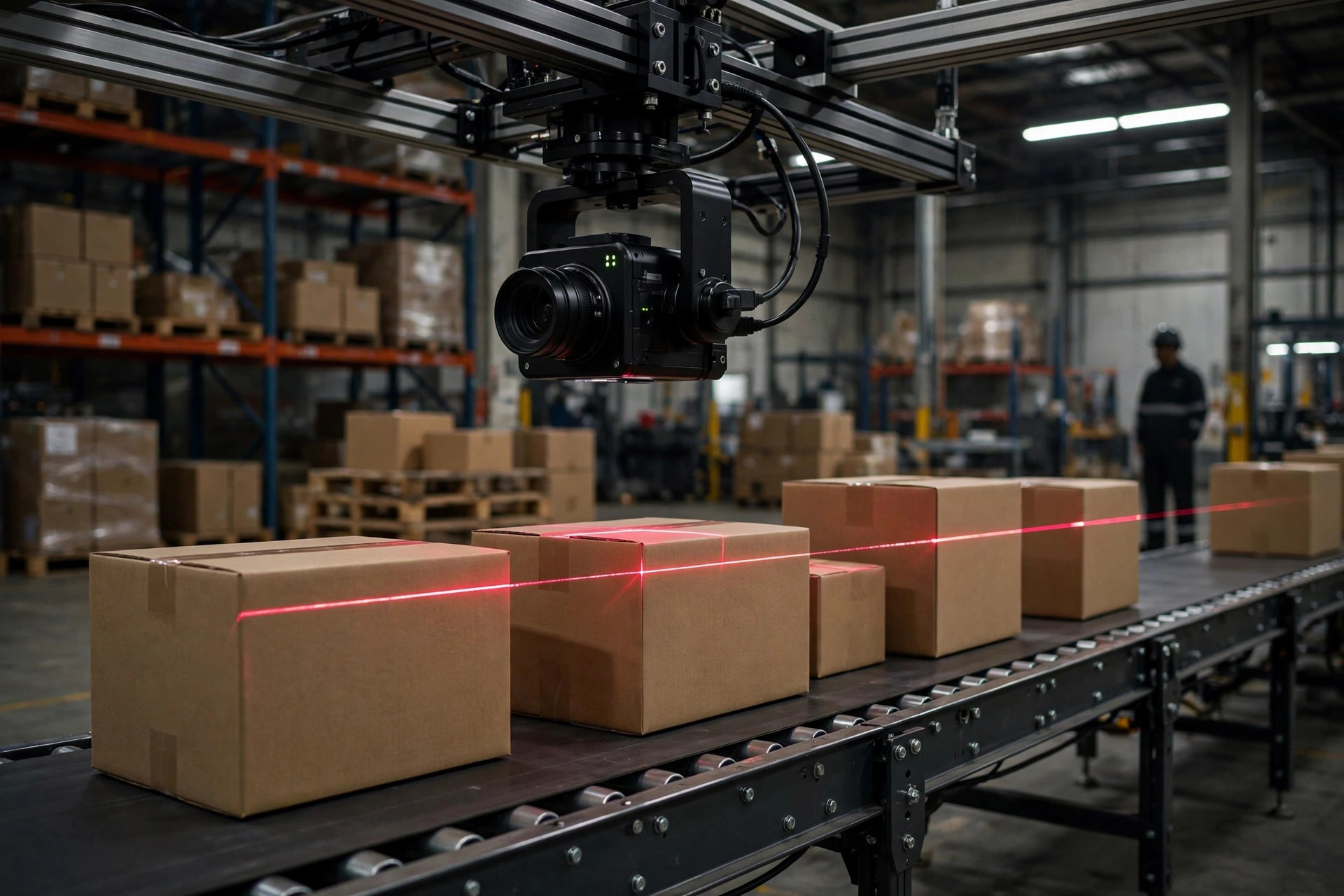
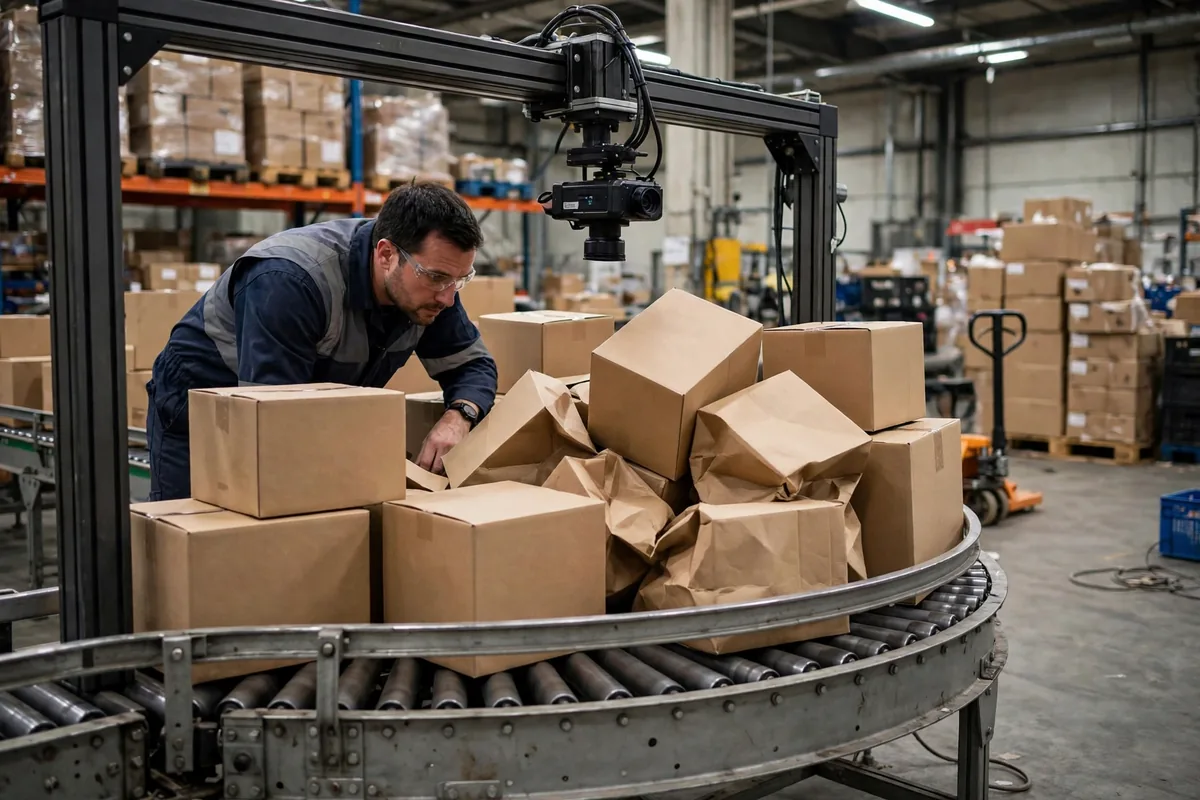
Now the opposite case. The numbers below are an illustrative example: a snack-food warehouse wanted vision to catch biscuit boxes missing a pack. The boxes are soft packaging, and a two-millimeter sag is hard to spot with the naked eye. They started with 2D, hoping shadows would reveal the problem, and false alarms kept stopping the line. Switching to a 3D laser profiler changed everything — the height map exposed every short box on the spot. Same phrase, "defect detection," two totally different jobs. One runs on contrast, the other on depth. Pick the wrong one and you burn money.
Conveyor speed is another detail people forget. A 2D setup processing a frame in under 50 milliseconds keeps up even when the belt runs fast, while a 3D system chewing through point clouds can force you to slow the belt down. Our sorting line pushes over 2,000 parcels an hour at peak. Slowing down means overtime, and overtime means money. Put speed in the math, not just the accuracy numbers on the spec sheet.
Label verification is another job worth naming. In November 2025 we had a baby-products client whose production dates and batch codes on each carton had to match the system exactly — one wrong character and the whole batch came back. The same 2D camera, with character recognition added, compares every code as it passes and flags mismatches on the spot. At 4,000 orders a day, our errors fell from two or three a week to barely one a month. Character recognition is 2D's home turf. Do not let a salesperson talk you into 3D for it.
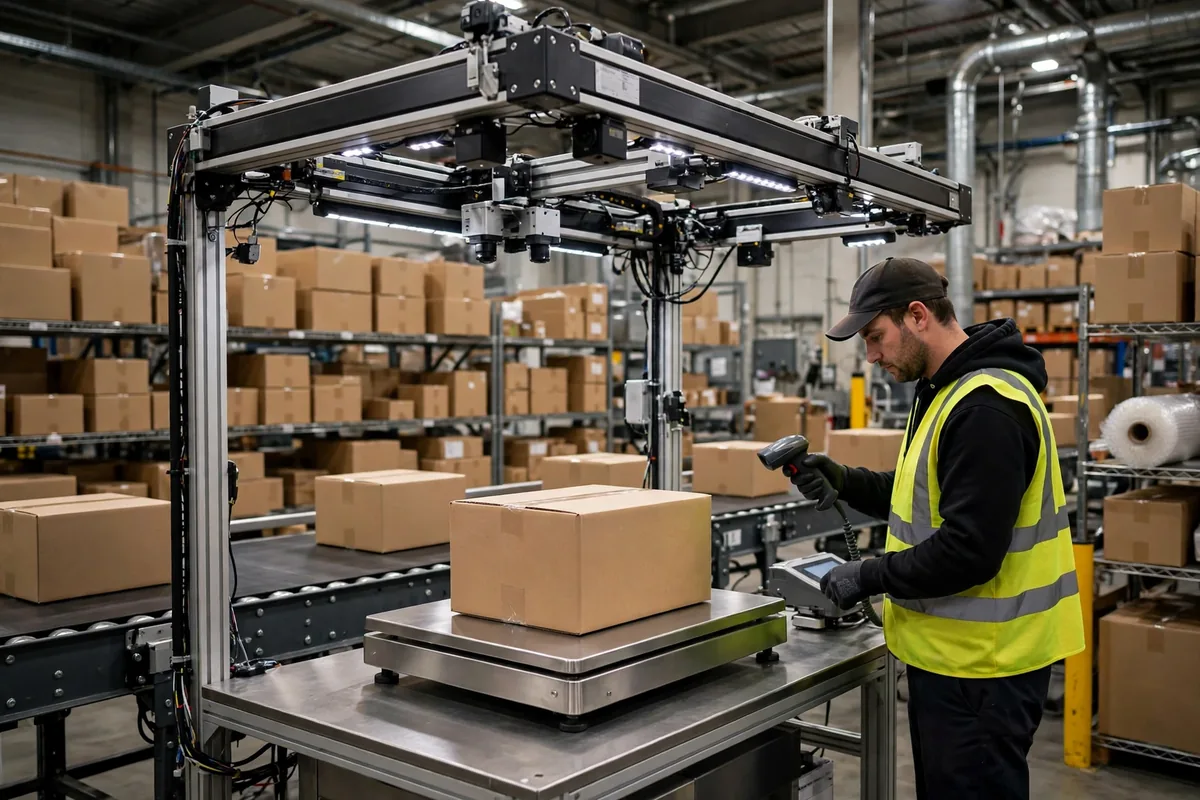
Dimensioning is where sellers miscalculate most. You need three numbers — length, width, height — and 2D can only give you two. The third has to be guessed or measured by hand. Carriers bill on dimensional weight, so a carton measured one centimeter wrong adds up to real shipping money over a month. For dimensioning, stop debating and buy 3D. That money is not optional.
| Job | Right camera | Why | | Barcodes, labels, print checks | 2D | Contrast only — fast and cheap | | Volume and height measurement | 3D | Needs depth data 2D cannot give | | Surface defects, print problems | 2D | The defect sits on the surface | | Warping, missing items, crooked stacking | 3D | The defect sits in height and shape |
Machine Vision 2D vs 3D Camera: The Math Before You Buy
Here is the counterintuitive part: a 3D camera is not only more expensive, it can also be slower. Point clouds carry far more data than flat images, so each frame takes longer to process. Speed up the conveyor and the fancy 3D system falls behind while the humble 2D camera keeps up. I have watched more than one seller pay top dollar for 3D and then slow the whole line down. Selection is not about whose camera is fancier. It is about whose setup is just enough.
Do the full math. The numbers below are an illustrative example: a small warehouse shipping 5,000 orders a day, a 2D barcode setup with hardware and installation at about $80,000, a 3D setup at about $250,000, both able to push misreads below 5 per 1,000. The extra $170,000 buys depth data that this operation never uses in a single day. That saving covers two conveyor motor replacements or two extra packers at the bench. Sellers need that ROI math in their heads before signing anything.
Three warnings before you buy. First, never let the vendor write your requirements — if you cannot write them yourself, do not buy yet. Second, test with your real parcels on site, not with the demo video from the trade show; showroom lighting and warehouse lighting are two different worlds. Third, leave room to upgrade. Start with 2D, get it running, and add 3D later when you genuinely need dimensioning. Running both side by side is normal, not embarrassing.
Then there is lighting, which most people forget until it bites them. 2D is picky about light. When afternoon sun slants in through the warehouse door, a 2D camera starts crying false alarms. Our fix is cheap and ugly: a shade over the camera, dimmable light bars, one saved setting for cloudy days and one for sunny days, and the operator switches between them. 3D handles light better, but it is no miracle worker either — shiny bags and matte black boxes fool it too. Test with your ugliest packaging, not your prettiest sample.
One last thing about renting. If the budget is tight, rent the camera for a three-month pilot and buy it only if the numbers hold up. That beats buying the wrong system outright. Some integrators rent by the month, and some will even tie payment to results. Do not be shy about asking. Sellers have a saying: get it working before you pay for it. It applies to cameras just as well.
This trick works — I tested it myself. Split the jobs, match one camera to each job, and spend the money where it actually pays.
By Ah K, E-commerce Seller (5 yrs)