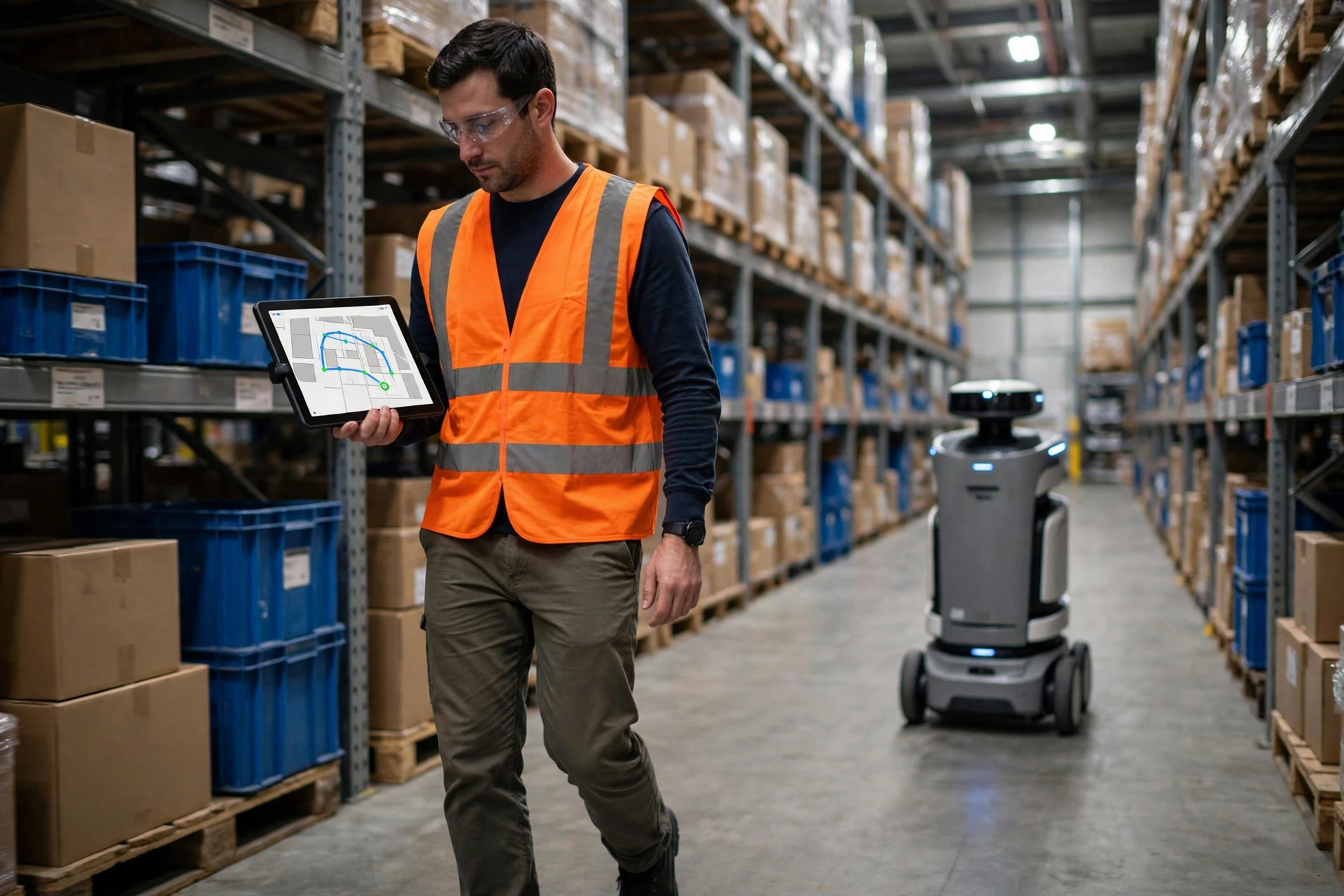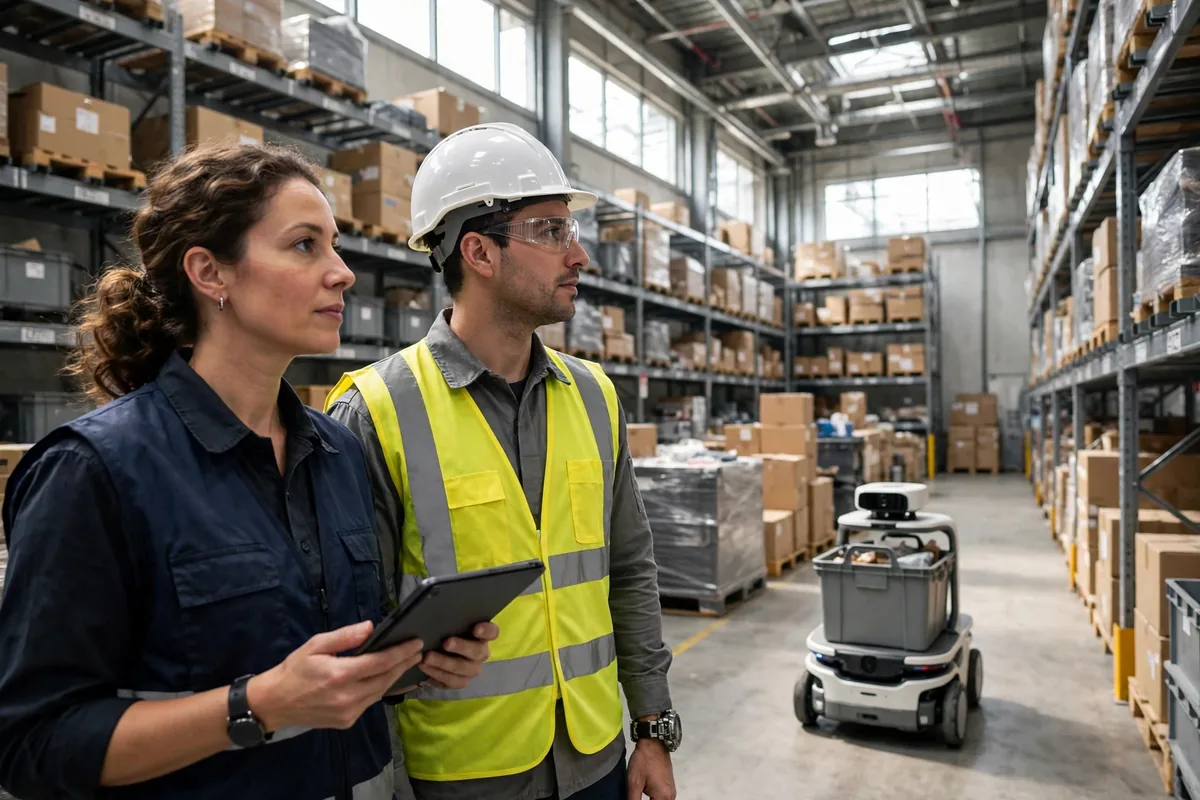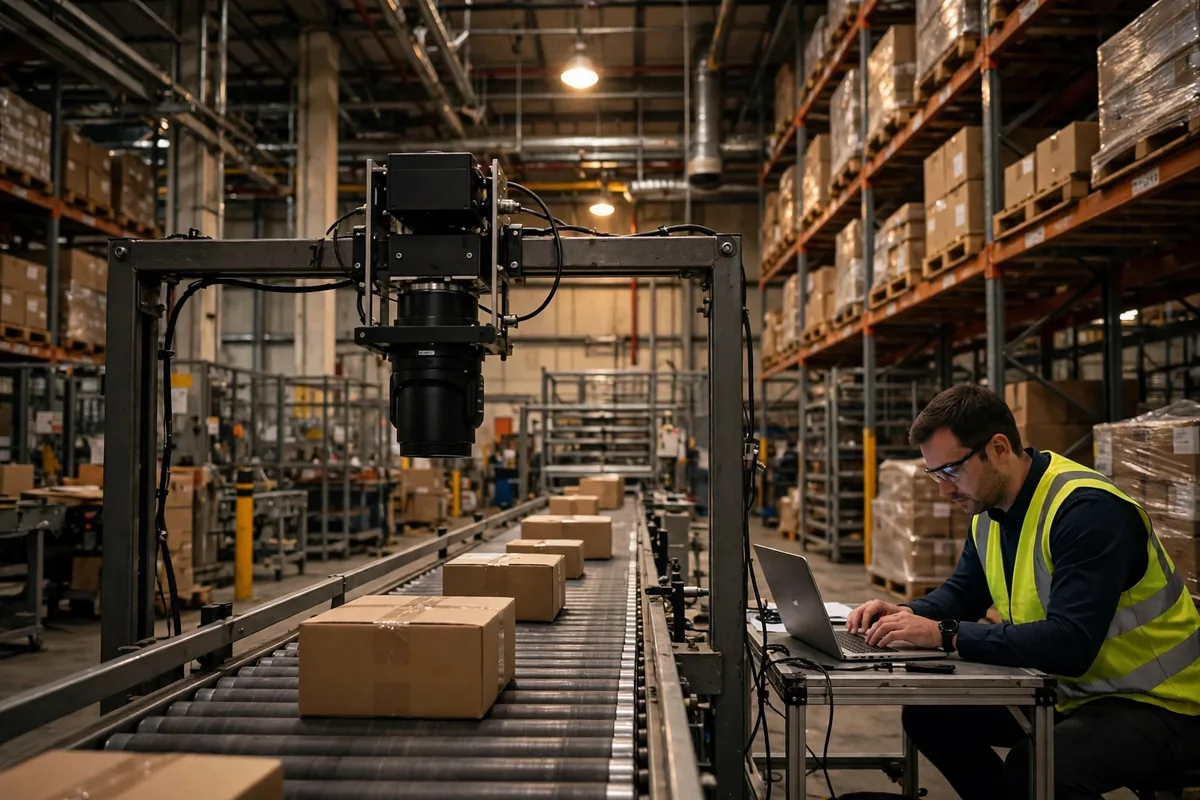
Last autumn, a sales rep showed up at my warehouse with an edge vs cloud pitch for my warehouse, and left me with the warehouse AI edge vs cloud inference deployment question: should the work run on edge devices or in the cloud? I read the monthly fee line three times to make sure I had not misread the decimal point. Then I laughed, because we are a small warehouse and we cannot afford to burn money like that. The monthly fee for his cameras cost more than hiring someone to stand at the packing line and check boxes with her own eyes.
But the question he left behind was a fair one, and it is the warehouse AI edge vs cloud inference deployment question every small warehouse eventually has to answer: for warehouse AI inference, should the work run on edge devices or in the cloud? The cloud guy said cloud, no hardware to buy. My hardware friend said edge, it keeps working when the internet dies. Both had a point, and both wanted my money. So I spent two months running a small experiment with six cameras in my own warehouse. Here is the short answer: put the urgent work on the edge, put the slow work in the cloud, and never bet everything on one side.
Edge vs cloud: the latency bill, and where edge actually wins
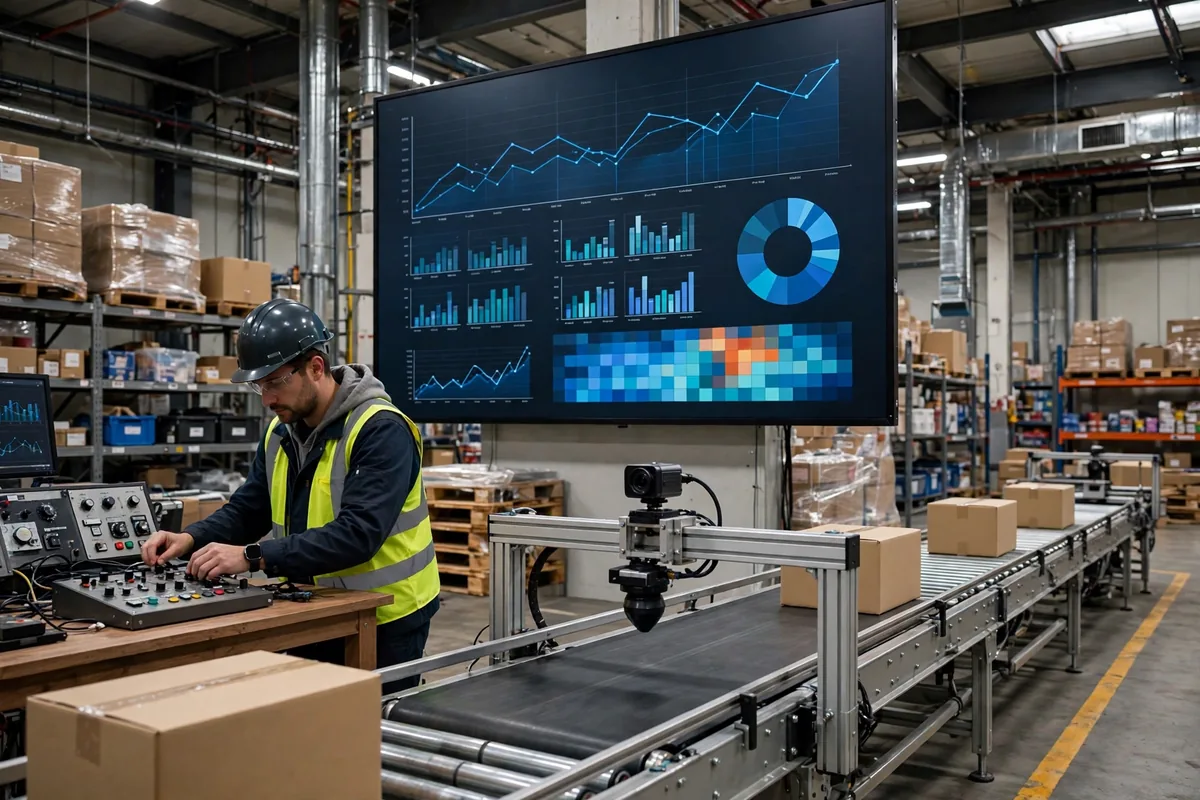
Let me start with a true story from a fellow warehouse owner. In October 2025, a small-appliance warehouse in Dongguan, Guangdong, put cloud vision checks on four packing lines. The camera took a photo, sent it to the cloud, and waited for a pass or reject. On a normal day it worked fine. Then one morning at 10 a.m. the park's broadband started jittering, latency jumped from a couple hundred milliseconds to almost a full second, and the conveyor did not wait. In three hours, more than 40 cartons were sealed and shipped before the check result came back. Seven of them had the wrong goods inside. The owner told me later that returns and reshipping alone cost him over 6,000 yuan that day, before counting the customer complaints.
That latency gap is not marketing talk. Published comparisons consistently put edge inference at roughly 1 to 50 milliseconds, while cloud inference, including the network round trip, usually lands at 50 to 500 milliseconds or more. Half a second sounds trivial until you measure it in conveyor belts. On a belt moving 2 meters per second, an extra 500 milliseconds means the carton travels one more meter. If the reject device sits only one meter past the camera, the wrong carton is already gone. The real advantage of edge computing is not that it is a little faster. It is that it is steady: no network jitter, no queueing, latency you can count on.
I tested this in my own warehouse. In March 2026, I ran barcode recognition on two cameras, one through the cloud and one on an old industrial PC on site. Over two weeks, the cloud path averaged around 180 milliseconds at peak hours and occasionally spiked past 600. The local path stayed around 20 milliseconds. Small difference? We scan more than 8,000 times a day, and the cloud path timed out and retried twenty or thirty times a day. Each retry made an operator stop and wait. Added up, that was half an hour of labor a day, gone.
Edge vs cloud, part two: cloud inference earns its keep too
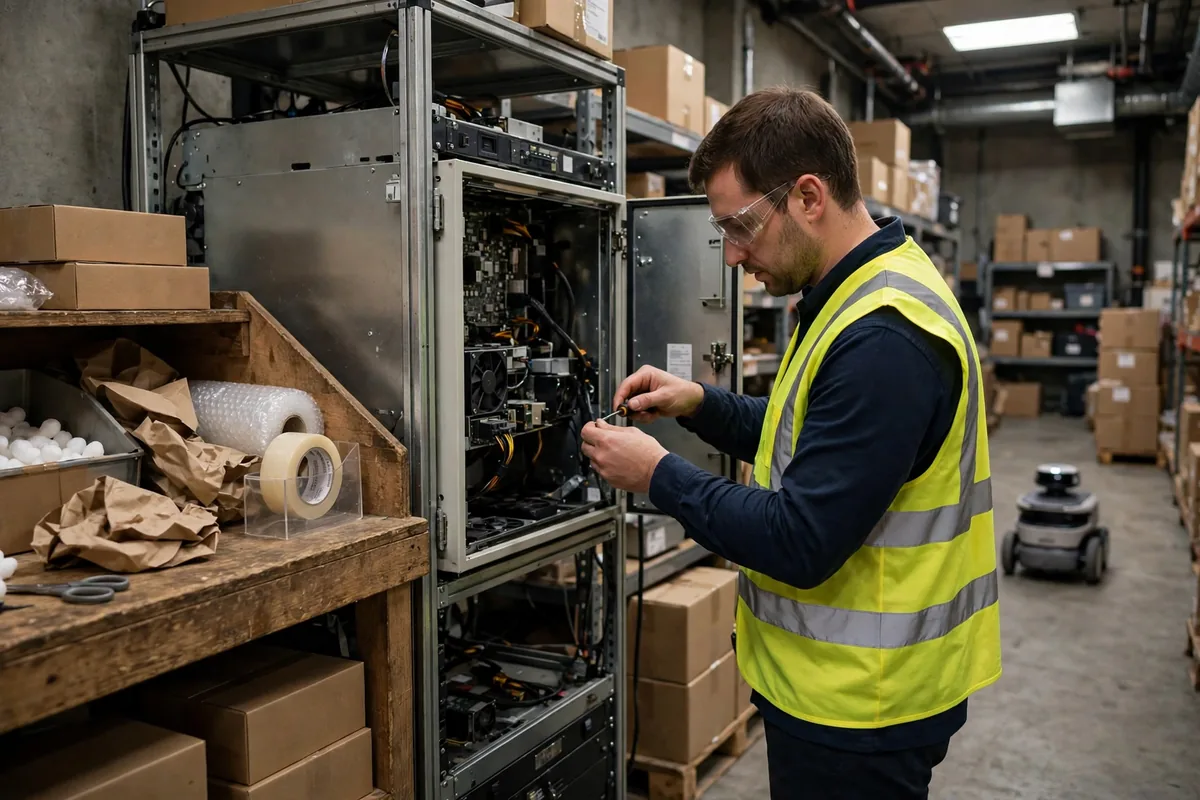
Only telling half the story would be dishonest. Edge computing has a painful weakness: you pay up front. The box, the industrial PC, the model setup, all of it comes out of your pocket at once, and when the model needs an upgrade, you do it yourself. When we priced it, one edge box capable of running vision models cost us the equivalent of two months' rent. The cloud asks for nothing up front. Start small, pay per use, a few hundred yuan a month when volume is low. For a small warehouse, that is a real difference.
More importantly, the cloud does jobs the edge simply cannot. Big models, cross-warehouse analysis, weekly reports, anomaly reviews. None of these care about a few seconds of delay, but they all need computing power. Our outbound data analysis runs in the cloud every night at midnight. I read the results the next morning. If it takes a few minutes longer, nobody notices.
Here is the counterintuitive part, and the heart of the warehouse AI edge vs cloud inference deployment decision: edge and cloud are not rivals. They are a division of labor. The jobs in a warehouse that genuinely need millisecond responses are few, and you can count them on one hand: real-time rejects on a conveyor, obstacle avoidance and safety stops for AMRs, and anything where a scan must return a result instantly. Everything else, quality review, demand forecasting, exception statistics, can wait a few seconds or a few minutes without the sky falling. The most common mistake small warehouses make is buying the strictest latency standard for every single job.
The cheap workaround: edge only for the urgent jobs
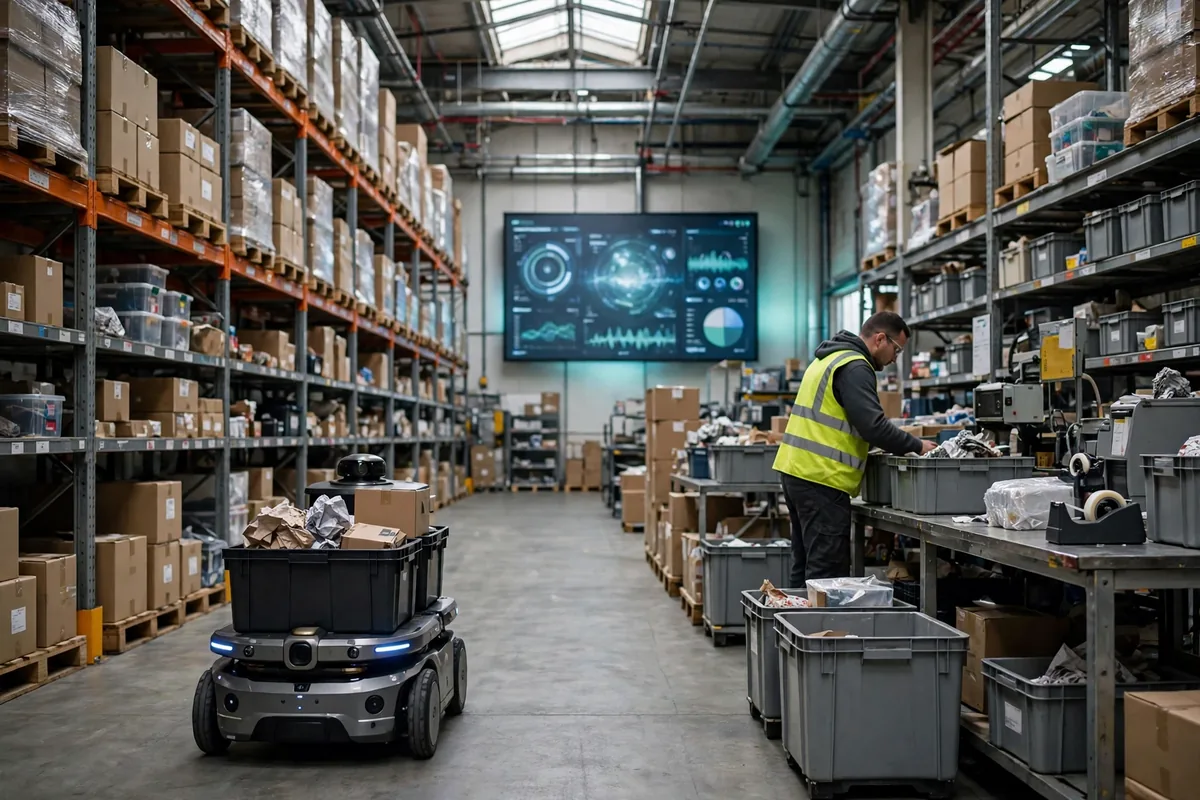
Our final setup is a little scruffy, but the math works. Of our six cameras, only the two doing real-time rejects run on the edge, on a second-hand edge box. The other four, used for records and spot checks, run in the cloud. Photos are stored locally first and uploaded in batches when the line is quiet. Model updates do not need a site visit either. The cloud trains the new model, pushes it down to the box overnight, and we keep working the next day.
| Deployment | Latency | When the internet dies | How you pay | Best for |
|---|---|---|---|---|
| Edge computing | Typically 1–50 ms | Keeps running | Up-front purchase, low running cost | Real-time rejects, obstacle avoidance, instant scan feedback |
| Cloud inference | Typically 50–500 ms or more | Everything stops | No hardware, pay as you go | Data analysis, model training, batch review |
| Hybrid | Urgent on edge, slow in cloud | Urgent jobs unaffected | Small up-front cost plus a controllable monthly fee | The cheapest workable option for a small warehouse |
When you do the math, do not compare monthly fees alone. Compare them against what one bad afternoon of downtime costs. Our own structure, with illustrative figures: a cloud plan at 1,500 yuan a month looks cheap, but two outages a year, half a day each, cost us over 10,000 yuan in wrong shipments and idle labor. An edge box at 20,000 yuan up front (illustrative figure), spread over three years, works out to a little over 500 yuan a month, and it never checks the weather of our broadband connection.
One more cheap trick: do not worship new hardware. Our edge box is second-hand, bought from another warehouse that upgraded. It cost 40 percent of a new one and runs our small models with room to spare. And do not overbuy the model either. A light model that recognizes 20 product categories is enough when you only stock 20 categories. A model that recognizes 2,000 is just you charging yourself extra.
If you run a small warehouse like mine, here is a framework you can copy directly for your own warehouse AI edge vs cloud inference deployment choice. List every job you want AI to do, and split them into two piles: cannot wait, and can wait. Only if the cannot-wait pile has more than three jobs is edge worth a serious look. With one or two jobs, rent the cloud for three months first, get it running, and then decide whether a box is worth buying. Get it running first, optimize later. That is how small warehouses stay alive, and staying alive comes before looking impressive.
By Xiao Ma, Small Warehouse Owner