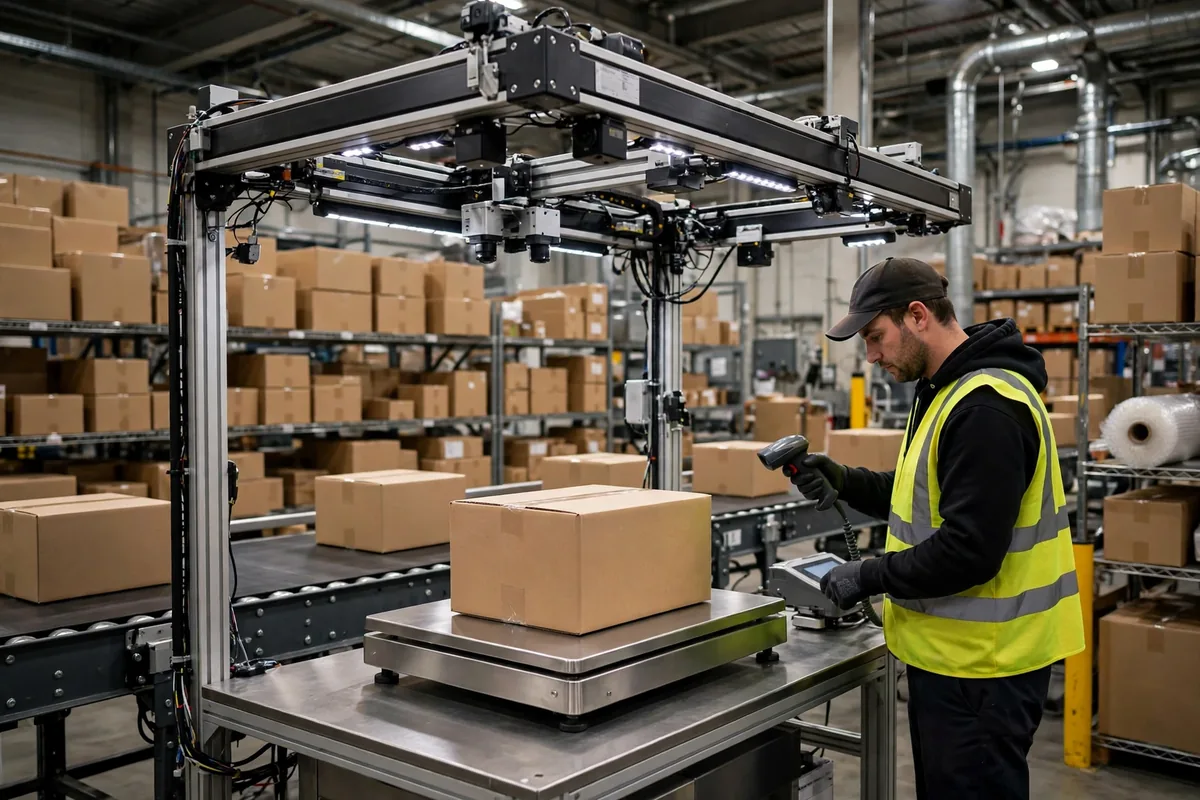
Let's start with a bill — the bill that decides whether a dimensioning system is worth buying. Suppose your warehouse ships 2,000 parcels a day, and 3% of them come back on the carrier's invoice with a dimensional-weight correction, averaging $0.60 extra per parcel — figures are an illustrative scenario, plug in your own invoice. That's roughly $1,080 a month, nearly $13,000 a year. And you can't fight it, because you have no evidence: your system holds a hand-typed set of dimensions, while the carrier holds a machine-scanned record with a photo. A dimensioning, weighing, and scanning system — DWS for short — exists to fix exactly that gap: one pass, one record, dimensions, weight, barcode, and photo. Whether it's worth the money depends on running that bill first.
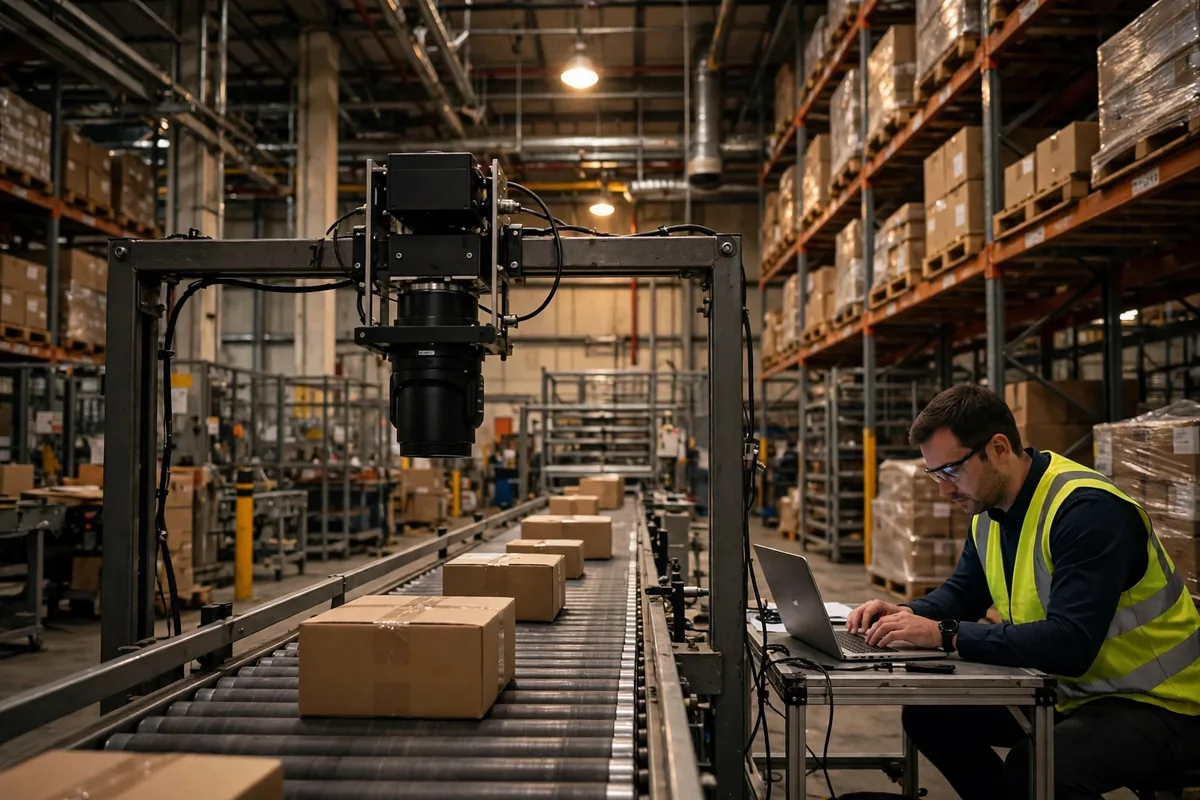
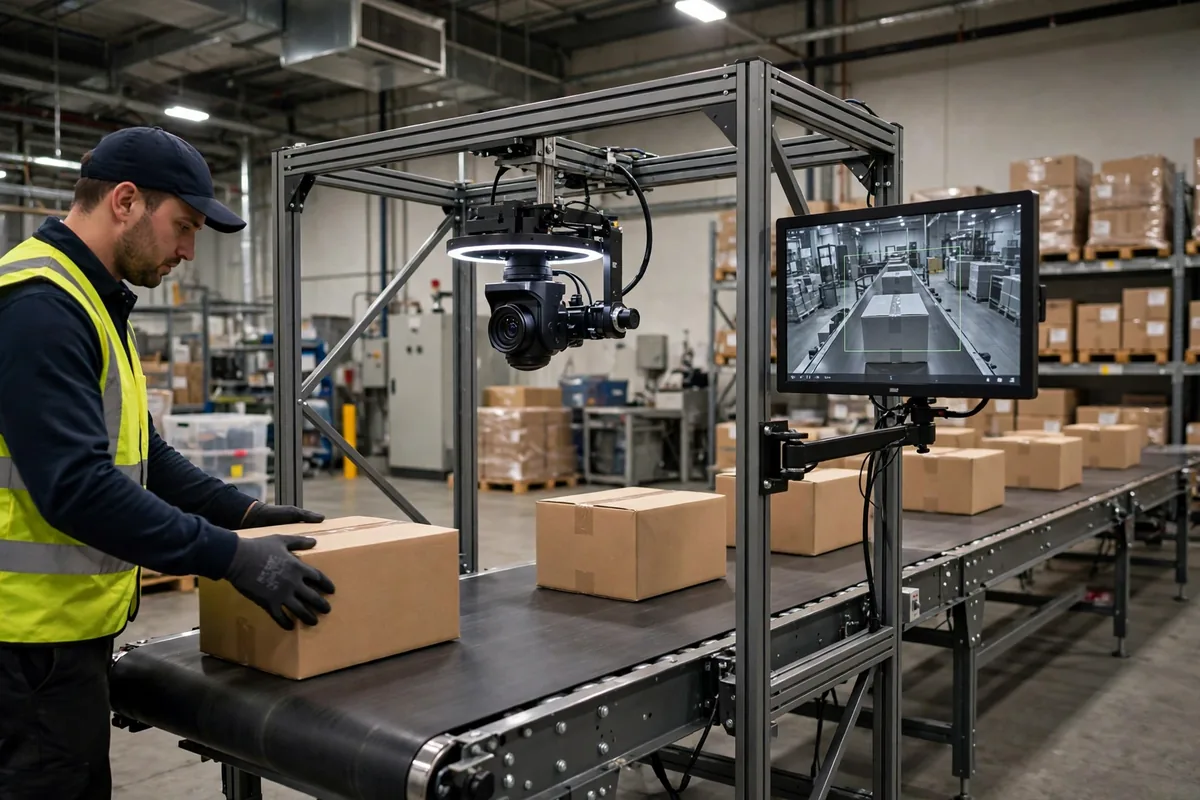
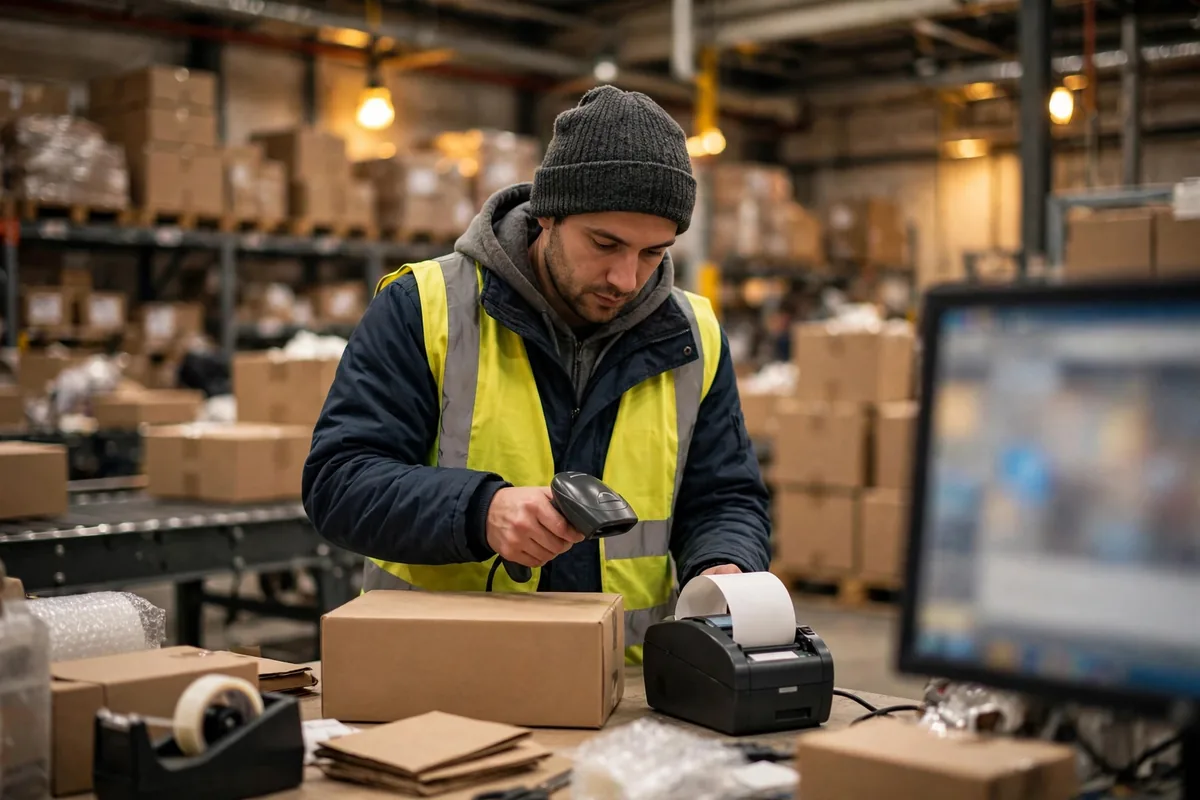
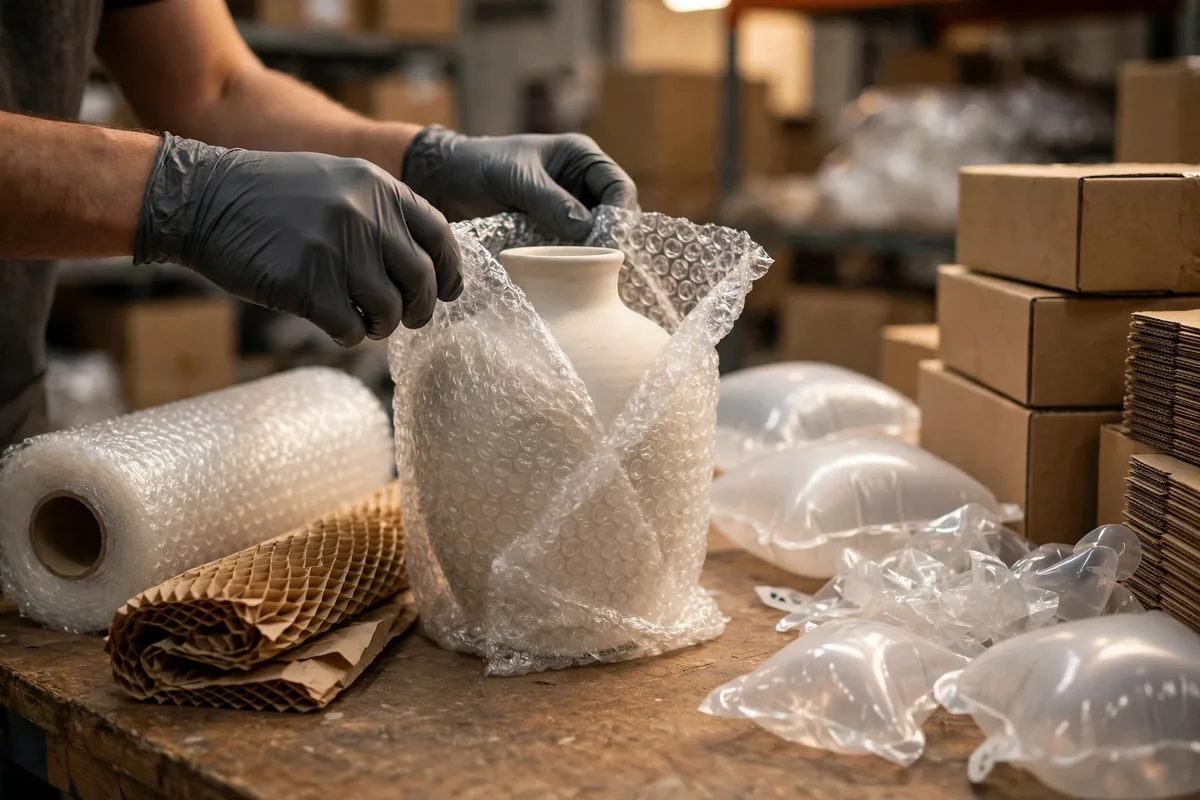
The principle is simple. A parcel passes through once, and the system does three jobs at the same time: measures length, width, and height; weighs it; scans the barcode. Some units add a photo for evidence. Dimensions come from structured light or laser scanning. A good static dimensioner measures regular cartons to about ±5 mm (0.2 inches) — that figure has public product documentation behind it; Rice Lake's iDimension Plus, for example, is certified Legal for Trade at 0.2 inches (5 mm), and a single scan takes under a second. Note my qualifiers: "regular cartons" and "certified." Soft polybags and irregular shapes measure worse, and the numbers on a vendor's brochure were captured in a lab. Your warehouse has tape, bubble wrap, and lopsided boxes — never take brochure numbers as acceptance criteria.
The First Bill: Dimensioning and Dimensional Weight Corrections
Everybody in the trade knows the rule: carriers charge whichever is greater, actual weight or dimensional weight. Dimensional weight is length × width × height divided by a divisor — and the divisor varies by carrier and changes over time, so always confirm it against the carrier's official website and latest policy. A 40 × 30 × 30 cm box is 36,000 cubic centimeters; divided by 5,000 that's 7.2 kg of billable weight, even if the scale says 3 kg. Every extra centimeter of box is money.
In spring 2025, a 3PL shipping apparel came to me with this problem. Light, bulky freight: a hoodie weighs 300 grams but ships in a 40 cm box, 40,000-plus parcels a month. The carrier's monthly correction bill ran over $2,500 — figures are an illustrative scenario. The warehouse manager wasn't having it, so we spot-checked a week: three operators measuring the same box with a tape measure produced three different numbers, and a 2 cm difference moved the dimensional weight by half a kilo. Worse, nobody agreed whether to measure the bulge at the taped seam or the box itself — there was no standard at all. After the dimensioner went in, every parcel kept its dimensions, actual weight, barcode, and photo in one record. When a correction arrived, they checked the photo before paying. Within three months, correction charges fell sharply — not because the carrier got generous, but because the evidence was complete and the charges that shouldn't have been paid stopped being paid.
Here's the counterintuitive judgment: the dimensioner's biggest value isn't accuracy, it's evidence. Without a photo and a system record, you lose every argument with a carrier. With evidence, most disputes die at the reconciliation stage. Warehouses that calculate ROI on labor savings alone and leave the dispute money out of the math are doing the math wrong.
The Second Bill: Not Every Warehouse Deserves One
Now the cautionary tale. Late in 2024, a small hardware warehouse shipping 300 parcels a day bought a dimensioner because a competitor had one. Their freight was small and dense — dimensional weight almost never beat actual weight — and monthly corrections were under $70. The machine cost several thousand dollars, and it sat on the packing bench processing 300 parcels a day while operators had to lift every parcel on and off it, slower than typing dimensions by hand. Six months later it sat under a dust cover. Figures are an illustrative scenario, but the lesson is real: where dimensional weight never beats actual weight, a dimensioner saves nothing, and buying one is burning money.
Draw three lines to decide. First, light-and-bulky share: apparel, home goods, baby products, cosmetics — where dimensional weight routinely beats actual weight, go first. Second, daily volume: above roughly 1,000 parcels a day, the error and time cost of manual measuring is big enough to amortize the machine. Third, dispute volume: if monthly corrections exceed the machine's monthly amortized cost, the purchase pays. Hit two of three and it's worth a serious conversation. Hit none, and standardizing your box sizes and tightening the manual measuring process will do more than any machine.
One use case gets overlooked: cubing data for storage. Measure every SKU's true dimensions at receiving, feed them into the WMS, and slotting, load planning, and replenishment all get sharper. A home-goods warehouse I know bought a dimensioner not for corrections but to write real volumes into its WMS; the slot utilization gain was like getting a free racking bay. That benefit is real too — but label it an illustrative scenario, not a promise.
Total Cost of Ownership: Spread the Whole Bill Out
I never price a machine by its sticker. Here's the total cost of ownership table, with figures as an illustrative scenario — fill in your own quotes.
| Cost item | Manual measuring (illustrative scenario) | Dimensioning system (illustrative scenario) |
|---|---|---|
| Purchase / lease | 0 | One-off cost or monthly rent, spread over 3 years |
| Time per parcel | 30–60 seconds to measure, weigh, and scan by hand | Under 1 second per pass (vendor rated) |
| Dimensional error | ±5–20 mm by hand | About ±5 mm on regular cartons (rated) |
| Correction disputes | No evidence, nearly all accepted | Photo record, corrections can be challenged |
| System integration | Hand-typed into WMS, error-prone | API push to WMS/TMS, one-off development |
| Maintenance and calibration | Tape measures and bench scales, periodic checks | Sensor calibration, consumables, annual cover |
The payback formula is simple: monthly saving equals corrections avoided plus labor time saved plus mis-shipments reduced; payback in months equals total investment divided by monthly saving. If you can't calculate the monthly saving, don't buy — anything that "should save money" on a feeling almost never does on the books. Two costs people always forget: the integration development, and the training week. In week one the machine will be slower than the old way while operators learn placement, exception handling, and error messages. Price that week's lost throughput into the deal.
Five Things to Check Before You Buy a Dimensioning System
If you're buying, check five things. First, accuracy in two grades — regular cartons and irregular items — and accept the machine against your own freight, not the vendor's demo boxes. Second, real throughput on your real mix: a vendor's rated several hundred parcels an hour is an ideal condition; your freight is mixed sizes, soft bags and hard cartons, so test it. Third, the photo evidence must exist and be retrievable by tracking number in one click — a photo you can't find is no evidence at all. Fourth, integration: does it push to the WMS in real time or by batch file, and how do exceptions come back? Find out before go-live, not after data stops halfway. Fifth, calibration and support in the contract: how often, who does it, and what happens while the machine is down — when the dimensioner stops, the packing bench stops, so what's your fallback?
One calm word to finish. A dimensioning, weighing, and scanning system is a good tool, but it treats one disease — inaccurate measurements with no evidence — not every disease. Oversized boxes, poor cartonization, a badly negotiated carrier contract: it fixes none of those. Standardize your boxes first, pull out the SKUs that blow the dimensional-weight budget and put them in smaller cartons, and learn your carrier's billing rules properly. Do the free work first. What's left of the bill after that is the dimensioner's job to calculate. Tomorrow morning, do one thing: pull 20 correction charges off last month's carrier invoice and count how many you paid because you had to, and how many you could have refused. That number is your answer.
By Lao Zhou, Logistics Cost Analyst