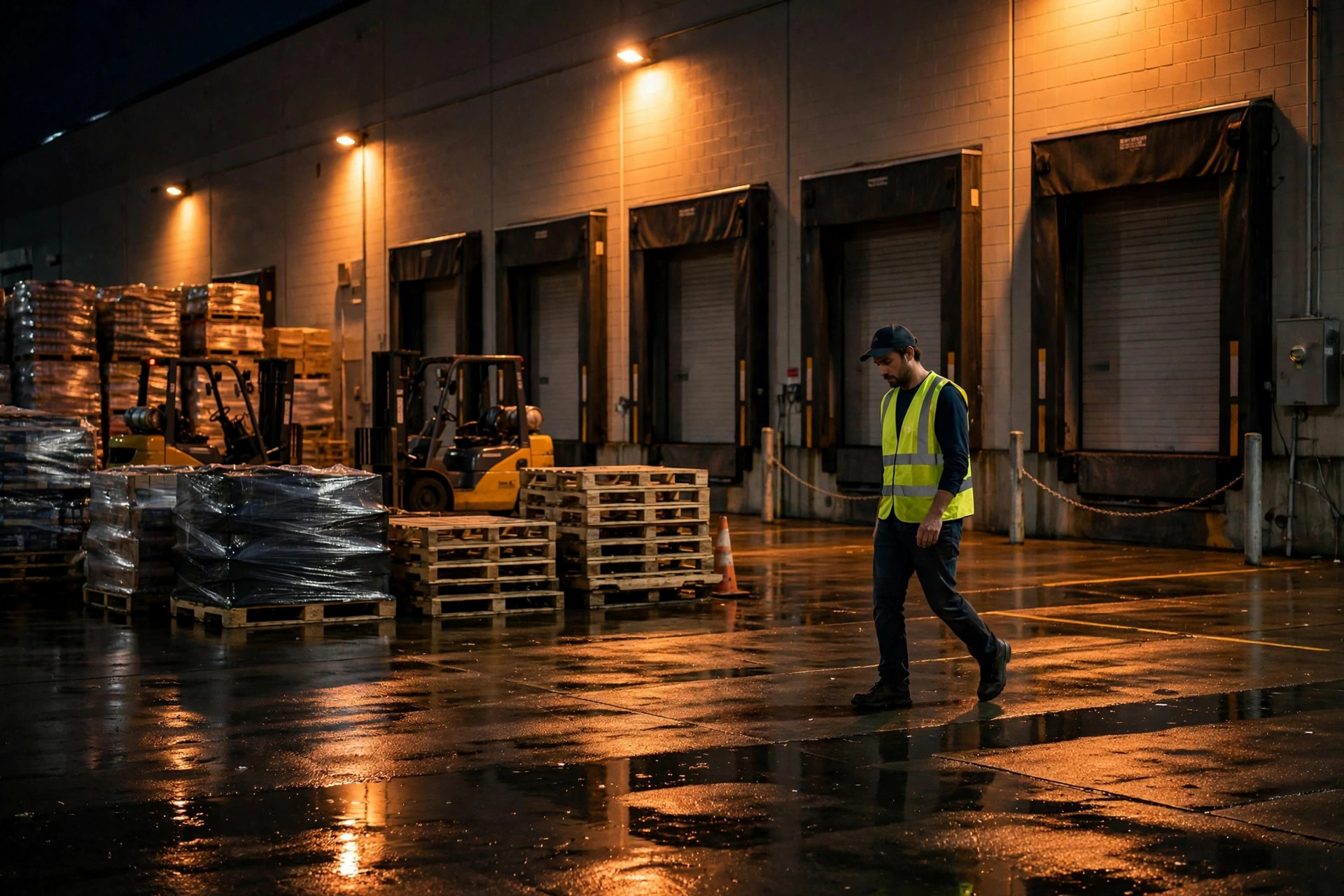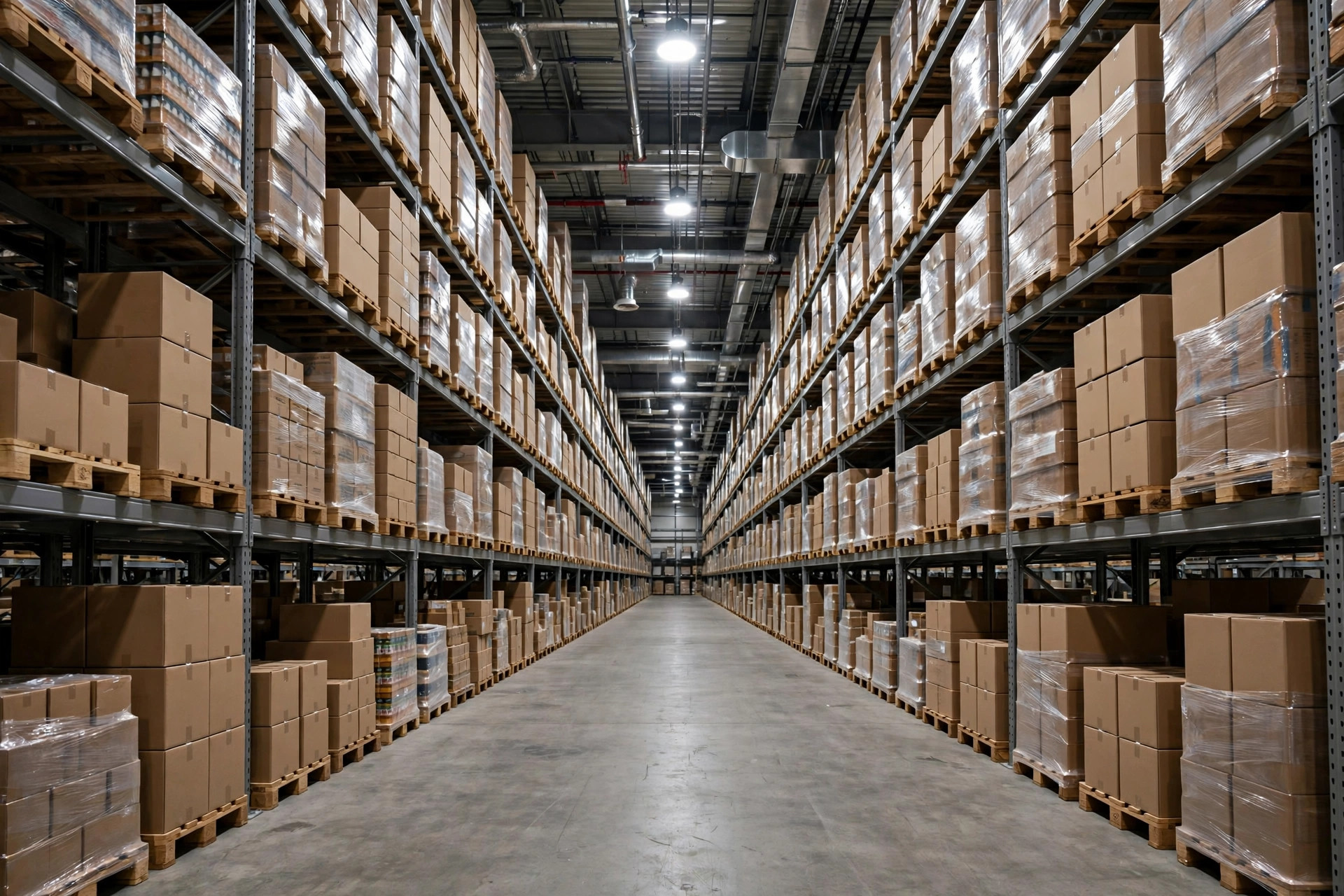
In November 2025, I was reviewing quarterly operations data for a food 3PL in Southern California — a 62,000-square-foot facility doing case and each picking for fresh-food e-commerce. Their puzzle was specific: over nine months, the picking error rate had climbed from 0.8% to 1.7%, and in the same period two workers had been injured in the rack aisles — one tripped by a pallet, one clipped by a forklift. Management first blamed process. They re-tuned the pick-path algorithm, added a verification step, and the error rate refused to budge. Then, during a night-shift walk in December, the operations manager brought a lux meter. Mid-aisle in the picking zone, it read 92 lux. That was the moment everyone realized the problem might not be in the process at all — it was overhead.
Aging Lamps, Taller Racks: Warehouse Lighting in Structural Decline
The facility's high-bay fixtures were 400W metal halides installed in 2013. After a dozen years of lumen depreciation and aging ballasts, the maintenance contractor's measured figure was roughly 60% of design output. Worse, a 2021 SKU expansion had added two runs of six-level beam racking without moving a single fixture — the light now hits the tops of the racks while pickers standing in the aisle scan location labels on levels two and three, working mostly off reflected light. The problem with warehouse lighting is rarely "no lights." It is "lights, but the light never reaches where it is needed."
Zoom out, and the pattern is structural. A large share of U.S. warehouses built between 2000 and 2015 still run metal halide or high-pressure sodium fixtures, and their lumen-depreciation curves are destiny. Meanwhile SKU proliferation pushes racking taller and aisles deeper, while fixture layouts stay frozen on the original construction drawings. Two trends, one outcome: picking-zone illuminance decays almost by default. Many operations managers can recite their error rate from memory but have never measured their aisle lux — which says everything about how this variable is treated.
The Numbers from One Warehouse Lighting Retrofit: 92 Lux to 350 Lux
From January to March 2026, the 3PL completed an LED retrofit: metal halides swapped for 150W LED high-bays, denser fixture spacing in the picking zones, and occupancy sensing with zone-based dimming. Post-retrofit lux readings: picking aisles went from 92 lux to 340–360 lux; receiving held around 200 lux; offices at 500 lux.
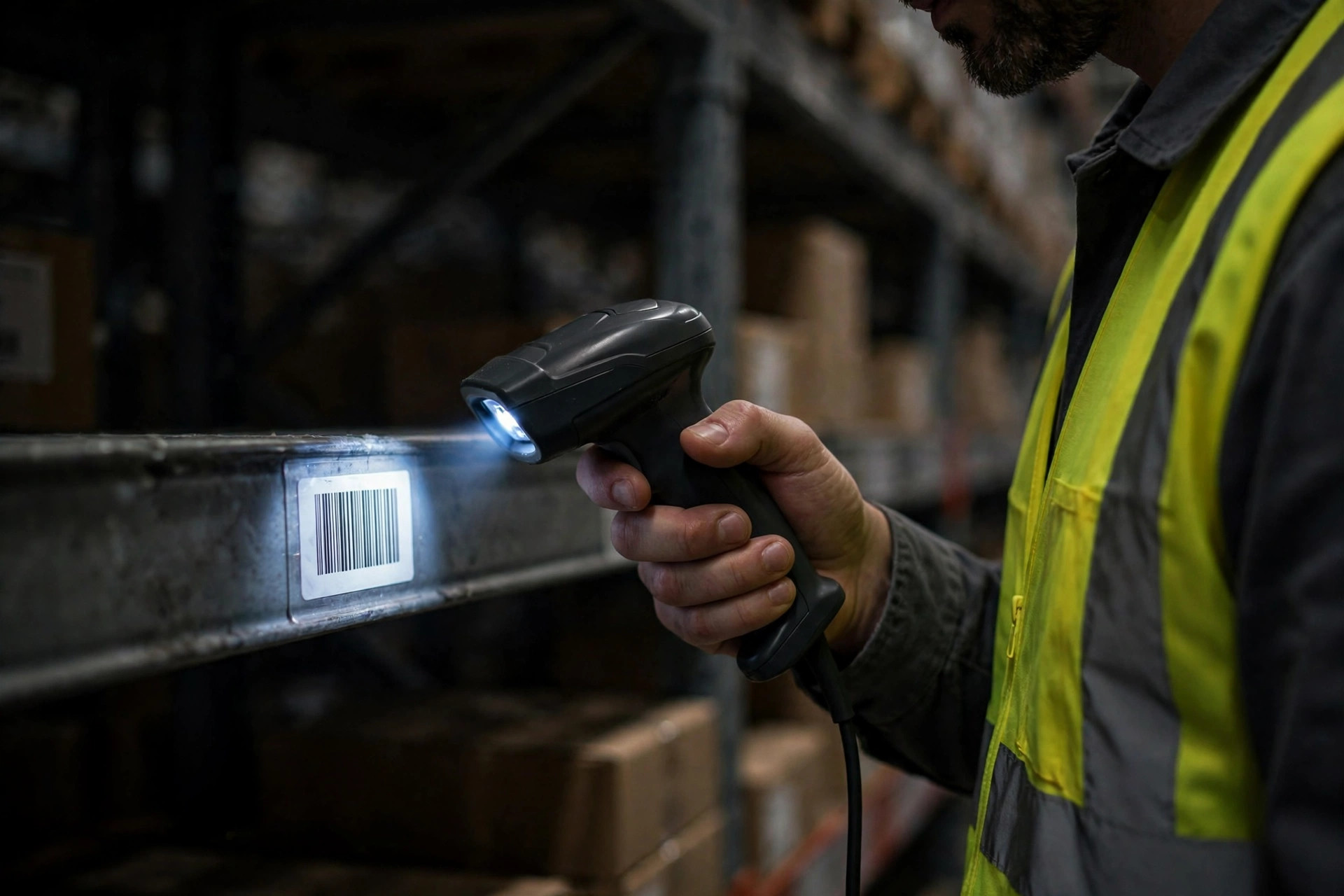
Comparing the two quarters after the retrofit (all figures below are the operator's own case data, not academic research): the picking error rate fell from 1.7% back to 0.9%; internal complaints about unreadable labels dropped from 11 per month to 2; no further aisle injuries occurred in the period. On the utility bill, lighting electricity use fell by roughly 60% — the retrofit contractor's measured figure, including the contribution of sensor-based dimming. That result is project-specific; different baseline fixtures and electricity rates will produce very different numbers, so don't copy it onto another project.
What these numbers actually prove is not "brighter is better." They prove that insufficient illuminance is a systematically underestimated operations variable. An 0.8-point error-rate recovery compresses three cost lines at once: verification labor, returns handling, and customer claims.
Why Illuminance Moves Errors and Injuries Together: Three Mechanisms
The first is the recognition chain. Most picking errors don't start as "grabbed the wrong item" — they start as "misread the label." SKU codes, lot numbers, and location labels in small type need enough contrast to decode. Under low light, the eye fills gaps with experience — and guessing produces errors. Each-pick zones with small labels are the worst-hit.
The second is the fatigue curve. In dim environments the ciliary muscle stays under constant tension, and eye strain in the second half of a night shift degrades into attention drift. Plenty of warehouses see their error curve tilt upward late in the shift; managers attribute it to "tired workers" and rarely connect it to the fixtures above. Fatigue is the symptom. Illuminance may be the cause.
The third is the alert radius. Injuries don't only happen during the pick itself — pallets in the aisle, stretch film on the floor, a forklift at the corner all enter peripheral vision later under low light, leaving a shorter reaction window for avoidance. So when lux falls short, errors and injuries are two outcomes of one cause, not two independent problems. That is exactly why the 3PL's two metrics deteriorated — and recovered — in lockstep.
The Counterintuitive Part: Brighter Is Not Better, and Glare Is the Same Injury
A word of caution. I have seen the opposite extreme: a facility that pushed its pick zone past 800 lux, where workers complained of glare and errors didn't fall. The reason is straightforward — direct high-bay output plus specular reflection off steel racking equals glare. Physiologically, glare and under-illumination are the same injury: both are contrast collapse, one from overexposure, the other from underexposure.
The approach that works is task-tiered illuminance, not one brightness for the whole building. The widely referenced ballpark figures from the IESNA warehouse lighting guidance (confirm against the latest IESNA edition and project-specific photometric design) look like this:
| Work zone | Ballpark | Rationale |
|---|---|---|
| Receiving / shipping staging | approx. 200 lux | Enough for paperwork and full-pallet labels |
| Aisles and full-case picking | approx. 300 lux | Balances travel safety with scanning |
| Each / small-item fine picking | 300–500 lux | Small-type label recognition needs it |
One clarification worth making explicit: OSHA does not specify lux values for warehouse picking areas. Do not map a supposed "compliance number" onto OSHA clauses. Illuminance design rests on industry guidance like IESNA and on field measurement — not on regulatory text.
Where This Is Headed: LED Is Table Stakes, Sensing Is the Second Half
Reading industry reports and vendor proposals from the last few years, the direction is clear. LED replacement is only step one, and the energy savings are a side benefit. Step two is zone dimming plus occupancy sensing plus daylight compensation — illuminance that follows the work. Aisles with people run full; unoccupied zones hold a safety baseline. That combination routinely cuts lighting energy another 30–50% (vendor proposal figures) while delivering more stable pick-zone illuminance than "always on," because the control system compensates for fixture depreciation over time.
An ROI framework for an operations manager considering an LED retrofit:
- Baseline first. Measure actual lux in each work zone with a meter — not the fixture nameplate — and record three baselines: error rate, injury count, electricity spend.
- Revenue side of the ledger. Lower error rates mean less verification labor, less returns handling, fewer customer claims; track workers' compensation rate changes and overtime hours too.
- Cost side. Fixtures, installation, controls — and check your local utility's commercial lighting rebates, which are routinely overlooked.
- Payback. Most project estimates land at 2–4 years, but the hidden error-and-injury savings usually make actual payback faster — because those two line items are typically underestimated at the proposal stage.
A lux meter costs a few dozen dollars, yet almost no warehouse puts it on the daily inspection checklist. Here is the open question worth sitting with: when we talk about "smart warehousing," we talk about AMRs, AI vision, digital twins — but if pickers can't read the location labels, isn't the return on all of that investment being discounted by a light bulb first?
By Dr. Chen, Supply Chain Researcher