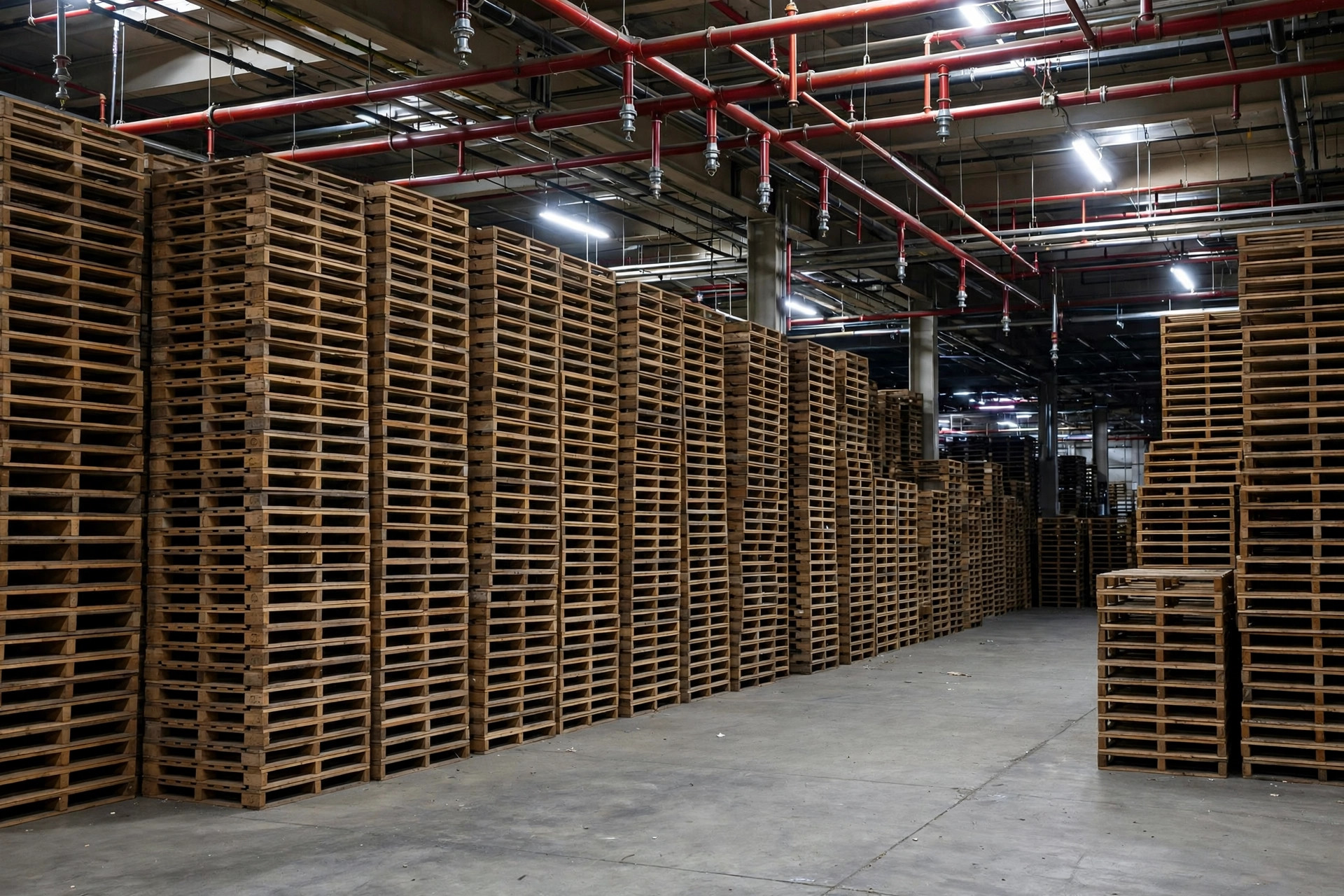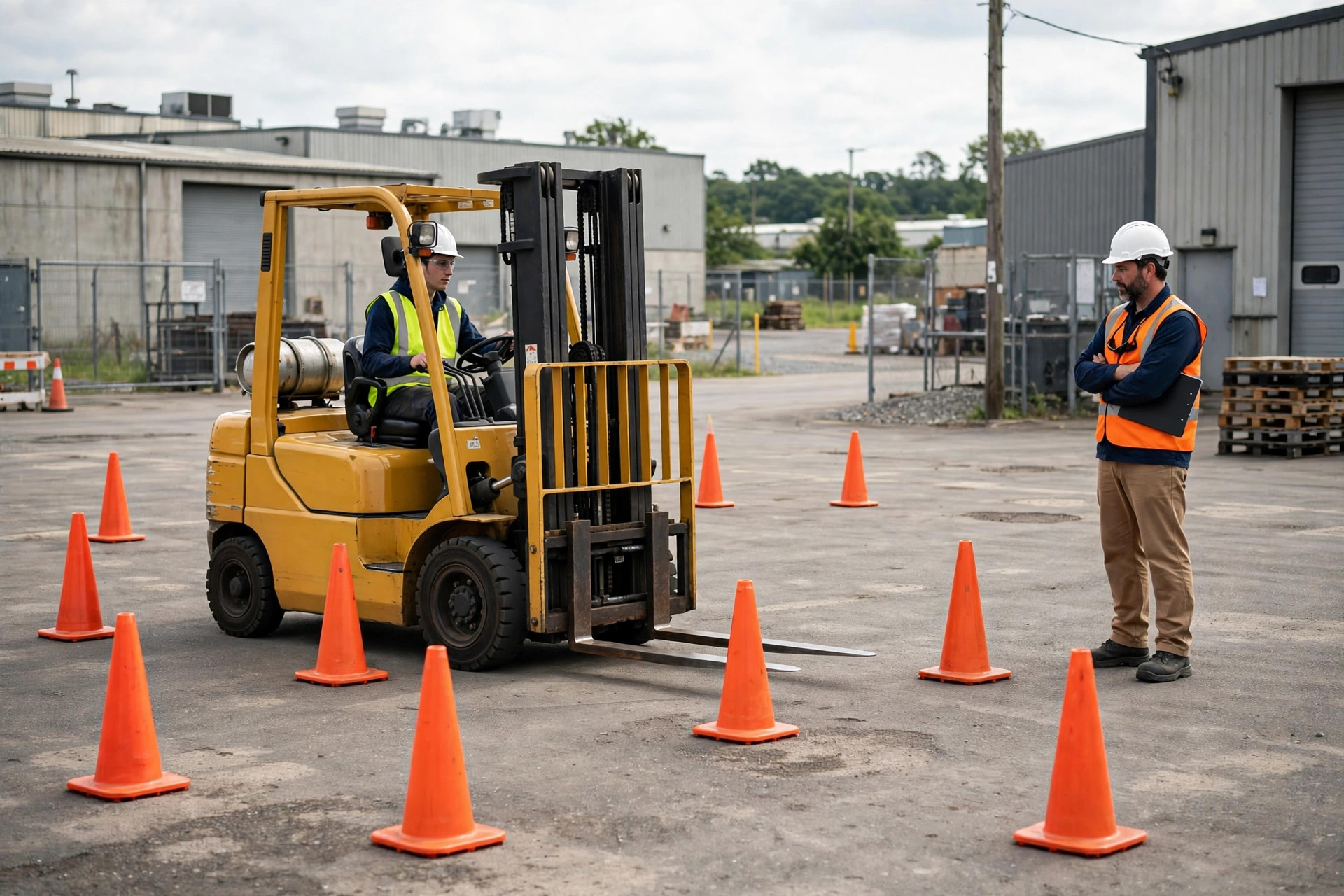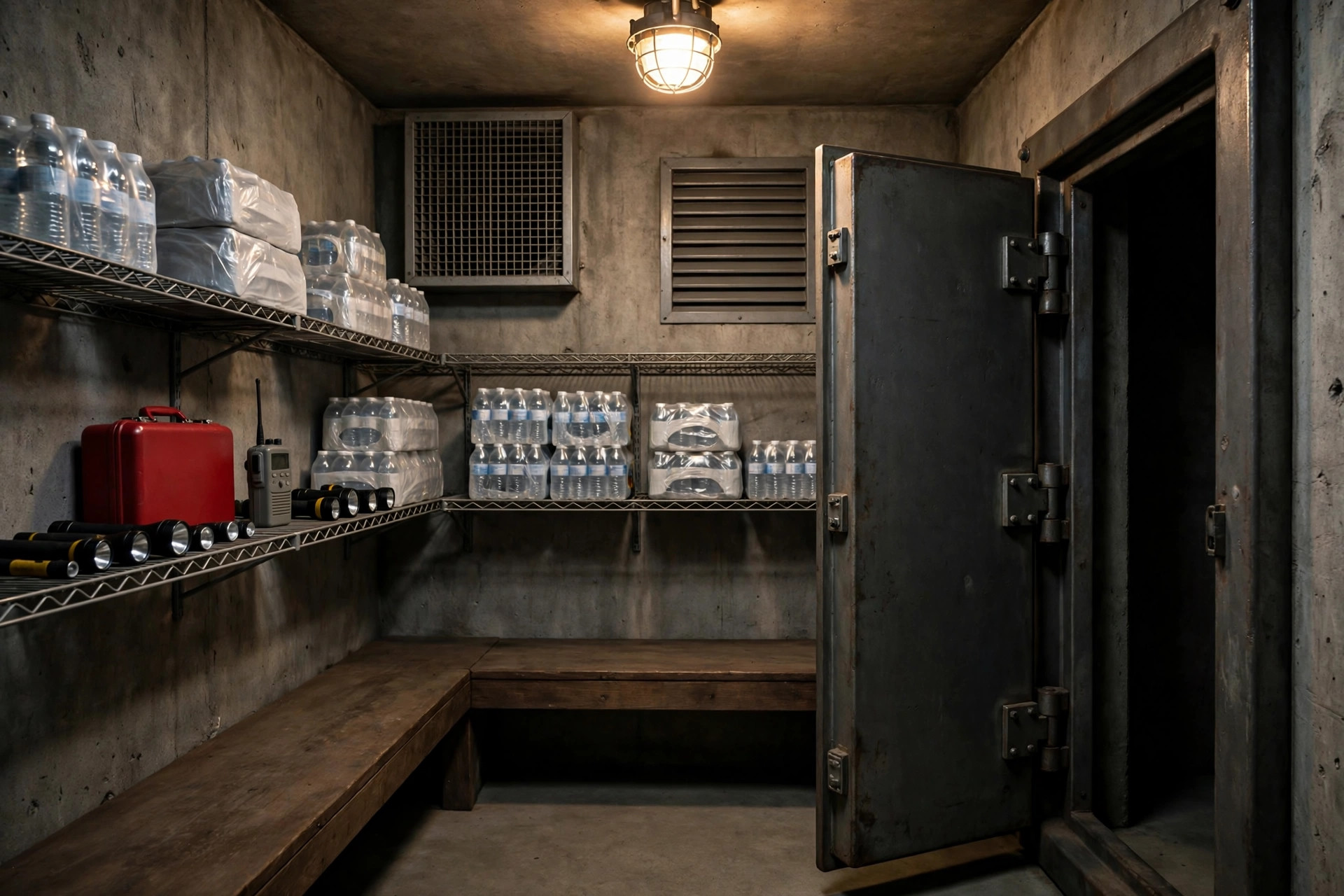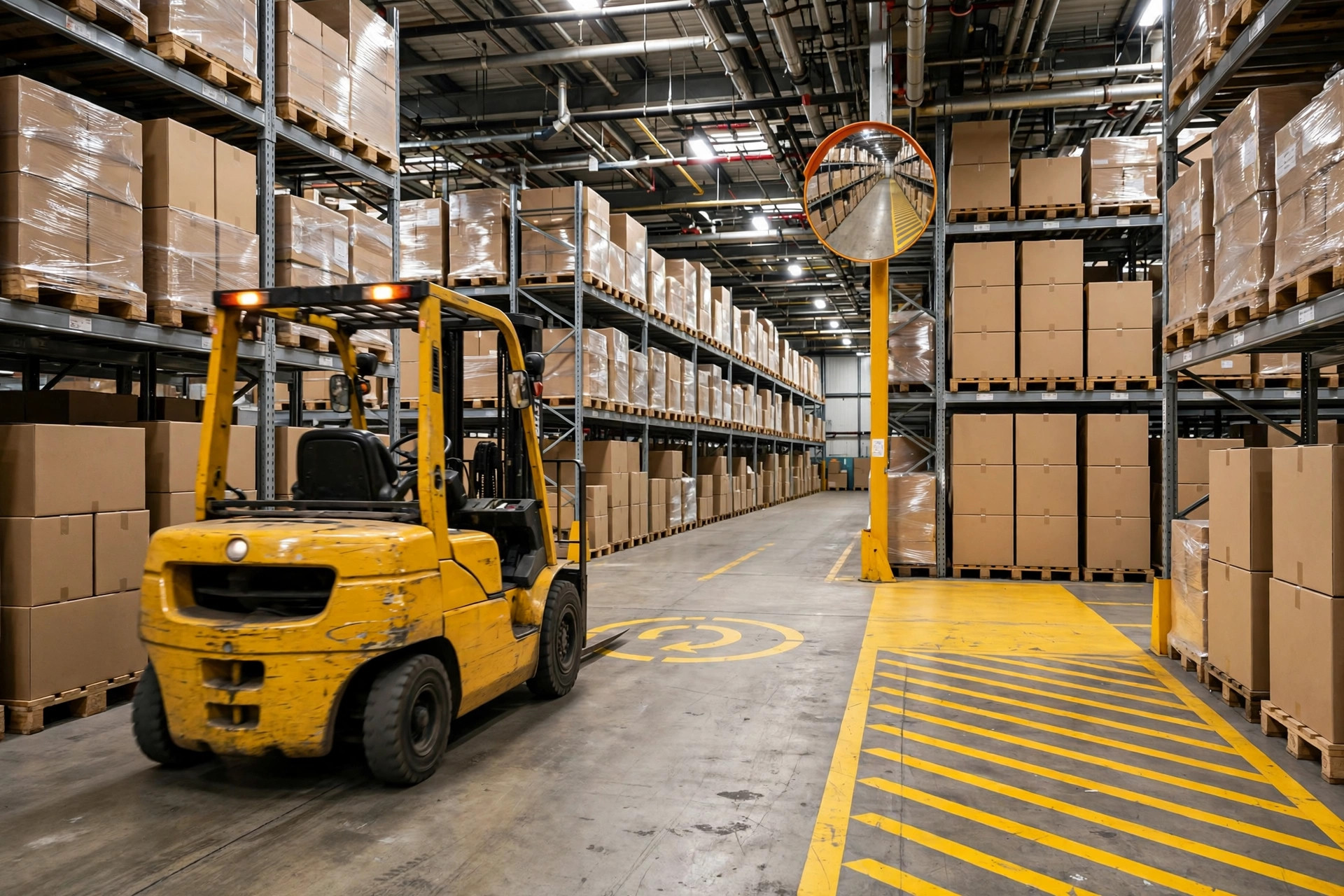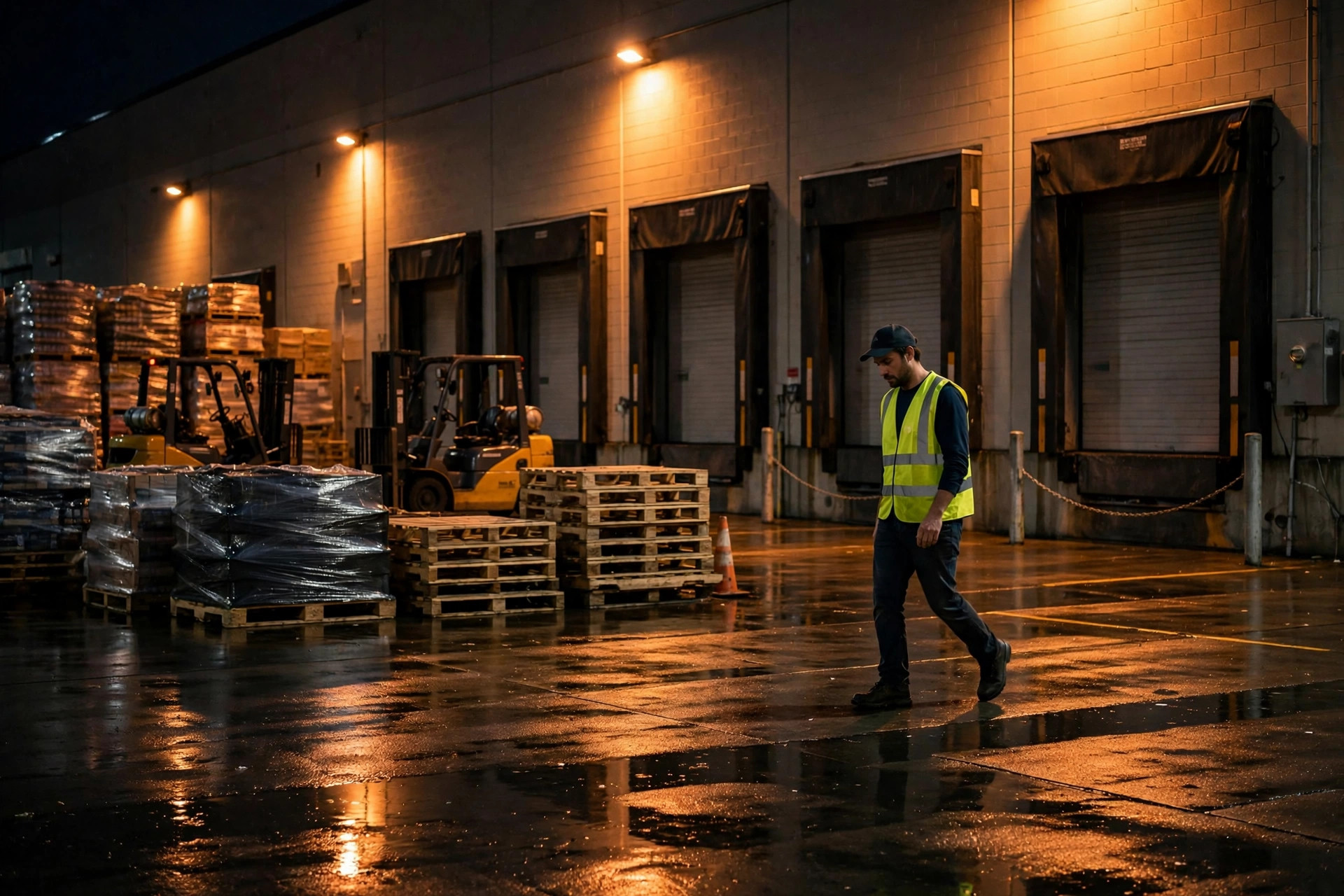
2:15 a.m., Fontana warehouse, night shift.
I happened to be there that night, going over receiving paperwork with Lao Zhou, the night-shift lead. The radio crackled: "Dock! We got two guys going at it on the dock!" We ran over. Two temps — one had shoved the other, hard hat on the ground. The whole fight was over who got to use the freshly charged forklift first. Lao Zhou separated them, chewed them both out, sent them back to work. No report, no record. Like it never happened.
Two weeks later, one of them quit. On his way out he told HR: "Never felt safe working in that warehouse." I still remember that sentence. This was August 2024, barely a month after SB 553 took effect on July 1, 2024. We had a plan back then — a Word document in a folder. It existed. Nobody took it seriously.
Real talk: the warehouse workplace violence prevention plan California requires isn't written for office workers. It's written for places like ours, where trucks roll in at 2 a.m. Here's how our warehouse spent two years turning that document into something real.
SB 553, Two Years In: The Permanent Standard Lands by Year-End
Let me get the timeline straight, because half the articles out there are still quoting 2024:
- September 30, 2023: the governor signed SB 553 into law — Labor Code §6401.9, the first general-industry workplace violence law in the country.
- July 1, 2024: effective date. Covered employers needed a written Workplace Violence Prevention Plan, a violent incident log, and employee training.
- Right now: Cal/OSHA had to propose a formal standard by December 31, 2025, and the Standards Board must adopt the final rule by December 31, 2026 — expected to become Title 8, Section 3343, most likely effective January 1, 2027.
- April 2026: Cal/OSHA released the latest revised draft. Big changes: scope now covers employer-provided transportation and housing; the small-employer exemption got nailed down tight; trauma counseling got clarified — if it's available through workers' comp or an EAP, you're covered.
The takeaway in one line: 2024 was "have something on paper." 2027 will be "do it by the standard." There's still a window of a few months to true up your plan to the draft. Better now than after an inspection.
The Three-Question Exemption Check: Don't Celebrate Yet, Small Warehouses
Every time I talk SB 553 with other managers, eight out of ten ask first: "We're under 10 people — we're exempt, right?" Real talk: the exemption is narrower than you think. Under the latest draft, all three conditions must hold at the same time:
- Fewer than 10 employees at the worksite at all times during the preceding 365 days;
- The worksite is not accessible to the public;
- Your Injury and Illness Prevention Program (IIPP) is itself compliant.
For warehouses, condition two kills it. Dozens of drivers come through your dock every day, plus visitors and couriers at receiving — that counts as accessible to the public. We learned this in 2024: someone said "night shift is only 8 people, we're exempt," and I told him to count the daytime drivers. Forty-plus a day. Exemption over.
Here's the counter-intuitive part: in a warehouse, the top workplace-violence risk isn't employees fighting each other — it's the drivers and visitors at the dock, and lone workers on the night shift. Cal/OSHA's four violence types put warehouses squarely in Type 1 (outsiders with no business relationship) and Type 2 (customers/visitors with a business relationship — like drivers). Employee-on-employee friction (Type 3) is actually the manageable one: they're your people, there are rules, there's a supervisor present. But a driver who's waited three hours at receiving, losing his temper and pounding the desk? Every warehouse has seen it.
November 2025, the week before Thanksgiving, peak season — it happened to us. An LTL driver waited nearly three hours at receiving, stormed into the office, pounded the desk, screamed at our receiver Xiao Li, and said "come outside and say that." The old way: the supervisor smooths things over, the driver leaves, done. This time we ran the plan: the shift lead logged it in the violent incident log within 10 minutes, pulled the camera footage, and the next day we did a hazard assessment. Root causes: no marked driver waiting area, no way for drivers to know how long the wait was, no radio protocol at receiving. We sent Xiao Li the EAP counseling info (free, bookable within a week). Then we painted a driver waiting zone on the dock, put up a whiteboard with estimated wait times, and gave receiving a radio. Cheap fixes — but for the first time, we closed the loop with a record, an improvement, and a follow-through.
Running the Workplace Violence Prevention Plan: One Page, Three Logs

Nobody reads a 30-page plan. Ours boils down to one page and three logs.
One page, posted in the break room and the supervisors' office: three violence levels (verbal threat / shoving / weapon), who responds at each level (shift lead / warehouse manager / call 911), and the rule that the incident log gets filled within 24 hours. Every new hire gets a 10-minute walkthrough of that page on day one, with a signature. Those 10 minutes are SB 553's "initial training," in warehouse form.
Three logs (spreadsheets now, but we still call them logs):
- Violent incident log: date, time, location, type, what happened, consequences — no personal identifying info. Kept 5 years by law; employees can request to see it.
- Training records: who, when, what — kept 1 year. Annual 45-minute refresher for everyone, done in a slow month.
- Hazard assessment and investigation records: what we checked, what we changed — kept 5 years.
Honest math: 180 people × 45 minutes a year = 135 labor hours, spread across shifts — about one skipped lunch break per person per year. The logs live on a shared drive; the cost is near zero. There's only one expensive option: not doing it and getting caught. Cal/OSHA enforces under §6401.9 directly now; check the official site for current penalty amounts, but a few days of shutdown-for-corrections hurts any warehouse more than the paperwork ever will.
And there's a trade-off worth thinking through: the more detailed the plan, the more it costs to run — but the better it protects the company when something happens. Our first version was 4 pages; a lawyer friend looked at it and said "this proves you know the law exists, not that you follow it." Now it's 18 pages — half procedures, half record templates. My take: inspectors don't grade your writing. They check whether, last time something happened, you did what the paper says. Records are what count.
Three SB 553 Reminders for Fellow Managers
First: if the warehouse workplace violence prevention plan California law made you write in a rush in July 2024 hasn't been opened since, pull it out and revise it against the April 2026 draft. Three things to check: does it cover employer-provided shuttles and transportation, is the trauma-counseling channel written down (posting the EAP number counts), and re-run the three-question exemption check.
Second: do a separate hazard assessment for the night shift. Daytime risk and nighttime risk are two different animals — fewer people, dim light, drivers showing up at 3 a.m. Our night rule now: between midnight and 5 a.m., nobody walks the dock area alone; even a bathroom run gets a radio check-in. Low-tech. Works.
Third: don't be afraid to log incidents. A lot of supervisors worry that "logging makes our warehouse look bad." It's the opposite — when Cal/OSHA visits and the log is empty, there are two explanations: you're paradise, or you're hiding things. Which one do you think the inspector believes?
SB 553, at the end of the day, forces us to turn "we used to handle it by yelling and smoothing over" into "it's on paper, on record, and someone owns it." That's what a warehouse workplace violence prevention plan California-style actually looks like in practice. A warehouse manages freight, but people move the freight — and freight doesn't move well when people don't feel safe. I still hear that sentence: "Never felt safe working in that warehouse." Don't give your people a reason to say it.
By Chen Feng, Warehouse Operations Manager