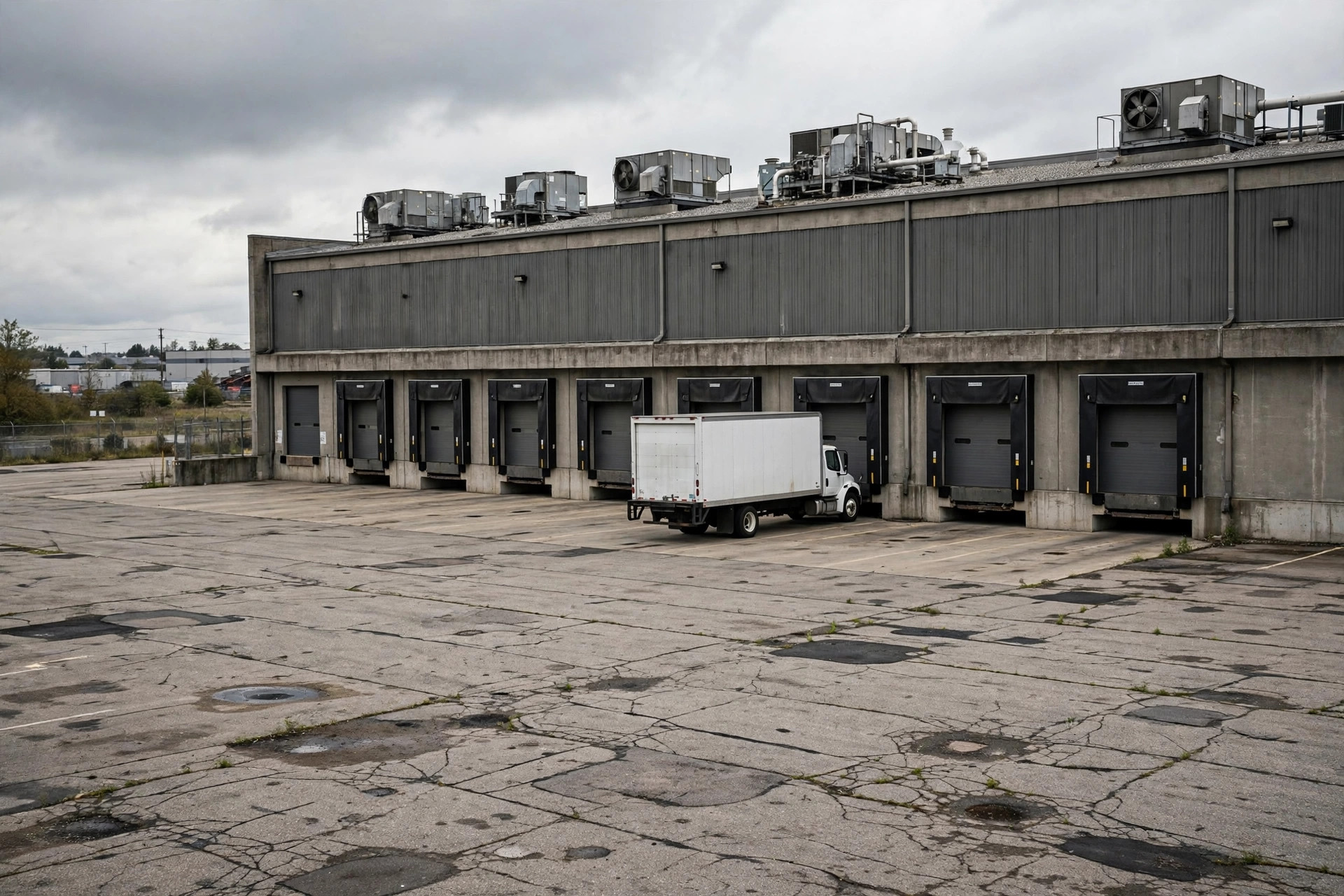
The most expensive clause in a warehouse lease is rarely the rent. It is the maintenance section that nobody reads at signing.
I have watched this play out more times than I can count. A tenant signs a lease after negotiating hard on dollars per square foot, skims two pages of maintenance language, and signs. Then the roof starts leaking. The slab starts cracking. The parking lot turns into a patchwork of potholes. And every one of those "we'll work it out when it happens" lines in the contract turns into an invoice with somebody's name on it. Here is the verdict up front: in an American industrial lease, the roof, the building structure, and the exterior walls are the landlord's problem — but only if the lease actually says so. If the big-ticket items are not pinned to the landlord in writing, you just bought them.
The landlord's side of the fence
There is a working rule in US warehouse leasing, and it is worth memorizing: the building envelope and everything tied to the building's life belong to the landlord. That means the roof, the foundation and load-bearing structure, the exterior walls, and the fire protection main systems. You are renting the right to use the building, not the building itself. When the building itself fails, the landlord pays. That part is not controversial.
What is controversial is that most leases say "landlord is responsible for structural repairs" without ever defining what counts as structural. Is a roof leak structural? Is a failing parking lot structural? The landlord will call it routine maintenance. You will call it a building defect. And that is exactly where the fight starts.
A case I handled in 2022 still sticks with me. A tenant in the Inland Empire had taken 120,000 square feet of single-story warehouse space. Three years in, an old roof seam started seeping, and during the rainy season water was dripping straight onto cartons in the racking area. The tenant called the landlord. The landlord pulled out one line from the lease — "tenant shall maintain the premises in good condition" — and argued that membrane deterioration was a maintenance issue. Four months of back-and-forth later, the tenant paid out of pocket for a partial re-roofing job that ran into the tens of thousands. One question at signing — "who replaces a worn-out membrane?" — would have put that bill on someone else's desk.
So when you read a lease, skip the headings and read the fine print. Roof repair and roof replacement are two different things, and the lease should name both: "repair and replacement of the roof system, including the membrane, shall be the landlord's obligation." Same for fire protection — mains, pumps, and the alarm panel belong to the landlord; you handle the sprinkler heads you added and routine testing. Anything tied to the building's lifespan should sit on the landlord's side of the line.
The gray zone where the real fights happen
The genuinely hard stuff lives in the middle: slab cracks, dock doors and levelers, the parking lot, and the HVAC. There is no industry-wide standard for any of these. The contract decides, line by line.
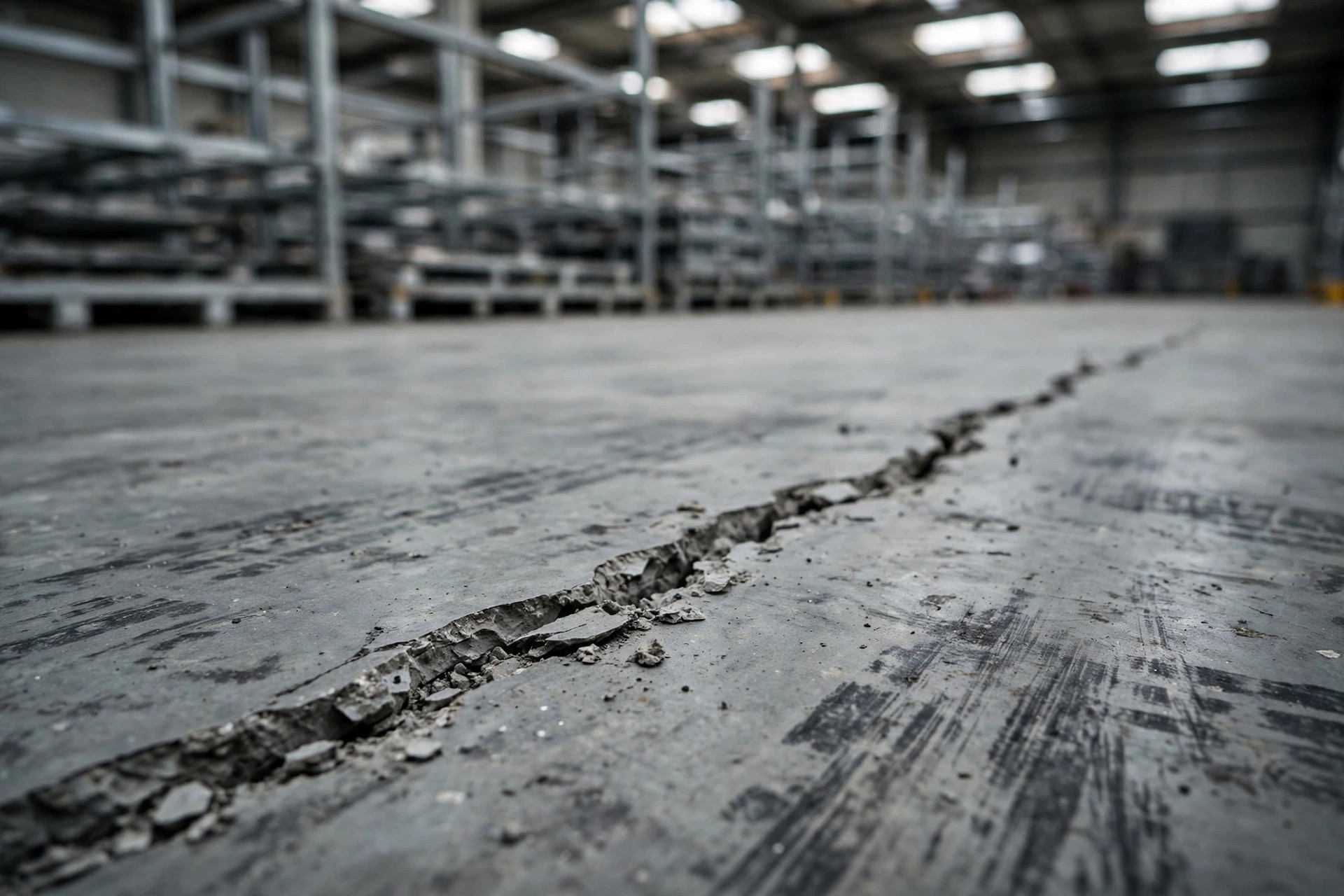
The slab is the biggest battleground. Concrete control joints crack — that is normal — but forklifts keep pounding them and the cracks keep walking. Filling a hairline crack is a tenant's job, no argument. But widespread settlement or full-depth cracking is a five-figure repair, and if the lease is silent, the tenant pays by default. The fix I always recommend: do a joint slab-condition survey with the landlord before signing, photograph everything, and write in a threshold — "structural cracks beyond an agreed width or depth are the landlord's responsibility." You can negotiate the number. You just need one.
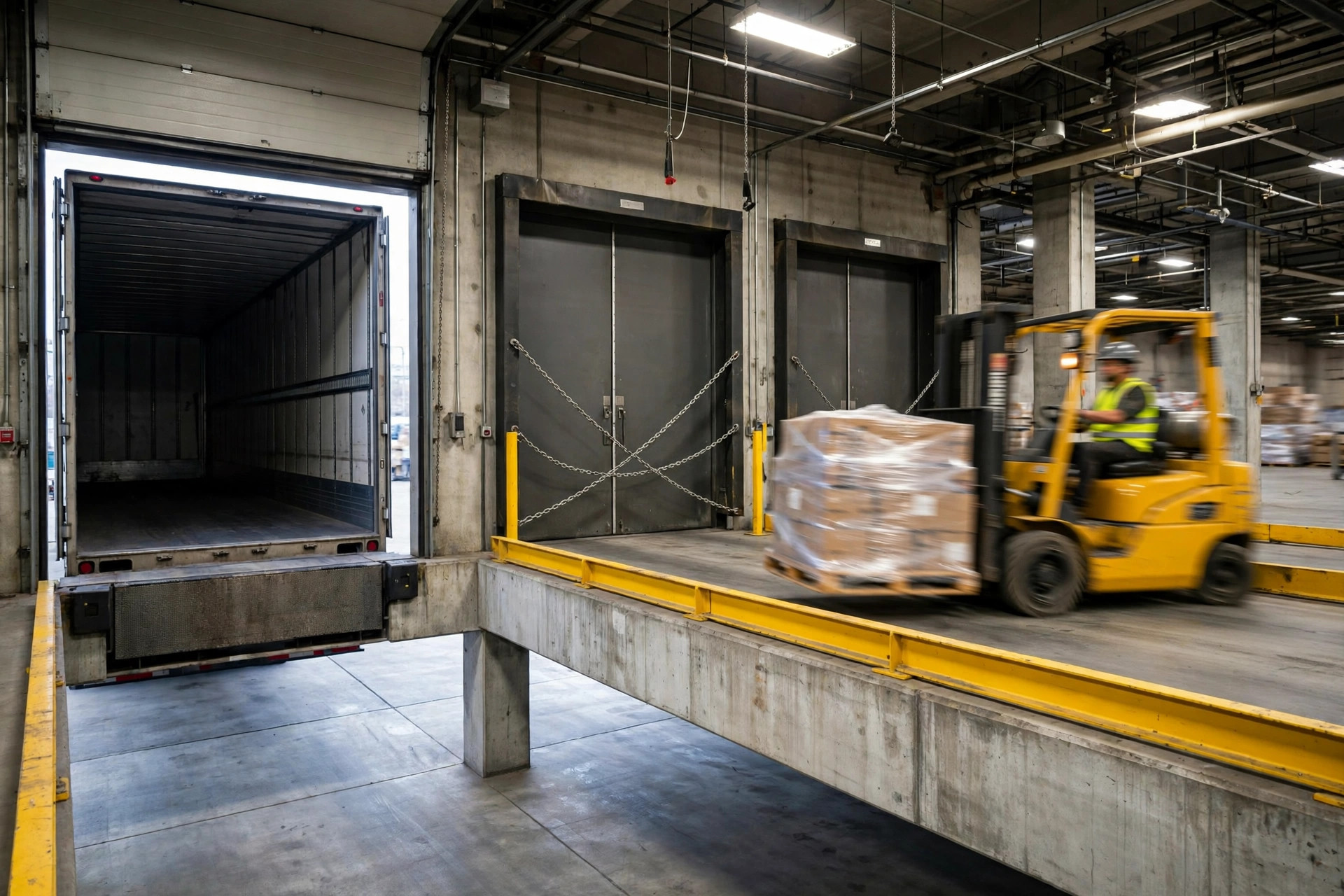
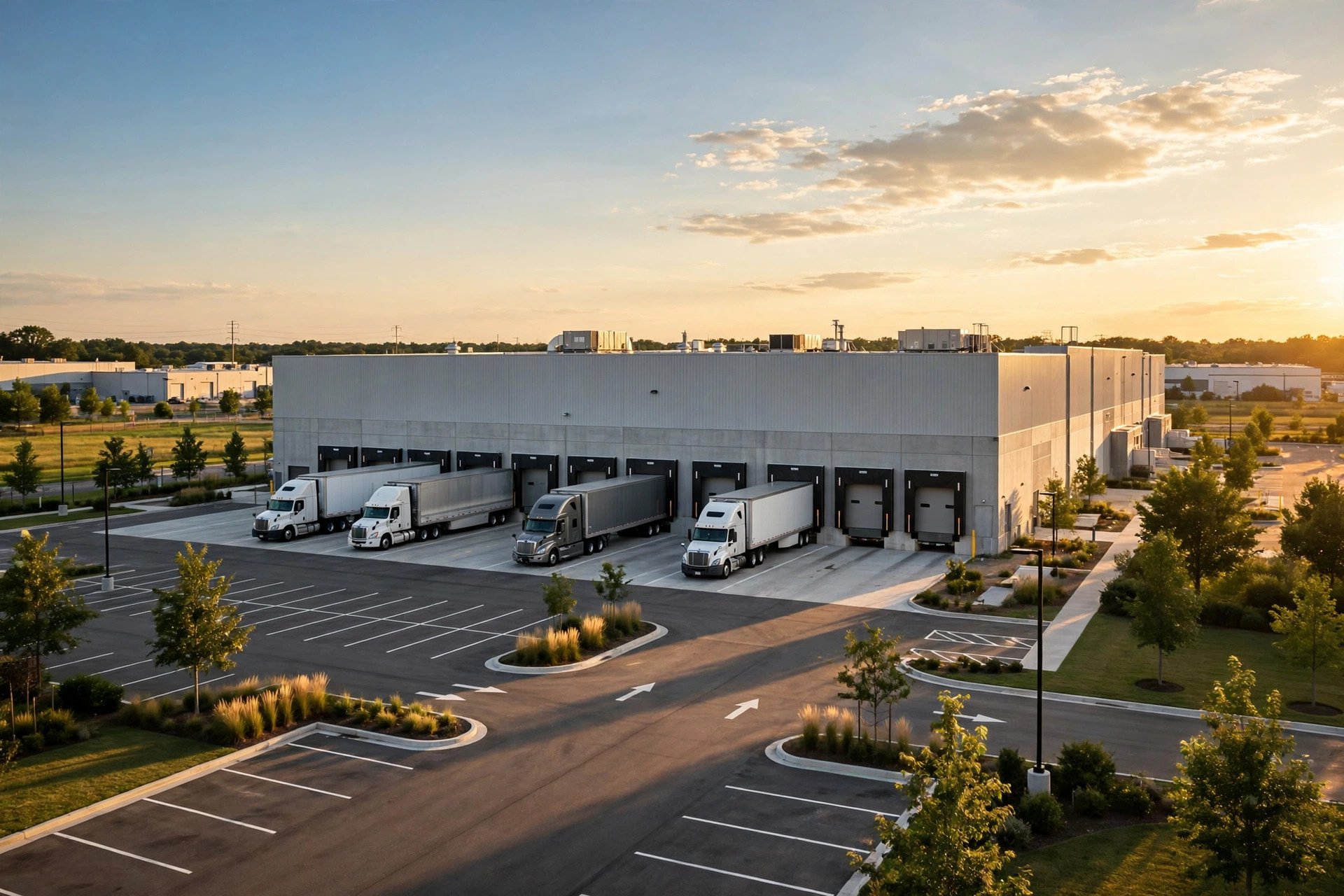
Dock doors and levelers follow the same logic. A door cycles hundreds of times a day; springs and motors are consumables, and tenant-paid preventive maintenance is fair. But a racked door frame or a leveler with a blown hydraulic system — that needs a conversation. The parking lot is the classic example: crack-filling and restriping are tenant chores, while a full resurface is the landlord's. Here is the trap many tenants miss: in a triple net (NNN) lease, day-to-day lot maintenance often gets folded into common area charges that you already pay pro rata — but the capital cost of a resurface belongs to the landlord. If that distinction is not written down, you can end up paying both the CAM share and the resurface bill.
HVAC is the sleeper. A rooftop unit replacement is a five-figure line item, and the lease must split it explicitly: filters and routine service are the tenant's, but compressor failure and full unit replacement need a named owner. I have seen landlord-drafted templates hand the entire "HVAC system maintenance" paragraph to the tenant. Tenants sign without reading closely, the compressor dies in year three, and the bill arrives like an ambush.
Three things to do before you sign
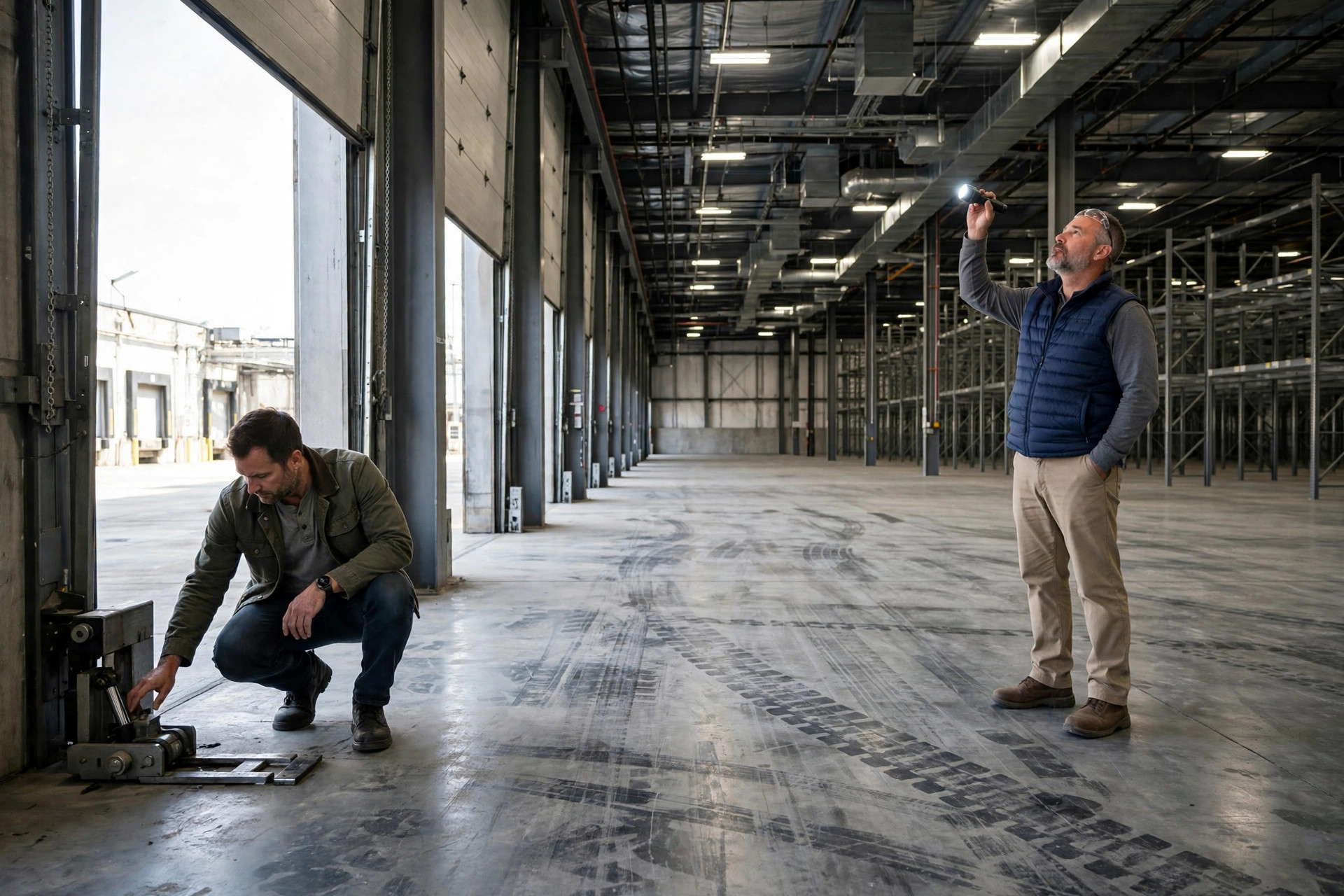
No lease language beats walking the property yourself. Whenever I tour a warehouse with a client, I insist on three things.
First, get on the roof. Look for blistered membrane, patched seams, clogged drains, and standing water stains. Take photos of everything — they become your evidence of pre-existing conditions. If the roof is old and patched over patches, demand a full landlord-funded inspection and repair before handover, written into the lease.
Second, visit during a heavy rain. A building with bad drainage will tell you everything in one storm: ponding at the dock aprons, water creeping under the doors, grade sloping the wrong way. You learn about drainage, topography, and threshold heights in a single visit.
Third, put the responsibility schedule in the body of the lease, not in an exhibit. Exhibits get quietly "updated" at renewal; clauses in the body survive. Make it painfully specific: roof, structure, exterior walls, and fire mains to the landlord; interior finishes, racking, and routine repairs to the tenant; every gray-zone item decided one by one. Two hours spent arguing over that schedule before signing will save you two months of arguing after the roof leaks — and one very large invoice.