The day I signed my lease, the landlord's lawyer slid the contract across the table and said, "Just take one more look at the insurance section." My first thought: insurance section? That's just the rental-car upsell, right — "would you like the full coverage?"
Then I opened it. Two full pages: commercial general liability at $1M per occurrence / $2M aggregate, the landlord named as an "additional insured" on my policy, waiver of subrogation, 30 days' written notice before any cancellation... My little warehouse had never seen anything like it. And my first reaction wasn't "is this clause fair" — it was: how much is all this going to cost? Because let me tell you, our small operation cannot afford to burn money.
Here's the punchline up front: most of the insurance your landlord makes you buy is really bought for them. You pay; they sleep well. But there are a few money-saving gaps hidden in those clauses, and small warehouse owners need to dig them out themselves.
Our Predicament: A Renewal Addendum With a Premium Attached
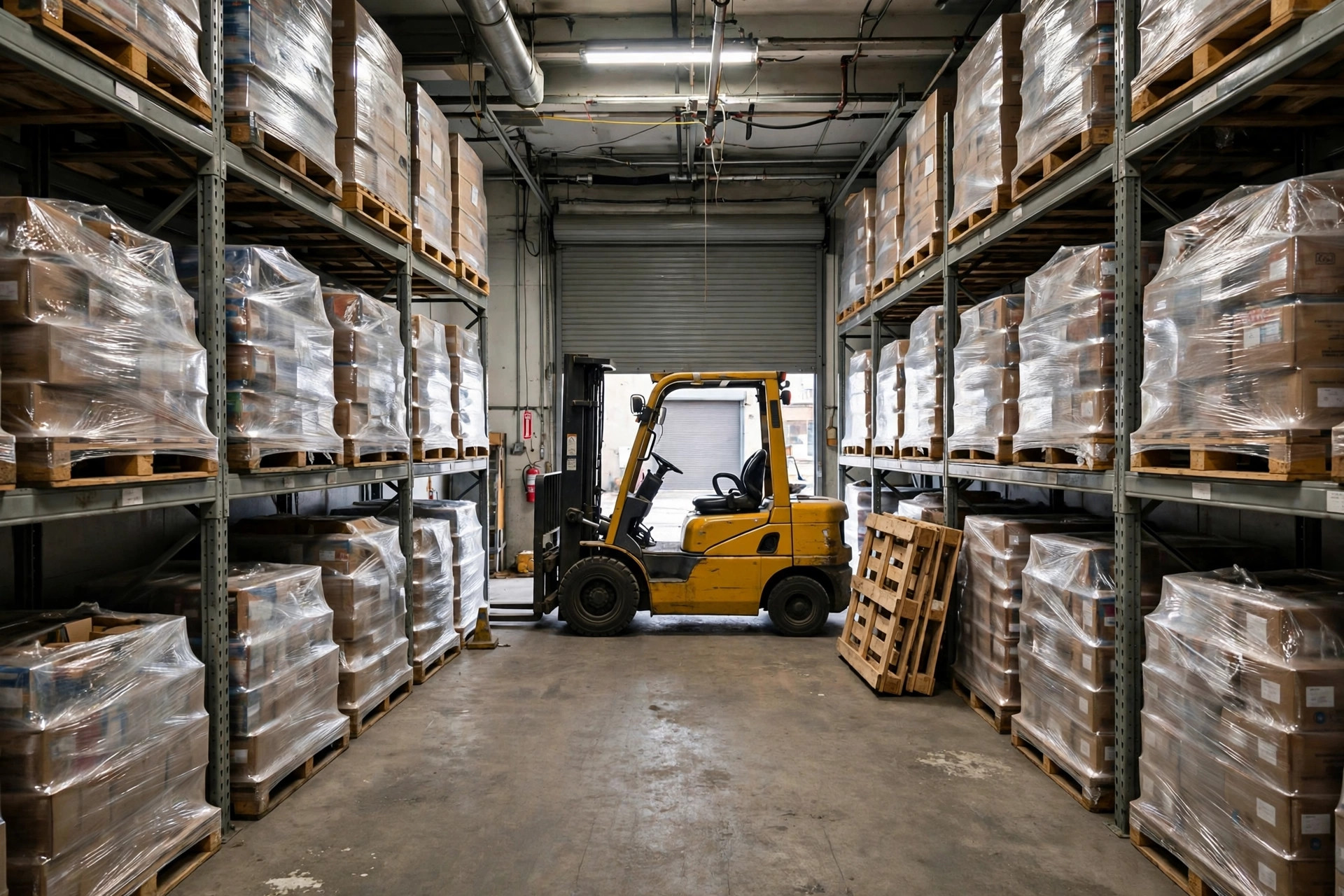
In early 2024, we renewed the lease on our 3,000-square-meter (about 32,000 sq ft) warehouse in California's Inland Empire. The landlord had brought in a new asset management company, and their first move was to "standardize the lease." The renewal addendum came stuffed with a full insurance package: CGL at $1M/$2M as the baseline, plus warehouse legal liability insurance (covering customers' goods stored in my building), plus a requirement to email proof of insurance to their compliance inbox within 15 days of every renewal.
I already had a general liability policy — a few hundred dollars a year, nowhere near those limits. One call to my broker: bumping up to $1M/$2M and adding warehouse legal liability multiplied my annual premium several times over.
What I learned later: the $1M/$2M requirement is the standard opening bid in American commercial leases — most landlord templates read exactly like that. It's not personal. But "standard" doesn't mean "non-negotiable."
A Friend's Expensive Lesson: The Year He Got Burned by Umbrella Insurance
In 2025, a friend of mine who runs a small warehouse near Dallas, Texas — roughly 2,000 square meters — signed a new lease. Alongside the usual clauses, his lease had one extra line: $5M in umbrella (excess liability) coverage.
His thinking at the time was "the landlord says buy it, so buy it — don't hold up the signing." He had his broker quote a $5M primary policy. His annual premium shot way up, and it hurt for the entire year. Then over drinks at year-end, he told me he'd had an independent broker review the lease. The actual wording was "CGL at $1M/$2M, plus umbrella to reach $5M total" — meaning he could keep the primary at $1M/$2M and stack a much cheaper umbrella on top to hit $5M. He never needed a $5M primary policy at all. After switching, what he saved in a year would buy dinner for his whole crew three times over.
The lesson is simple: read the landlord's clauses word by word, and question your broker's first quote line by line. Quoting the most expensive, least-effort option is the broker's instinct. Saving money is yours. You have to show up for it.
What Does the Landlord Actually Want? One Table Explains It
I broke down the typical warehouse lease insurance clauses into a table — what the landlord asks for on the left, how a small operator should think about it on the right:
| Common landlord requirement | What it actually means | The small-warehouse workaround |
|---|---|---|
| CGL $1M/$2M | Someone slips in your warehouse, your pallet damages someone else's property — the insurer pays. This is the standard limit in US commercial leases | This is the floor — comply. But get quotes from at least 3 independent brokers; identical limits can come back priced nearly 2x apart |
| Landlord as additional insured | The landlord can file claims and hire lawyers directly under your policy. You pay the premium; the protection is theirs | The endorsement usually costs little or nothing to add, but confirm it only covers incidents tied to your leased premises — don't underwrite the landlord's troubles elsewhere |
| Waiver of subrogation | After your insurer pays a claim, it can't turn around and sue the landlord to recover | Standard practice — accept it. But push for the landlord's policy to waive subrogation against you too. Reciprocity is only fair |
| 30-day cancellation notice to landlord | If you drop coverage, the landlord finds out first | Have your broker write the notice clause into the policy — typically free |
| Property insurance (your goods and improvements) | Fire or flood wipes out your inventory; the insurer pays replacement cost | Buy based on your actual inventory value, not whatever number the landlord threw in. If your stock swings hard between peak and off-season, negotiate reporting-form coverage |
| Warehouse legal liability | Customers' goods in your custody get lost or damaged — you're on the hook, and the insurer covers you | A must if you do 3PL. Pure self-storage operators can evaluate, but if the lease says it, you buy it |
| Workers' comp | Employee injured in the warehouse — required by state law (rules vary by state) | That's the law's business, not the landlord's. Buy what your state requires, no shortcuts |
Read that table and it clicks: the core logic of landlord-required insurance is "your accident must not become my problem." Additional insured, waiver of subrogation, cancellation notice — that whole trio is the landlord's body armor, and you're paying for all of it. That's not a conspiracy theory; it's business reality. Why would someone hand you a multimillion-dollar property and volunteer to share your risk?
Here's the counterintuitive part: plenty of small operators think "more insurance is always better, higher limits mean safer." For a small warehouse, overbuying insurance burns money just as surely as buying none. Going from $1M to $2M might barely move the premium; going from $2M to $5M is a completely different slope. Landlord templates are written for big tenants. The small operator's job is: meet the lease minimums to the letter, spend zero above them, and redirect the savings into the coverage that actually protects you — your inventory, your forklifts, your lost income if you have to shut down.
Four Cheap Tricks That Actually Work for Small Warehouses
Big companies have risk management departments. Our small warehouse has me and my calculator. Here are four field-tested moves:
First, shop around — and use independent brokers. Buying straight from an insurer's website is like only checking one store's price. An independent broker pulls quotes from a dozen carriers at once. When I compared three, the highest quote for identical $1M/$2M limits was nearly double the lowest. Insurance is a highly shoppable product. Don't be shy about haggling.
Second, raise your deductible sensibly. The deductible is what you pay out of pocket before insurance kicks in. Moving it from $1,000 to $5,000 can shave a real chunk off the premium. A small warehouse might go a whole year without a single claim, so trading "higher self-retention" for "lower fixed cost" is a good deal — as long as you genuinely have that $5,000 sitting in the account. Don't play hero with money you don't have.
Third, bundle. Liability plus property packaged as a Business Owner's Policy usually costs meaningfully less than buying each separately. Same logic as the combo meal versus ordering à la carte. Just confirm every line item still meets the lease minimums before you sign — don't buy a watered-down bundle to save a buck.
Fourth, review the insurance section 60 days before every renewal. Plenty of landlords quietly raise the bar in renewal addenda — an umbrella this year, an extra clause next year. Once you sign, that premium is yours. My routine: 60 days before renewal talks, I pull the insurance section out on its own and have my broker mark every line "must buy," "negotiable," or "skip." Then I walk into the negotiation with that sheet.
One last honest word: small operators fall into two traps with insurance. One is "save wherever possible, run naked." The other is "buy whatever the landlord says, no questions asked." The first is gambling with your life; the second is burning money. The right path is the narrow middle: meet every one of the landlord's minimums without fail, spend nothing above them, and use the savings on the coverage that genuinely protects you.
Small warehouses have their own way of surviving — big companies review contracts with a legal department; we do it with a calculator and the shameless habit of asking one more question. Same result, a fraction of the cost.
By Xiao Ma, Small Warehouse Owner