"Sign for three years, and I'll throw in two months free."
The landlord waved his hand like he was doing me a massive favor, and I nearly bowed on the spot. We run a 3,000-square-meter warehouse — cash flow measured in days, not quarters. Two months of free rent? That's serious money. Who says no to free money?
Then I took the contract home and ran the numbers three times on my calculator. Got colder with every pass. Those two "free" months didn't cost the landlord a cent — and they came with three traps baked right in. This one's for every small warehouse operator who goes weak at the knees when they hear the words "free rent."
Trap 1: The Free-Rent Clock Starts on Signing Day — Your Renovation Burns It
Our first lease, signed in early 2023 in Suzhou: 3,000 square meters, 60 days free, with the dreaded line "commencing from the date of signing."
Then came the buildout: floor repairs, racking installation, fire inspection approval. The fire inspection bounced once over sprinkler retrofits. Forty-five days evaporated before we could move a single pallet in. Of our 60 free days, barely two weeks were left.
Sit with that for a second: 45 days of empty warehouse, zero revenue, while the "free rent" burned away on paper, second by second. At roughly 1 yuan per square meter per day (a ballpark for the area — check your local market), that's over 130,000 yuan. Gone. Didn't even make a sound.
The industry has a name for this: the commencement-date game. Of course landlords want the clock to start at signing — the earlier it starts, the more generous they look, and whether you can actually use the space is your problem. Some contracts go further and tie free rent to rent escalation: year two jumps 5%, calculated off the "original" rate before the free-rent discount. So part of what you "saved" in year one gets quietly clawed back in year two.
The scrappy fix: These days I insist the free-rent period starts on "the date fire inspection is passed" or "the date Party B actually moves in" — picked one, written into the contract, zero ambiguity. Plus one more line: "if delays are caused by Party A (the landlord), the free-rent period extends accordingly." Landlords always shake their heads at first. Then I hit them with: "I can't control the inspection timeline — is that really unreasonable?" It usually gets agreed. And honestly? A landlord who won't agree is telling you he's desperate to get you signed early. That's a warehouse you don't need to rush on.
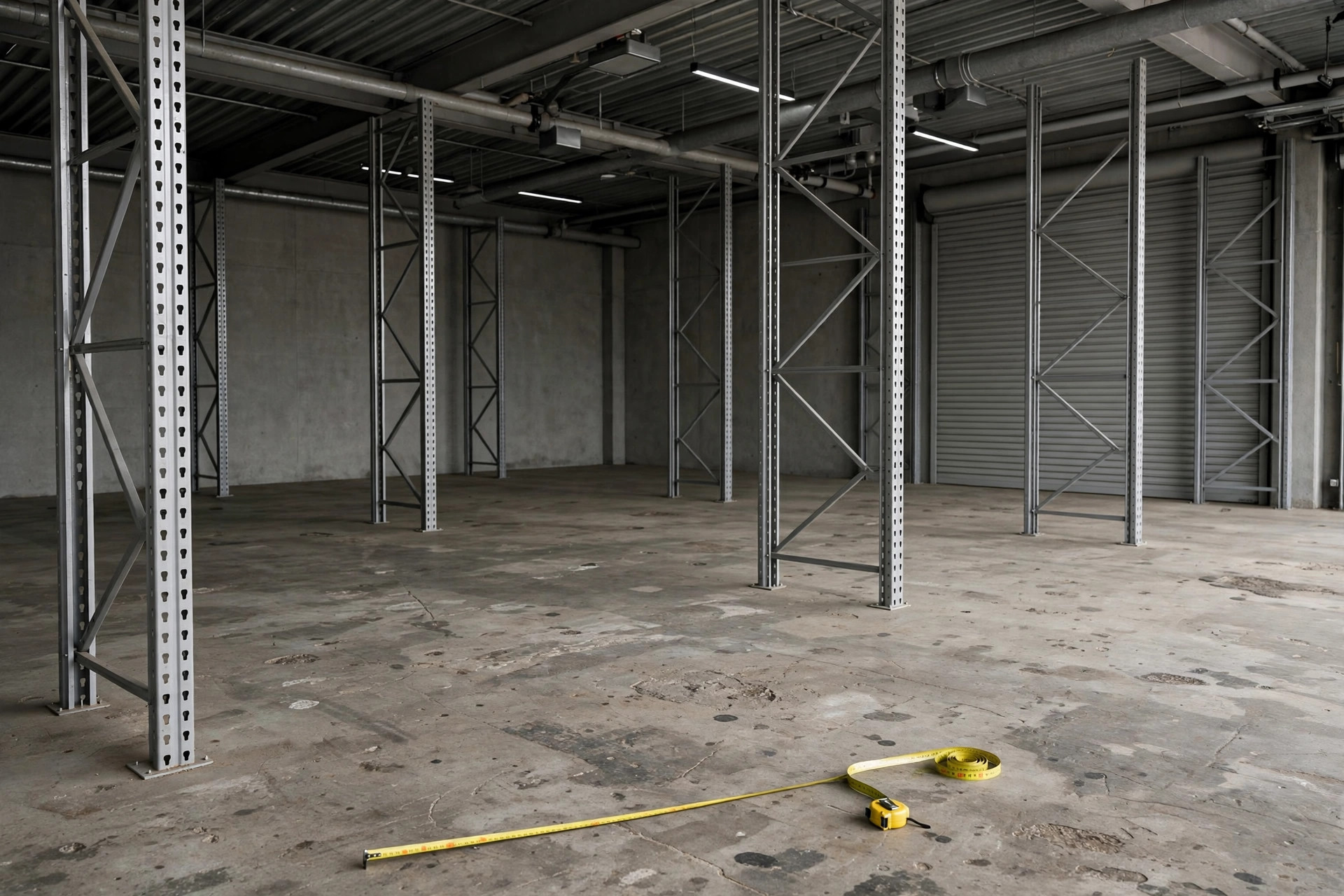
Related habit: bring a tape measure before you sign. Our landlord quoted 3,200 square meters gross; after common-area deductions, the space that could actually hold racking was 2,700. Free rent was "given" on 3,200 square meters, and rent is charged on 3,200 square meters. Measure or don't — the difference comes straight out of your pocket. Small warehouses like ours can't afford to burn money on phantom square meters.
Trap 2: They Raise the Rent First, Then "Give" It Back to You
This one's the slickest of the three.
My neighbor Lao Wang runs a warehouse about our size. His landlord gave him "3 months free" at 1.1 yuan per square meter per day. Wang told everyone he'd scored an amazing deal. I'll admit, I felt a little jealous at the time.
Then I ran the numbers for him over a 5-year lease on 3,000 square meters:
| Wang's "3 months free" | Our "no free rent, lower rate" | |
|---|---|---|
| Daily rate | 1.1 yuan/sqm/day | 1.0 yuan/sqm/day |
| Free rent | 3 months | none |
| 5-year total | about 5.70M yuan | about 5.48M yuan |
| Effective rate | about 1.04 yuan/sqm/day | 1.0 yuan/sqm/day |
(Figures estimated at the roughly-1-yuan ballpark — check your local market for actual rates.)
Wang went quiet. The playbook is simple: inflate the rate by 10%, then "give" you two months — the gift is made entirely of the extra money you already paid. Over five years, that's 200,000+ yuan extra, all to purchase the warm feeling of getting a bargain. It's like paying for your own dinner and then thanking the chef.
Here's the counterintuitive read: the more generous the free rent, the worse the property is leasing. A landlord offering 3 months free has probably been sitting vacant for half a year — which means your negotiating leverage is way bigger than you think. Push for a lower rate instead of free months. For a small warehouse, a lower rate pays off for five full years; free rent is a one-time placebo. Placebos don't cure cash-flow anxiety. Lower rates do.
The scrappy fix: convert every quote to the same denominator — total rent divided by total months equals true monthly cost. When the landlord says "two months free," I reply: "Great — then let's talk total price over 60 months and bring the rate down to X." Translate "free" into "discount," and the theater falls apart. This move has never failed me. The moment a landlord realizes you can do math, the quotes suddenly get three points more honest.
Trap 3: Want Out Early? Spit the Free Rent Back First
This one nearly killed us in 2022.
Business was rough and I started thinking about breaking the lease. Dug out the contract and found a lovely little line buried in the termination clause: "If Party B terminates early, Party B shall repay the free-rent period rent and pay 3 months' rent as penalty."
The math: repay 2 free months (about 180,000 yuan) + 3 months penalty (about 270,000) + the deposit was as good as gone. Exiting would cost nearly half a million in breakup fees. We couldn't afford it. So we gutted it out. For six months I walked into that warehouse every morning feeling like I was visiting a grave.
Big companies have legal departments that read every line. Small warehouses don't — the landlord hands it over, we check the total looks about right, we sign. And the free-rent clause is exactly where small operators get hurt worst: the lock-in cost hides inside the very clause that made you happiest ("two months free!"). The candy coating goes down sweet; the cannonball comes free with it.
The scrappy fix: my termination clause template now has two lines. First, cap the free-rent repayment — "repayment shall not exceed one month's rent." Second, pro-rata forgiveness — "no repayment required if terminated after 2 years of performance." If the landlord won't take the second, at least get the first. The logic is dead simple: after two years of rent, they've earned back that "gift" many times over. What exactly am I supposed to be spitting back?
Four Scrappy Rules for Small Warehouses Like Ours
First, always convert quotes to true monthly cost before comparing — rate, free rent, escalations, all folded into one table. One table exposes every trick.
Second, the free-rent clock starts on the inspection-pass date, with extensions for delays — in the main contract body, not a side letter. Side letters have a funny way of getting "lost."
Third, cap free-rent repayment in the termination clause and add pro-rata forgiveness. This is a small warehouse's life insurance. It's awkward to negotiate at signing; it's devastating to need at exit.
Fourth, bring a tape measure before signing. Verify the area, clear height, and column spacing yourself. Don't trust the brochure. The brochure's numbers are advertising; your numbers are costs.
Did it work? On our second negotiation, we got the rate from 1.15 down to 1.02 (local ballpark figures), 45 free days starting from the inspection-pass date, and repayment capped at one month. Over five years, the savings covered two new forklifts.
Big companies lease warehouses with lawyers, consultants, and leverage. We have none of that. But small warehouses have their own way of surviving: calculate precisely, negotiate shamelessly, and read every single line of the contract. Take the landlord's "gift" with a smile — but do your own math.
By Xiao Ma, Small Warehouse Owner