Here's my verdict up front, no hedging: over the next three years, the warehouse jobs AI reshapes first won't be the forklift veterans — it'll be the office folks who live in spreadsheets, documents, and phone calls. My timeline runs to 2028: task-based white-collar roles get absorbed first, frontline physical jobs get reworked into human-machine collaboration, and a batch of entirely new roles shows up that didn't exist before.
Why am I confident enough to call it? Three reasons. First, the cost math already works: frontline warehouse wages in much of the US have reached around twenty dollars an hour, so one round-the-clock position costs well into six figures a year, while an AMR doing fixed work — or an AI customer-service seat — already annualizes below that. Second, the technology hit an inflection point: vision models can read damage and labels, language models can write emails and build rosters; what remains is plumbing those capabilities into business systems. Third, the labor shortage is real: every peak season for five years running, warehouses couldn't hire enough people, and management's question shifted long ago from "should we automate" to "which thing first."
This isn't AI hype. If anything, my point is the opposite: the jobs being reshaped most are the ones that looked respectable from a desk chair.
The Paperwork Jobs Are Already Fading
Look at what's already happened. Shipment tracking was the first to fall: a customer calls asking "where's my freight," and it used to take a rep opening the WMS, calling the warehouse, and calling back. Plenty of 3PLs now run AI agents that read in-transit status straight from the system and answer in natural language; routine tracking calls barely touch a human anymore. The reps didn't get fired — but one rep now covers two or three times the accounts they used to. That's restructuring: not zero people, the same people doing multiples of the work.
Rostering and order review are next. Warehouse scheduling has a fixed set of variables: the order forecast, historical throughput, employee skill tags, the overtime budget ceiling. Since 2024 I've watched several mid-size 3PLs generate first-draft rosters with AI tools, with supervisors only handling exceptions. What used to be a clerk's entire afternoon with a spreadsheet is now a fifteen-minute first draft. Order review is the same story: the system auto-matches orders against inventory, only exceptions get kicked to a human, normal orders flow straight through.
Then there's data entry and reconciliation. Supplier delivery notes, carrier invoices — someone used to key them in line by line. Vision plus language models now read the documents and reconcile automatically; a human only looks when a variance crosses a threshold. An importer I know still employed two full-time reconciliation clerks in 2023; by 2025 there was one part-timer left doing spot checks. That other salary is just gone.
What these roles share: the inputs and outputs are structured information, the decision rules can be written down, and mistakes are traceable. AI doesn't need robots or a facility retrofit to take this work — one computer and one API connection does it. That's why they're first in line, and it's not unfair.
Forklift Drivers and Pickers Change How They Work, Not Whether They Work
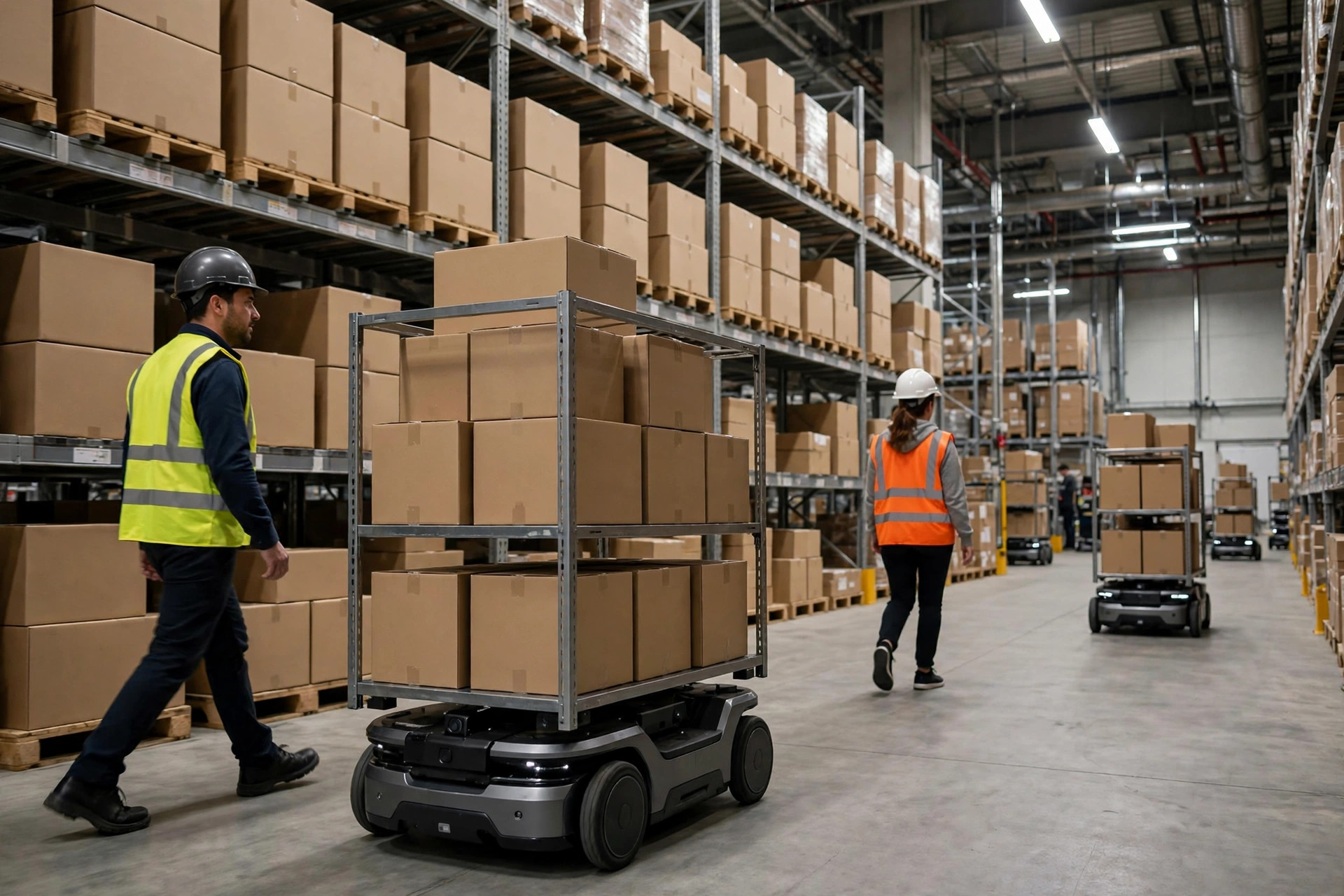
Now the floor. A lot of people worry AMRs and robotic arms will wipe out pickers and forklift drivers entirely. My call: not within three years — but how the work gets done changes a lot.
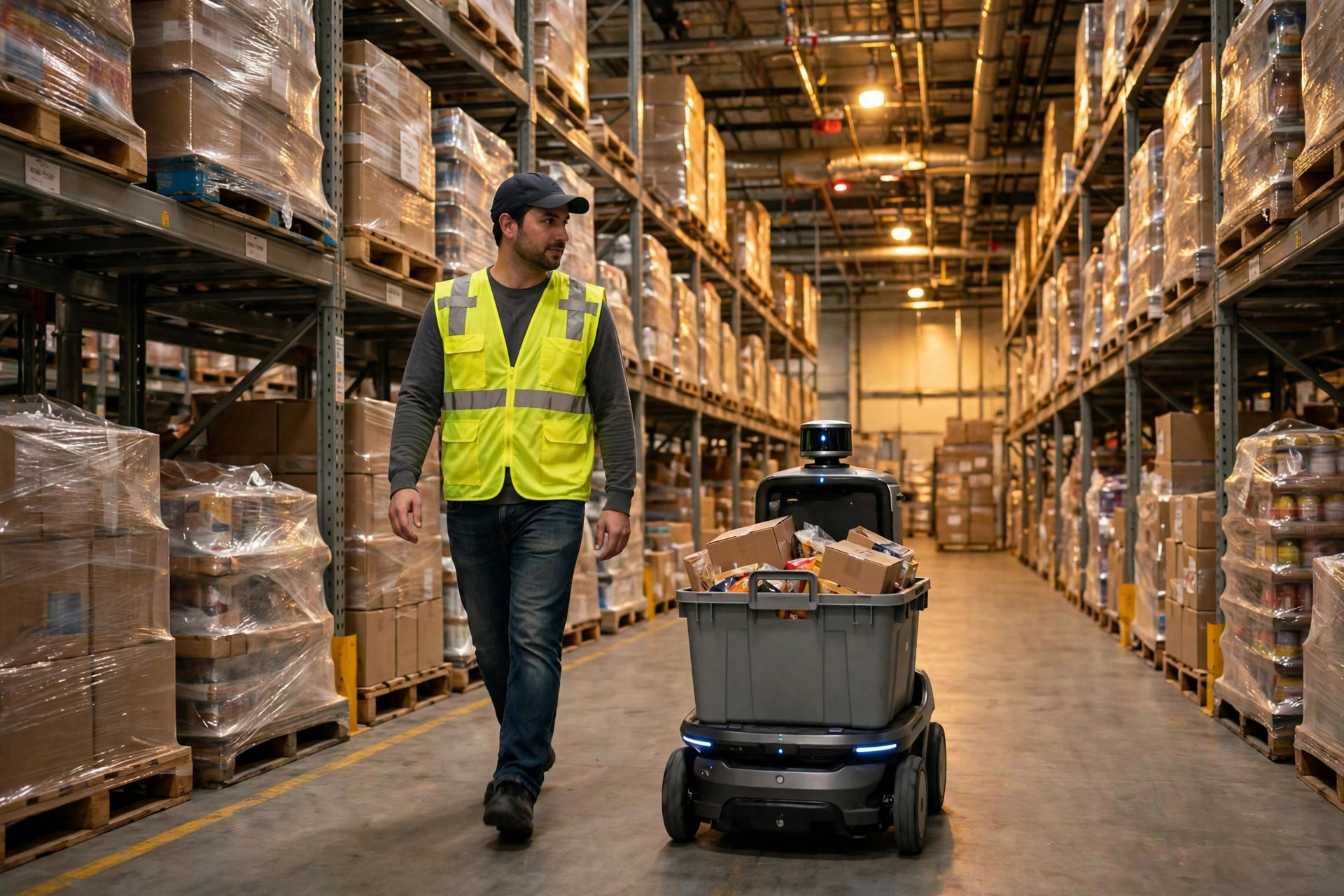
Take picking. Boston Dynamics' Stretch unloading robot, Symbotic's full-pallet automation for big retailers — these are real, and they're running. But they eat the standardized, repetitive, high-volume scenarios: full pallets in and out, fixed transport routes. The e-commerce warehouse with three items per order, tens of thousands of SKUs, and every package shaped differently — robots still can't match human flexibility and speed there. Over the next three years, picking becomes human-machine collaboration: the AMR brings the shelf to the person, and the human does only the final grab and the judgment call. Walking and carrying time gets eaten by the machine, picks per hour go up, headcount shrinks — but the role doesn't vanish.
Forklift operators are a special case. The hard part of driving a forklift was never "driving" — it's judging a dynamic environment: straighten that leaning pallet or not, who yields in a busy aisle, whether that carton six meters up is stable. Autonomous forklifts already run fixed routes, but in a busy mixed-traffic zone, full autonomy has a long way to go. My read is the role splits over the next three years: some operators become equipment supervisors, watching several autonomous trucks and handling exceptions; and the most experienced veterans actually get more valuable — the trickier the job, the more experience matters.
Meanwhile new roles are appearing, and they already are: robot maintenance, system exception handling, data labeling, process optimization. The more machines you have, the more people you need who understand both the warehouse and the systems. I know a traditional warehouse that deployed AMRs in 2024; the scarcest resource that first year wasn't the money for the machines — it was finding someone who could read a WMS report and wasn't afraid to tune a robot parameter. They ended up growing that person from a veteran employee. These new roles consistently pay a step above the old frontline jobs.
So the real picture of warehouse labor over the next three years: office task roles contract, frontline physical roles go collaborative, and a new middle layer grows — people who understand equipment, systems, and data. Total headcount probably drops. But the people who stay do work that's worth more.
One question to take with you: in your warehouse, whose job is closest to "copying data from system A into system B"? Find that person and look at where their hours actually go — the first knock of AI will most likely land on them. Figuring that out matters more than buying any AI system.