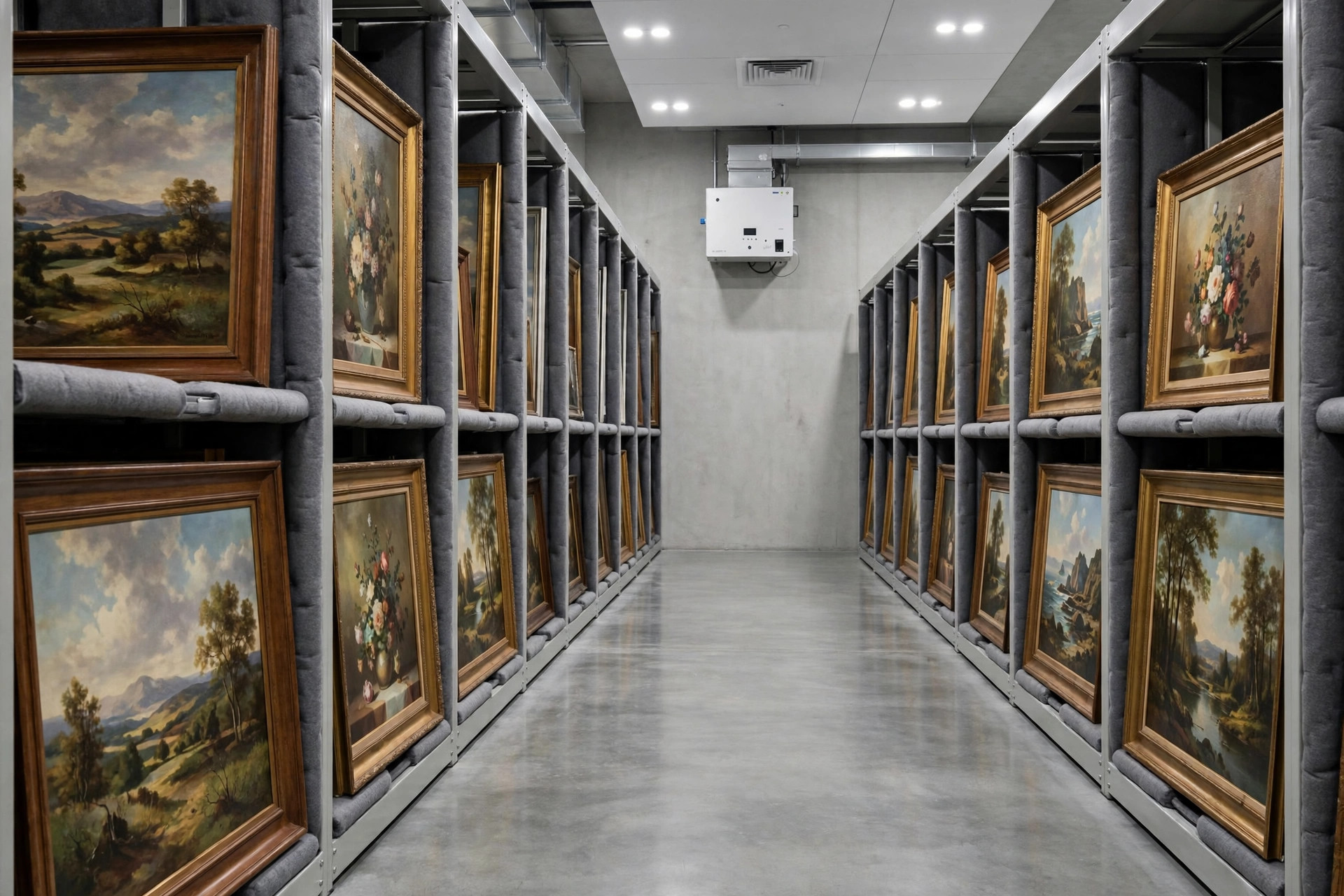
We have a client in the Inland Empire leasing 80,000 square feet for home-goods distribution. Last October his renewal quote landed on his desk, up more than 20% over the prior year. His first words on the phone: "Susan, are you 3PL folks getting hit with this too?"
Oh, we're getting hit. Our own buildings go through the same fight every renewal season. But after enough of these cycles you learn something: a renewal premium is never simply "calculated" by the carrier. It is negotiated. Same building, same inventory — one operator takes a 30% hike, another takes 10%. The difference isn't luck. It's what you did in the three months before renewal.
One caveat before we start: every increase figure below is an order of magnitude we've seen in recent years, not a quote. Your numbers are whatever your policy and your broker say they are.
Know Who's Across the Table: The Carrier and Your Broker
Most people think the negotiation is with the insurance company. That's only half right. You're actually negotiating with two parties: the carrier, and your own broker.
The carrier first. Warehouse property premiums have been climbing for straightforward reasons: several years of wildfire, hurricane, and hail losses stacked up, reinsurance got more expensive, and carriers passed it down. That's the market weather, and no single shipper changes the weather. But the weather is not your destiny — your building's risk profile can absolutely beat the market average.
Now the broker, and here's the insider part most people on the buying side never hear: many brokers earn commission as a percentage of premium. When your premium goes up, so does their paycheck. So "please get me a lower price" is not something you can outsource to their good intentions. Your job is to hand them ammunition and apply pressure, so they have a reason to fight the carrier on your behalf.
And here's the counterintuitive one: the carrier with the cheapest first-year quote is often the worst choice. Some carriers buy your business with a low introductory price, then claw it back at renewal — with a fresh stack of exclusions attached. Warehouse insurance rewards relationship history. A client with three clean years who shows up with a risk-improvement report every renewal is worth more to an underwriter than a stranger who just walked in the door. Chasing the cheapest year one is how you plant a landmine for year two.
The 120-Day Playbook: Seven Things Before Renewal
Renewal negotiation does not start in renewal month. The operators who get the best outcomes start four months out. This is the prep checklist we hand our clients:
| When | What to do | Who owns it |
|---|---|---|
| T-120 days | Tell your broker: this year we're going to market — get multiple quotes | You. Say it first |
| T-120 days | Pull five years of loss runs | Request from your current carrier |
| T-100 days | Update your statement of values: inventory, equipment, improvements | Finance plus ops, reconciled together |
| T-100 days | Compile your risk-improvement file: sprinkler inspections, fire drills, security upgrades | Facilities and safety lead |
| T-90 days | Make your broker respond in writing: which markets, what feedback from each | Broker, in writing, non-negotiable |
| T-60 days | Get at least two comparable quotes, start negotiating terms | You and the broker together |
| T-30 days | Lock it in: price, deductible, and every exclusion reviewed line by line | Legal reads it before you sign |
The item everyone skips is number four. What does an underwriter actually want to see? Not your verbal assurance that "we're very safe." Paper. Sprinkler inspection reports. Fire marshal records. A list of every risk remediation you completed in the past year.
We have a client in San Bernardino, 120,000 square feet, whose renewal jumped nearly 30% two years ago. It stung. Last year we prepped early and submitted a proper risk file: ESFR sprinkler maintenance records, newly installed heat detection, a reconfigured isolation zone around forklift battery charging. A dozen-plus pages. This year's renewal came in up just over 10%. The underwriter's exact words: "This client takes risk management seriously." The money is hiding in that paperwork. Every dollar you spend on sprinklers, detection, and compartmentation becomes a negotiating chip at renewal time.

At the Table: The Deductible Is Your Fastest Lever
If renewal negotiation has one power move, it's the deductible.
The logic is simple: carriers hate high-frequency small claims. Raise your deductible and you're telling them "I'll eat the small stuff, you only show up for the big stuff." Their exposure shrinks, and the premium follows. An illustrative example (hypothetical numbers, just to show the math): on a $200,000 annual premium, moving the deductible from $10,000 to $50,000 commonly shaves something in the 10–20% range in recent years. But do the arithmetic honestly: the premium you save has to cover the extra deductible risk you're absorbing. Five clean years with no claims? That math almost always works in your favor. Filing small claims every year? Don't play this game — fix the risk first.
Beyond the deductible, three scripts you can use verbatim at the table:
First, to your broker: "How many markets did you take my account to? Give me each one's feedback, in writing." This is the lie detector. A broker who shopped one market and brought back one quote is collecting a paycheck. One who lays the market feedback on the table actually did the legwork.
Second, to the carrier (through your broker): "If I raise the deductible to X, how much does the premium drop? Give me tiered pricing." Never ask "can you do any better" — that question always gets "this is already our best offer." Make them price the tiers. Numbers on paper are something you can negotiate against.
Third, to yourself, and this one is mandatory before every renewal: "How much did my inventory values, rent, and volume change this year? Does my coverage limit still match?" Plenty of operators just sign. Limits sit untouched for three years. Values go up without the limit following, a coinsurance clause triggers at claim time (80% or 90% are the common ones — check your actual policy), and the payout gets haircut. Values go down without the limit following, and you're overpaying premium for nothing. Your broker will not track this for you. That's on you.
Before Your Next Renewal, Ask These Three Questions
Renewal season comes every year, and every year it's negotiable. The lesson from the sell side: the first quote the carrier sends you is an opening bid, not a final price. Opening bids are written for people who don't push back.
So before your next renewal, ask these three questions. Ask your broker: how many markets did you shop? Ask the carrier: I raise the deductible, how much does the premium drop? Ask yourself: does my coverage still match my inventory values?
Answer all three, and you won't be the sucker at the table this renewal season.
(This article shares industry experience and is not insurance advice. Terms and rates depend on your policy and your licensed broker.)
By Susan, 3PL Sales Director