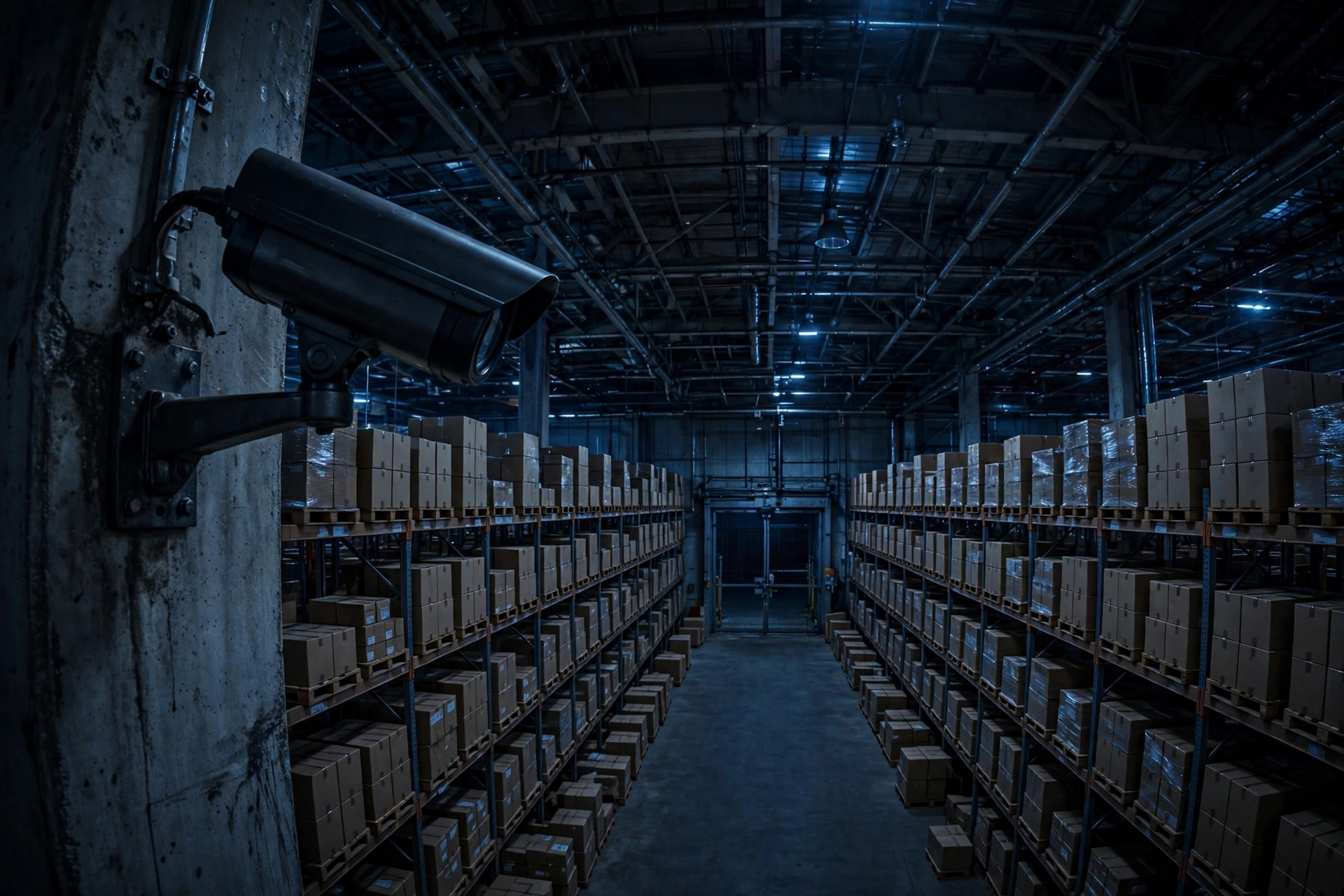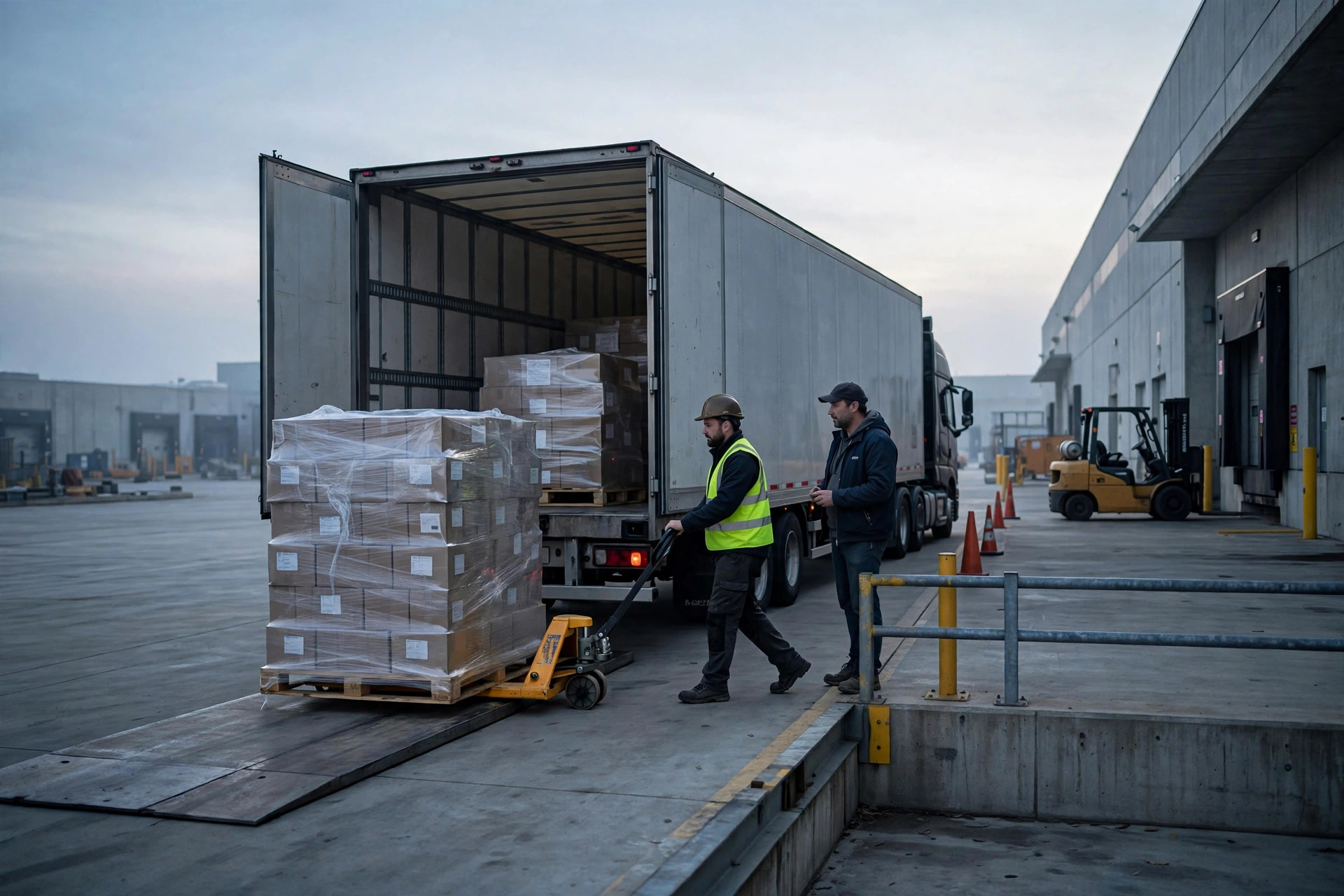
1:30 a.m. last fall. I'd parked my rig at the gate of a 3PL outside Fontana, California. Dispatch said, "Driver, no dock door till 8 a.m. — just catch some sleep at the gate." Let me tell you, after fifteen years on the road, I've heard that line a thousand times. Sounds like saving thirty bucks on parking. That night somebody pried open my trailer doors and walked off with a dozen-plus cartons — close to ten grand in cargo value. Next morning the shipper, the warehouse, and I spent an hour on the phone arguing about one thing: was that freight in transit or in storage? And whose loss was it?
That's what this is about — the line where cargo insurance shifts from transit to storage. Most people never think about that line until it costs them money.
At the Warehouse Gate: Still in Transit, Still on the Driver
Bottom line up front: until the freight is fully unloaded and the paperwork is signed, it's in transit. If it goes missing or gets damaged, the carrier — that's my side of the fence — owns it. Under the Carmack Amendment, which governs U.S. interstate freight, the carrier is liable for the full actual loss, with only five narrow defenses: act of God, act of public enemy, act of the shipper, act of public authority, or the inherent vice of the goods. A pried-open trailer door at 2 a.m. isn't on that list.
In the Fontana case, my side ate it. And honestly? The warehouse had a point: "The freight never came through my door — why would I pay?" The shipper was blunter: "I handed my freight to the carrier. The carrier never handed it to me. Talk to the carrier." What this tells you is simple: "arrived at the warehouse gate" is legally the same as "still on the road." That patch of asphalt by the gate isn't the warehouse's responsibility zone — it's your free parking lot, and the risk is 100% yours.
So here's rule one for drivers: don't overnight at the warehouse gate unless you have no choice. If you must, spend twenty or thirty bucks on a fenced, lit truck parking lot. Do the math with me: saving $30 on parking to gamble $10,000 in cargo. Only a fool takes that bet.
Half Unloaded: The Murkiest Stretch of the Whole Trip
Gate arrival is transit. Signed receipt is storage. The stretch in between — half unloaded — is where the fights happen. Two stories.
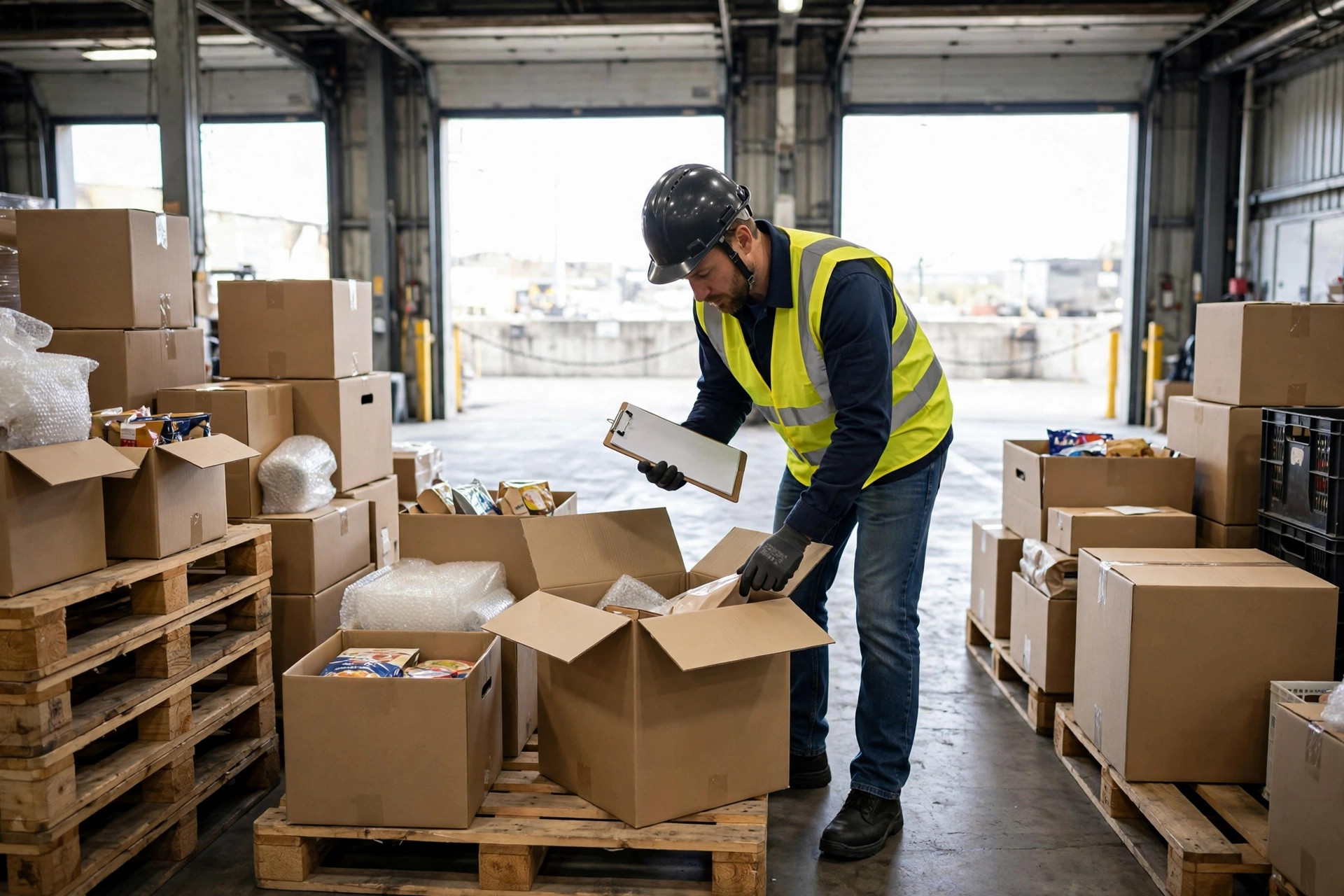
Early 2024, a warehouse outside Houston. They were halfway through unloading my trailer when their forklift driver clipped a pallet of wine on a turn. Cases everywhere — roughly twenty grand in cargo value. Who pays? Everybody stood around staring at each other until someone pulled out the contract: it said "warehouse responsible for unloading." That pallet was the warehouse's loss, because the freight was already in their hands and unloading was their job.
Flip it around: if the contract says "driver unload," or if the driver — being a nice guy — grabs a pallet jack to help and tips a pallet over, that's carrier unloading damage. The driver's side pays. Let me tell you, in fifteen years I've watched plenty of drivers get burned by their own good intentions. You touch the freight, you own what happens to it while you touch it. Rule of thumb: whoever does the unloading owns the unloading damage. Don't touch what isn't yours.
There's a sneakier version: they get halfway through, the shift ends, "we'll finish tomorrow." Half a trailer sits in their yard overnight — and gets hit. Whose loss? The carrier's. Half unloaded isn't half delivered. In the eyes of the law, delivery is binary: done or not done. The yard belongs to the warehouse, but the risk still rides with you.
Signed but Not Put Away: The Pen Stroke That Hands Off Liability
Then comes the signature. The delivery receipt — the POD — is in your hand. For the driver, that pen stroke is the sweetest moment of the trip: the freight officially moves from "in transit" to "in storage," and the carrier's liability ends right there. For the shipper, it's the moment to wake up, not relax.
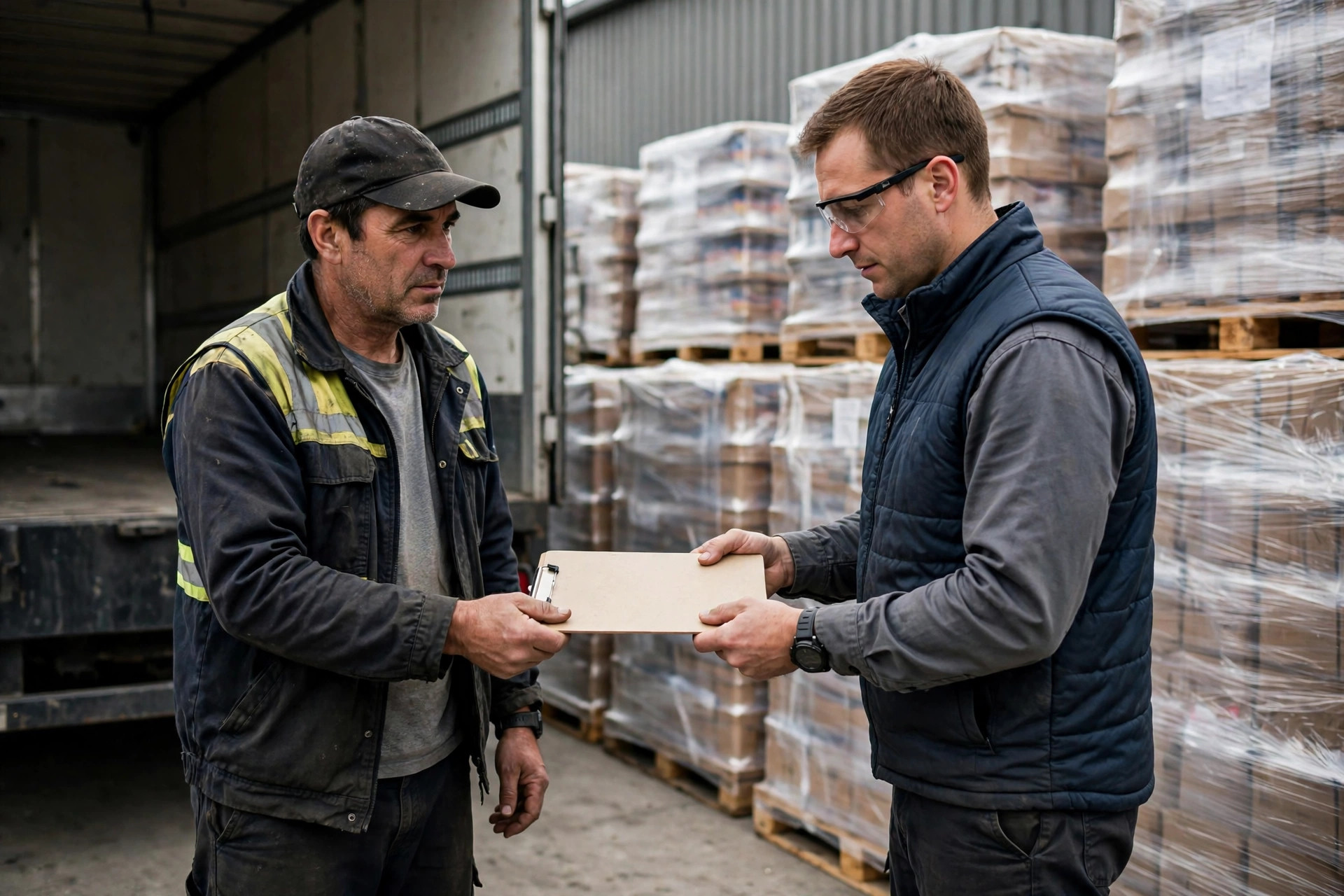
2023, a 3PL in California. My load got signed for and sat in the receiving staging area for four days, never put away. On day five, a small fire in staging took out the two outer pallets. The shipper called me first. I sent a photo of the signed receipt: signed four days ago — not my problem anymore. The shipper turned to the 3PL, which pulled out the contract: the liability cap per shipment covered barely a fraction of the loss. Then the shipper filed with their own cargo insurance. The adjuster paid — the policy's storage clause covered up to 60 days in storage, and four days was well inside it. But the adjuster added something that stuck with me: "You're lucky. If that freight had sat here three months without moving, past the storage clause, you'd have been running naked."
What this tells you: the signature is just the carrier handing off the baton — not the end of the story. After the pen stroke, the risk sits with the warehouse and the shipper: the warehouse's exposure is whatever the contract cap says, and the shipper's backstop is their own cargo policy's storage clause. Common market practice covers 30 to 60 days in storage; past that without an extension, you're uncovered. Check your own policy wording — don't take my word for it.
Three Policies, Three Stretches: Cargo Insurance, Carrier Liability, Warehouse Liability
Put the three moments side by side and the picture gets clear:
| Moment | Where's the freight | Who's liable | Which policy pays | Key evidence |
|---|---|---|---|---|
| At the warehouse gate | On the trailer, untouched | The carrier (the driver) | Carrier liability / shipper's cargo policy, transit clause | BOL, GPS pings, no signature |
| Half unloaded | Half on the trailer, half on the dock | Whoever is doing the unloading; half done = not delivered | The unloading party's liability coverage | Unloading terms in the contract, site photos |
| Signed but not put away | Warehouse staging area | The warehouse (up to contract cap) + the shipper | 3PL warehouse legal liability / shipper's cargo policy, storage clause | Signed POD, putaway records |
Now three things most people get backwards:
First, "the truck's inside the warehouse gate, so it's the warehouse's problem." Wrong. The gate means nothing. The signature means everything. Until that pen moves, the biggest yard in the world isn't your safe.
Second, the driver helping with unloading is kindness that can backfire. You touched it, the damage is yours to explain. If the warehouse asks for a hand, fine — but ask yourself first: if this pallet goes over, whose claim is it?
Third, the signature is freedom for the driver and the start of a new risk for the shipper. Plenty of shippers think "freight at the warehouse" means "home safe." Storage losses — fire, theft, forklift damage — happen at least as often as road losses. Just with different people holding the bag.
Three Pieces of Practical Advice
One, for shippers: write all three moments into the contract before the truck rolls. Who unloads. What happens if unloading stops halfway overnight. How long freight can sit in staging. What the 3PL's liability cap is. Saying the ugly stuff up front costs a hundred times less than fighting about it later. And pull out your own cargo policy — find the storage clause page, check how many days of storage it covers and the per-location limit. Don't let an adjuster be the one to tell you it expired.
Two, for warehouses: don't let freight sit in the receiving staging area more than 48 hours. Get it put away. Staging freight is the worst of both worlds — you've signed for it so the liability is yours, but it's not in a slot yet, so if it walks off you can't even say which location lost it. Note piece counts and visible exceptions on the receipt, take photos. That protects you and the shipper both.
Three, for my fellow drivers: three habits. Don't overnight at the warehouse gate unless there's truly no alternative. Don't lay hands on the unloading unless the contract says it's yours. And on the delivery receipt, write down the piece count and any visible damage, snap a photo with your phone, then roll. Each of those habits can save you once — and once is all it takes.
There's an old saying where I come from: even brothers settle accounts clearly. In transit or in storage — whose loss is it? Figure that out on paper before the truck moves, not in a claims fight after. A contract up front beats a lawsuit after, every single time.
By Shifu Zhao, Trucking Veteran (15 yrs)