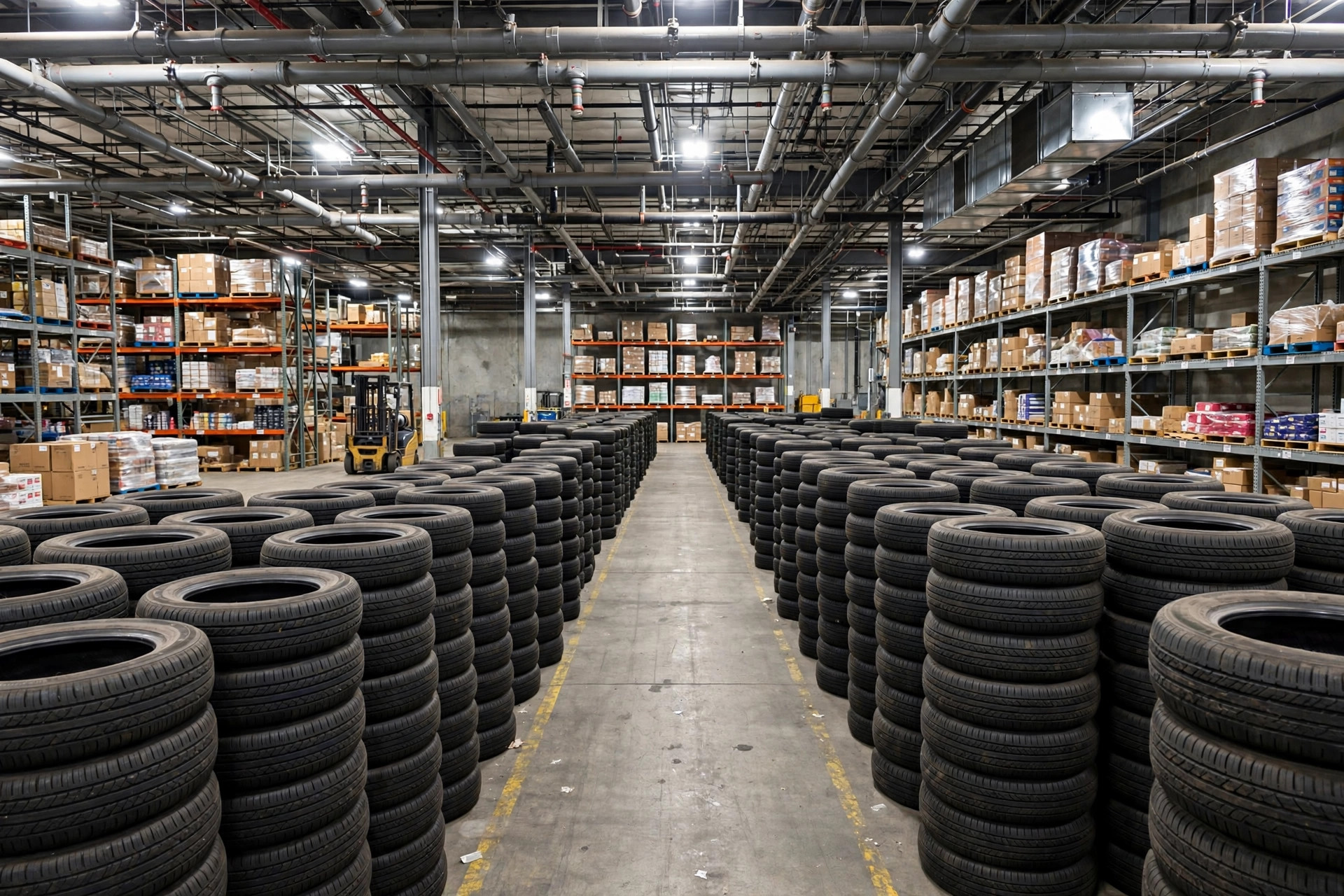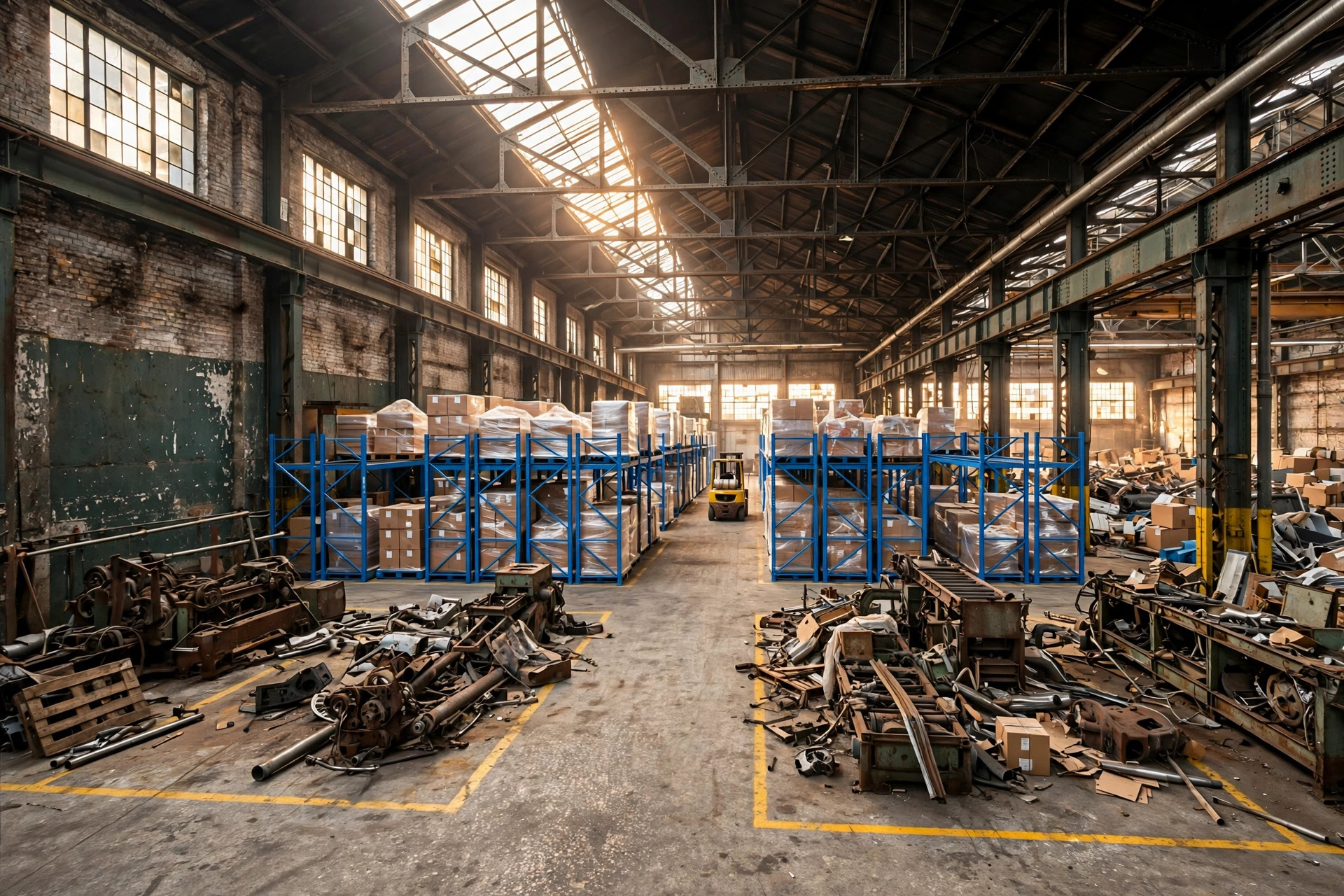
Here's my rule after 30+ WMS go-lives: when I walk into a new warehouse, I don't look at the system first. I walk the building and check three things — the canopy outside, the mezzanine inside, and the partition rooms in the corners. Fire inspection is a hard veto. One sealing notice on the door and the cleanest WMS configuration in the world doesn't matter.
And here's what most operators get wrong: the fire code doesn't punish "illegal construction" as such. It punishes what the construction did — wrecking fire compartments, blocking evacuation, and blinding the sprinklers. Even a permitted mezzanine fails if the sprinklers can't see under it. People think the cost is "a fine." The real bill has four line items: the fine, the demolition, the shutdown, and the insurance denial. The last two are where the money burns.
Suzhou, 2023: one canopy, 45 days of delay
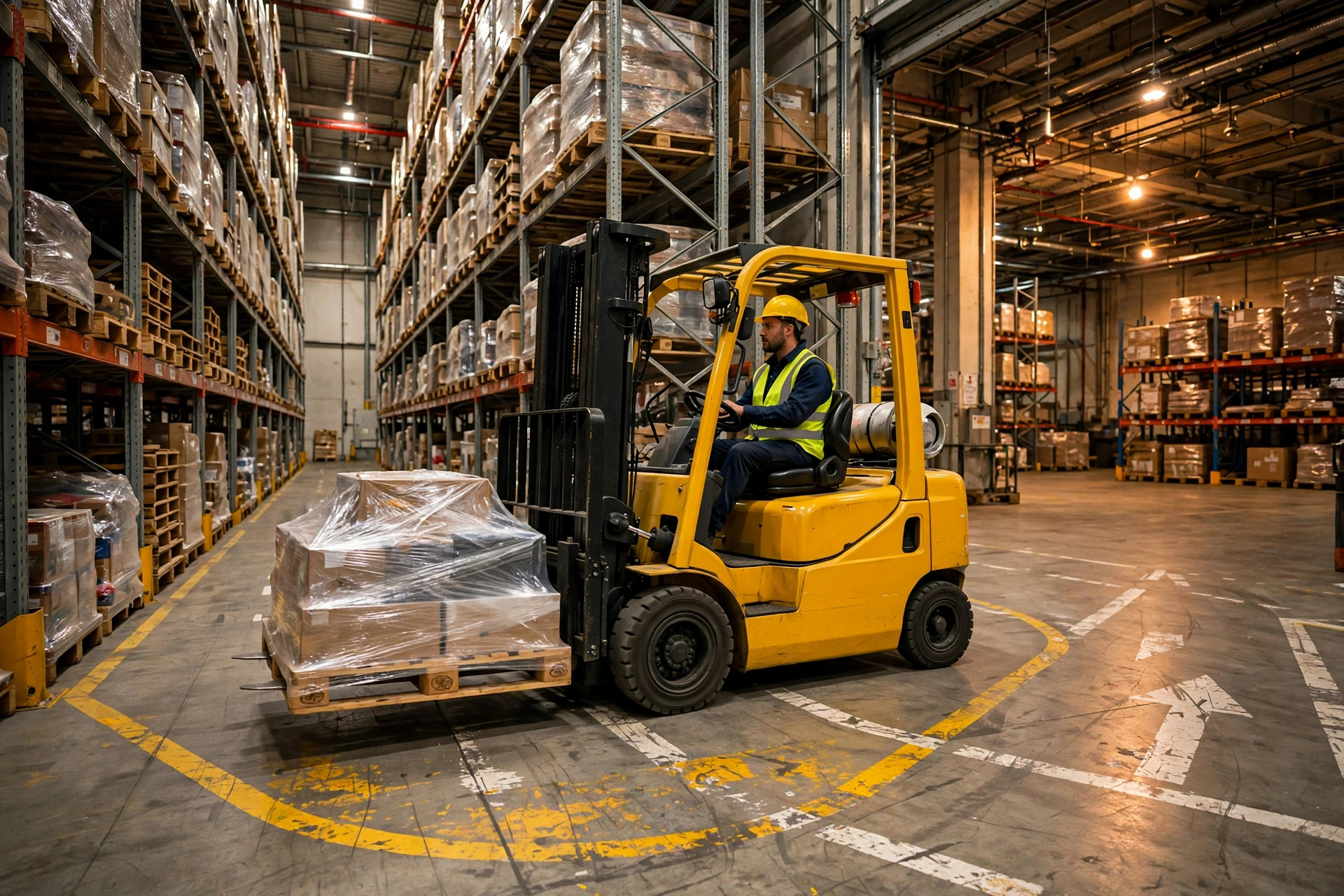
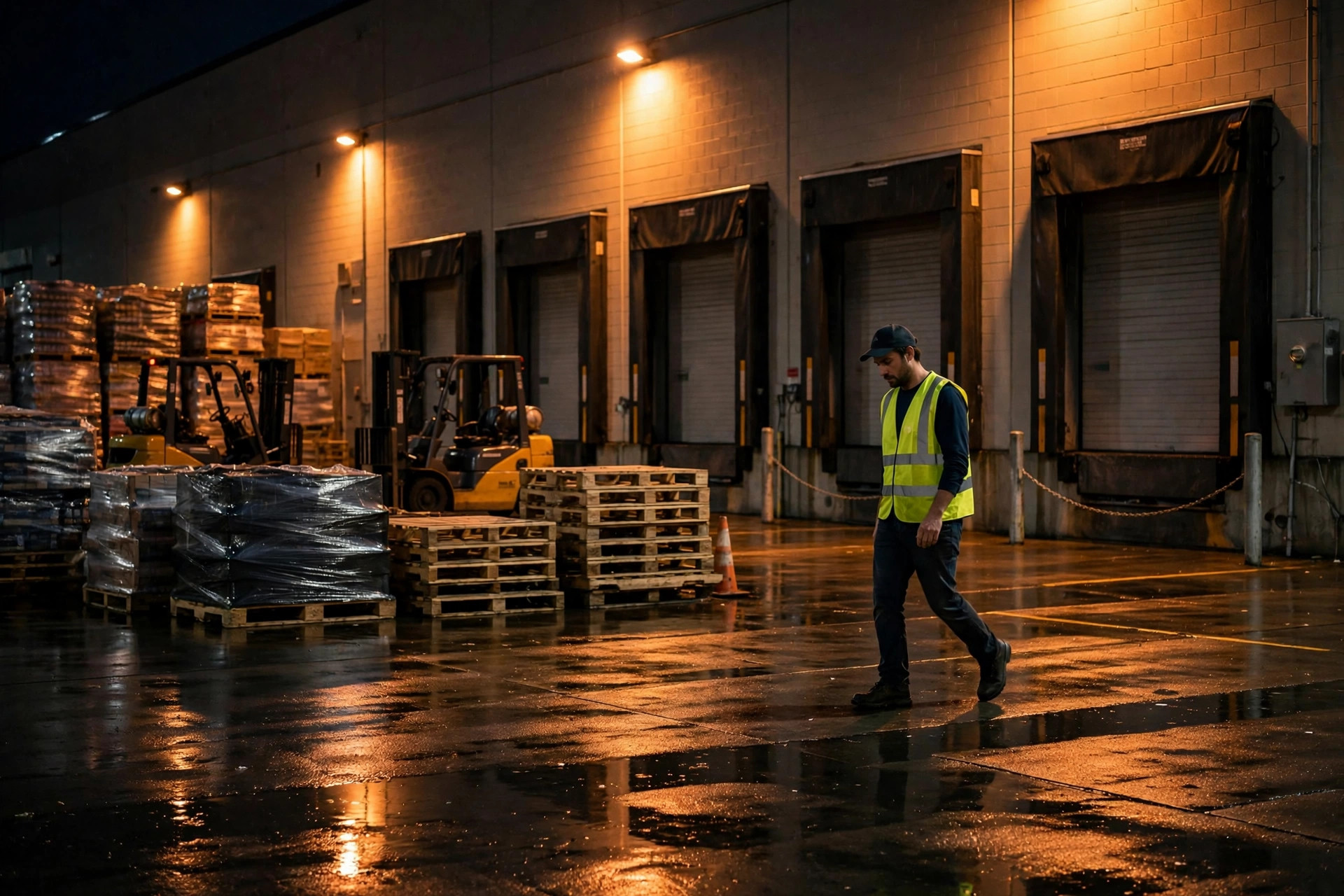
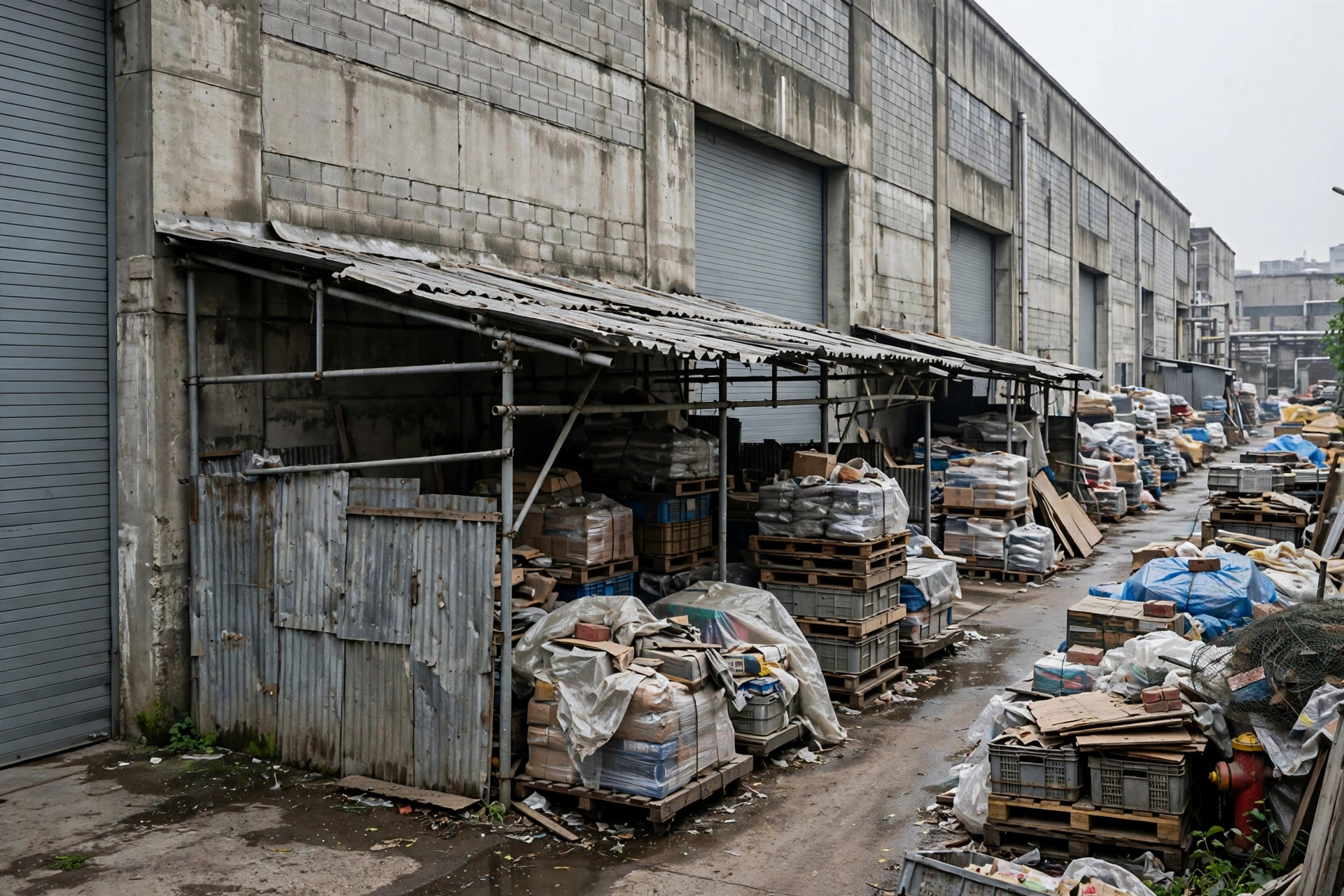
Fall 2023, Suzhou: a 12,000 sqm 3PL warehouse, three weeks before go-live. Along the back wall sat an 800 sqm corrugated-steel canopy, packed with palletized goods. The ops manager shrugged: "The landlord built it. We only run the inside."
One week before go-live, the fire inspection team showed up and pointed at the canopy: it sat on the fire-truck access lane. Under China's Fire Protection Law, Article 28, nobody may occupy, block, or seal off evacuation routes, exits, or fire-truck lanes. Article 60(1)(5) sets the penalty for blocking a fire-truck lane: ordered rectification, plus a fine of RMB 5,000–50,000. On top of that, the canopy had no construction planning permit, so under Article 64 of the Urban-Rural Planning Law it was an unauthorized structure subject to ordered demolition within a deadline.
Result: 15 days to demolish, 800 sqm of goods with nowhere to go, an emergency yard rented from the neighboring park, go-live pushed back 45 days. The canopy cost about RMB 120,000 to build (illustrative estimate). Demolition and debris removal: about RMB 30,000 (illustrative estimate). Forty-five days of dual-site operation, extra handling, and temporary yard rent: over RMB 400,000 (illustrative estimate). The "saved" yard rent came back with interest.
I've seen this trap three times. Legally, the tenant is the fire-safety responsible party for the premises it uses. When the citation lands, the tenant pays. If your lease doesn't spell out who demolishes and who pays, the default answer is you.
Guangzhou, 2024: a 1,200 sqm mezzanine vetoed at inspection
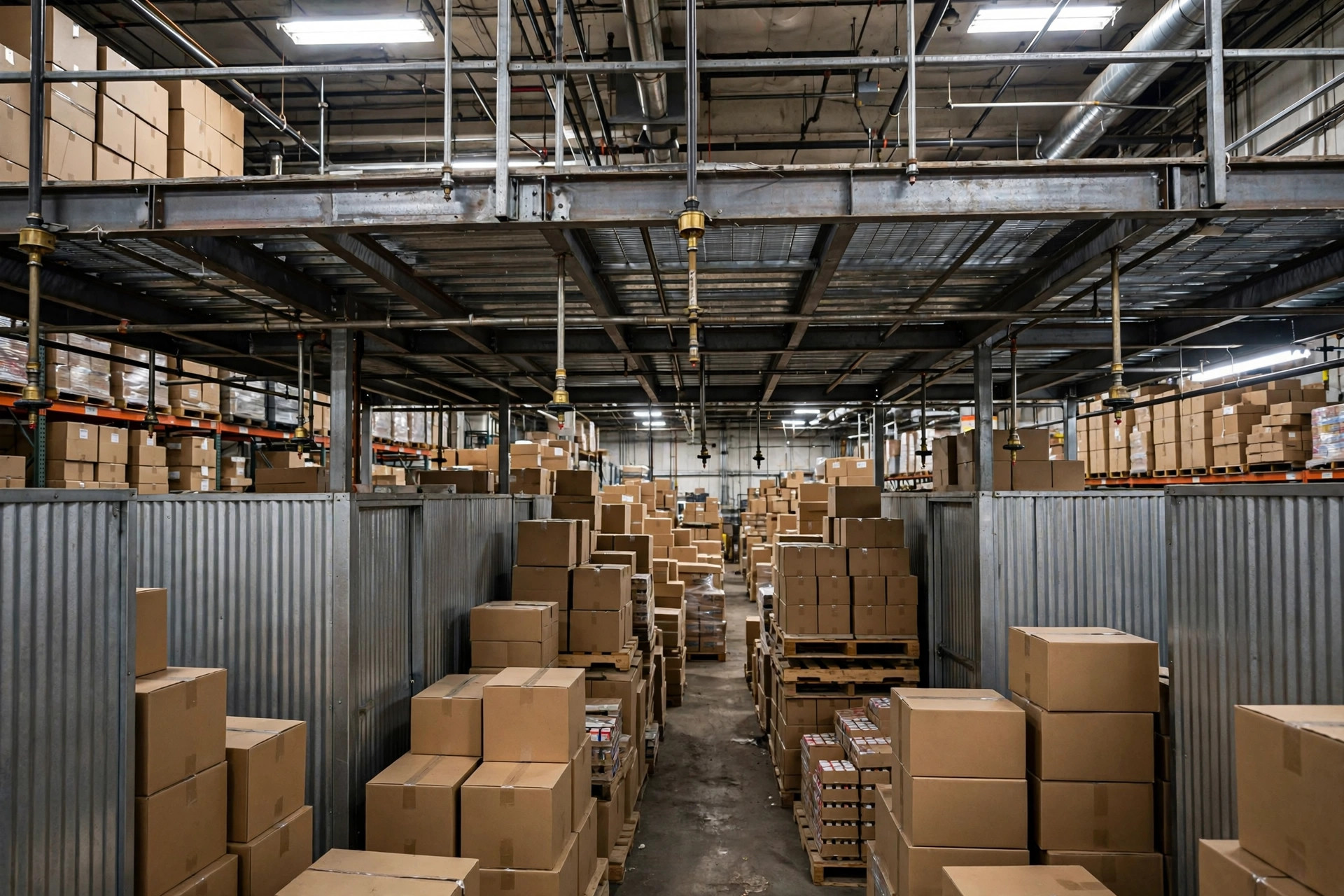
In 2024, an e-commerce warehouse in Guangzhou added roughly 1,200 sqm of steel mezzanine inside the hall — half sortation, half offices. Free floor space, saving RMB 400,000–500,000 a year in rent (illustrative estimate).
Before go-live, their fire-acceptance filing got sampled for spot inspection. Failed. The deficiency list: the mezzanine blocked the automatic sprinklers, the new office area had no independent fire alarms, and the mezzanine added occupant load without adding exits — the fire compartmentation was altered. Under Article 58 of the Fire Protection Law (2021 revision), putting a project into use without passing fire acceptance means ordered suspension plus a fine of RMB 30,000–300,000 (about USD 4,200–41,700). The client said afterward: "We should have just leased a compliant two-story building."
Remediation took five weeks: three to demolish the mezzanine, two to restore sprinklers and alarms. The warehouse couldn't operate normally during that window. Go-live slipped two months. The mezzanine had cost roughly RMB 800,000–1.2 million to build (illustrative estimate); demolition and restoration another RMB 300,000–500,000 (illustrative estimate), fine on top, and two months of shipping delays cost them two major accounts.
Partitions: foam sandwich panels are a sealing magnet
The third category is partitions — offices, dorms, charging rooms carved out of the warehouse floor, usually walled with foam-core sandwich panels: cheap and fast. The core is polystyrene or polyurethane foam: low ignition point, burns violently, toxic smoke. On October 12, 2026, fire authorities in Xiuying District, Haikou, sealed 26 premises in a single operation over illegal foam sandwich panels — warehousing and logistics sites named as a focus.
Partitions die two other classic deaths: eating the evacuation route or blocking the exit — Article 60(1)(3), RMB 5,000–50,000 fine, forced execution at your expense if you refuse — and housing people inside. A live-in warehouse is a "three-in-one" premises, sealed on sight.
The logic: when safe evacuation is no longer possible, the fire authority can temporarily seal the area or the premises. Sealing isn't a fine. It's a stop. Systems, orders, customers — everything stops.
The math: what three kinds of illegal construction really cost
Fines below come from the statutes; costs are illustrative estimates (eastern China, ~2024):
| Canopy | Mezzanine | Partitions | |
|---|---|---|---|
| Why it was built | Free outdoor yard space | Free second floor | Cheap and fast |
| What it "saved" (est.) | RMB 200–300k/yr yard rent | RMB 400–500k/yr rent | 60–70% cheaper than compliant partitions |
| Chance of getting caught | High (aerial + routine checks) | Medium-high (acceptance sampling, tip-offs) | Medium (inspectors always check wall material) |
| Fine basis | Fire Law Art. 60: RMB 5k–50k; Planning Law Art. 64: 5–10% of build cost | Fire Law Art. 58: RMB 30k–300k + ordered suspension | Fire Law Art. 60: RMB 5k–50k; foam panels get you sealed outright |
| Remediation cost (est.) | RMB 20–50k demolition, goods need a new home | RMB 300–500k demolition + fire-system restoration | RMB 50–100k to redo, but the whole site stops while sealed |
| Business impact | Go-live slips 1–2 months | Go-live slips 2–3 months, possibly lost accounts | Sealing means zero output, losses accrue daily |
One line item most people never budget: insurance. Warehouse property policies routinely exclude losses where the insured altered the building structure or increased the risk without notifying the insurer. After a fire, the insurer brings photos of your illegal mezzanine and denies the claim.
The 12-point pre-lease / pre-go-live checklist
This page sits permanently in my "night-before-go-live" checklist. Run it once before signing the lease, once before go-live:
- Get the landlord's fire-acceptance certificate or filing receipt — the original, not a photo — and check the address, area, and permitted use match your lease.
- Walk the full exterior: canopies, lean-tos, attached sheds. Photograph everything; check none sits on fire-truck lanes or fire separation distances.
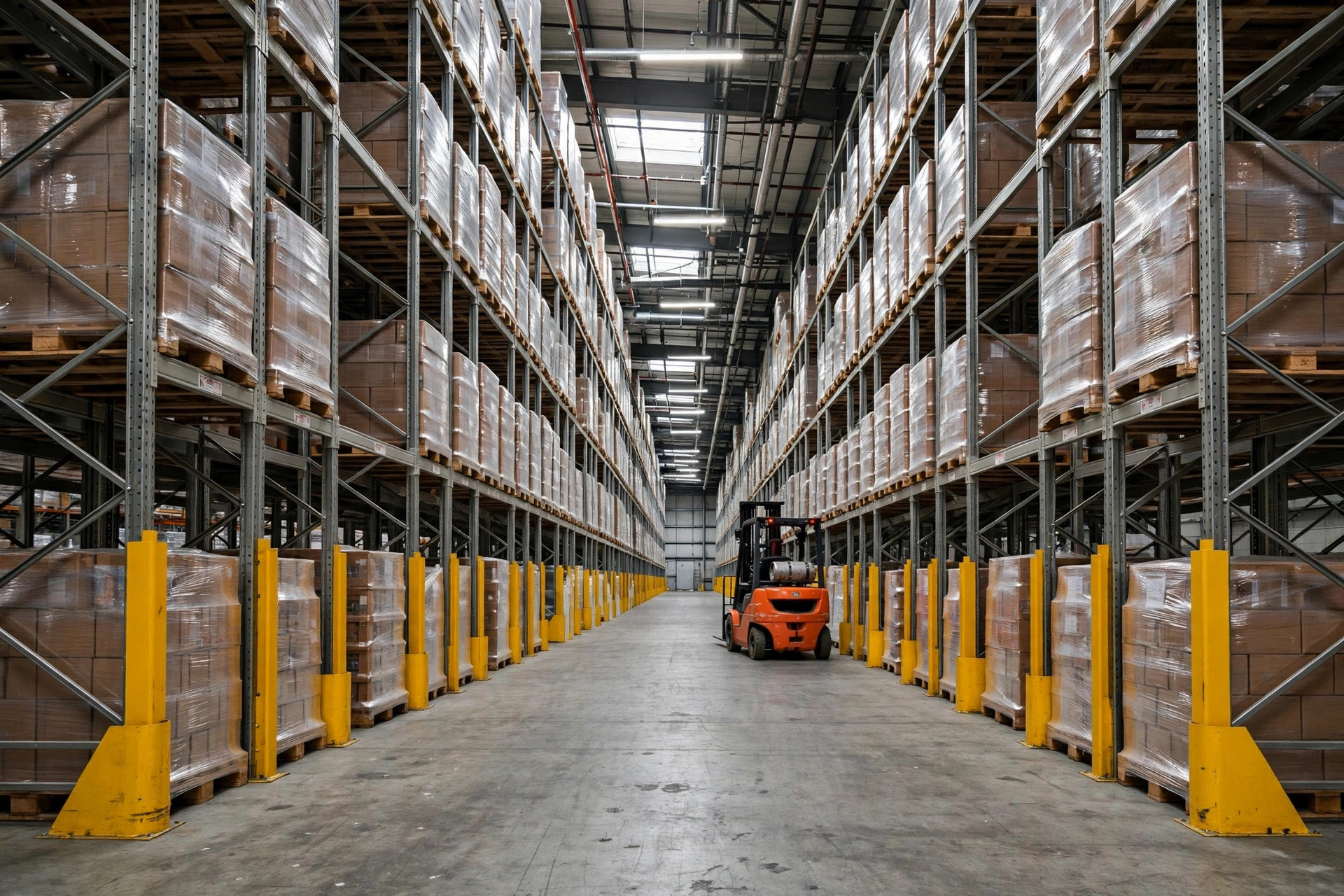
- Look up inside: any retrofitted steel mezzanine, loft, or raised deck? Sprinkler heads or detectors blocked or covered?
- Check the partitions: offices, dorms, charging and electrical rooms — what are the walls made of? Flag every foam sandwich panel.
- Walk every evacuation route and exit: blocked by partitions, racks, or pallets? Exit signs lit?
- Ask the landlord for the construction planning permit for any added structure. Can't produce one? Treat it as unauthorized.
- Lease clause: who demolishes existing illegal structures, who pays fines before demolition, who bears shutdown losses from a sealing order.
- Ask neighboring tenants about citations in the last two years. Neighbors beat paperwork.
- In the WMS project plan, fire remediation goes before system go-live — never in parallel.
- If you genuinely need a mezzanine or partitions, do it properly: licensed designer, drawings, file for review where required, pass acceptance.
- Need yard space? Apply for a temporary-structure permit or rent the park's designated compliant yard. Don't build your own canopy.
- After remediation, file the acceptance documents and inspection records with the WMS project docs, so your successor doesn't start from zero.
Five things I hear at least ten times
"Can't we just pay the fine and keep it?" No. Fines and demolition run together. You pay, and the demolition deadline still stands. Miss it and they demolish for you — billed to you.
"The landlord built it, not us." You're the occupant, and the occupant is the fire-safety responsible party. The citation names you. Spell it out in the lease or own the bill.
"We passed acceptance, we're safe." Acceptance was one day. Supervision checks and randomized spot inspections happen any day. One tip-off and they're at your gate.
"Let's go live first, fix fire issues later." Wrong order. A sealed warehouse can't operate; a live WMS with no orders is theater. Remediation first, go-live second.
"Foam panels are cheap, we'll swap them if caught." That's handing the inspector a gift. Foam panels are under active national enforcement — Haikou sealed 26 sites in one day. Getting caught means the whole premises gets sealed.
Illegal construction is a bet that never pays off — not because the fines are big, but because the biggest cost is uncertainty. You never know which day it blows up, how much inventory you'll hold, how many orders will be in flight, or where your project will stand. In WMS work, the first job is always to make the building legal, then talk about the system.
By Lin Xiao, WMS Implementation Consultant