Fifteen years behind the wheel of a truck, let me tell you what you learn waiting at a warehouse dock: you can read a forklift driver in about ten seconds. A good one takes a two-ton load around a corner and the pallets don't even shiver. A green one jerks the lift off the line, carries the forks half a metre in the air, and turns anyway. Green is not the scary part. The scary part is the green driver waving a card, and the warehouse supervisor glancing at it and waving him through — without ever asking who issued that card and whether it means anything here.
So let's get the first thing straight about forklift operator certification requirements: there is no government agency in the United States that hands you a forklift license. OSHA issues no certificate and no license. The employer does the certifying. Under 29 CFR 1910.178(l), the employer must make sure every person who operates a powered industrial truck is trained, evaluated, and certified by the employer. Read that again: the card is not something you pass a state exam to get. Your boss evaluates you, your boss signs it, and when something goes wrong, your boss owns it. It sounds like a loophole. It is actually a choke chain — the person who signs the certificate is the person who carries the liability.
A Forklift Operator Certification Is Not Something You Pass an Exam For
Here's a scene I watched play out. (Illustrative scenario.) In 2024, outside a warehouse in California, I got talking to a forklift driver while I waited for a load. He had just changed jobs, and he still had the card from his old company in his pocket. The new warehouse took one look at it and put him straight on a truck — no training, no evaluation. That afternoon he backed an unfamiliar model into a rack, and a whole bay of product came down. Nobody was hurt, but the damaged goods and the stopped work cost the warehouse plenty. When OSHA came to inspect, the first thing they asked for was the training and evaluation records. The new employer had none for this man, and the old company's card counted for nothing in the new warehouse. That is the most common trap in this business: the card follows the person, but the certification follows the job. New warehouse, new truck type — the old card has to be re-earned.
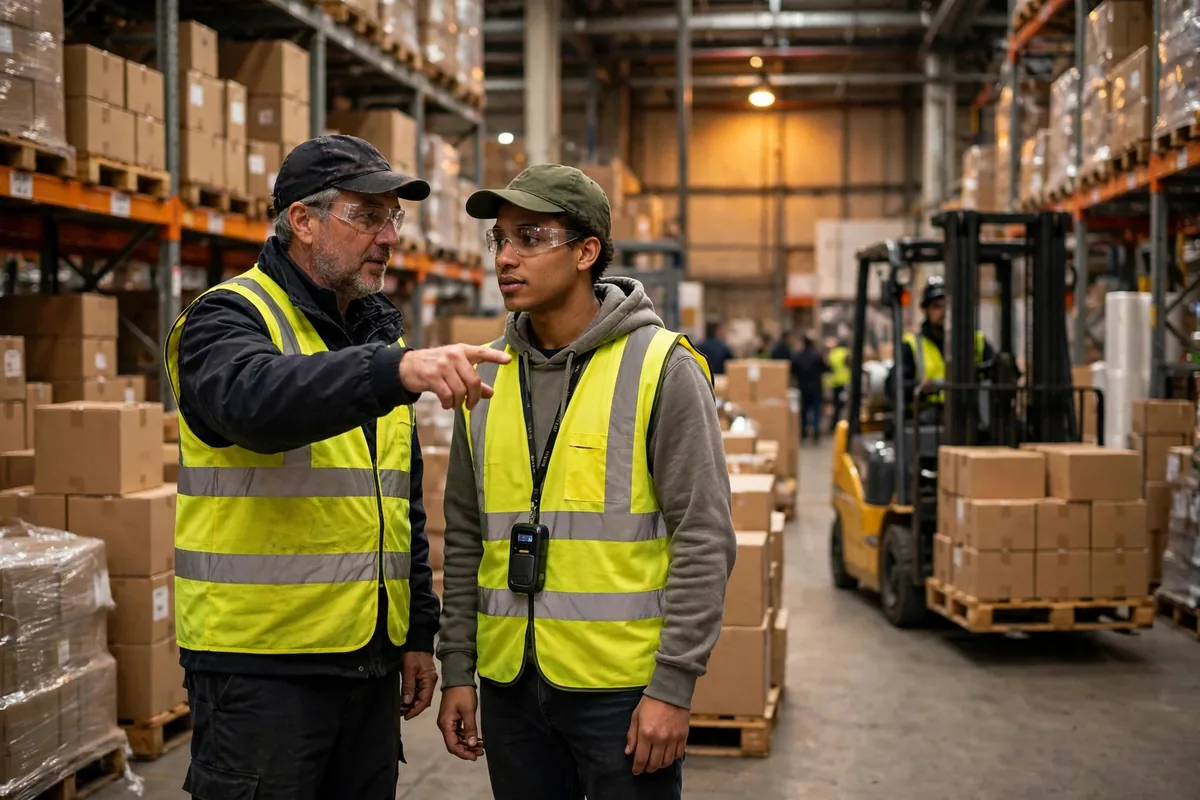
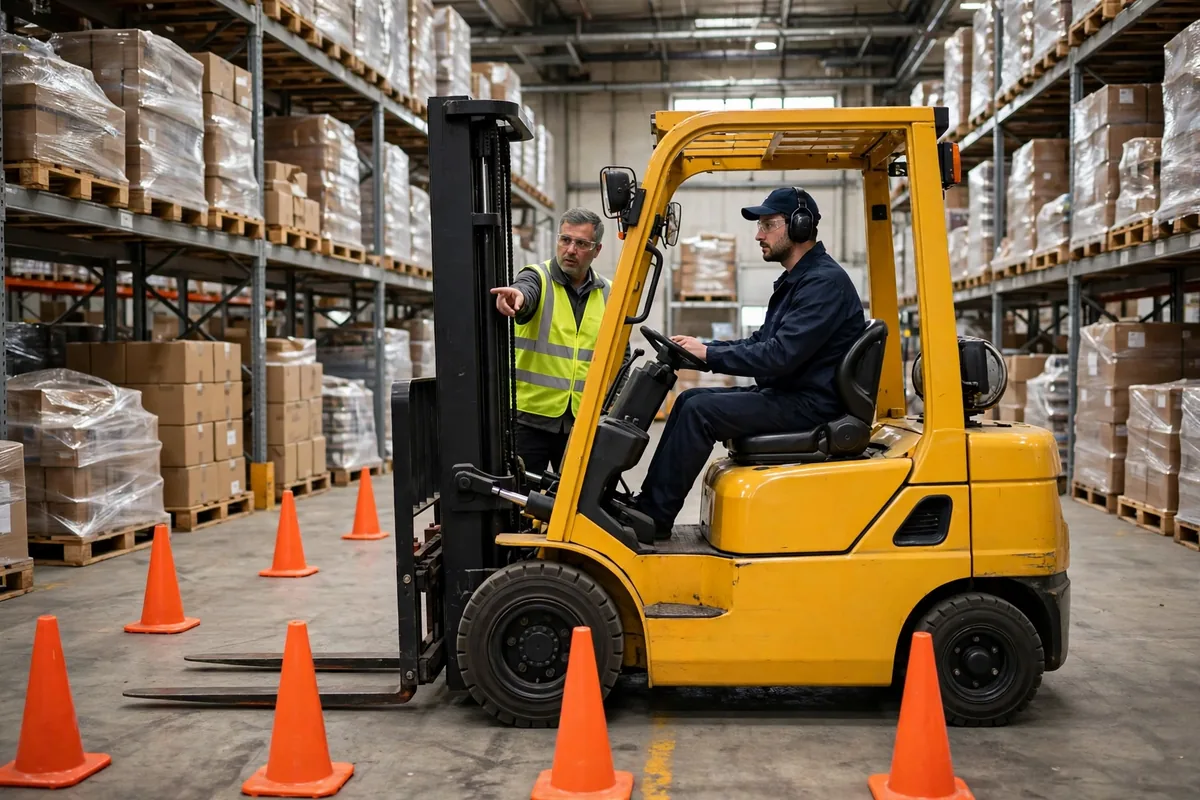
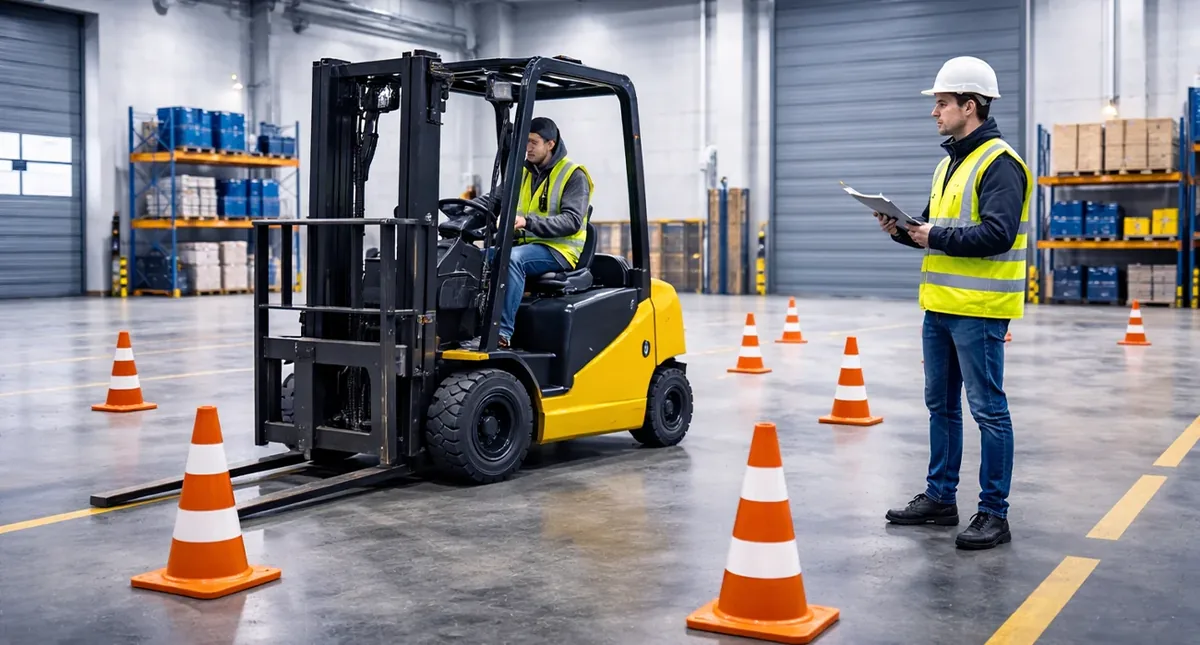
Proper training under the forklift operator certification requirements has three parts, and missing any one of them means the certification does not count. First comes formal instruction: how the truck works, how load capacity is calculated, what counts as a prohibited operation. Second comes practical training, hands on the controls with an instructor watching. Third comes a workplace performance evaluation, where a qualified person watches the operator do real work in the actual warehouse and confirms he can genuinely do the job. Those "get certified in two hours" courses online cover only the first part. Without the hands-on evaluation, there is no certification. Anyone who pays for an online course and thinks the job is done is just saving up for a fine.
The counterintuitive truth is this: in forklift work, "has a card" and "can drive" are two different things, and the law cares about the second one. When an employer signs that certificate, the signature does not say "this person sat through a class." It says "I watched this person do the work correctly in my warehouse, on my equipment, in my aisles." What matters is not where the card came from, but whether the evaluation happened in your warehouse, on your truck type, in your aisles. A card from somewhere else, never re-validated where you work, is worth the same as no card at all.
The 3-Year Rule for Forklift Operator Certification: Keep the Records Before You Need Them
A certification is not forever. The law requires every operator to be re-evaluated at least once every three years, counted from the date of the last evaluation. Three years sounds generous, but warehouse turnover is fast and three years slip past quickly. I have seen warehouses where operator records were scattered across three folders — some in HR, some in the safety manager's drawer, some nothing more than a sign-in sheet. When something goes wrong and you go looking, what you find is not a record. It is a hole.
The certification record must contain four items, and a gap in any one of them is a gap in compliance: the operator's name, the date of training, the date of evaluation, and the identity of the person who did the training and the evaluation. The last one is the item people forget most often. Plenty of records have a date and a name but never say who did the evaluating, which means nobody can say who stood behind the judgment. The dumb, reliable way to manage it is one card per operator, with the next evaluation's due date written on it, flagged a month in advance. The due date is not "about three years from now." It is three years to the day from the last evaluation.
(Illustrative scenario — cost example.) Here is what the paperwork is worth. Take a warehouse with twenty forklift operators, and suppose half of them have incomplete evaluation records. If an inspection treats each operator's missing record as a separate serious violation, and each serious violation carries a maximum penalty of $16,550, ten violations add up to $165,500. That is a hypothetical calculation, not a real citation — actual penalties depend on the circumstances — but the scale is the point: a stack of paper you didn't keep can turn into a six-figure fine. For reference, OSHA's 2026 maximum penalties are $16,550 per serious violation and up to $165,514 for a willful or repeated violation. Those numbers are public. A warehouse manager would do well to pin them to the office wall.
Five Situations Where Forklift Certification Expires Early
The three-year rule is the floor, not the ceiling. Five situations require refresher training before the three years are up, and the law spells them out in 1910.178(l)(4)(ii): the operator is observed in unsafe operation, the operator is involved in an accident or a near-miss, an evaluation shows the operator is working unsafely, the operator is assigned to a different type of truck, or workplace conditions change. Five triggers, and every one of them is a "do it now" item.
The different-truck trigger is the one people overlook most. A counterbalance truck and a reach truck both look like forklifts, but they drive like different machines: different visibility, different turning radius, different load centre. A warehouse brings in a new truck type and the old hands climb straight on, on the theory that "a forklift is a forklift." That is a gamble, not a plan. The changed-conditions trigger works the same way: the warehouse re-lays its aisles, resurfaces a floor, adds high racking, and the environment the operator was evaluated in no longer exists. Let me tell you, the thing to fear about refresher training is never the hassle. It is the "looks fine" moment — and "looks fine" is the most common condition right before something goes wrong.
So what should a warehouse manager actually do? The list is short. First, evaluate every new hire before they touch a truck, whatever card they walked in with — your truck type, your aisles, your rules. Second, keep one card per operator and flag the due date a month ahead, instead of digging through folders after OSHA walks in. Third, start refresher training the moment any of the five triggers fires — don't wait, don't delay, don't decide by mood. Fourth, write all four record items in full, with the evaluator's signature attached. Fifth, treat online courses as classroom prep only; the hands-on evaluation has to happen in your own warehouse. Do those five things and the compliance book on forklifts is basically in order.
Fifteen years on the road teaches you this: forklift operator certification requirements were never about a piece of paper. They are about the person. The employer does the certifying, and the employer carries the responsibility. Trucks can be replaced and cards can be reissued. A person who gets hurt cannot be put back together. The old saying goes, caution keeps the ship sailing for ten thousand years — and in the forklift business, caution keeps the truck running for ten thousand years too.
By Shifu Zhao, Trucking Veteran (15 yrs)