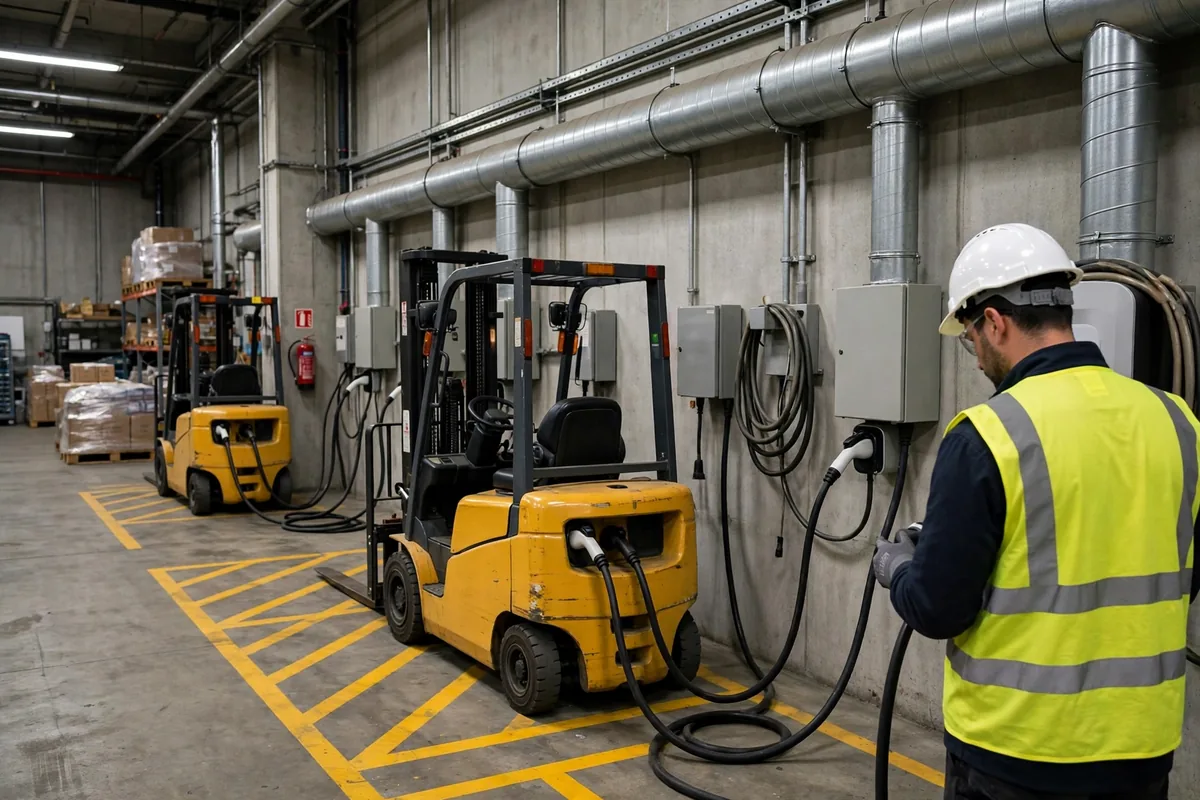
It was 2:30 in the morning, peak season, and I stood in the doorway of the charging area for ten minutes without moving. What I was looking at was a forklift battery charging room warehouse safety problem waiting to happen, and I knew it.
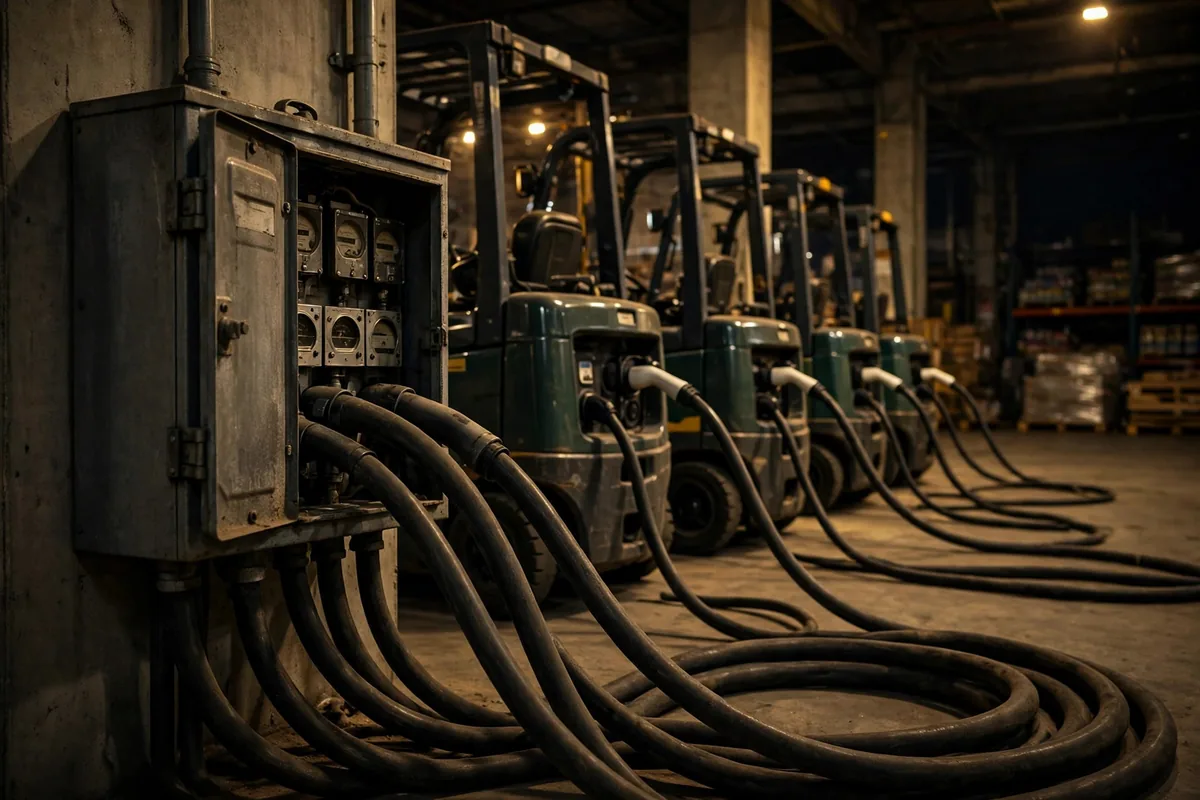
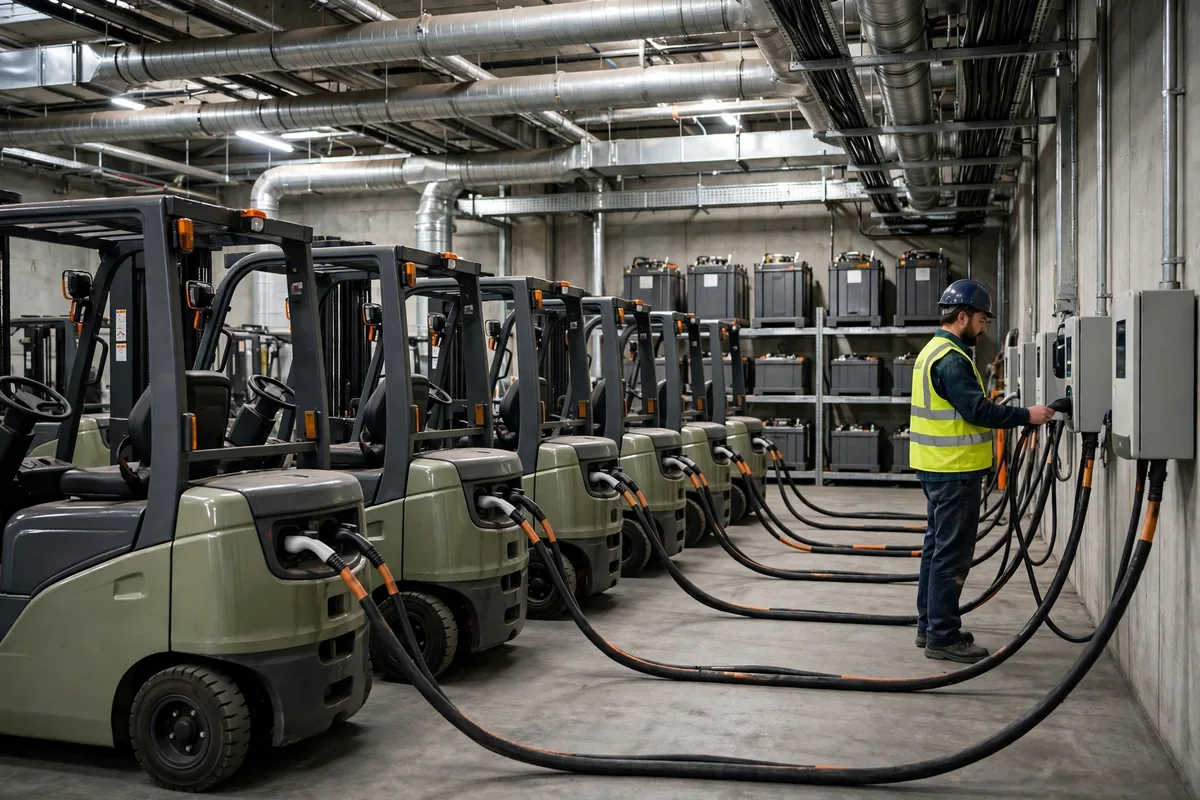
Night shift had just taken over. Eight forklifts sat in a row, plugged in. The charger fans hummed, and the air had a faint warm smell to it. Let me be straight with you: I have smelled that kind of air for years. Lead-acid batteries give off an acid smell when they charge, and you get used to it. But that night was different. Every truck on charge was lithium. The smell was different, and the heat was different. I called the shift lead over and told him to bring the temperature gun. We checked every truck, one by one. The guys standing around thought I was making a fuss over nothing. The readings came back fine. False alarm. But I walked away from that doorway with one clear thought: forklift battery charging room warehouse safety has to be worked out all over again in the lithium era. The lead-acid playbook does not carry over to lithium fast charging.
The Lead-Acid Playbook Does Not Fit Lithium
Let me tell you how we used to do it. In the lead-acid days, the charging room was its own separate space, a row of racks inside. Batteries came out of the trucks in whole sets, lifted by hoist. The old hands all remember the smell: acid mist while charging, the floor going pale over time, the exhaust fans running all year. Swapping a battery was a two-person job, and half an hour went by with the hoist. Night shift kept one person on charging duty. The rule back then was simple: put the charging room as far from the work as possible. The farther from the goods, the safer the fire risk felt.
That logic was sound for lead-acid. Charging was slow, an overnight job, and the batteries sat on racks where nobody touched them. That is the first lesson of forklift battery charging room warehouse safety in the lithium era: the risk moved from the battery to the schedule. Then lithium showed up and the whole rhythm changed. Lithium batteries stay in the truck. Drivers top up whenever they get a break — half an hour over lunch puts real charge back in. Charging stopped being one overnight event and became something that happens in small pieces all day long. If the charging area still sits in the far corner the way it used to, drivers will not walk over there. They will find the nearest outlet and make do. I am not making that up to scare you. It happened in our building.
Two summers ago, a new driver parked his truck by the wall next to the picking area to charge, plugged into a temporary extension line. The shift lead caught it on patrol and made him move the truck right there. Nothing happened that time. Pure luck. Let me be straight with you: when the charging area is too far away, drivers vote with their feet. Here is the counterintuitive part I want you to take away: a charging room is not safer just because it is far away. Put it too far from the work, and you get more off-the-books charging, not less. Safety does not come from drawing a remote corner on a floor plan. It comes from making the right way to charge easier than the wrong way.
Forklift Battery Charging Room Safety Starts With Location
So we moved our charging area. Not to the middle of the floor, and not back to the far corner either. We put it in the transition zone between receiving and storage. Drivers pass it on their way out, it sits behind a fire wall from the racking, and it is well clear of the offices and anywhere people gather. I walked that spot three times with our fire maintenance contractor before we settled on it. Anything that touches local fire rules or official policy, we checked against the latest official guidance — and where I could not verify a specific clause, I am not going to quote it here.
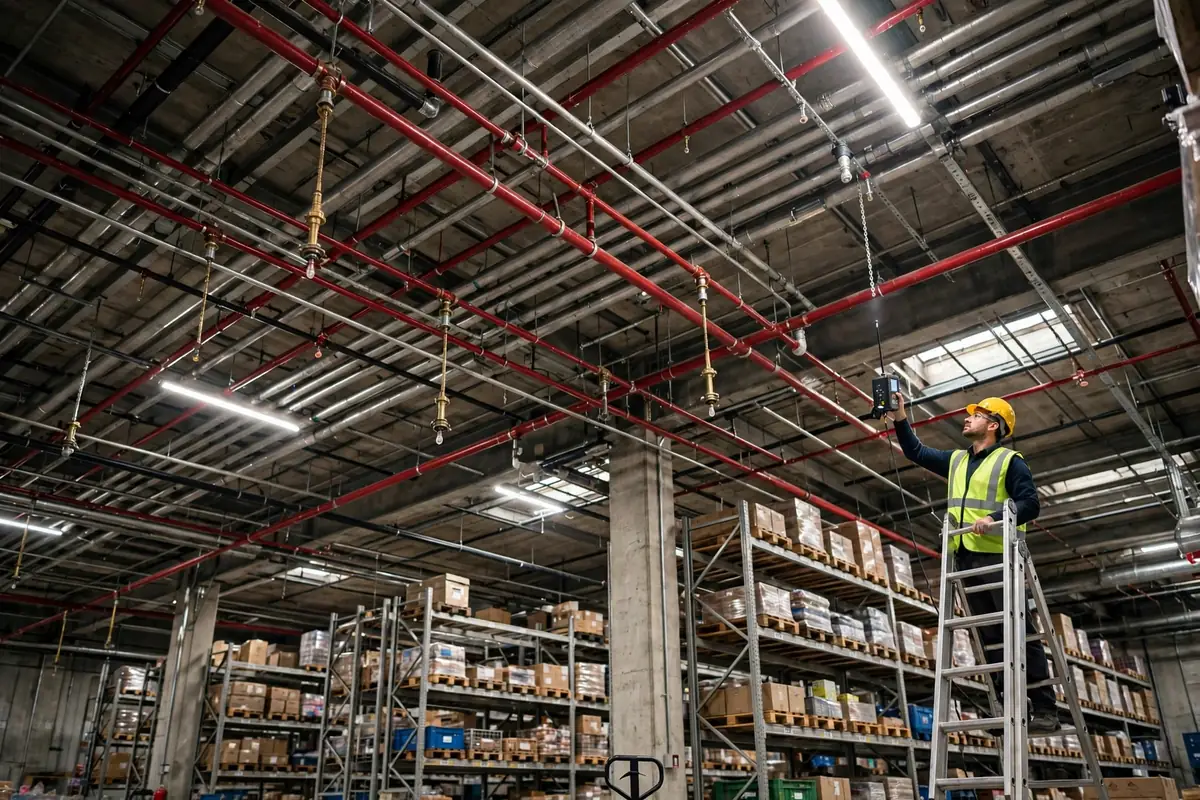
The layout runs on a few hard rules now. First, the charging area is physically separated from storage. Charging trucks never share space with loaded pallets, and the fire lane between them stays clear at all times. If someone stacks anything in that lane, that person owns it. Second, the floor is treated for insulation and kept dry, and every trace of old lead-acid residue was cleaned off before the lithium trucks moved in. Third, chargers and the distribution box are mounted separately, the box has its own breaker, and at night we cut power but never monitoring. Fourth, smoke and heat detectors push alerts straight to the duty phone — no one has to pass the message along. Fifth, every charging bay is numbered, truck, charger, and shift matched one to one. The whiteboard gets updated every day.
Ventilation is different for lithium too. Lead-acid charging needs acid mist pulled out, so the exhaust fan was the star of the show. Lithium charging makes heat, so ventilation becomes about shedding heat. Our fix is plain and unglamorous: exhaust fans up high, space between chargers so heat can escape, and during the hottest weeks, night shift staggers fast charging so a dozen trucks never pull full power at once. People ask whether that delays morning outbound work. It was tight at first. Then we fixed the schedule, and it smoothed out.
The Charging Shift Schedule Is the Other Half of Forklift Battery Charging Room Safety
The charging schedule is the most practical part of this whole story. You can buy any hardware you want, but if the schedule is a mess, the best charger in the world will not save you. Here is how our warehouse runs it now. Before day shift ends, drivers bring any truck below half charge into the charging area and sign it in. The night shift lead lines up charging order against the next day's outbound plan: trucks needed first thing in the morning charge first, trucks needed in the afternoon charge later. At 2 a.m. the lead walks the area, checks temperatures, checks the chargers, writes down the numbers. At 6 a.m. the day shift drivers sign out their trucks and confirm the charge level.
Here is a worked example — a hypothetical scenario I put together from our fleet size, not measured data, just to show the thinking. Say a warehouse runs 20 forklifts with 8 fast chargers, and one top-up takes about an hour. If all 20 trucks try to charge in the same hour after shift change, 8 chargers cannot handle it. Drivers queue up, or skip charging altogether, and the next morning they charge on the fly and delay outbound work. Spread the same charging across four time slots overnight, 5 trucks per slot, and 8 chargers are more than enough, with the night lead free to patrol every two hours. What that math saves is not the electricity bill. It is the next morning's on-time departure rate. Ask any warehouse manager what forklift battery charging room warehouse safety comes down to on a night shift and you will get the same answer: who is watching, and when.
Battery rotation needs attention too. Lithium does not need whole-set swaps the way lead-acid did, but battery health still has to be watched. Once a month we take one truck and log a full charge and discharge cycle. Any battery losing charge noticeably faster than the rest of its batch gets flagged, and we call the supplier's technician in. When old hands train new drivers, the first lesson is not how to drive. It is how to read the charger lights: green means normal, yellow means report it, red means cut power and call someone. There is a card on the charging room door with three lines on it: cut power first, call it in second, and do not try to put the fire out yourself. Everybody on the floor can recite it.
One last word for anyone running a warehouse like ours. The charging room is the most forgettable corner of the building, right up until it is the most dangerous one. Do not wait until you smell something to go check on it. Once a month, give yourself ten minutes: stand in the charging area, feel whether the chargers are running hot, look at whether the cables are a mess, check the fire lane is clear, and see whether anyone has written in the logbook in the last three days. Those ten minutes will tell you more than any inspection. That is how we do it in our warehouse now.
By Chen Feng, Warehouse Operations Manager