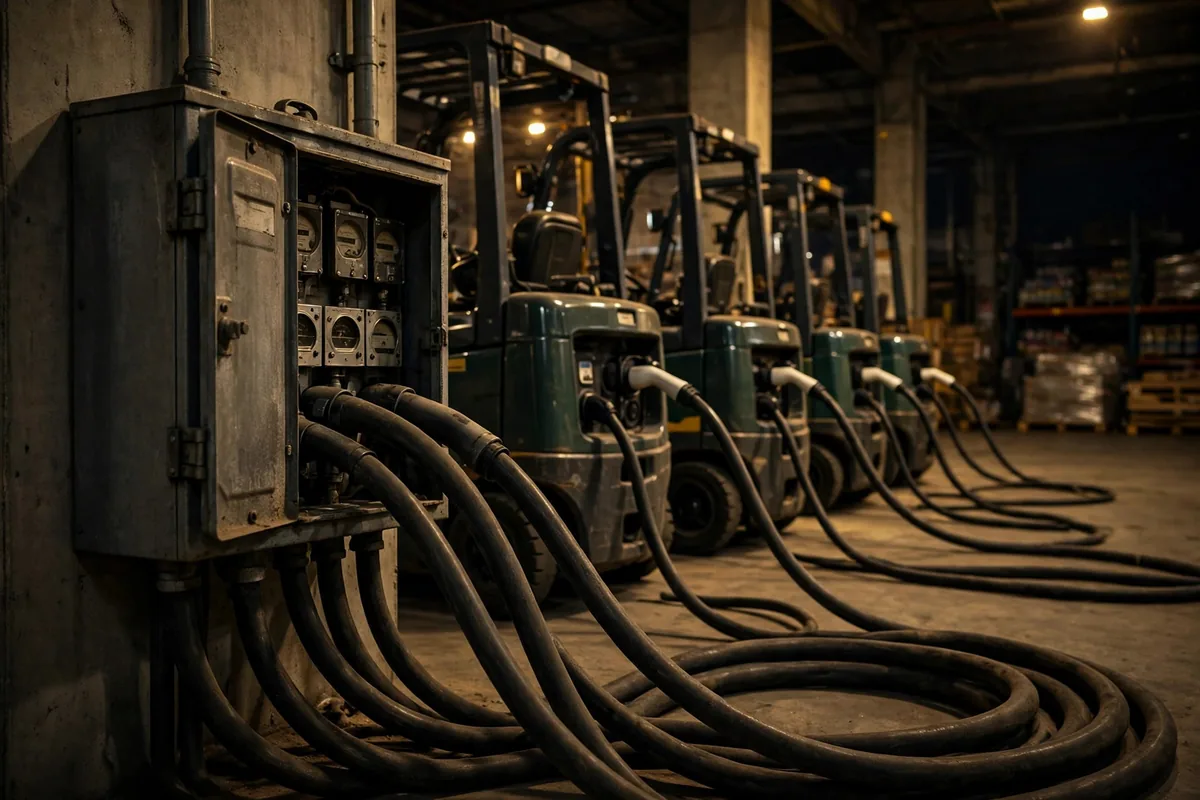
We had a client who signed a distribution contract with a major brand last year. On audit day, the auditor stood in the charging room for less than ten minutes and wrote up three findings. No high-level exhaust ventilation. The hydrogen detector mounted at mid-wall instead of near the ceiling. The eyewash station a whole aisle away from the charging bays. The client was genuinely hurt — we have run this charging room for five years and nothing ever happened. The auditor's reply has stuck with me ever since: nothing happening does not mean safe. It means your luck has not run out yet.
Forklift battery charging hydrogen is the kind of hazard you cannot see until it becomes the kind of accident that makes the news. Lead-acid batteries release hydrogen while they charge. Hydrogen is colorless and odorless, lighter than air, and it drifts upward and collects near the ceiling. Its lower explosive limit is 4% — 4.1% to be precise — and the safe control target is to keep concentrations below 1%. That leaves three percentage points between safe and explosive. Ventilation, hydrogen detection, and charging-room layout are the three lines of defense holding that gap.
Forklift Battery Charging Hydrogen Rises, So the Exhaust Has to Rise With It
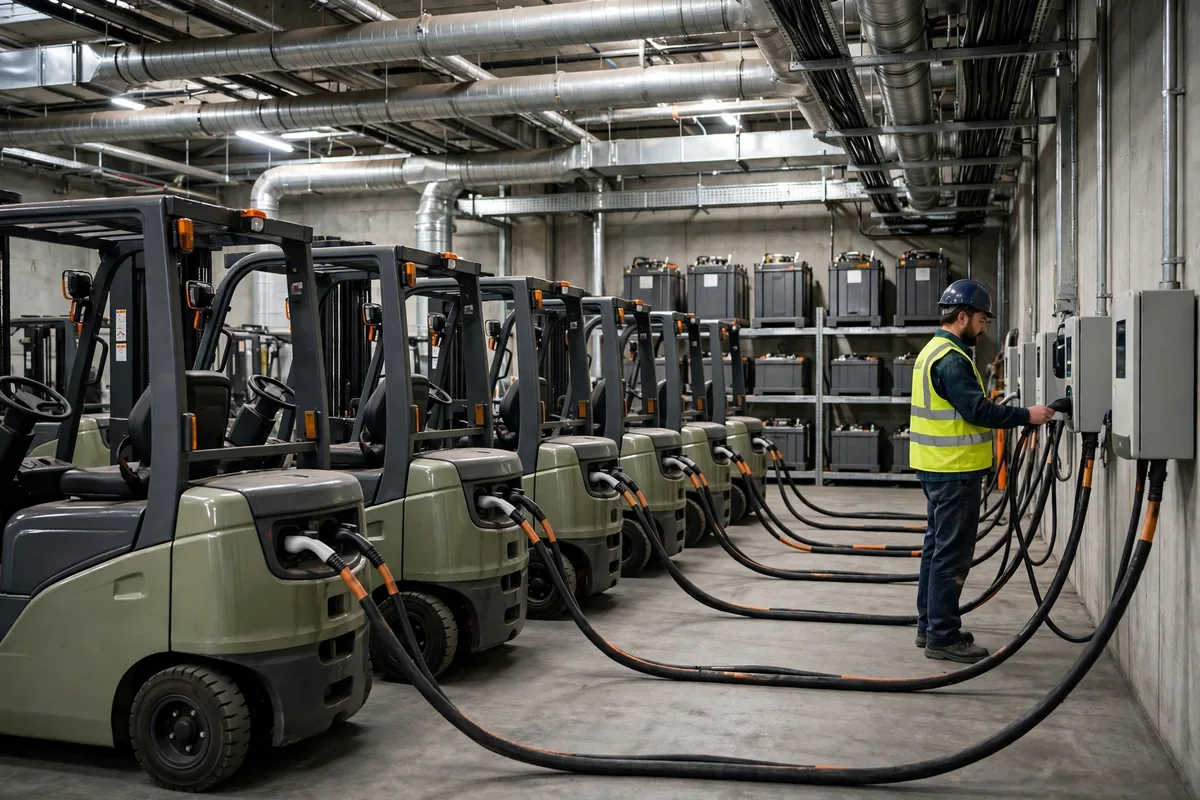
Hydrogen being lighter than air is the first principle of the whole charging-room design. Exhaust vents belong up high, fresh air intakes belong down low, so clean air comes in at the bottom and carries hydrogen out at the top. Plenty of warehouses get this backwards. There is a fan on the wall at standing height, hydrogen pooling under the ceiling, and the fan dutifully exhausting clean air from below. Money spent, risk unchanged.
I visited one warehouse where the charging area sat in a corner of the building under a sloped roof, with a small window at the highest point. The owner called that the ventilation. I asked where the hydrogen detector was. On the wall, he said, at about five feet. I could not help laughing: hydrogen rises, and your detector sits at five feet — that is like mounting a flood alarm a foot above the riverbed. By the time water reaches it, the dam is already gone. Detectors belong near the ceiling, where hydrogen arrives first, with the alarm set below 1%, and when it sounds, someone has to respond. Silencing it is not a response.
After 80% Charge, Forklift Battery Charging Hydrogen Output Jumps
Here is a detail most people miss: once charging passes 80%, hydrogen output climbs sharply. In the final stage the battery is nearly full, so the energy stops going into storage and starts splitting water into hydrogen instead. The most dangerous hours in a charging room are not when the charger is first plugged in. They are the final hours, when nobody is watching and hydrogen output is at its highest. Night-shift charging is the worst combination of all, because that is when staffing is thinnest and hydrogen output is heaviest.
One of our clients learned this the hard way. Their forklifts all charged overnight and were unplugged at the 6 a.m. shift change. One summer, cardboard had been stacked next to the charging area and one exhaust fan had failed without anyone reporting it. When the doors opened in the morning, the smell of acid hit first, and the detector read close to its alarm value. Close, not over. Nobody was hurt. After that they changed the rules: any truck past 80% charge moves to the best-ventilated bay or gets a scheduled walk-through, and a dead exhaust fan gets reported the same day — no "we'll manage for now." The rule went into the shift handover log, it ran for two years, and no auditor has marked down their charging room since.
What an Auditor Sees Standing in Your Charging Room
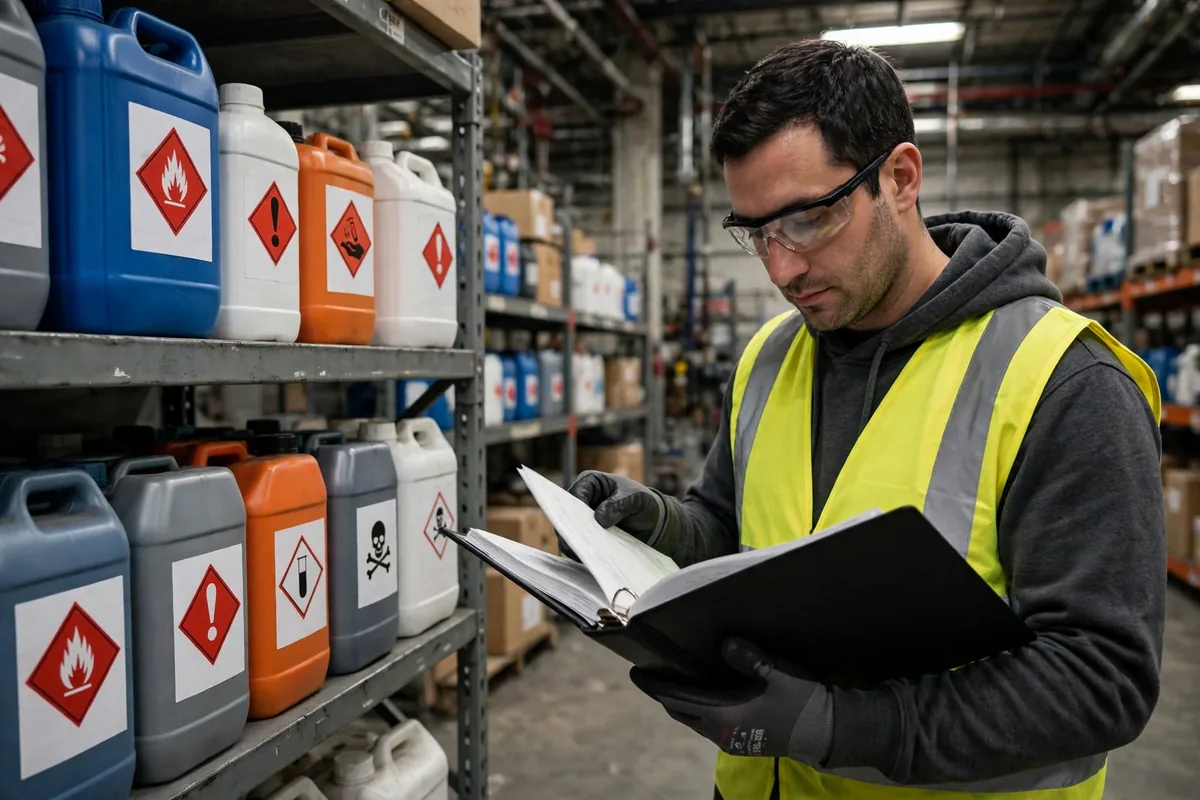
From the sales side, the charging room is worth more than people think, because it is the easiest place for a client's auditor to read your management quality at a glance. They do not need to understand your systems or read your reports. One look around the charging room tells them most of what they need to know. The U.S. Occupational Safety and Health Administration spells it out plainly in OSHA 29 CFR 1910.178(g): a designated charging area, adequate ventilation, an eyewash station reachable within 10 seconds, no-smoking signs, acid-neutralizing supplies on hand, and proper personal protective equipment. These are not suggestions. They are line items on an audit checklist.
My advice to clients is to run the charging room like a standalone product: floor markings that define the charging bays, the battery storage area, and the eyewash location once and for all; no-smoking signs where you see them the moment you walk in; neutralizing supplies in a fixed spot, checked regularly for expiry; protective equipment hanging at the charging bay, not locked in a cabinet on the other side of the building. Auditors notice exactly these details, and when the details are right, trust follows. A charging room in chaos makes a buyer discount even the lowest quote, because they are already wondering what else is unmanaged.
| Line of defense | What matters | What auditors check |
|---|---|---|
| Ventilation | High exhaust, low intake, vents near the ceiling | Vent position, fans actually running |
| Detection | Detector mounted high, alarm below 1% | Detector position, alarm records |
| Layout and protection | Designated area, eyewash within 10 seconds, no-smoking signs, neutralizing supplies, PPE | Eyewash distance, signs and supplies in place |
The figures are a hypothetical scenario for illustration: take a charging room with ten forklifts charging at once, one exhaust fan dead overnight — how high hydrogen climbs depends on room volume and charge state, and there is no single answer. But one thing is certain: the climb from 1% to 4% does not take long, and from 4% to an incident takes only one spark. No smoking, no open flames, explosion-proof electrics in the charging area — these rules are not there to satisfy an inspector. They exist so that spark never shows up.
The counterintuitive part is that most people think the battery itself is the danger in a charging room — the acid, the short circuits, the hot terminals. Batteries deserve respect, but what can put a whole charging room on the news is the hydrogen you cannot see. Acid on skin is an injury. Hydrogen at 4% is an explosion. Different order of magnitude entirely. Manage the hydrogen first, then everything else.
Next time you negotiate a contract, ask three questions: how high are your charging-room exhaust vents? Where is the hydrogen detector mounted? How many seconds to the eyewash? If they cannot answer, discount the quote before you keep talking.
By Susan, 3PL Sales Director