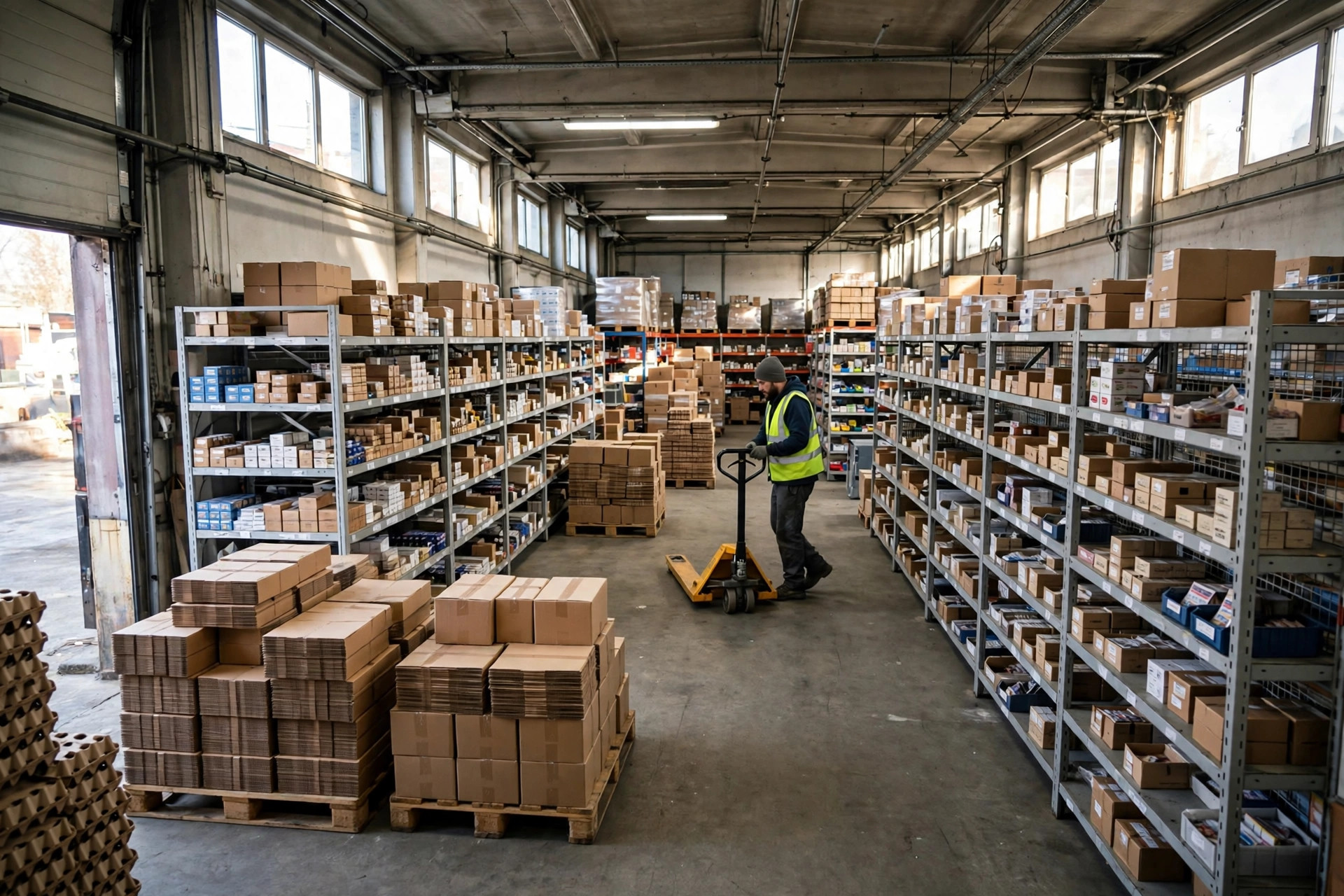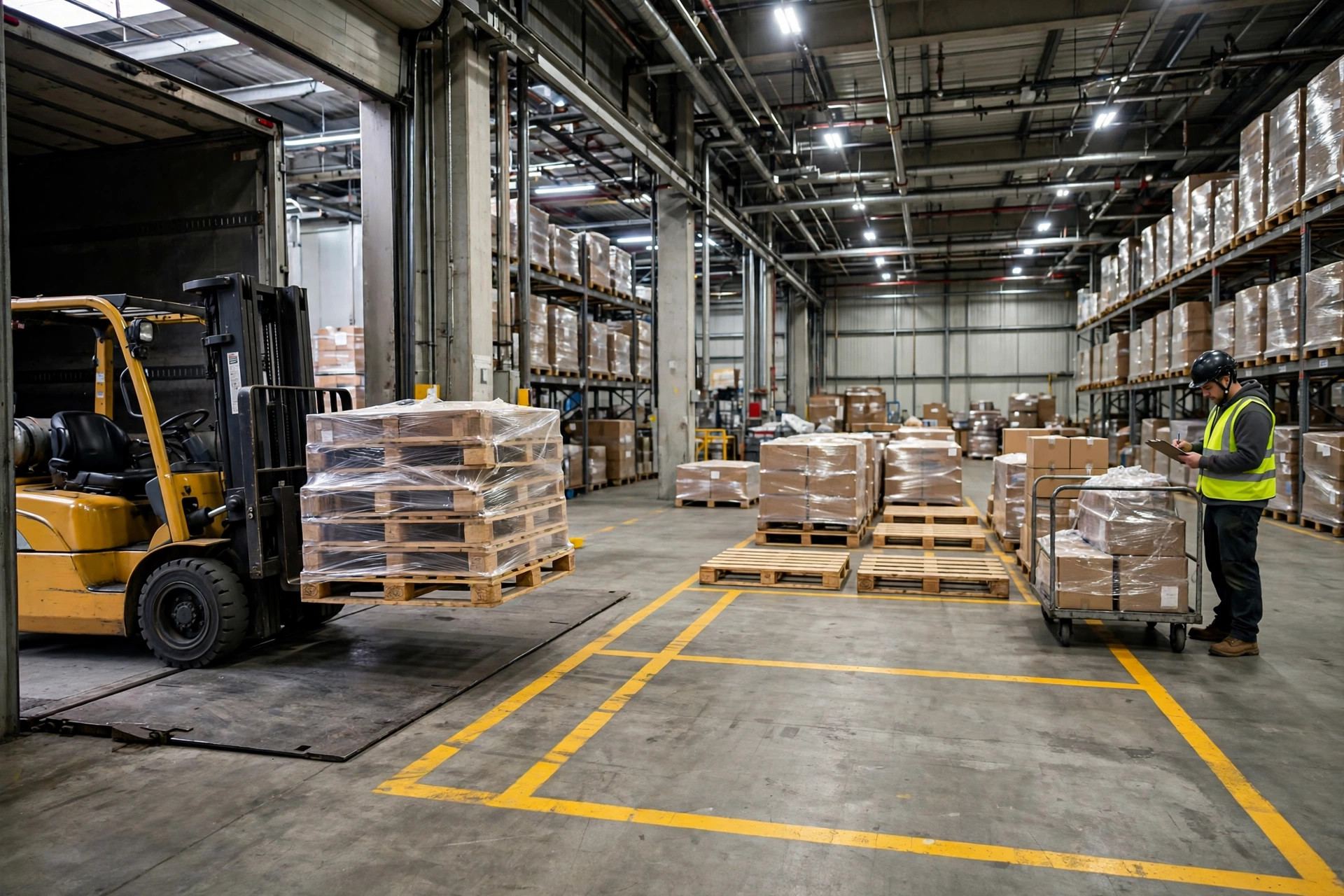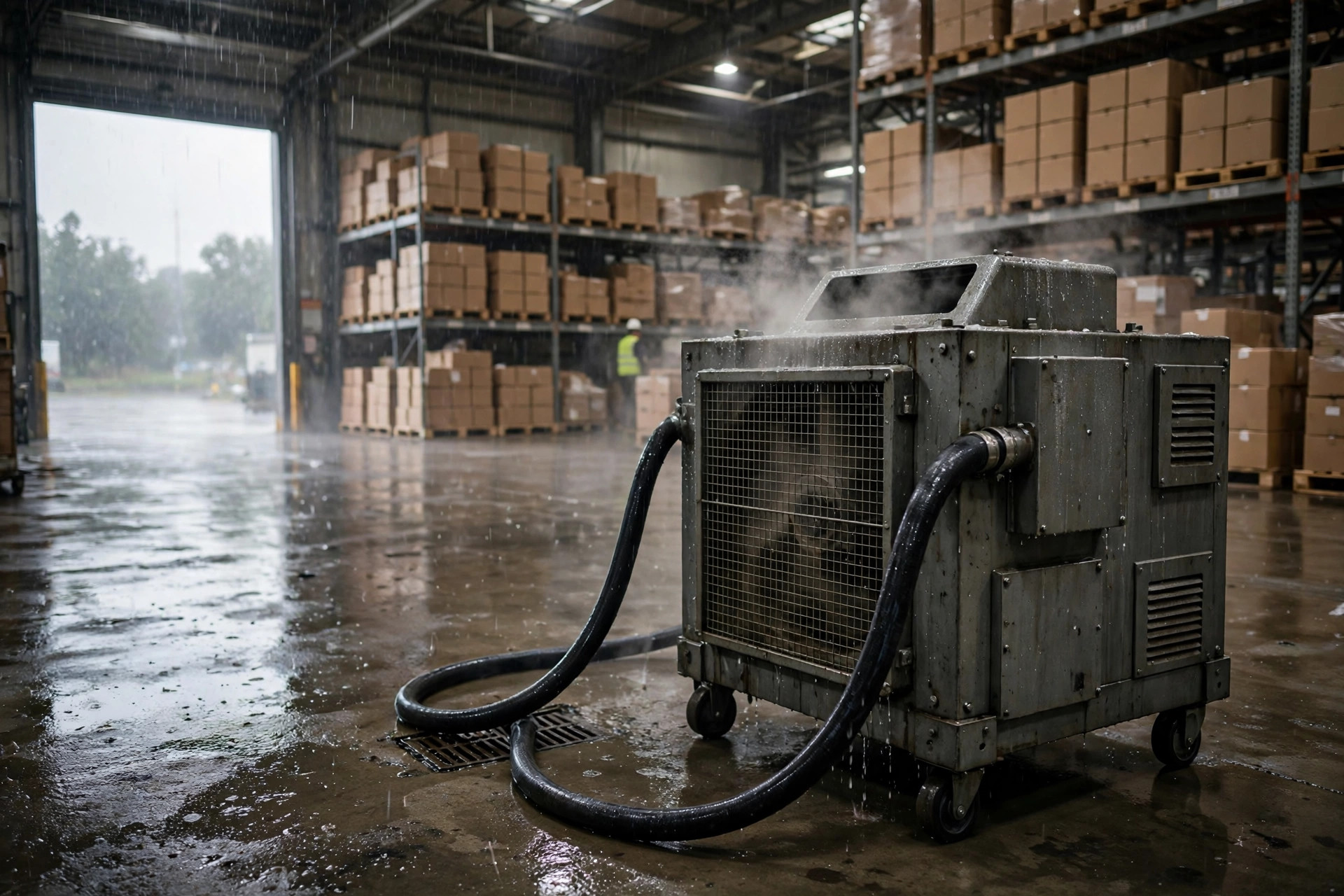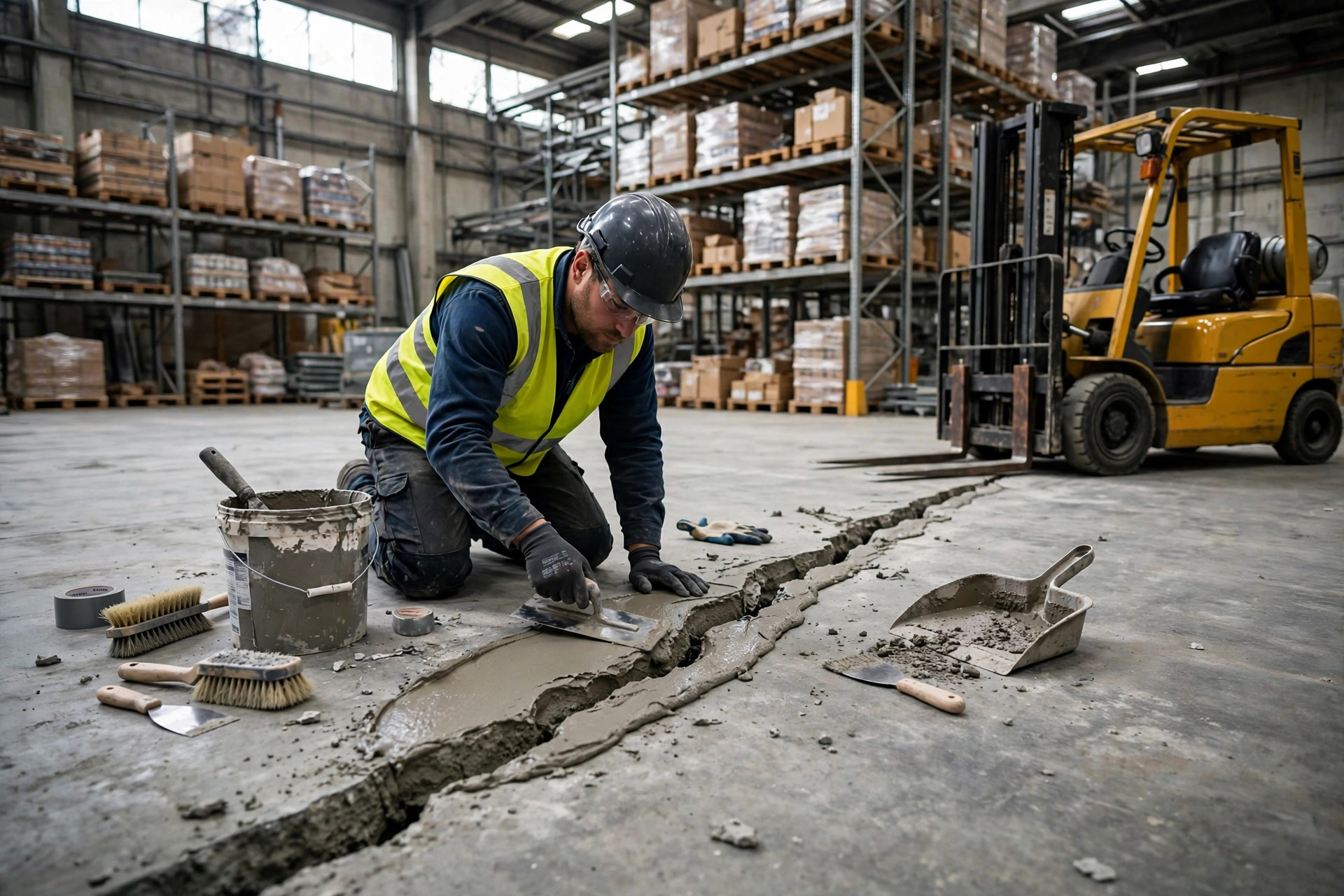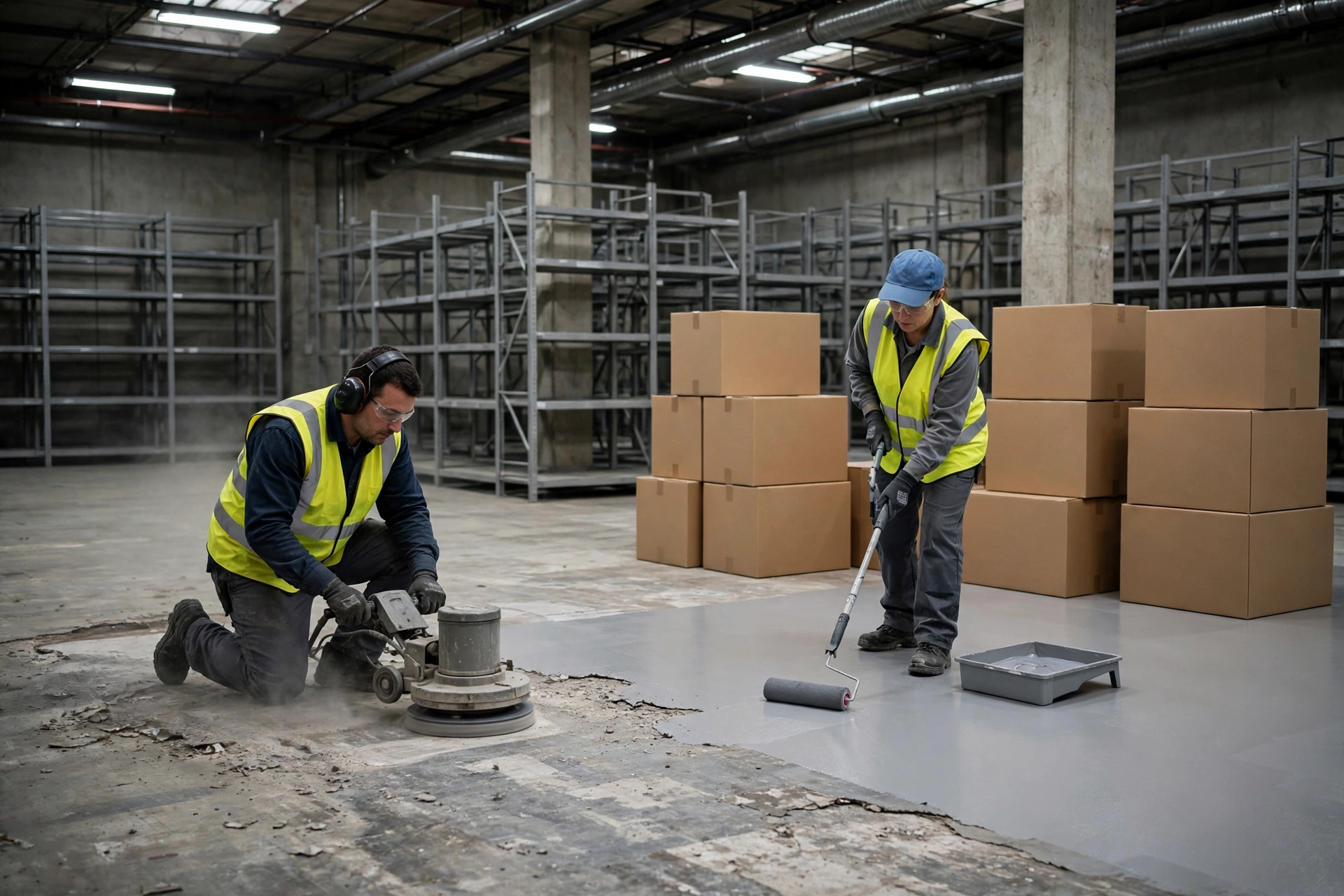
When a warehouse floor coating starts failing, the most common reaction is to strip the whole floor and start over. I understand the impulse. Most of the time, though, it means spending full-floor money on a problem the size of a dinner plate. Warehouse floor coating repair is not really a workmanship problem. It is a judgment problem, and the judgment has to happen before anyone picks up a grinder: how bad is this damage, really, and does it justify a big job?
How Warehouse Floor Coating Repair Breaks Into Three Tiers
Coating failure comes down to three root causes: it stopped sticking, the slab underneath is moving, or the surface has been worn away. Think of it like paint peeling off a wall. Sometimes the adhesive gave up, sometimes the wall itself is cracking, and sometimes people have simply rubbed the same spot for years. Different cause, different fix. Grinding and recoating a crack caused by slab movement is like putting a bandage on a fever.
I sort damage into three tiers. Tier one is surface trouble: small patches of peeling, light wear, slab intact, forklifts still running fine. It looks bad and kicks up a little dust, but nothing structural is wrong. Tier two is patchwork trouble: peeling joined into sheets, cracks running along an aisle, and every patch you laid last time curling at the edges. Tier three is slab trouble: cracks that open and close, settlement or hollow spots underfoot. Here the coating is just taking the blame for what the slab is doing. The repair bill for these three tiers is not in the same league.
In 2023, a third-party warehouse in Dongguan handling small home appliances learned this the expensive way. A few peeling spots appeared in the receiving aisle, small in area, and the site team patched just the lifted sections to save time. Within three months, every patch edge had curled, and forklift wheels kept catching the lifted edges and tearing off fresh flakes. The job eventually became a full regrind and recoat of the entire aisle section. The two rounds combined cost more than doing the full section properly the first time. The crew was not at fault. The first round misjudged the tier: moisture had already weakened adhesion under those spots, so a local patch never had anything solid to grip.
Peeling, Cracking, and Wear: Three Coating Repair Fixes
For peeling, test the bond before you decide. Run a scraper gently around the edge of a lifted patch. If the material underneath is dry and hard and the damage stays local, spot grinding plus a touch-up coat will hold. If the underside is damp or soft, or one scrape lifts a much bigger area, the bond layer has already failed. Patching there is like taping over sand. That damage belongs in the full-section tier, no matter how small it looks.
For cracks, first settle whether the paint cracked or the floor cracked. Fine, even, non-penetrating lines in the coating itself can usually be ground out and recoated. A crack that runs in a line, opens and closes, or shows a slight step between its two sides is almost certainly a moving joint or settlement crack in the slab. A North China auto-parts warehouse paid for this lesson twice: the same aisle crack was recoated two times and kept opening, until the third round treated the slab joint with a flexible filler. It has held for two years since. Paint cannot cover something that moves. The same logic applies to a wall: if the wall keeps shifting, no amount of filler on top will stay put.
Wear is the most misjudged of the three, in both directions. Thinned coating at forklift turning points and dock doorways, with no exposed aggregate, no dust, and no slipperiness, can wait for the planned maintenance window. But once the surface wears down to exposed coarse aggregate, wheels start bouncing, dust gets into product packaging, and tire wear accelerates. At that point you are no longer repairing a coating. You are paying for tires, complaints, and eventually the slab itself.
The Ledger: Three Columns Before You Spend Anything
Before any work starts, I build a three-column ledger and fill in the numbers before deciding.
| Tier | What you see | The fix | How the money works | | Tier one: surface trouble | Small peeling spots, light wear, slab sound | Spot grind and touch-up | Materials plus half a day of labor, minimal downtime | | Tier two: patchwork trouble | Peeling in sheets, cracks along the aisle, curling patches | Strip and recoat the whole section | Priced by full-section area, usually cheaper than repeated patching | | Tier three: slab trouble | Cracks that move, settlement, hollow spots | Fix the slab first, then recoat | Slab work is the big cost; the coating is the smaller line item |
This ledger produces a counterintuitive result. Most people assume spot patching is always the cheapest option, and the math says otherwise. Tier one damage genuinely is cheapest as a spot fix. But tier two damage patched once grows a fresh ring of weak edges, and the next failure comes faster. Two rounds of patching, plus two rounds of aisle disruption to receiving, usually add up to more than a single full-section recoat. Nobody writes the disruption into the quote, but every warehouse manager has paid it.
So my rule is simple: the same spot failing twice within a year gets promoted one tier on the spot. Stop arguing with a patch of floor. Arguing with it always costs more than fixing it properly once.
The Maintenance Traps That Waste Money Four Ways
The first trap is running forklifts on a fresh coat before it has cured. The aisle looks dry, a wheel leaves its print, and that printed spot is where peeling starts later. Tight schedules are real, but the fix is sequencing: recoat in sections, close one section at a time, and protect the curing time. Saving half a day is not worth shortening the whole section's life.
The second trap is only fixing what visitors see. Dock doorways and main aisles get polished while turning points deep in the storage area go uninspected. Wear starts exactly at those overlooked turning points, and by the time anyone notices, the coating is worn through to aggregate. Put turning points, column bases, and dock ramps on the inspection route. A monthly walk takes minutes.
The third trap is treating a floor scrubber as maintenance. A scrubber removes dust, not oil that has soaked into the coating. Forklift drips and pallet leakage left sitting will slowly eat through the film. Wipe up oil when it happens. Waiting until it stains through means grinding away coating life that did not need to be lost.
The fourth trap is repairing without records. Which section was fixed, in which year, for how much, with what material — nobody remembers, so every failure gets judged from scratch. A repair log does not need to be fancy: location, tier, fix, date. Three years of that table is your warehouse's floor history, and the next budget stops being guesswork.
Warehouse floor coating repair comes down to one sequence: grade first, then act. Grade it right, and small damage stays cheap while slab damage gets one proper fix instead of three failed ones. Grade it wrong, and small money turns into big money that still does not solve the problem.
So is the money well spent? Look at one number: how many years the repaired section holds before major trouble returns. If it holds, the money was worth it. If it does not, even the cheapest quote was a waste.
By Da Liu, Automation Engineer