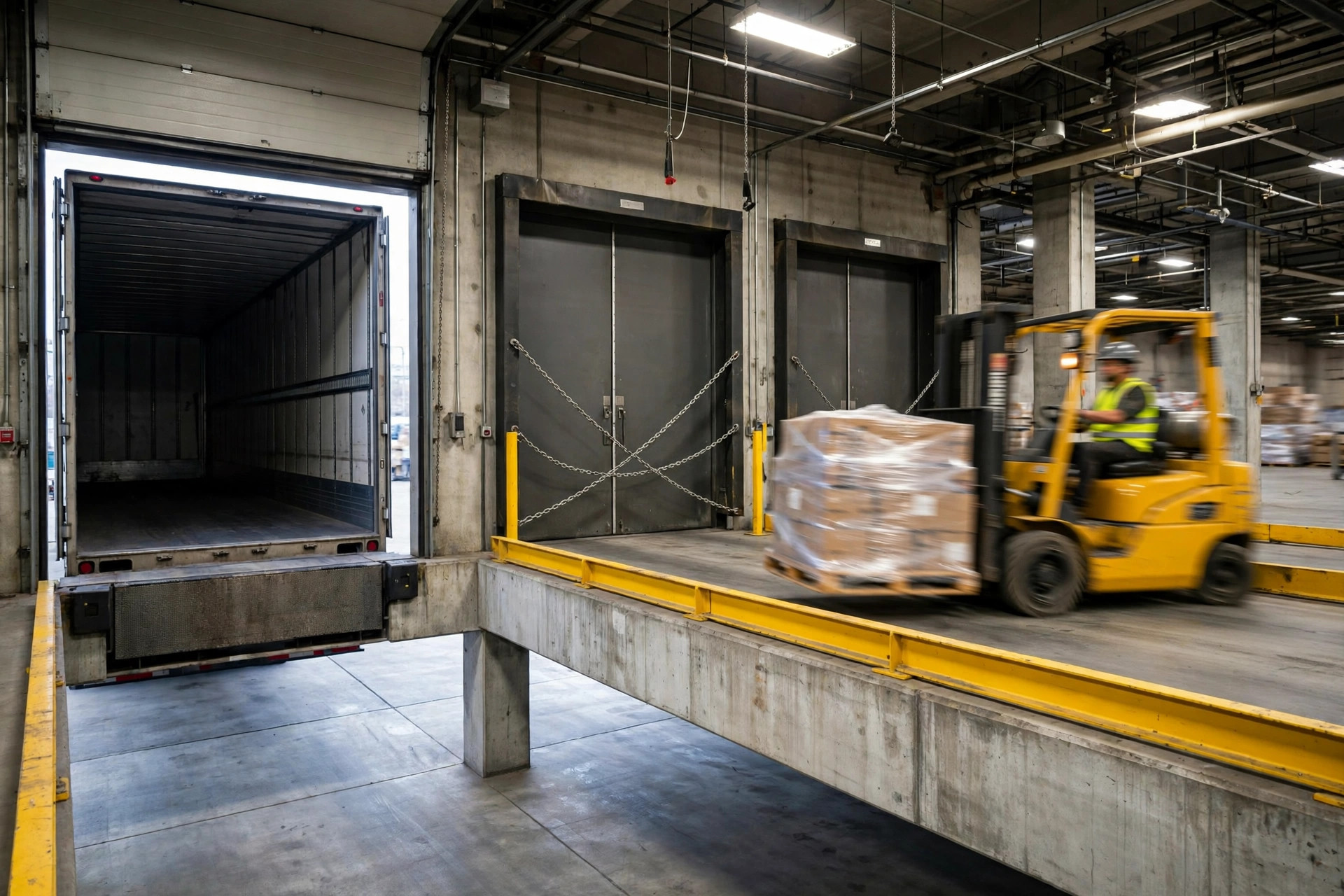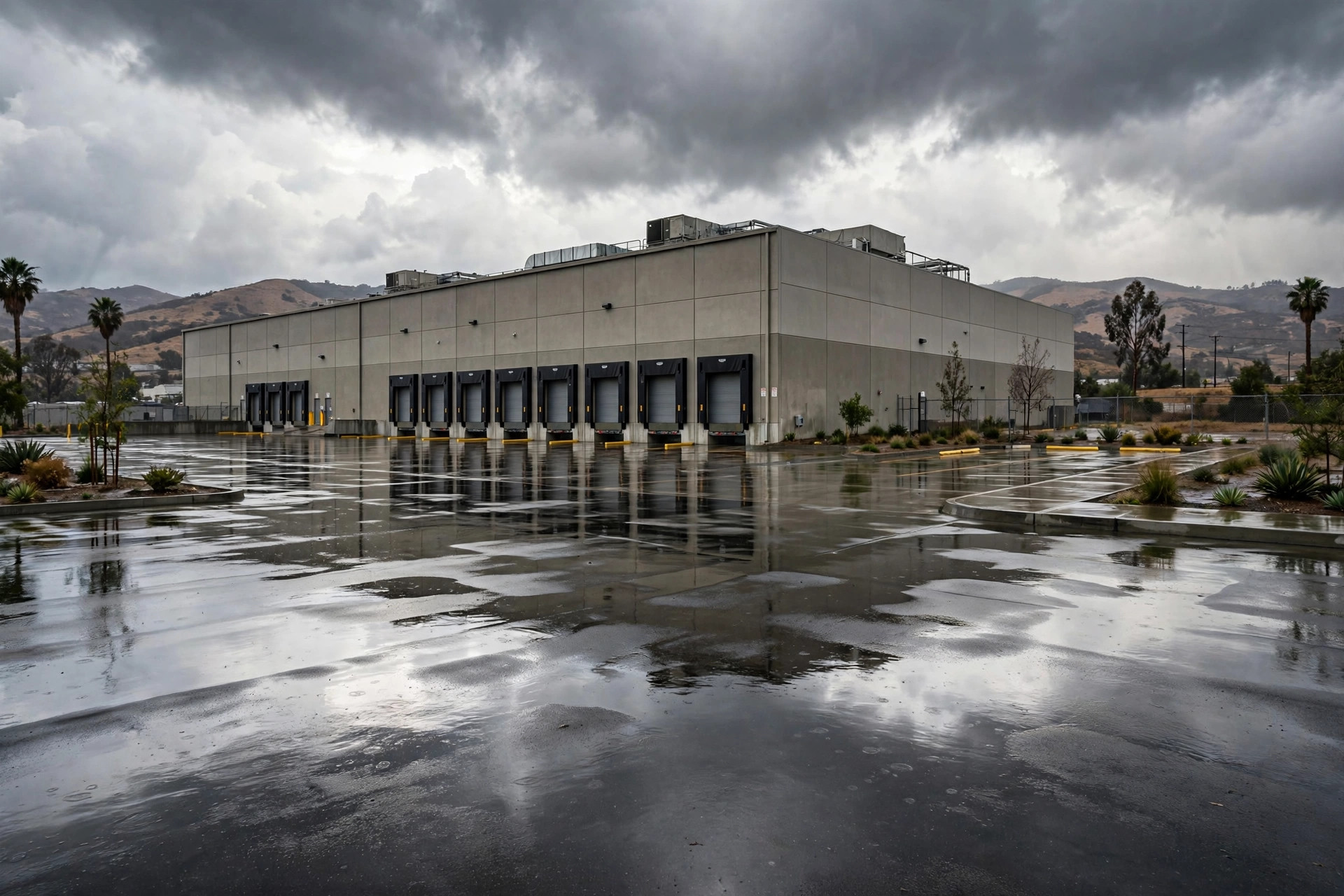
During the atmospheric-river storms that battered Southern California in the winter of 2023, a small home-goods distributor in a San Bernardino industrial park watched water creep up to ankle height at their loading dock. For three full days they shipped nothing — forklifts parked under soaked racking, half the cartons wet through, and parcel carriers refusing to send trucks into the park. When the water finally receded and they sat down with the landlord to sort it out, the real story came out: nobody had looked at a certain map before signing the lease.
Whenever I tell this story to people in the industry, the reaction is usually the same: "There's a flood map?" We obsess over rent per square foot, clear height, dock doors, and distance to the port — but nobody types the address into FEMA's map and takes a look. That map is free and public, and checking it takes less than ten minutes. Skip it, and you get the double hit: the insurance bill you never budgeted for, and the shutdown you never negotiated.
The Map You Can Check in Ten Minutes
FEMA runs a Flood Map Service Center at msc.fema.gov. It's free. Type in the warehouse address and it pulls up the Flood Insurance Rate Map (FIRM) for that parcel. You only need to read two things.
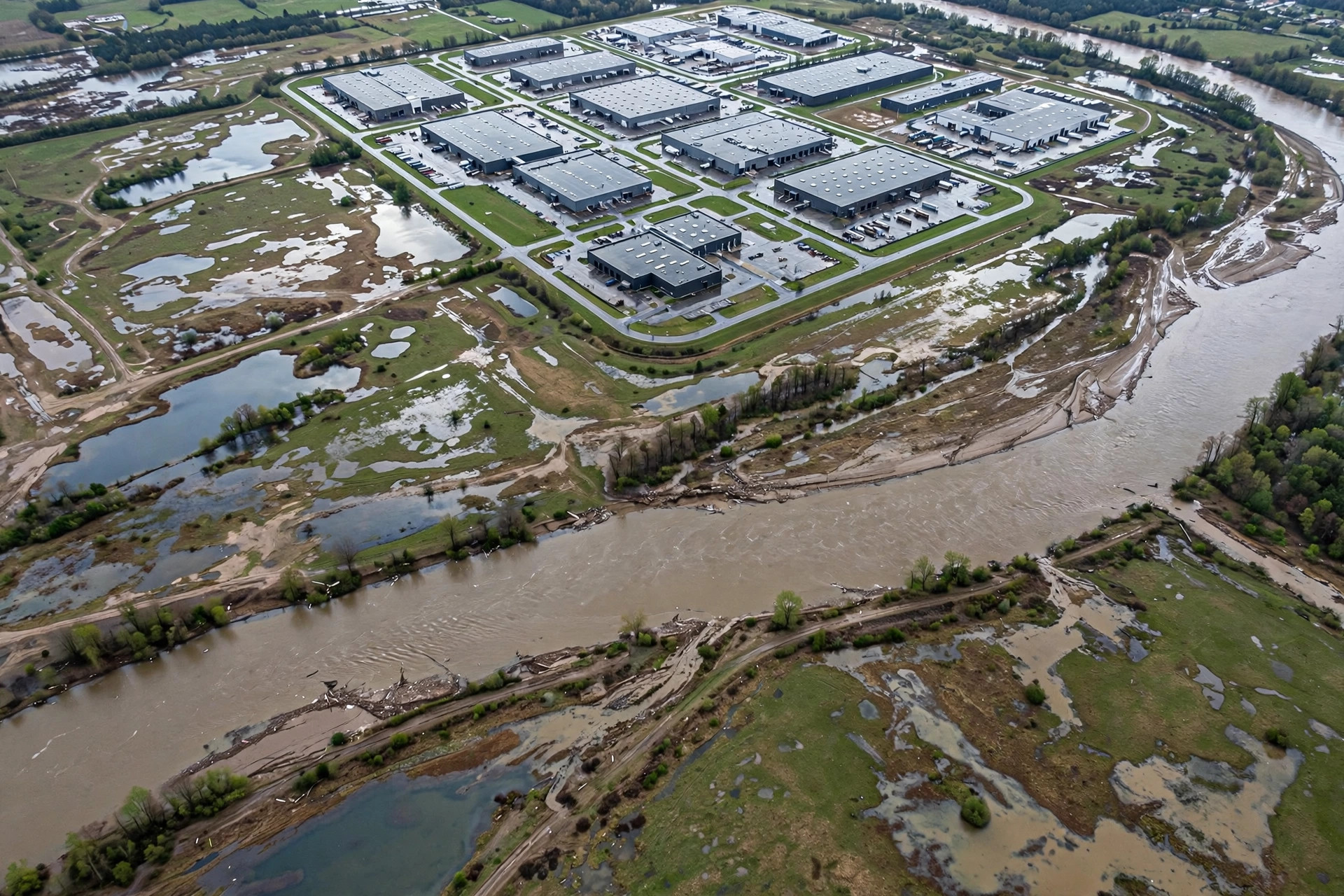
First, the zone. Zone A and Zone AE are high-risk areas — the official definition is a 1% annual chance of flooding, the so-called "100-year floodplain." Don't shrug at 1%: over a 30-year mortgage horizon, that's a 26% chance of flooding at least once. Zone X, by contrast, is moderate-to-low risk. Second, the Base Flood Elevation (BFE) — roughly, how high that "100-year" water is expected to reach. Everything about insurance pricing downstream flows from this map.
Brokers never bring it up during site tours. Many landlords haven't checked it themselves, or have and decided not to mention it. So this one is on you. Punch in the address, download the report, save the screenshot. It becomes your first piece of leverage in every conversation that follows — with the landlord and with your insurance broker.
The Flood Insurance Math: Who Pays, How Much
Start with the hard rule. If the property sits in a Special Flood Hazard Area (SFHA) and the owner carries a federally related loan — which covers the vast majority of commercial mortgages — federal law mandates flood insurance. Refuse, and the lender can buy force-placed coverage at an inflated price and bill you for it. Note: that mandatory policy covers the building. Not your inventory. Not your racking. Not one dollar of your goods.
When landlords say "we already have flood insurance," ask three questions. One: insured for whom? The landlord's policy covers the structure only. Two: how much? Commercial policies under the National Flood Insurance Program (NFIP) cap out at $500,000 for the building and $500,000 for contents. For a real warehouse, that doesn't even cover a row of high-bay racking — the excess has to come from the commercial market, where pricing and terms are a different universe. Three: does it cover downtime? Business interruption insurance excludes flood by default; you need a separate endorsement.
And don't count on the landlord's policy for your goods — it was never built for that. Most tenants need their own commercial property policy with a flood endorsement, sized to peak inventory, not the off-season average. Water doesn't check your calendar. Get quotes from more than one broker, pricing NFIP and commercial excess coverage together; the spreads between brokers can be surprisingly wide.
Before signing, demand one document from the landlord: the Elevation Certificate. It records whether the warehouse's first floor sits above or below the Base Flood Elevation, and that single fact drives the premium tier. A building above the baseline versus one below it can differ in premium by multiples. If the landlord can't produce one, that tells you everything — get a surveyor to make one yourself. A few hundred dollars for clarity.
Here's my blunt take: if flood insurance is "something we'll figure out later" in the lease, it will never get figured out — after the water arrives, everything is priced at catastrophe rates. The insurance cost belongs in your total occupancy math before you sign the LOI, not after. Don't just compare rent per square foot. A Zone X warehouse renting slightly higher can end up far cheaper than a Zone AE building with tens of thousands in annual flood premiums.
Lease Language You Need in Writing
When negotiating, don't let flood provisions stay vague. Get these in writing. First: who buys the flood insurance, the minimum coverage limit, and who delivers the annual renewal certificate. Second: who carries business interruption insurance — landlords love to hide behind "force majeure" when flooding shuts you down, so spell out rent abatement for flood-related downtime upfront. Third: how the force majeure clause defines a flood event, at what point rent gets reduced, and at what point you can terminate early. Fourth: who pays for flood damage at move-out, and whether restoration covers waterlogged floors and walls.
Don't worry that this sours the negotiation. What really sours relationships is finger-pointing after the water recedes.
Already in a Flood Zone? Here's the Playbook
If you're already signed and just discovered you're in a flood zone, don't panic — there are still moves. Pull the zone and BFE from msc.fema.gov, get the Elevation Certificate from the landlord, and take both to an insurance broker for quotes. Don't wait for renewal season. On the physical side: move goods up off the ground floor, keep water-sensitive SKUs off the bottom level, stage flood barriers and sandbags at the doors, and check the park's drainage and pumps before storm season. And keep that lease language list handy — work it in line by line at renewal. The landlord won't grant everything, but you'll get nothing you never asked for.
Pre-Lease Flood Checklist
Do these in order, don't skip steps:
- Look up the address on msc.fema.gov, pull the FIRM zone, save a screenshot.
- If it lands in Zone A or AE, ask yourself: is this building irreplaceable? If a Zone X alternative exists, look at it first.
- Before signing the LOI, get the Elevation Certificate from the landlord — or commission one yourself.
- Take the zone and elevation to an insurance broker. Price both flood insurance and business interruption coverage into your total cost.
- Write it into the lease: who buys insurance, minimum coverage, downtime rent relief, the force majeure definition, and move-out damage responsibility.
- Before storm season: flood barriers, sandbags, move ground-floor goods up, inspect drainage.
A flood zone isn't a dealbreaker. But the insurance math and the lease language have to be settled before the LOI — negotiating after you sign is too late.