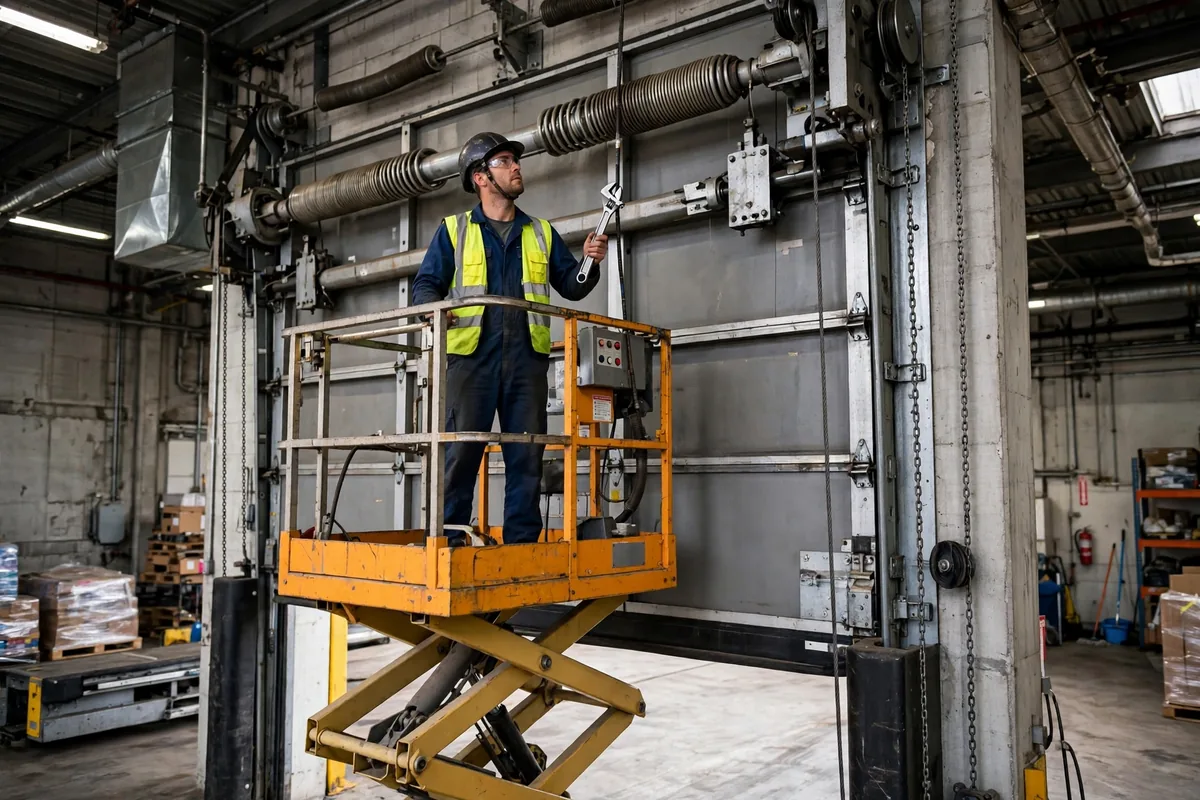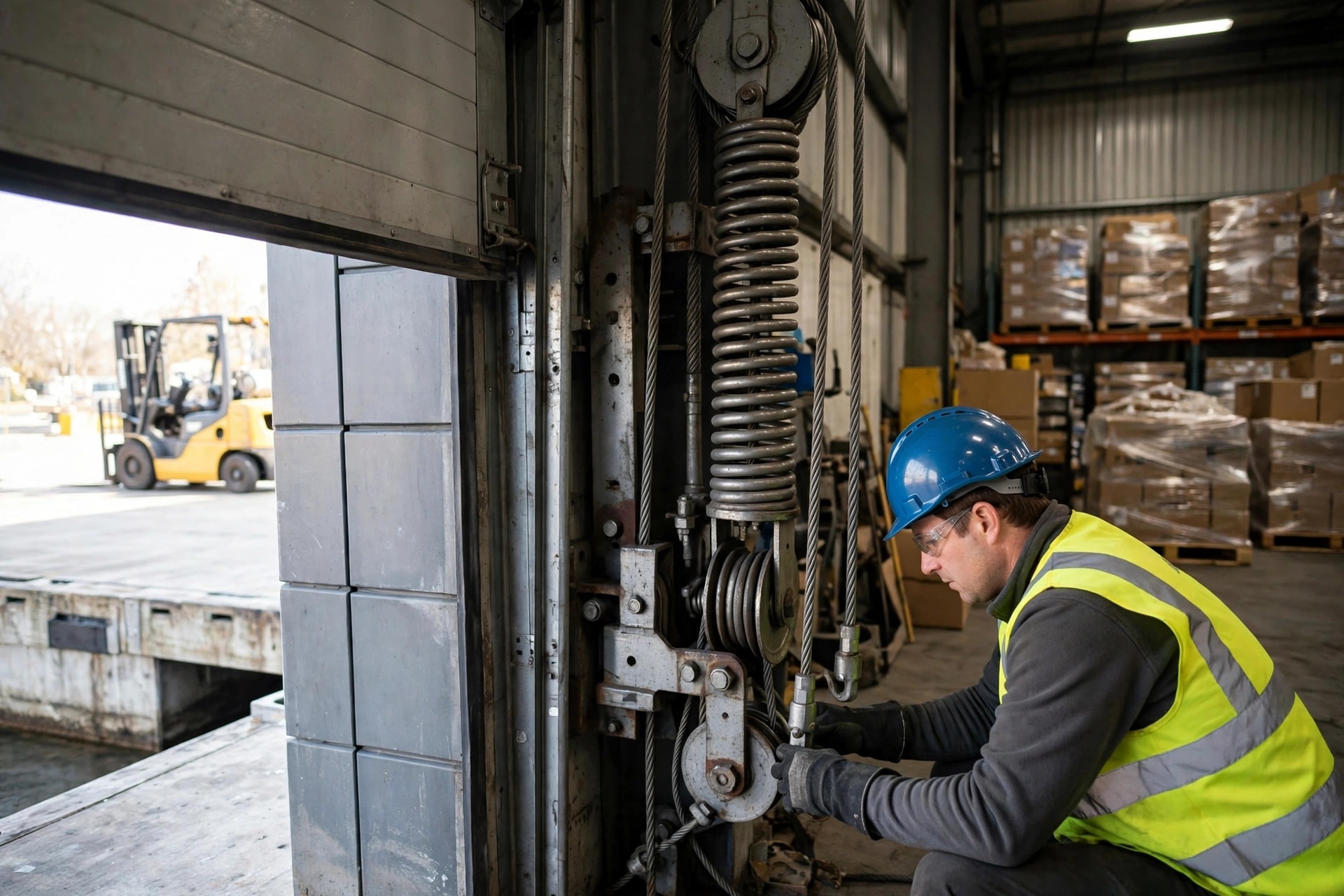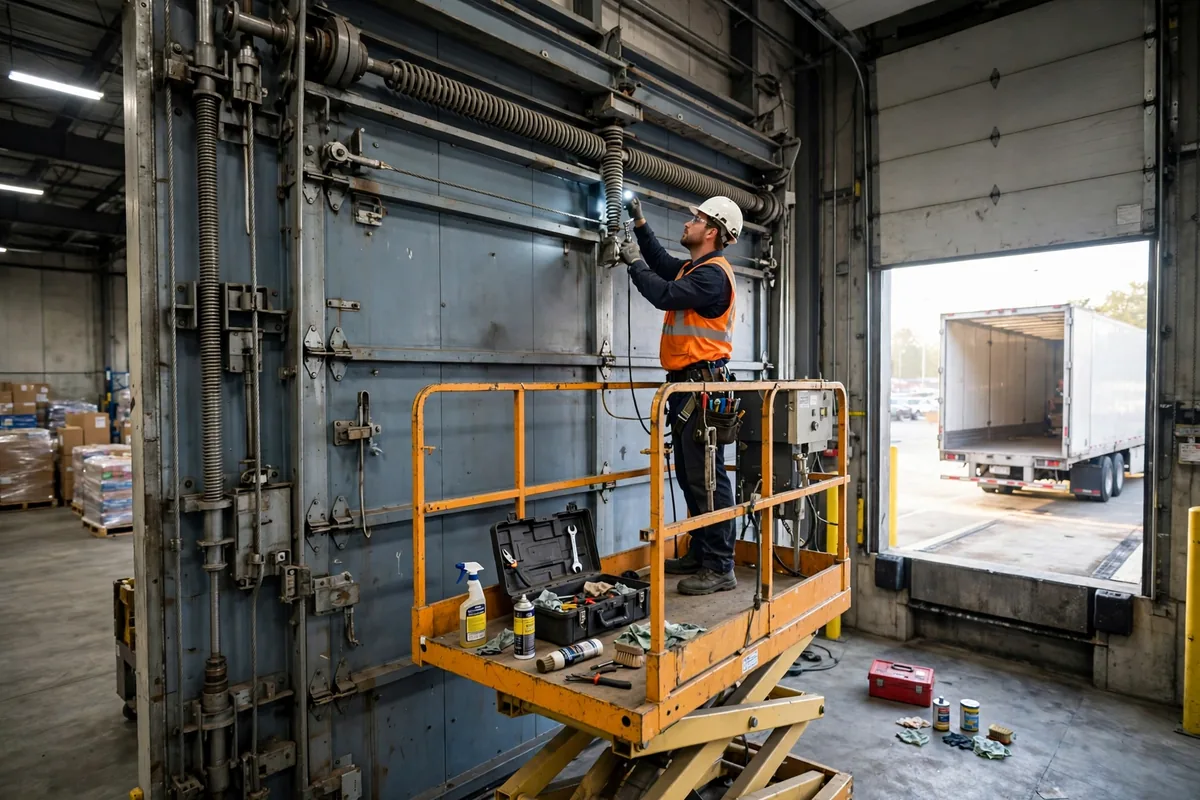
6:40 a.m., peak Monday. Door 3 jams halfway up — warehouse dock door preventive maintenance stops being paperwork, right there. The first truck is already backed in. The driver leans on the horn. Two more trucks are waiting behind him. Our mechanic is not on shift yet, and the lead is running the dock with a radio in each hand. One stuck door cost us close to two hours of shuffling trucks before the day had really started.
What warehouse dock door preventive maintenance actually covers
Plenty of warehouses fix doors only after they break. If it goes up and down, people call it fine. A dock door does not work that way. Springs, cables, tracks, seals, and sensors all wear on their own schedule. Whatever is aging quietly will pick your busiest week to quit.
Our routine now has three layers. It is not fancy. It works.
| Frequency | What gets checked | Who does it |
|---|---|---|
| Weekly | Door seals for tears, tracks for debris, bumpers and the area around the leveler for fresh impact damage | Shift lead, logged in the handover book |
| Monthly | Spring tension, cable wear, travel speed, photo-eye sensors, locks and bollards | Our in-house mechanic, item by item on a checklist |
| Quarterly | Balance system, motor noise, control box, full-travel test, seal and insulation check | Mechanic leads, service provider joins when needed |
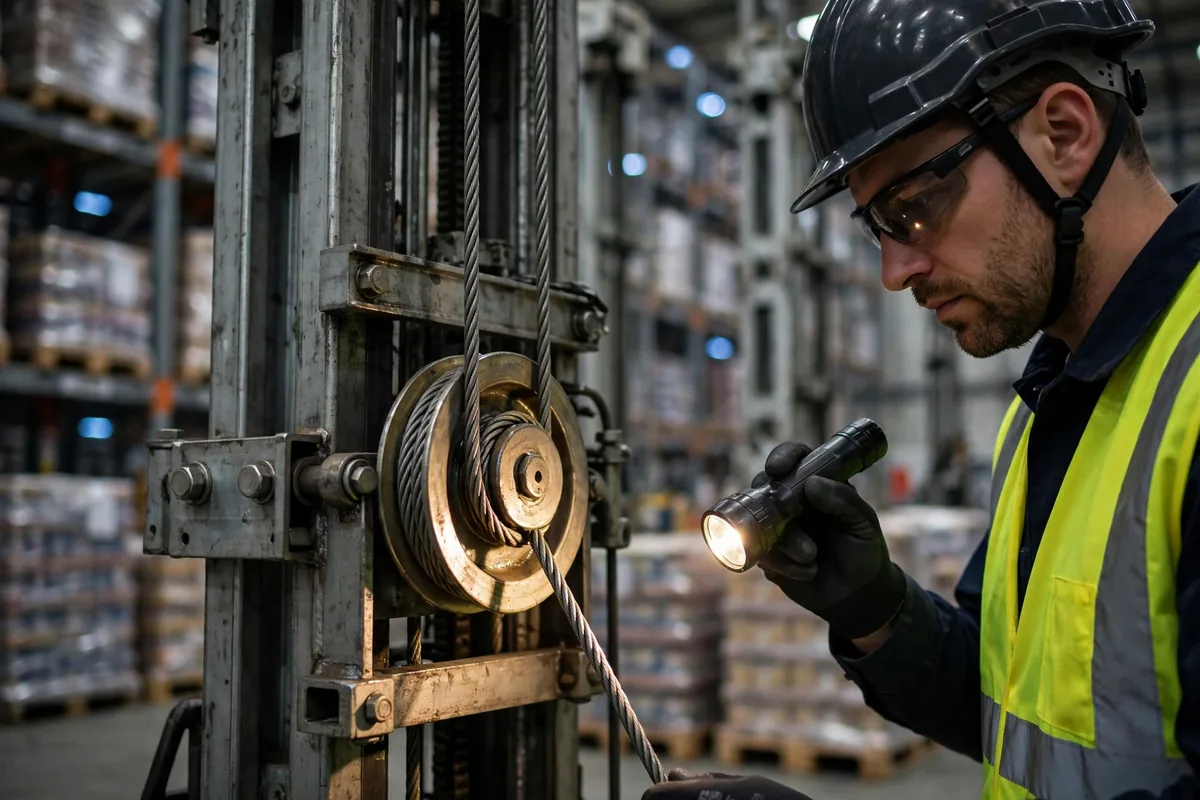
Let me give you a real-feeling example from last fall, the kind every dock lead will recognize. During a monthly check, our mechanic, Old Chen, found a dock door cable starting to fray on door 5. You had to look closely to see it. The door ran perfectly that day. If that cable had let go during peak, we would not just have had a repair bill. We would have had a safety incident to answer for. We replaced it that same week, and door 5 ran the whole peak without a single stoppage.
Seals are the other item people ignore until it hurts. On a door next to a cold room, a cracked seal leaks cold air all winter and leaves condensation on the floor by the doorway. One night-shift guy slipped there and caught himself on a rack. He was fine. The seal went on the weekly list the next day. A tear longer than your hand gets replaced. Nobody waits for the quarterly visit.
What one dead door costs at peak: a worked example
I am a floor person, so let me do this in plain numbers. The table below is a clearly labeled hypothetical example, not any real warehouse's books. Swap in your own door count, truck volume, and labor rates, using your provider's latest terms where a contract is involved.
Picture a site with 8 dock doors handling roughly 60 truck visits a day in peak season. One door goes down for 3 days.
| Impact | What changes in this hypothetical example |
|---|---|
| Usable doors | 8 doors become 7, and every truck waits longer in the busiest hours |
| Dispatch work | Repeated re-spotting of trucks, a growing queue, and a dock coordinator firefighting all day |
| Labor | Receiving and loading each lend people to manage the doorway, and overtime stretches |
| Knock-on risk | Last-minute door changes raise the odds of freight staged at the wrong door, and one mix-up can burn half a day of searching |
The parts bill is rarely the expensive line. The expensive part is rhythm. Drivers get loud. Receivers get pulled off their work. A lead who should be running waves spends the shift directing traffic. Three days of that costs more in hours and temper than the repair invoice ever shows.
Here is the part that surprises people: a spare door you never use is not a safe door. Springs sit, tracks collect grime, and the one morning you finally need that backup door, it may not travel at all. We now run every spare door through two full open-and-close cycles each week, the same idea as warming up a truck. Use it a little, and it is there when you need it.
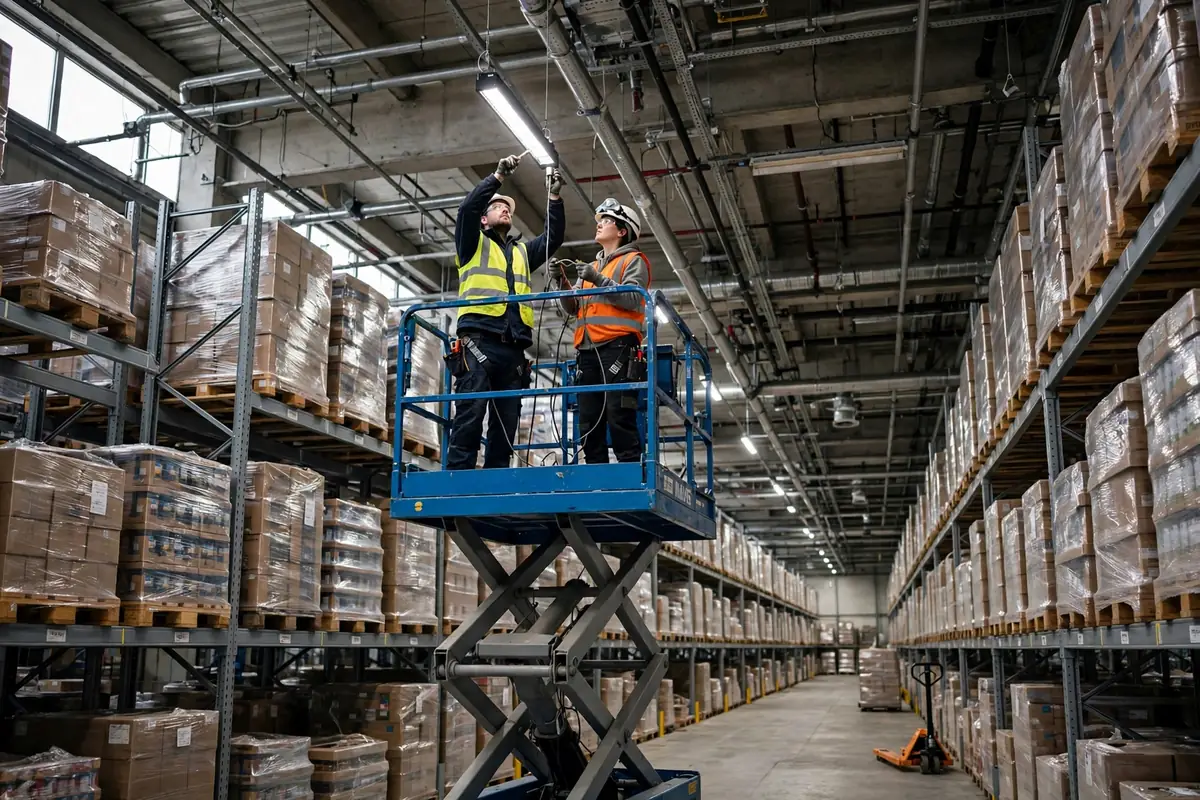
One more lesson, from a Friday afternoon last peak. A pallet clipped a sensor at door 2, just a light bump. The door still closed, so nobody reported it. Saturday morning that door kept reversing halfway down, the system kept flagging it as not closed, and the loading crew would not load the trailer behind it. The adjustment itself took minutes once someone finally checked the sensor alignment. The diagnosis and the waiting ate half the morning. After that, our rule changed: any contact with a door or a sensor gets reported the same shift, no matter how well the door seems to run. That line sits in bold on our warehouse dock door preventive maintenance checklist, and it has saved us at least twice since.
In-house hands or a service contract for dock door work
There is no single right answer here. It depends on your building and your crew.
In-house repair wins on speed. The mechanic is already in the building, and a stuck door gets eyes on it fast. The weakness is depth, and honesty. Deep work on springs and balance systems needs the right training, and when the building gets busy, preventive work is the first thing everyone agrees to postpone. Postpone it enough times and you are back to fixing doors after they fail.
A service contract wins on discipline. Someone else tracks the cycle, shows up with records, and handles the quarterly deep inspection. The weakness is response time. At peak, every warehouse in town is calling the same providers, and emergency response depends on what your contract actually says. Go by the written contract and the provider's latest terms, not by what a salesperson promised in a meeting.
What we run now is a mix, and I offer it as a starting point, not a rule:
- Weekly and monthly checks stay in-house. Our people do them, sign them, and keep the records in the building.
- Quarterly deep work, plus anything involving springs and balance systems, goes to the provider. Our mechanic stays alongside for the whole visit and learns the door while it is open.
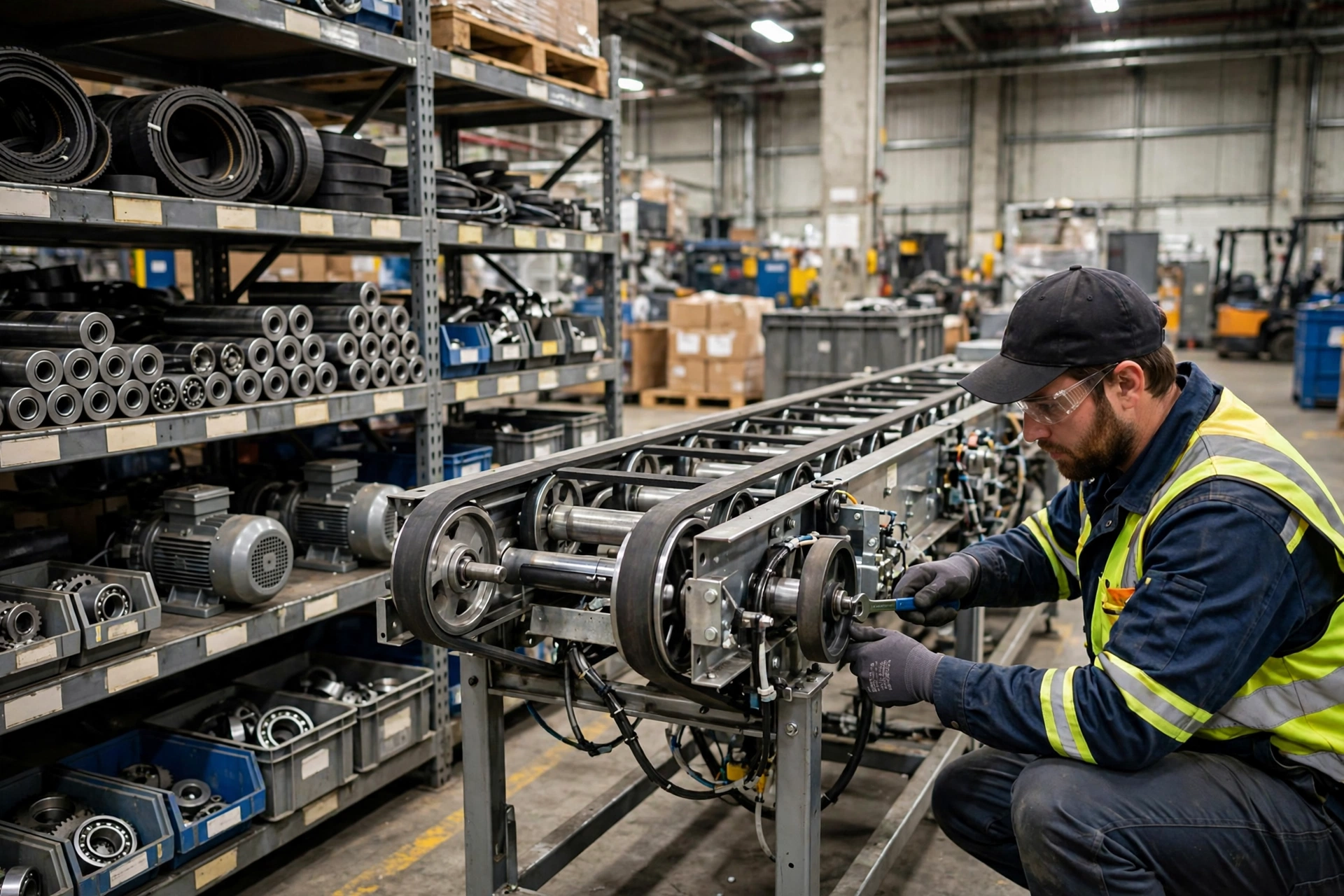
- We stock a small set of common wear parts on site: seals, sensors, and the cable spec our doors use. Confirm which parts fit your door models with the manufacturer before stocking anything, so you do not fill a shelf with parts nothing uses.
- Every failure gets three lines in the log: which door, what symptom, how long it was down. After a year of that log, you know which door is your problem child, and the repair-versus-replace conversation stops being guesswork.
I will finish with the people side, because that is where this really lands. The dock is where arguments start in a warehouse. Drivers are short on hours. Receivers are short on time. When a door fails, all of that frustration lands on whoever is coordinating the yard. Good warehouse dock door preventive maintenance is not really about doors. It is about whether your morning and night crews get to do their jobs without a daily emergency at the doorway.
So here is my advice to fellow leads. Do not wait until the peak roster is posted to think about your doors. Pick a quiet afternoon this month. Run every door through its full travel. Crouch down and look at the seals and the tracks yourself. Anything you find, you still have time to fix. Find it with trucks queued at the gate, and all that is left is overtime and apologies.
By Chen Feng, Warehouse Operations Manager