Here is the short version: warehouse dock door maintenance cost is decided less by the repair quote than by the timing of the failure. A door you take out of service on a quiet Tuesday morning for planned work and a door that drops on its own during a Friday shipping peak need the same spring. The bill is not the same at all. Think of a dock door like a person who skips every checkup: the problem does not disappear, it just waits for your busiest day to show up.
Dock doors are the easiest equipment in the building to ignore. They have no dashboard, no alarms, and no software nagging you. They open and close fine for months, so the budget line slides a year, then another. Then a cable snaps, the door hangs crooked halfway down, forklifts cannot pass, and an entire dock position stops with it. By the time you are discussing maintenance intervals over a jammed door, the discussion is already late.
warehouse dock door maintenance cost: count the downtime first
Whether the money is worth it comes down to one number: how many hours of dock capacity you lose when a door fails unplanned. Split the cost open and the math gets obvious. The figures here are a hypothetical worked example, not any real warehouse's books: assume one dock position handles a steady flow of pallets per hour, a peak-season failure forces rerouting that lengthens forklift travel, and an emergency call-out costs more than scheduled labor, with after-hours rates set by your service provider's current pricing. Two planned services a year cost a predictable amount of labor and wear parts, scheduled into your slowest windows. One major unplanned failure can eat several years of that preventive spend in a single afternoon, once downtime, emergency fees, and delayed loads are counted.
| Item | Planned service | Fix it when it breaks |
|---|---|---|
| When it stops | Your slowest window, chosen ahead | Peak hour, no warning |
| What you pay | Labor plus wear parts, predictable | Emergency fees plus downtime plus delays |
| Safety exposure | Hazards found and fixed with the door secured | Falling or unbalanced door, uncontrolled |
| Effect on staffing | Crews notified, shifts adjusted | Everyone firefighting, plan scrapped |
In the summer of 2022, at an inland food warehouse, I watched the textbook version of this failure. Mid-afternoon, right in the shipping rush, a sectional door spring snapped. The door hung from its cables and nobody dared walk under it. The supervisor sealed that position, two waiting trucks had to shuffle to the next door, and drivers sat in the yard for most of the afternoon. Nobody was hurt, which was luck, not management. When the door came apart later, the spring showed rust spots and the cable was already frayed. A monthly walk-around would have caught both a month earlier. The skill to fix it was never the problem. Nobody was assigned to look.
The quieter version happened at an auto parts warehouse in 2024. The bottom seal had aged and cracked, winter air poured through the gap, and the slots near the dock ran noticeably colder than the rest of the building. Freeze-sensitive stock had to move deeper inside, and usable capacity quietly shrank. A seal is a cheap part. A winter of wasted heat and reshuffled locations cost more than the seal many times over, and I will not invent an energy figure because every building differs. The pattern is what matters: a small worn part bills you from a different account.
dock door inspection: springs, cables, and safety devices
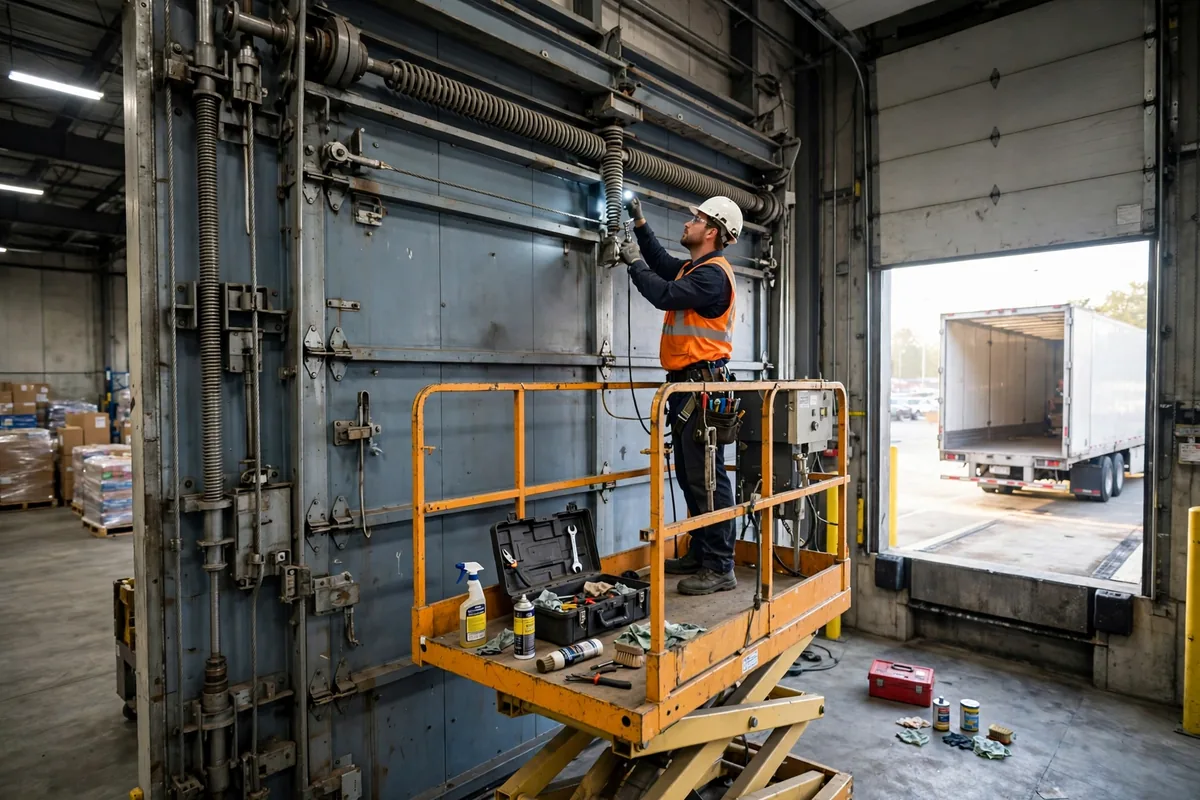
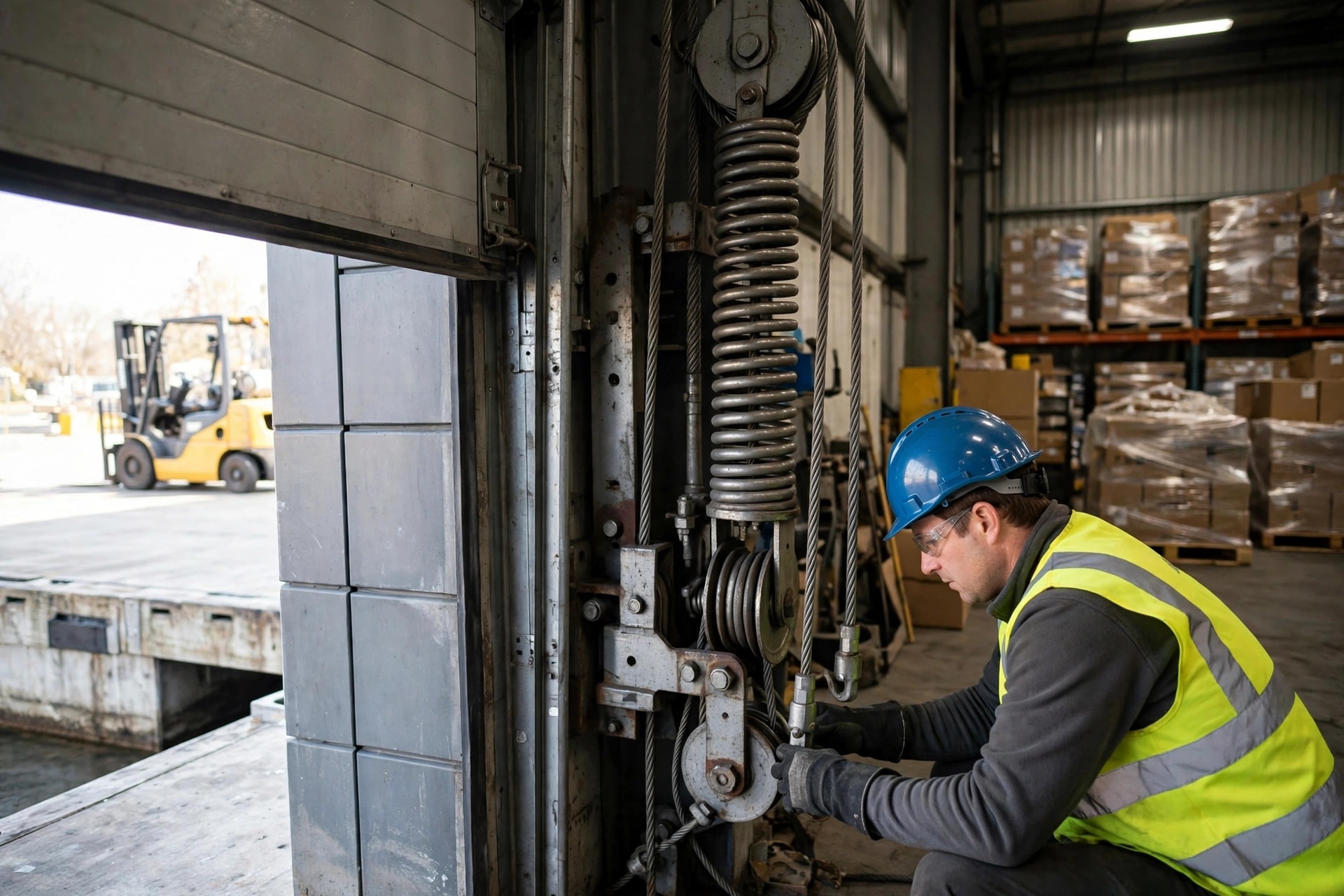
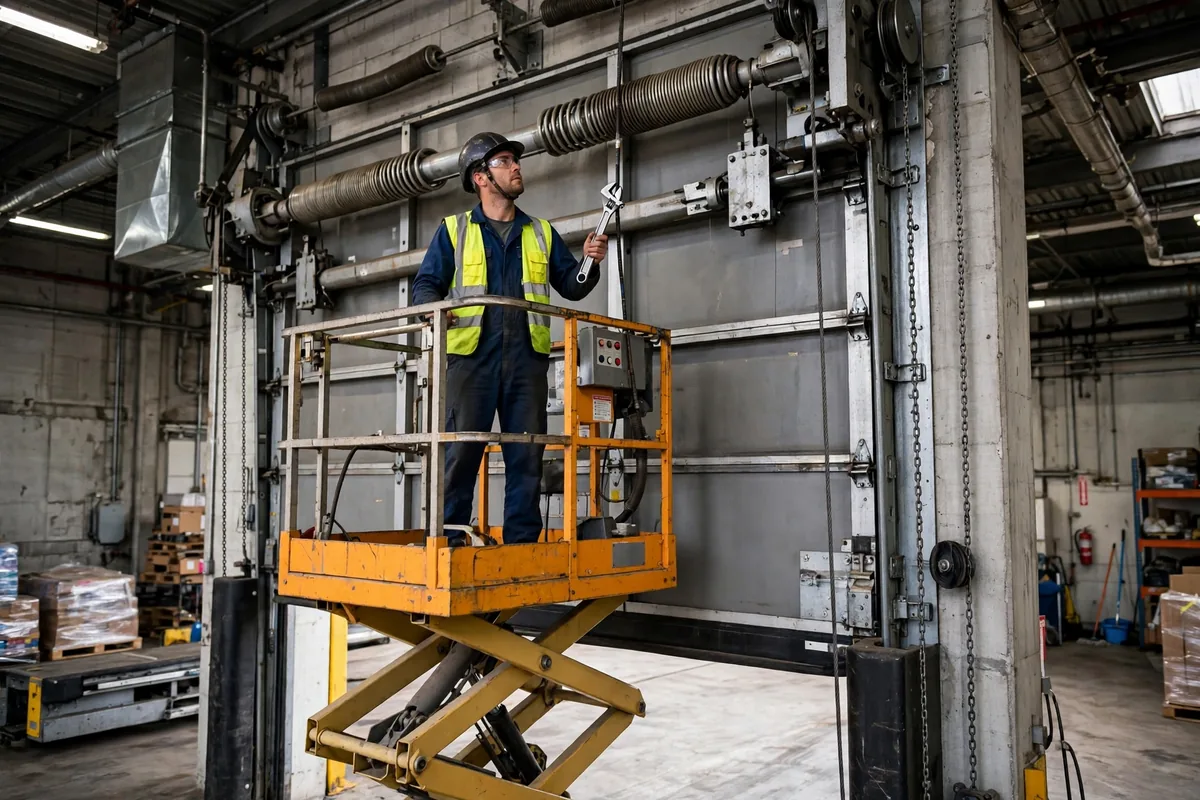
An inspection does not need ceremony. Walk the components in order. Springs: look for rust, distortion, and new noises, because a door that starts groaning or pulling unevenly is telling you the spring is tired. Cables: look for fraying, broken strands, and uneven tension, since a slack side makes the door track crooked and chews up rollers and guides. Tracks: check for forklift dents and debris. Rollers: spin them and listen. Then test the balance for real. Stop the door halfway, let go, and watch. It should roughly hold position. A door that sinks or climbs is out of balance, and running it anyway just moves the wear somewhere more expensive.
Safety devices are the part of the checklist you never skip. Confirm the fall-protection device is in place and actually free to work. I have found them tied back with zip ties because someone found them inconvenient, which is the same as removing the last line of defense by hand. Test the photo-eye with a carton: block the beam and the door must stop or reverse, every time, without hesitation. Check the bottom seal and bumpers by touch; rubber that feels brittle and crumbles is already past due.
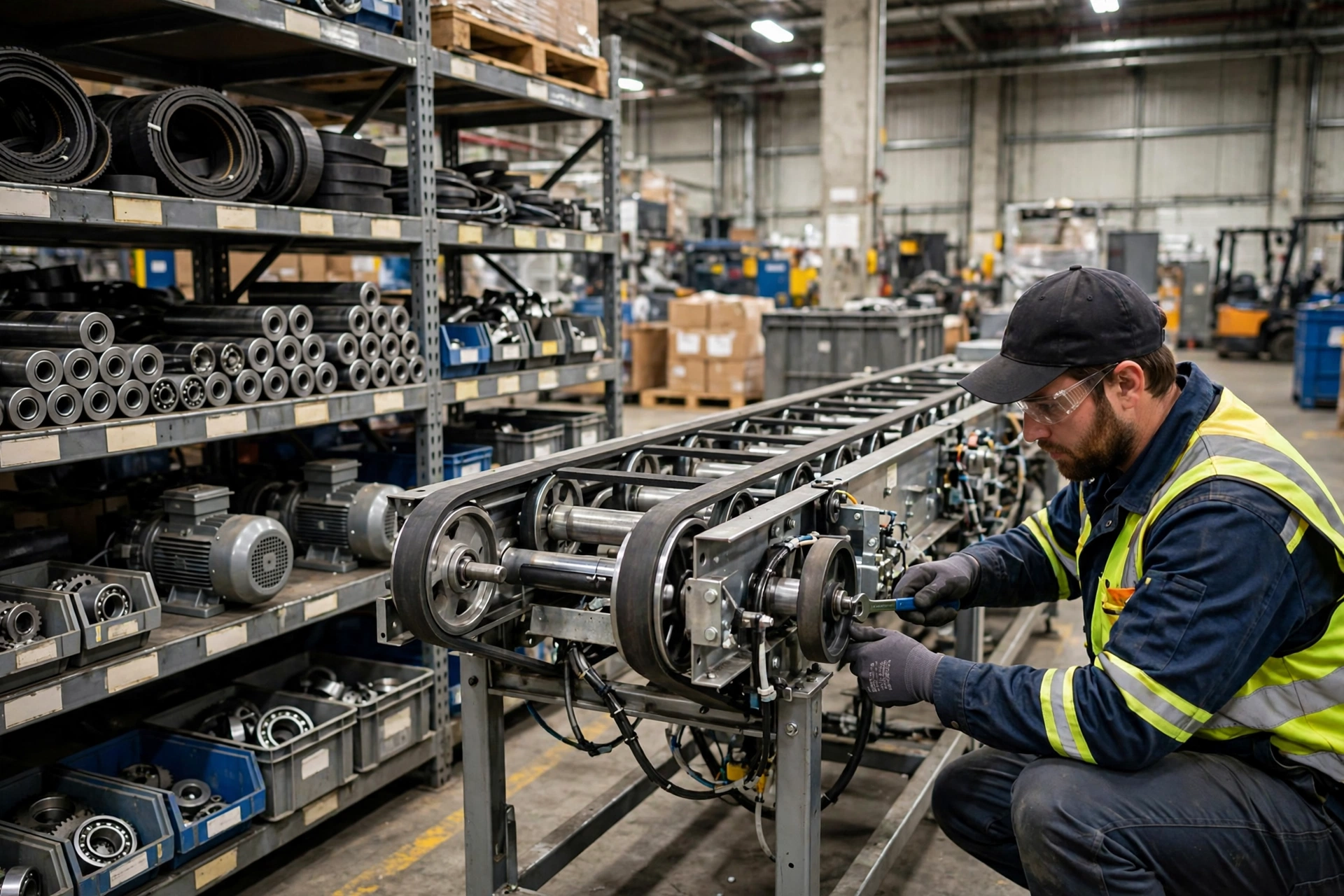
Keep the spare parts shelf small and correct: matching springs, cables, common rollers, seals, and a photo-eye sensor. The trick is matching the model, because doors installed years ago may have superseded parts. Photograph the nameplate and key components during each service and file it per door, so the next order is right the first time.
Draw the in-house line clearly. Daily checks, track cleaning, fastener tightening, seal replacement, and photo-eye testing are fair work for trained in-house staff, as long as every check is logged per door: date, inspector, findings, action taken. Spring replacement, cable replacement, balance adjustment, and fall-protection work belong with a qualified service provider. A loaded spring stores serious energy, and if it lets go during a do-it-yourself swap, the injury risk is real. On safety work there is no value calculation to run. Prices and response times vary, so budget from your provider's current quote and contract rather than stale numbers found online.
Put the cadence on a calendar, not in someone's memory. Rank doors by usage and importance, give each one a small card on its control box showing last service, parts changed, and next due date, and set the reminder two weeks ahead so the work lands in a slow window. High-cycle doors deserve a thorough service at least twice a year; low-cycle doors at least once, because rubber ages even when a door barely moves. Every warehouse dock door maintenance cost problem I have seen out of control shared the same root: not service done too often, but no line in the budget at all. Tomorrow, do one ten-minute test. Stop each door halfway and let go, then crouch down and look at the cables. You will know exactly how much time your doors have left.
By Da Liu, Automation Engineer