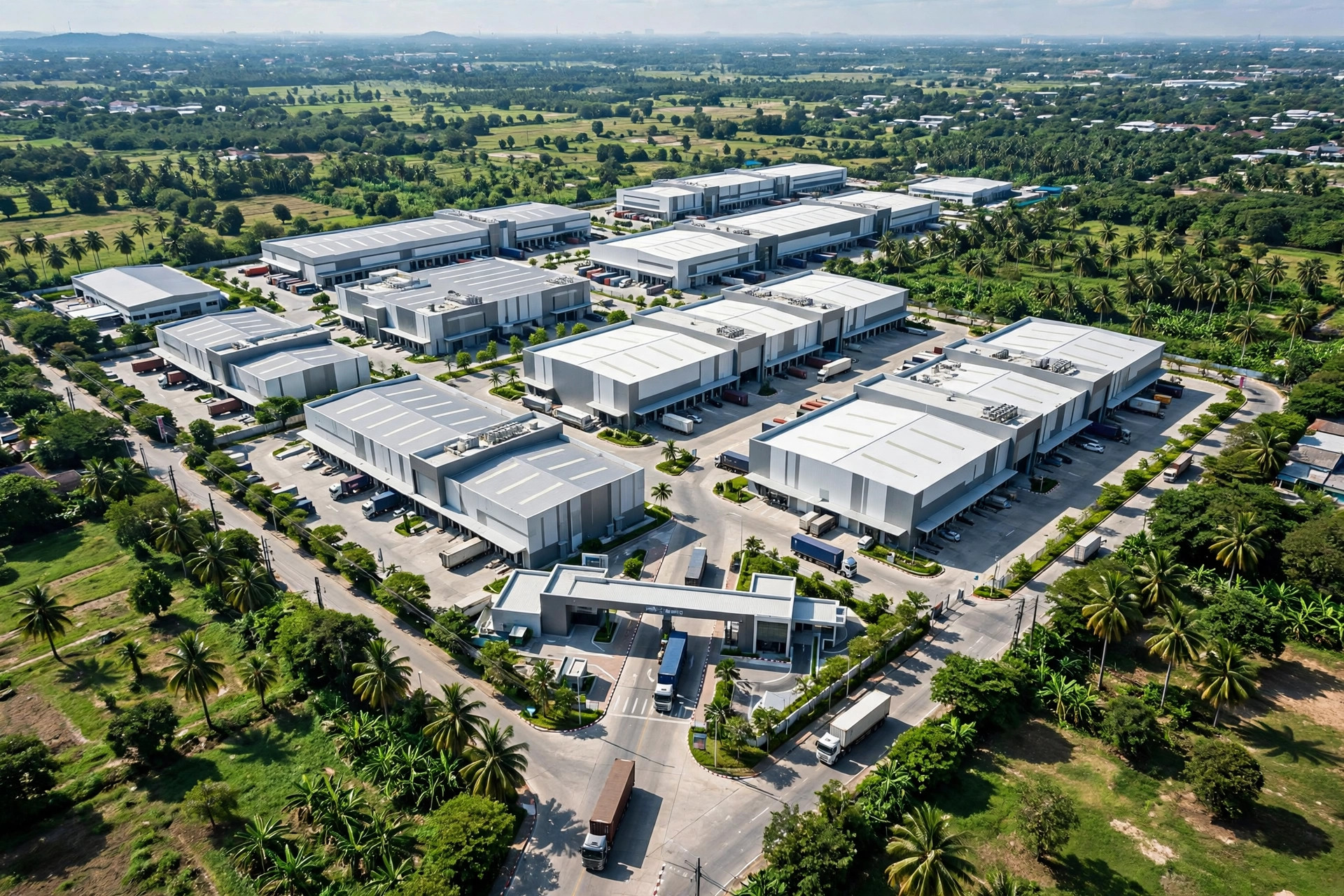
Here's my verdict up front: sign a warehouse with bad truck circulation, and no rent discount will ever make up for it.
Get the dock orientation wrong, undersize the truck court, and you'll have semis queued out to the highway ramp every rush hour. That cost isn't one-time — it's a monthly bill: detention fees, furious drivers, carriers padding their rates. By the time the three-year lease is up and you add it all together, the rent you "saved" is long gone, and then some.
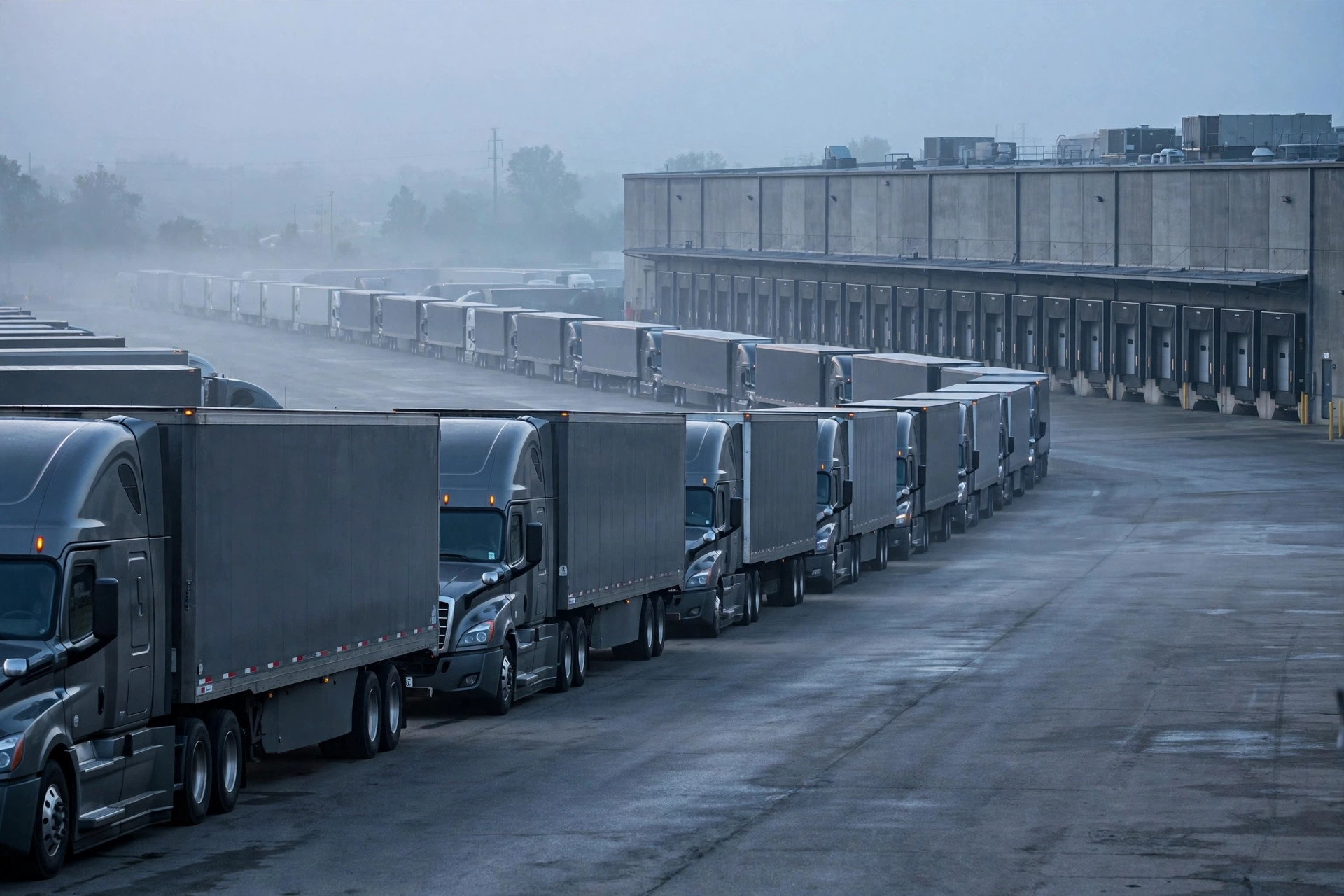
I once toured a 120,000-square-foot building in the Inland Empire. Location, clear height, sprinklers — all fine, and the rent was cheaper than next door. The landlord showed it to me at 11 a.m.: empty yard, a clean row of dock doors, looked great. On a hunch I came back at 7:30 the next morning: nine tractors queued at the gate, tails sticking out onto the public road, the guard on the phone begging drivers to hurry. I walked away. Three months later I heard a competitor had signed it. Their mornings now start with emails to the city and the highway patrol.
Circulation is the one thing you can't fix after signing. Racking can be swapped, software can be upgraded, processes can be tuned — but which way the doors face and how deep the yard is were decided the day the building went up. Here's what I check, every single time, before I sign.
Doors Facing the Street Turn Every Rush Hour Into a Liability
You can't see door orientation on a floor plan. You have to stand on the site.
In plenty of older parks, the dock doors face the public road with only an internal drive lane in between. Off-peak, no problem. But at rush hour, when the internal queue can't clear, truck tails spill onto the public street. In the U.S., that's not just "blocking traffic" — most municipal codes prohibit staging or maneuvering trucks on the public right-of-way. Tails on the street mean tickets from traffic enforcement, corrective orders from the city, and in bad cases, restrictions on your truck movements. And the lease will put all of that on you, not the landlord.
California adds its own twist: CARB rules bar diesel commercial vehicles over 10,000 pounds from idling more than five consecutive minutes. Drivers queued at your gate either shut down and roast in the cab, or idle and wait to get reported. In early October 2026, California launched a fresh round of anti-idling public reporting campaigns, with extra scrutiny near schools and residential areas. If your building sits next to a neighborhood, that line of queued trucks is ready-made complaint material.
So the first thing I do on a site visit: stand at the gate and look out along the line of the dock doors. Is that a public road or an internal drive? How far to the nearest traffic light? Any truck restrictions on that road by time of day? Don't trust the broker's "it never backs up." Stand there for half an hour at morning and evening rush. The answer is right in front of you.
A Shallow Truck Court Defeats Even the Best Drivers
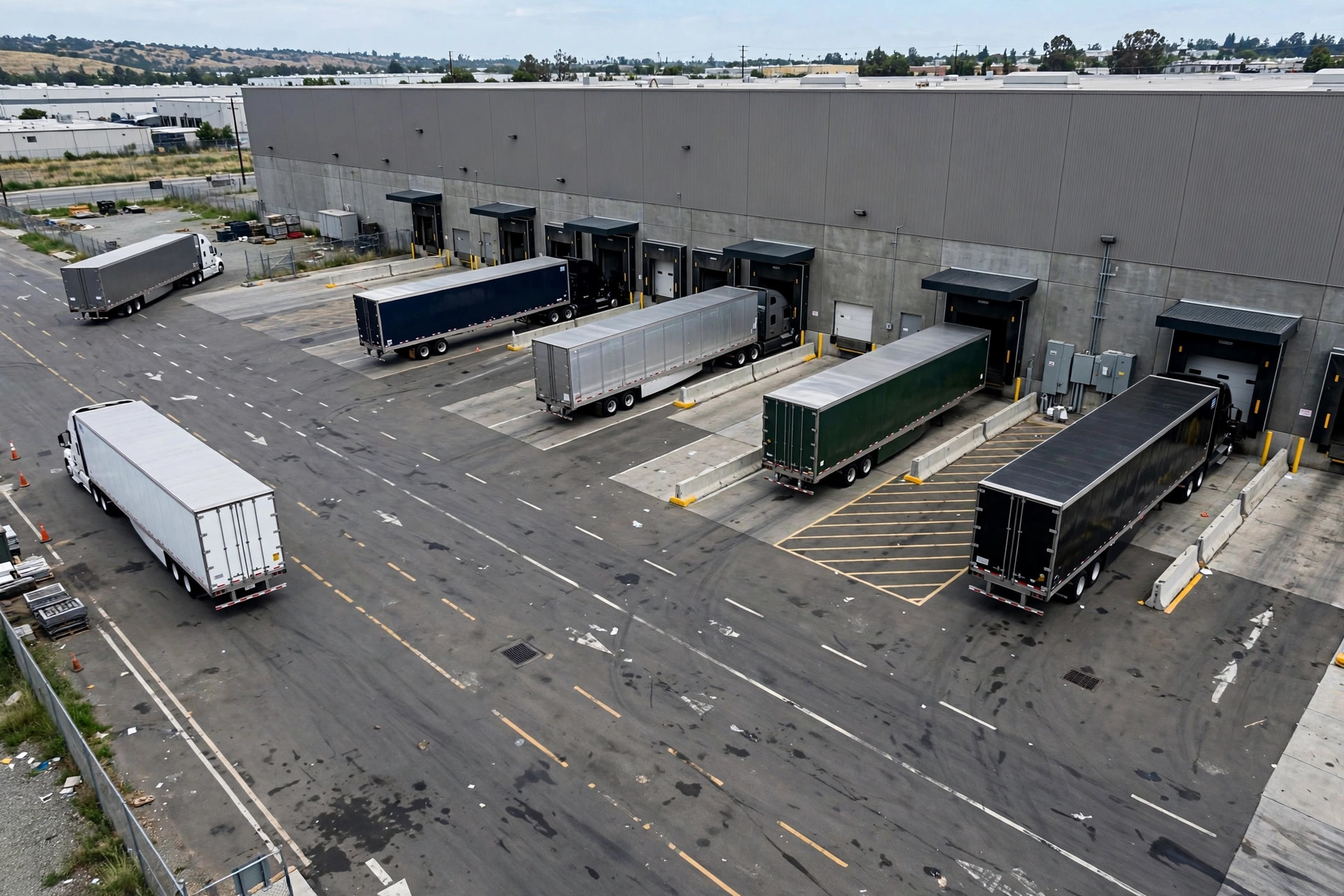
Yard depth in front of the docks is the hardest line in site circulation — hard enough that measuring it with a tape feels silly. Do it anyway.
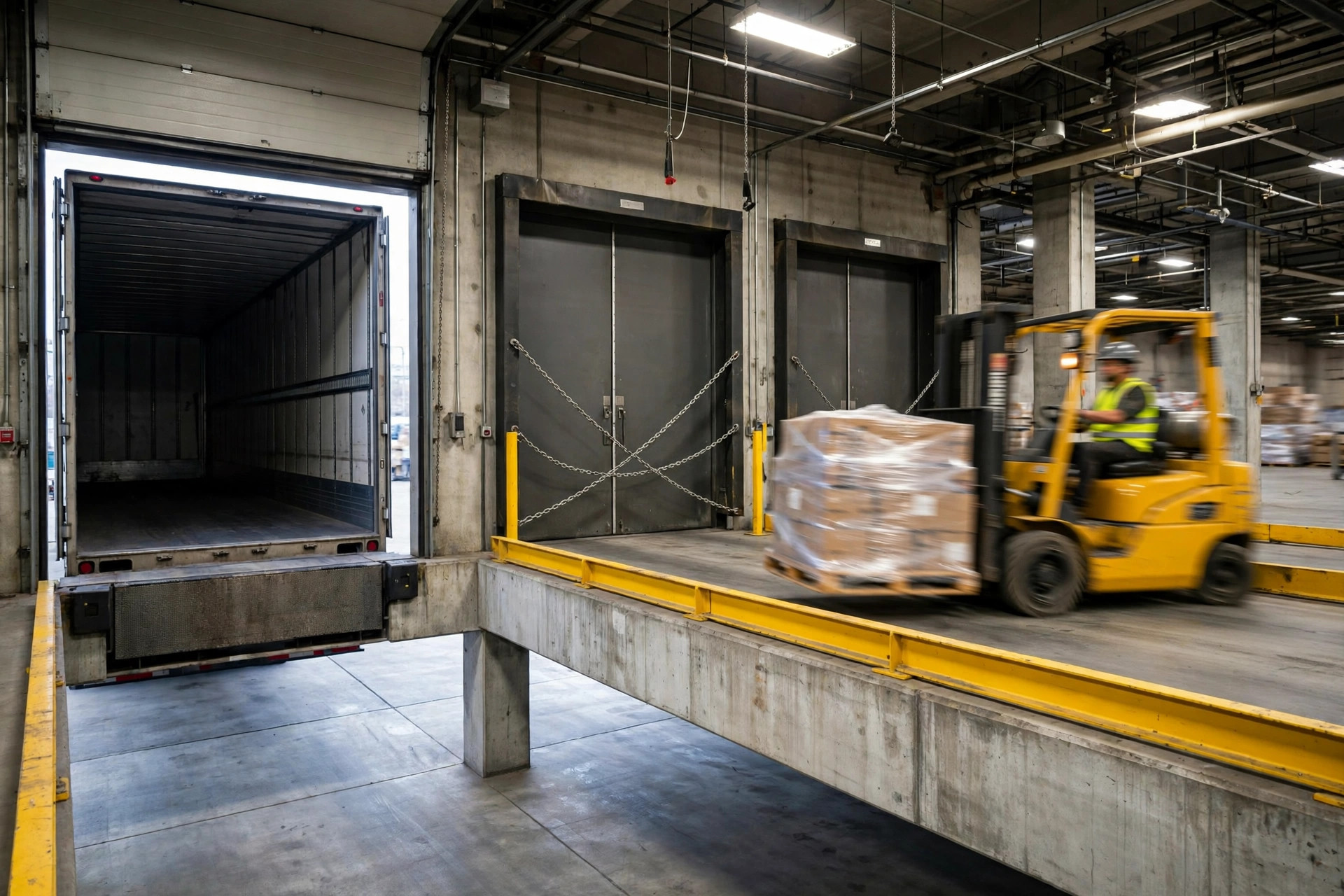
The workhorse of U.S. interstate freight is the 53-foot trailer, corresponding to the AASHTO WB-67 design vehicle with a 45-foot minimum turning radius. That's from the highway design manual, not a manufacturer's brochure. Industry dock-design guidelines recommend a 150-foot drive approach. Why so much? Backing a 53-footer into a dock door swings the tractor through a wide arc; a 120-foot yard looks generous on paper and fights you at every turn in practice.
My field method: bring a laser measure and shoot from the dock face to the fence, building, or property line across the yard. Plan dimensions routinely include landscaping and fire lanes that you can't actually drive on, so discount accordingly. Around 150 feet, I relax. Noticeably less, I start worrying about peak season. So tight that drivers have to thread the needle — I walk away and don't waste time negotiating rent.
Then do the door math: divide your daily truck count by the number of doors and figure out how many trucks each door must swallow in the peak hour. If the answer is three-plus per door per hour and the yard is already tight, that building's circulation was dead on arrival — it just didn't know it yet. Too few doors is a common cold; enough doors with a shallow yard is terminal.
One-Way Circulation Doesn't Save Land — It Saves Daily Friction
Two-way head-on traffic sounds like a planning issue. In practice it's dozens of small frictions a day compounding into real money.
In a two-way yard, outbound empties and inbound loads meet in the aisles dozens of times daily — every meeting a slowdown, a wait, a driver cursing. Worse is the backing maneuver: swinging a 53-foot trailer into a door needs that big clear arc, and one staged truck on the opposing side kills it. One-way circulation separates the flows; the backing arc is always empty, and traffic moves like water in one direction.
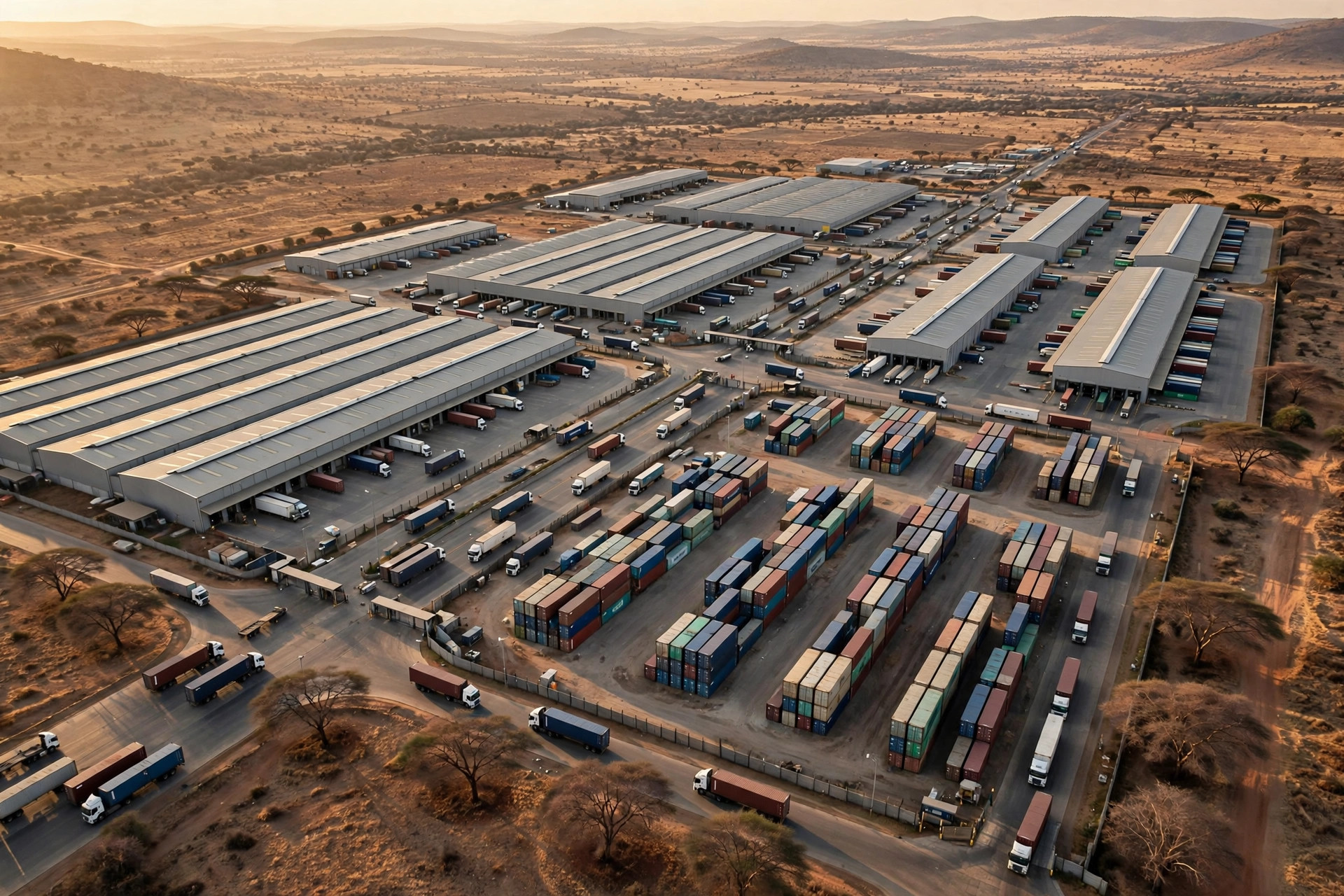
Staging lanes are the other thing that quietly disappears. The site plan shows two queue lanes; on the ground, one is employee parking and the other holds pallets. Appointment systems handle the scheduled trucks fine — they can't handle port surge. When Los Angeles and Long Beach release a wave of containers, they hit the Inland Empire in clusters. Your 2 p.m. appointment means nothing when the steamship line released four hours late and six trucks show up at once; the system just tells you "four trucks ahead." Without staging lanes, those four trucks sit on the public road — back to the time bomb in section one.
Gate placement matters too: close to the freeway is good, but if the first intersection out of the gate is a traffic light, the evening left-turn queue can back up onto the ramp — and then it's everybody's problem. And ask about truck restrictions: some cities ban heavy trucks on municipal roads during daytime, which means your trucks take the long way around. That's a gate facing the wrong direction by another name.
Half a Day of Homework Beats Three Years of Gridlock
Time to do the math. A DAT survey found roughly 63% of drivers detained more than three hours per stop; the industry generally treats anything over two hours as detention, paying $30–$50 an hour — and only 3% of carriers get paid on 90% or more of their detention claims. ATRI's numbers cut deeper: about four in ten drivers have been detained, and fewer than half of claims ever get paid. Run a building with bad circulation and the carrier that waited three hours on visit one bakes that time into the rate on visit two — or stops taking your freight. Driver churn, rate inflation: a monthly "circulation tax."
Moving out mid-lease is worse: sublease hassle, penalties, shutdown days for the move. None of it cheap. So I run the same half-day drill on every building:
Arrive at 7:30 a.m. and watch the morning queue — do tails leave the property? Mid-morning, laser-measure the yard depth, count the doors, run the door-to-truck math. At lunch, chat up the guard: how do appointments work, has the city ever come knocking? In the afternoon, pull the municipal records — truck restrictions, idling rules for that street. Then drive the full loop around the park and see who the neighbors are — their truck traffic stacks onto yours sooner or later.
Of everything in a warehouse, circulation is the one thing you cannot renovate. So next time you tour a building, don't ask about rent first. Ask this: at 8 a.m., where exactly are your trucks going to sit?