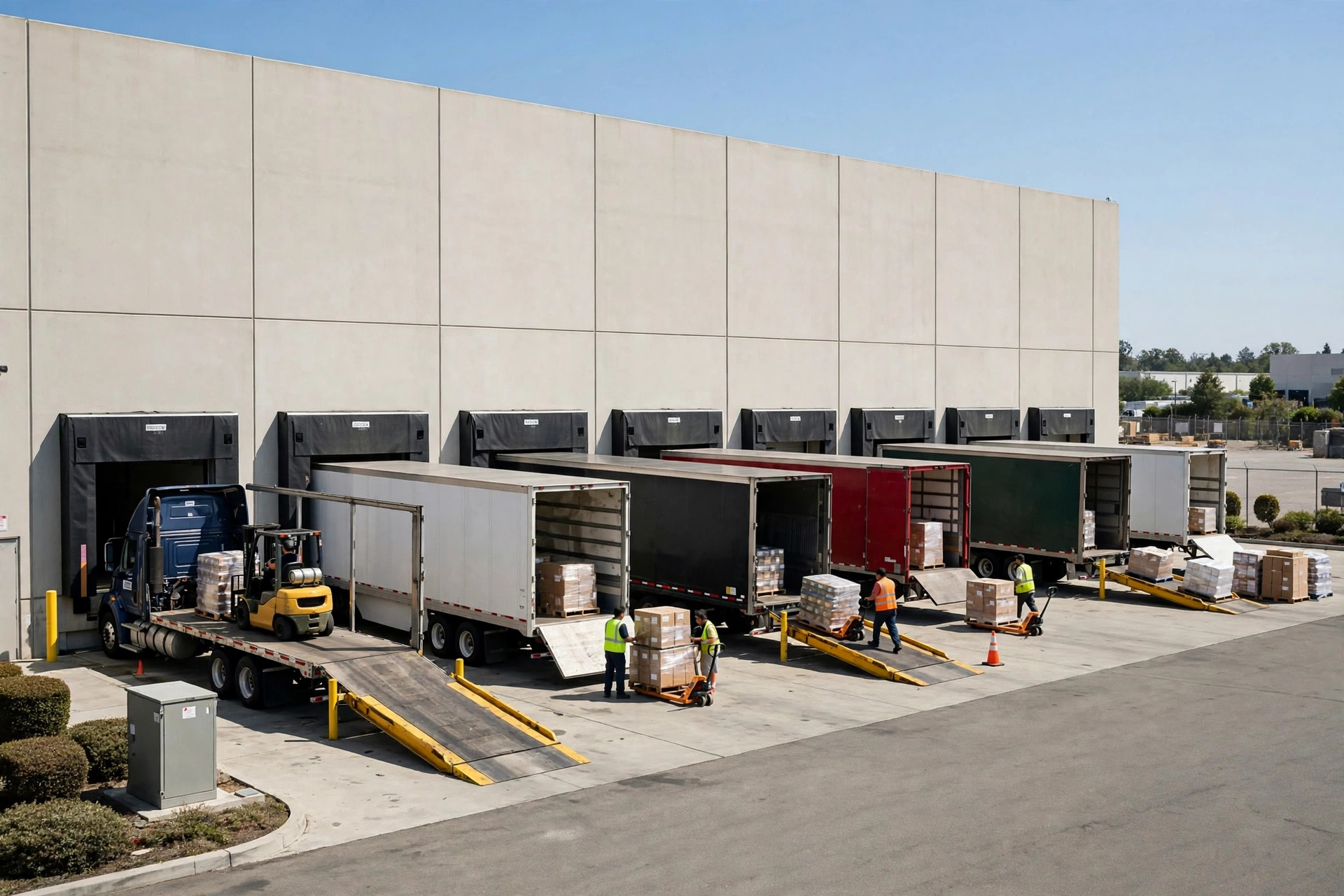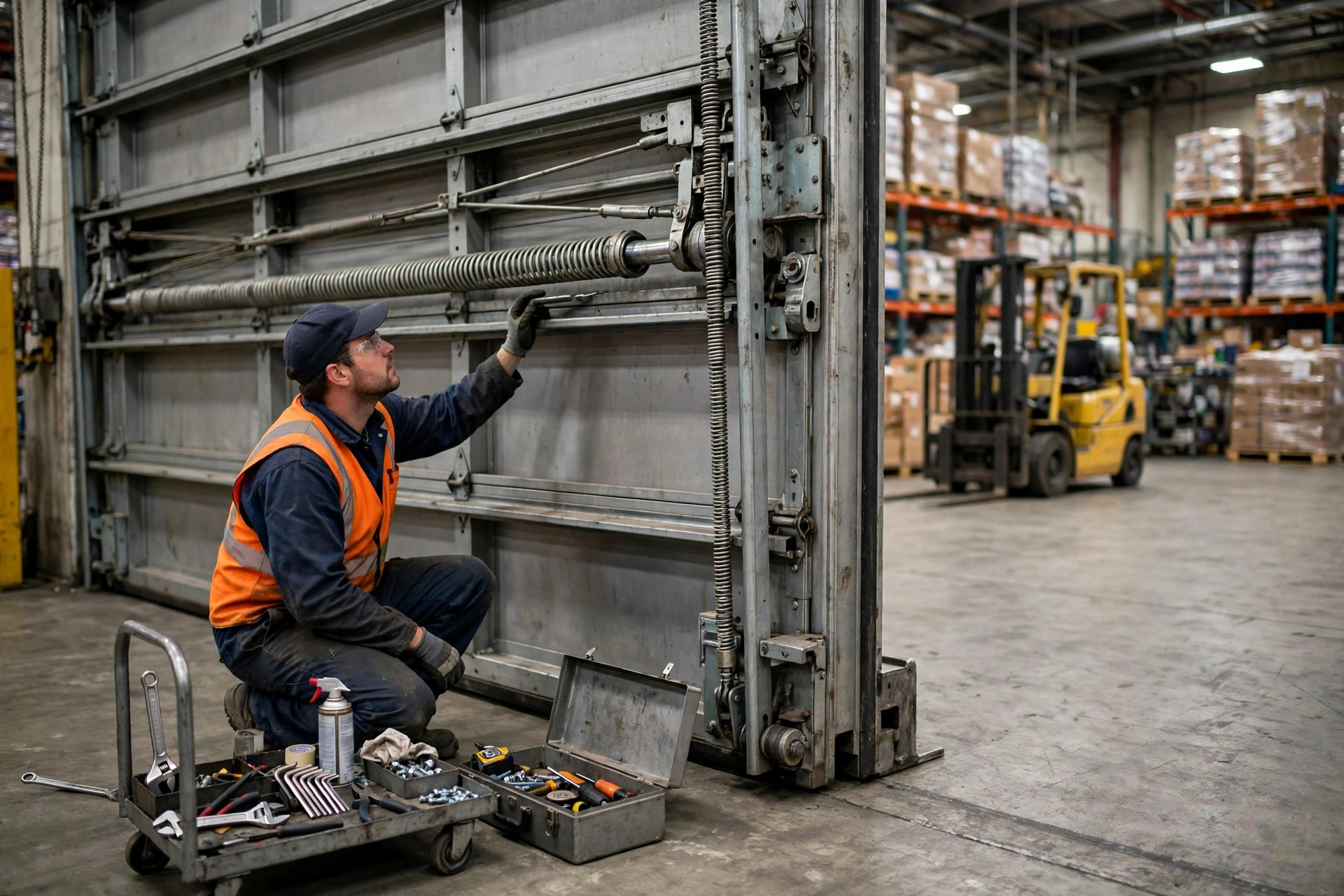
Let me paint you a peak-season night shift. It is 2 a.m., trucks are lined up for loading, and Door 3 rises halfway and sticks. It will not go up and it will not come down. The driver waits outside, the forklifts wait inside, and the shift lead calls maintenance, who says the earliest arrival is daylight. That night, every job planned for Door 3 got dumped on the other doors, and the whole loading sequence fell apart. Let me be straight with you: that door did not break that night. It had been breaking for weeks. Nobody treated it as a problem until it stopped the line.
Dock doors are like that. As long as a door goes up and down, everyone assumes it is fine. When it truly jams, you do not lose one door. You lose a shipping line. This is not about how many doors a warehouse should have or how to assign them. That is planning. This is maintenance: springs, tracks, and seals, what to check, how often, and what a dead door really costs.
The Warehouse Dock Door Maintenance Checklist Starts With Springs
Springs are the most dangerous part and the most ignored. Our warehouse learned this the hard way. Before one peak season, a door started rising a half-beat slower than usual, and its sound went dull compared with the other doors. The crew figured it was still usable and did not report it. Two weeks later the spring snapped halfway up on the morning shift and the panel dropped. Nobody was underneath, and we were lucky. After that we made a hard rule: judge a spring by whether it behaves differently than usual, not by whether it still works.
A spring gives three warnings before it breaks: the door rises slower, the sound turns dull or strange, and the panel slips back a notch after reaching the top. If an inspection finds even one of the three, report it the same day. Do not wait for all three. There is no such thing as a spring that holds for "one more week." The week you stretch it is usually the week it breaks.
Track drift is the second warning. A panel that scrapes the track, a bright wear line on one side, or a bottom seal worn thinner on one side than the other all mean the track is out of true. Leave a bent track alone and the rollers wear faster, the door drags more, and a jam becomes a matter of time. Our practice now is a monthly eyes-and-hands check of every track: a roller that will not turn freely or has play in it gets replaced on the spot. Never wait until a roller grinds through a track and forces a full replacement.
Warehouse Dock Door Maintenance Frequency: Split It by Usage, Not One Schedule for All
We used to inspect every door on the same schedule. High-use doors got checked too rarely, low-use doors got checked too often. Switching to usage-based frequency actually saved maintenance hours, because small problems on the busy doors got caught during inspections instead of during peak shifts:
| Usage level | What it means | Inspection frequency | Must-check items |
|---|---|---|---|
| High-use | Dozens of cycles a day, main doors | Weekly | Springs, rollers, tracks, safety devices |
| Medium-use | A dozen or so cycles a day | Every two weeks | Springs, tracks, seals |
| Low-use | Spare or seasonal doors | Monthly | Track rust, seal aging, motors |
Post the schedule on the maintenance room wall. Sign off each inspection. A signature is not bureaucracy. It is how you trace back to when a door was last checked and what was found. An inspection nobody signed might as well not have happened.
Door Seals and the Energy Bill Nobody Sees
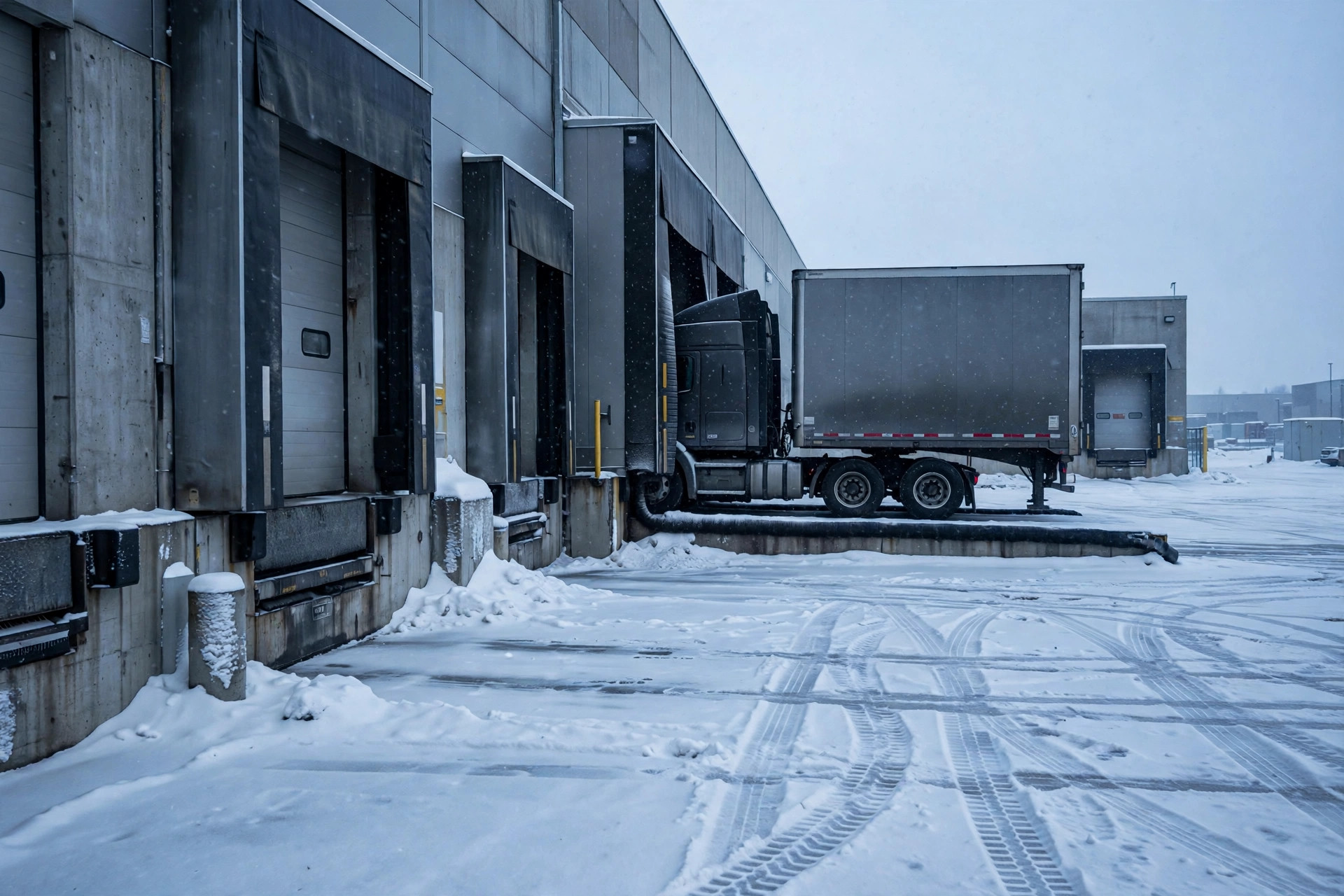
A leaking seal is the easiest cost to wave away. The door looks closed, but air slips through the gap. In winter, cold air pours in. In summer, hot air pours in. On a cold-storage door, frost builds at the edge, melts, and leaves a wet floor where forklifts can slide. An aging seal shows two signs: it goes stiff, or it cracks. If it feels hard when you squeeze it, or the edge shows cracks, replace it. Do not patch it with adhesive. A patched seal will not survive a peak season.
Do not take a vendor's energy-saving percentage for a seal replacement either. Run the meter your own way: record one month of power use before the change and one month after, in the same zone at the same temperature setting. Whatever you save is the seal's real number. That is how our warehouse priced a cold-storage seal replacement, with our own meter, not a brochure figure.
What One Dead Door Really Costs
Most people price maintenance as the repair bill. That is the small number. The real cost of a dead door sits in the schedule:
| Loss | How it shows up |
|---|---|
| Rerouted trucks | Every load planned for that door moves, and the loading order gets rebuilt |
| Idle labor | Drivers wait, forklifts wait, loaders wait, and wages run while nothing moves |
| Overtime | Work that misses the shift rolls into the next shift or into overtime |
| Safety risk | Temporary routes and temporary staging raise the chance of mistakes |
| Emergency call-out | A night call with a before-dawn arrival costs more than a planned visit |
Add it up and planned maintenance is always cheaper than an unplanned dead door. Maintenance is not spending. It is buying the guarantee that your doors hold through peak season.
Here is how our warehouse runs it now, four rules that never change: judge springs by change, not by whether they still work; check tracks every month with eyes and hands; replace a stiff or cracked seal outright; and split inspection frequency by usage. One reminder for fellow managers: before tonight's handover, go listen to your busiest door rise and fall. If the sound has changed, the door is already talking to you. Do not wait until it jams to hear it.
By Chen Feng, Warehouse Operations Manager