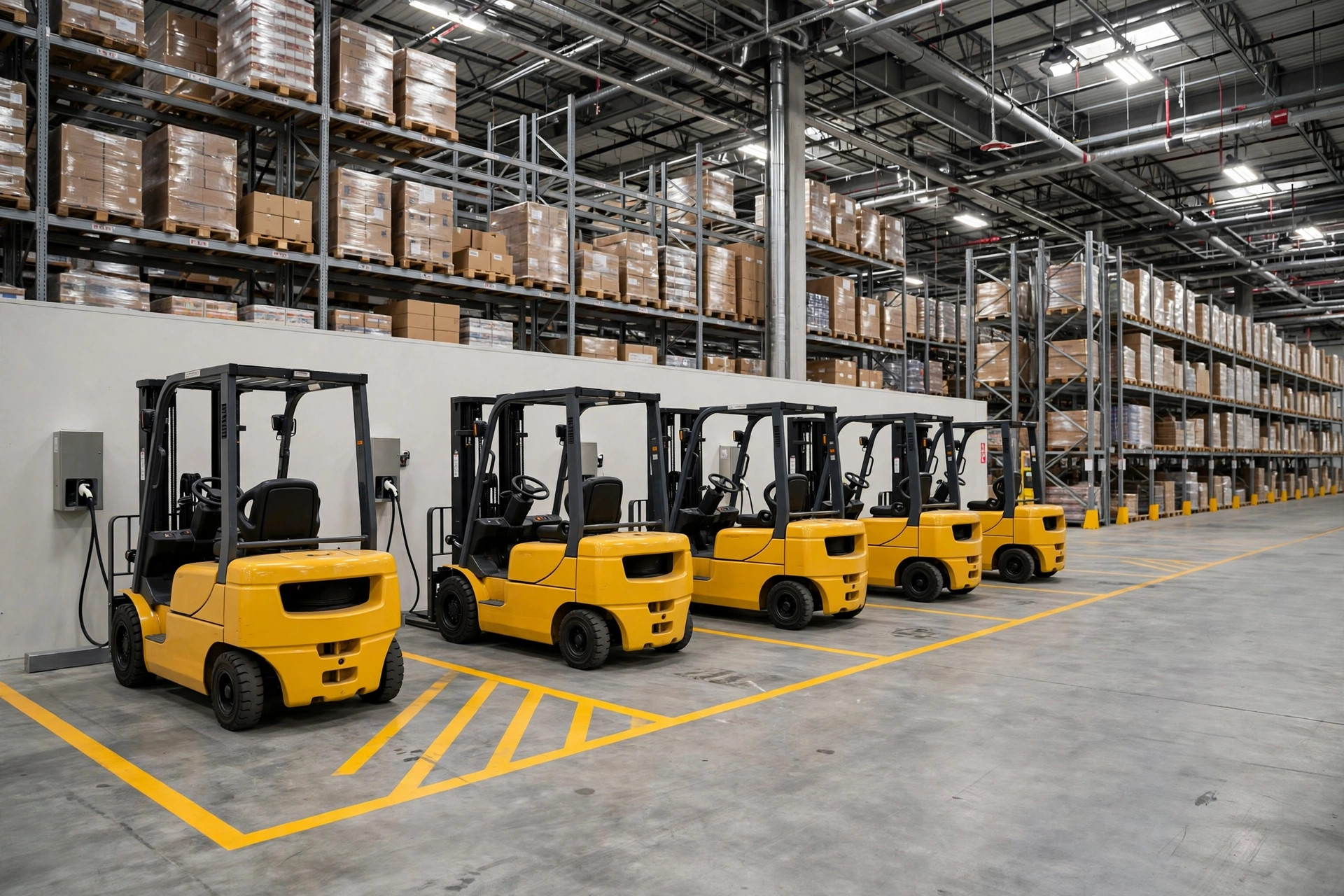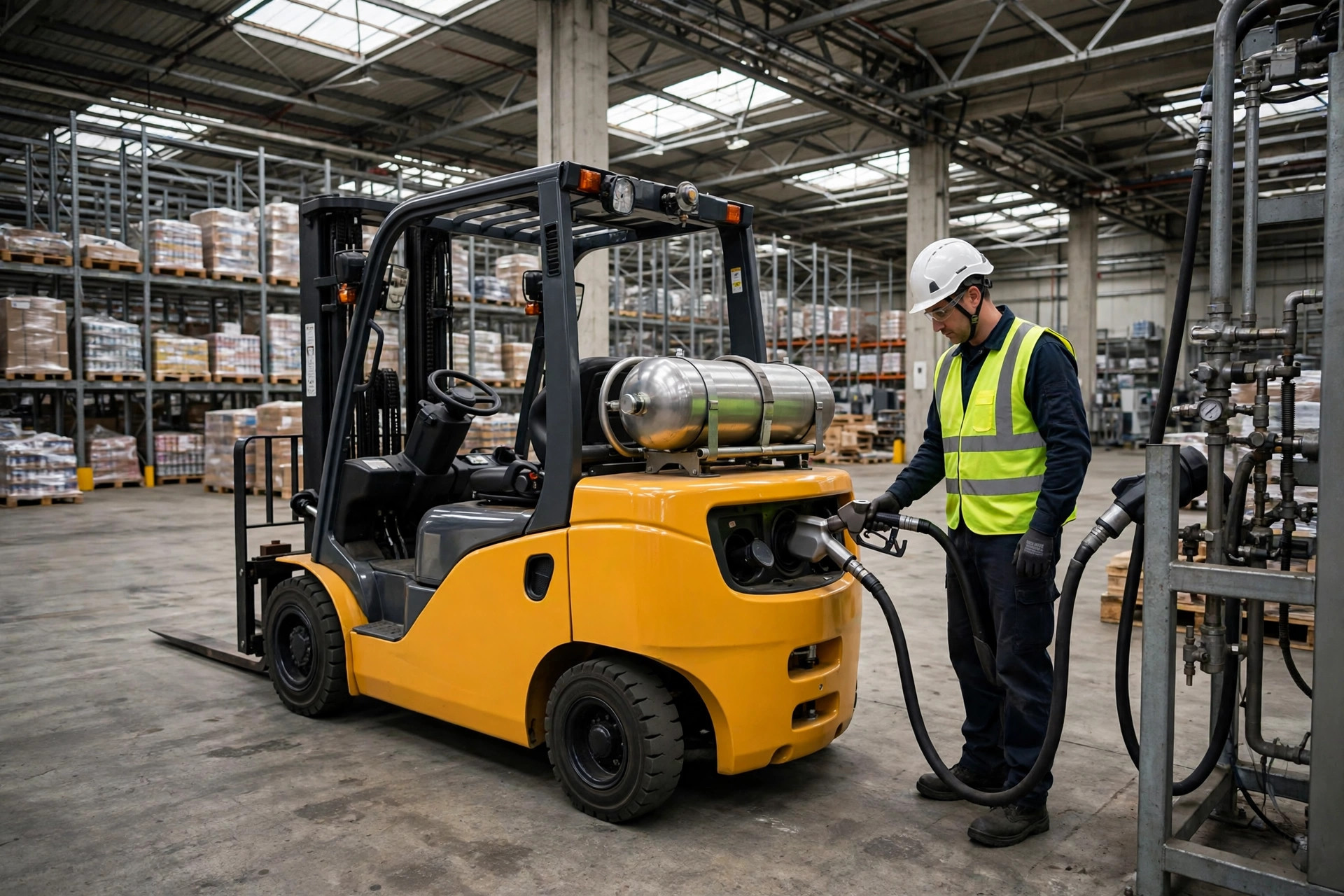
Let me start with the only number that matters for a hydrogen fuel cell forklift: not the price on the truck quote, but what it costs you every single day to keep that truck moving. A forklift's purchase price is a one-time event. Refueling is a daily bill, five years long. If you get the daily bill wrong, the purchase price is irrelevant.
The Three Costs Behind a Hydrogen Fuel Cell Forklift
Most warehouses compare truck prices and stop there. That is the wrong comparison. A hydrogen fuel cell forklift has three cost buckets, and the third one is where projects quietly go wrong. First, the truck and the fuel cell stack, including whatever stack replacement or major service falls inside the truck's life. Second, the hydrogen itself, delivered to your site. Third, the refueling station: construction, inspection, maintenance, insurance, and compliance.
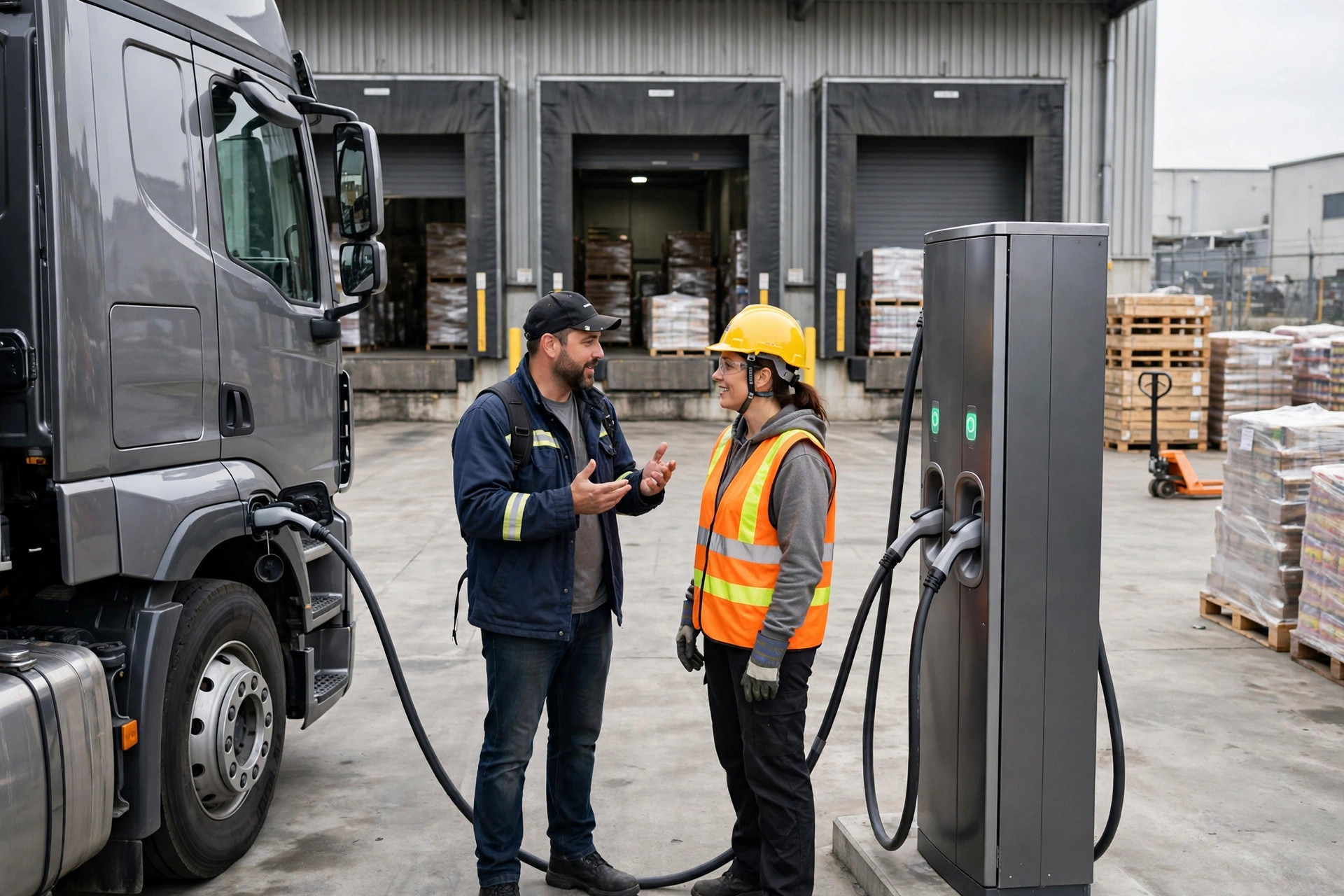
The station is the trap because it does not scale with your fleet. You cannot buy half a hydrogen station the way you add one charger at a time. From day one it is a complete system: storage, compression, dispensing, leak detection, ventilation, and fire separation. So its economics hinge on utilization. A small fleet spreads a large fixed cost across a few trucks. A large fleet spreads the same cost across many trucks, and suddenly the math looks completely different.
Here is the formula I make every vendor fill in before I take a proposal seriously:
Annual fueling cost per truck = (daily hydrogen use × working days × delivered hydrogen price) + (annualized station cost ÷ fleet size)
Daily hydrogen use depends on duty cycle, not the brochure. Heavy loads, high lifts, and constant stop-and-start burn more than light, flat work. The delivered hydrogen price must include delivery, tank rental, and any minimum purchase clause, not just a bare per-unit price. The annualized station cost must include construction, inspection, maintenance, insurance, and site work. Any quote that gives you a truck price and a hydrogen price but leaves the station allocation blank should go straight back for revision.
| Cost bucket | How to calculate it | What vendors most often leave out |
|---|---|---|
| Truck and stack | Purchase price plus stack service or replacement reserve | Output loss as the stack ages |
| Hydrogen supply | Daily use × working days × delivered price | Delivery fees, tank rental, minimum purchase terms |
| Refueling station | Total build and compliance cost ÷ years ÷ fleet size | Inspection, maintenance, insurance, site modification |
| Downtime | Refueling stop time × value of lost output | Queuing for the dispenser at peak hours |
This table is not meant to scare you off hydrogen. It is meant to force the numbers into the open. Risk always hides in the line nobody itemized.
Hydrogen Fuel Cell Forklift Refueling Stations: How Many Trucks Carry the Fixed Cost
Think of a three-shift cold storage warehouse with a fleet in the range of twenty trucks, running nearly around the clock, with refueling squeezed into shift-change windows. That is the natural home for a hydrogen station, because the station is busy all day and its fixed cost is spread across high throughput. Now picture the opposite: a single-shift warehouse with fewer than ten trucks, where the station sits idle most of the day. Same technology, completely different economics. The problem in the second case is not the price of hydrogen. It is an idle station.
So before signing anything, count three numbers: fleet size, number of shifts, and total refueling events per day. When all three climb together, hydrogen gets more attractive. When any one of them is low, calculate the idle-station cost first. One more question belongs in the contract: can the station be expanded in stages? A station sized for today's fleet, with a priced and scheduled expansion path, beats an oversized station built on day one. Get the expansion price and lead time in writing, not as a verbal promise.
Hydrogen Fuel Cell Forklift Range and Cold Storage Performance
The real advantage of a hydrogen fuel cell forklift is not the headline range figure. It is range stability. Brochure range assumes a standard duty cycle, and no warehouse runs a standard duty cycle. What hydrogen offers is fast refueling, measured in minutes, so the truck gets back on the floor quickly. In continuous operations, that matters more than absolute range, because the truck's value is in uptime, not in how far it goes between stops.
Cold storage deserves its own paragraph. In low temperatures, battery-based equipment loses usable capacity and charges more slowly, and the first shift on a cold morning shows it worst. A fuel cell's output is far less sensitive to cold, and refueling does not require parking the truck for a long charge. For a cold chain warehouse, that can mean fewer spare trucks held just to cover charging gaps, and no large charging area carved out of the yard. Treat that as a mechanism and a trend, not a claim about any specific model: demand the supplier's tested low-temperature performance curve for the exact truck you are buying, and never size a cold store fleet from room-temperature data.
Here is the counterintuitive part: long range does not make hydrogen right for every warehouse. A single-shift site with generous refueling windows and a small fleet gains nothing from fast refueling, because its trucks already have plenty of time to recharge. Paying for a hydrogen station in that setting means buying an advantage you will never use. The profile that fits hydrogen is actually narrow: multiple shifts, continuous operation, a fleet large enough to keep the station busy, tight refueling windows, and a meaningful share of cold or low-temperature work. Meet three of those, and hydrogen is worth a serious look. Meet only one, and slow down.
Where a Hydrogen Fuel Cell Forklift Fits, and Where It Does Not
Use this boundary table against your own warehouse:
| Your situation | Signals hydrogen fits | Signals to pump the brakes |
|---|---|---|
| Shifts | Two or three shifts, trucks barely stop | Single shift, long idle nights |
| Fleet size | Dozens of trucks, high station utilization | Under ten trucks, station mostly idle |
| Refueling window | Shift-change windows are tight, downtime loses orders | Plenty of time to refuel, no rush |
| Environment | Cold storage, heavy low-temperature share | Room temperature, light duty |
| Site | Room to build compliant hydrogen facilities | Constrained site, costly compliance work |
A second case makes the same point from the other side. A room-temperature e-commerce warehouse, single shift, modest fleet, relaxed refueling windows, nearly signed for hydrogen because fast refueling sounded impressive. Run it through the table and it ticks only one box, and that one advantage cannot even be cashed in under a single-shift schedule. They pulled back, not because hydrogen is bad technology, but because their operation could not carry the station's fixed cost. What they saved was not the truck price. It was five years of station allocation and maintenance.
A final word on hydrogen prices and station investment. Delivered hydrogen prices vary widely by region, and a supplier quote's validity period, delivery terms, and minimum purchase clauses all change the final number, so treat any single price you read online as stale until your supplier confirms it in writing. Station build costs vary just as much with site, scale, and compliance requirements. Do not borrow another warehouse's investment figure and paste it into your business case. Use the formula and the allocation table above, fill in your own first-hand quotes, and run the math yourself.
Whether this money is well spent has nothing to do with how advanced the technology sounds. It comes down to whether your shifts, fleet size, and refueling windows can dilute the refueling station's fixed cost. If they can, a hydrogen fuel cell forklift is a strong tool for continuous operations. If they cannot, it is an elegant but expensive fixed cost. Calculate the allocation first, then talk about technology. That is the whole conclusion, and it fits on one line of a spreadsheet.
By Lao Zhou, Logistics Cost Analyst