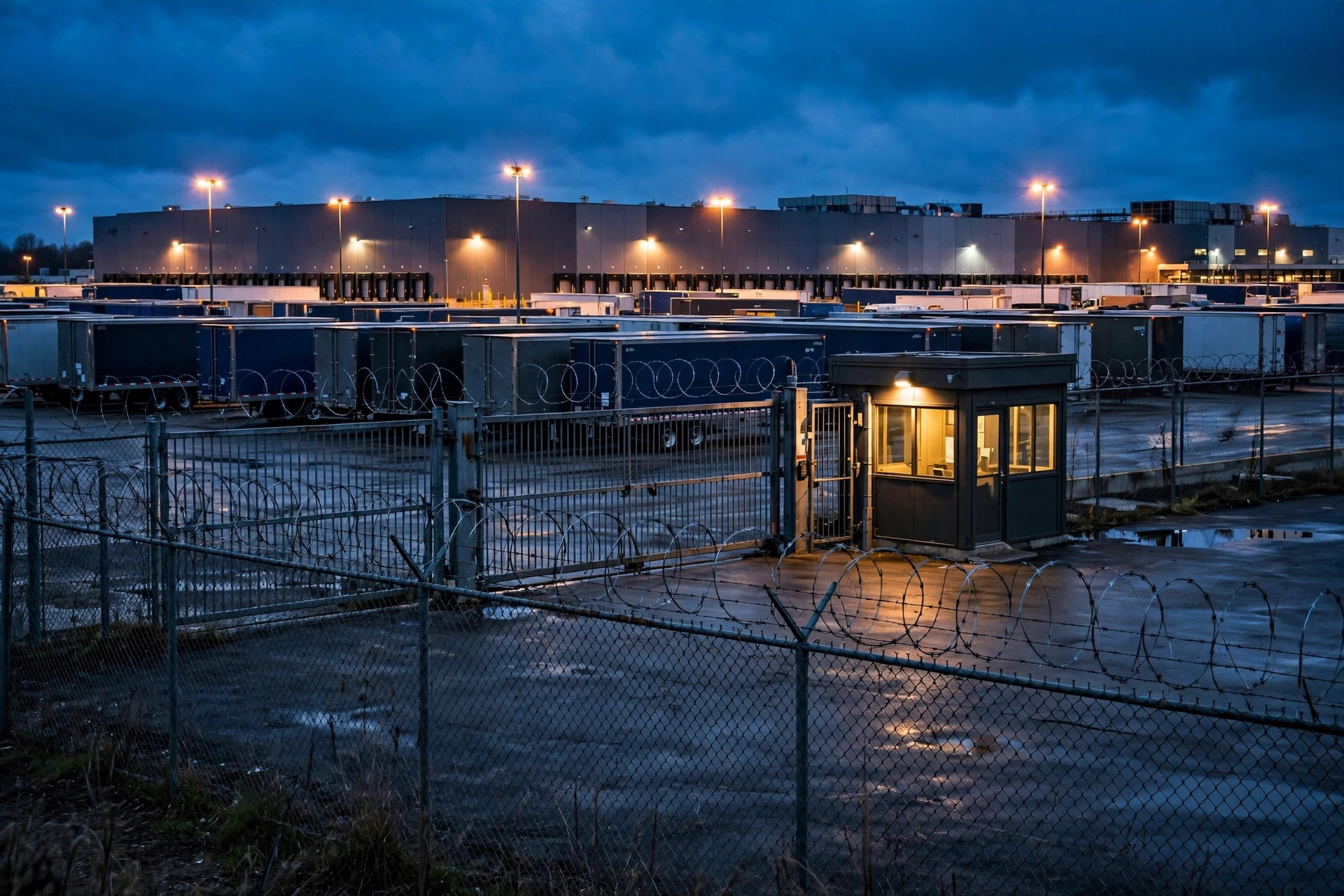
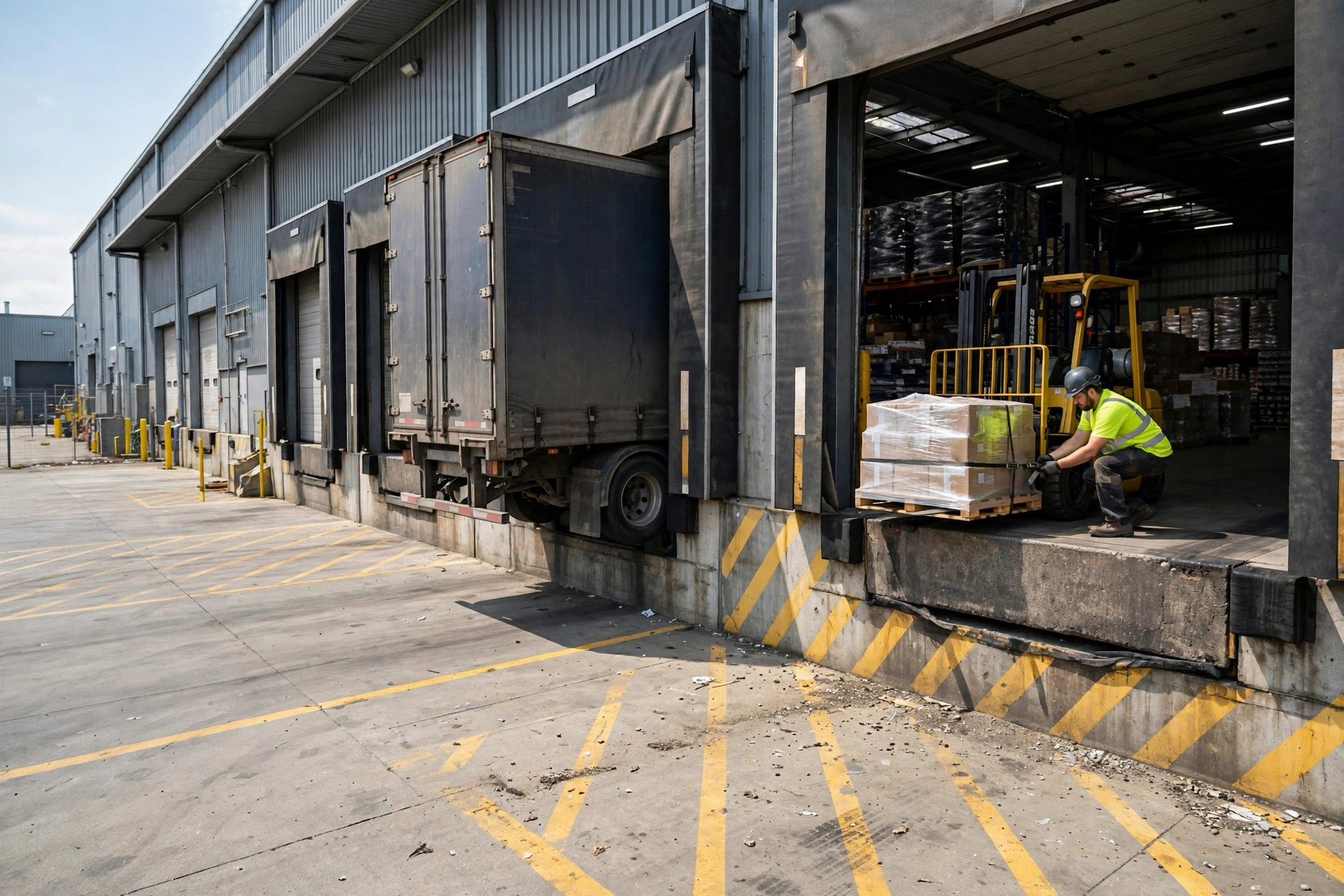
If you've typed "how many dock doors does a warehouse need" into Google, you're probably staring at a site plan wondering whether 8 doors will cut it or 12 is the safer bet. Here's my answer: it's not a guess, it's a calculation. In a 100,000 sq ft warehouse, one extra door can cost you tens of thousands a year in rent and equipment. One door too few, and peak-season trucks line up outside — detention fees, overtime, carrier penalties — wiping out a month of "savings" in a single bad week. Both directions burn money. So let's do the math.
How Many Dock Doors Does a Warehouse Need? Start With the Formula
Forget the rule of thumb "one door per 10,000 square feet." That's a broker's selling line, not an operator's planning tool. Search "how many dock doors does a warehouse need" and you'll get real estate spec sheets and equipment-vendor FAQs — nobody works it backward from throughput. The only thing that actually determines door count is volume:
Doors ≈ daily truckloads × hours per truck ÷ operating hours per day × peak factor
Four inputs, one by one (all figures below are sample values — plug in your own):
- Daily truckloads = daily pallets ÷ pallets per truck. Example: 660 pallets/day ÷ 22 per trailer = 30 trucks/day.
- Hours per truck = total door time per truck: docking, spotting, loading/unloading, paperwork. Palletized freight runs 1–1.5 hours (sample: 1.5); fast live-loads can get down to about 0.8.
- Operating hours per day = your shift length. Sample: one 10-hour shift.
- Peak factor = peak-month daily average ÷ annual daily average. Sample: 1.3 (peak 30% above average).
Run three sizes through it:
| Size | Trucks/day | Hrs/truck | Hours/day | Peak factor | Doors needed |
|---|---|---|---|---|---|
| Small | 30 | 1.5 | 10 | 1.3 | 5.85 → 6 |
| Mid | 80 | 1.5 | 10 | 1.3 | 15.6 → 16 |
| Large | 160 | 1.2 | 12 | 1.4 | 22.4 → 23 |
Round up, then add one spare door (maintenance and bad days need a buffer). Note what this formula does not capture: how well you run the doors. That turns out to be the biggest money lever, and it's free. More on that below.

The Cost of Getting It Wrong: Both Directions Burn Money
Too many doors first:
- Rent. Doors sit on the most expensive wall face of the building. Each extra door can add tens of thousands a year depending on the market (sample range — check your lease).
- Equipment. Every door needs a leveler, seal, and shelter. That's real capex, plus annual maintenance.
- Idle capacity. A door nobody uses is money sitting still.
Too few doors — and this side burns quieter:
- Detention fees. Trucks waiting past the free window (commonly 2 hours) start billing by the hour — typical U.S. quotes run $75–100 per hour (sample range, verify locally). Six trucks waiting 3 extra hours a day through peak season adds up to serious money fast.
- Warehouse overtime. Trucks backing up into the evening mean the crew stays late, and overtime typically starts at 1.5× the base rate.
- Missed appointments and penalties. Blow a retailer's or marketplace's delivery window and you're rescheduling at best, paying chargebacks at worst.
Here's the counterintuitive part: most warehouses I look at don't have too few doors — they misuse the ones they have. A truck occupies a door for 1.5 hours, but actual loading takes 40 minutes; the other 50 minutes are waiting for a forklift, waiting on paperwork, waiting for product to come out of the rack. Cut door time from 1.5 hours to 1.0 and you've effectively added 50% more doors without spending a dollar. Before you ask for more doors, break down your own per-truck time and look at it.
Two Expensive Lessons
Lesson one: a 3PL warehouse in Dongguan, Double 11, 2023. 70 trucks a day, 10 doors. On paper the formula said they were roughly fine (70×1.5÷12×1.3 ≈ 11.4 — short by one or two). But the real problem wasn't door count: every truck was booked between 9 AM and noon, and at the worst point 9 trucks were queued, drivers waiting 4 extra hours on average. Detention fees that month alone ran into the hundreds of thousands of yuan. The fix? No new doors. They split receiving appointments into four staggered windows. Queue gone, cost gone. Whether you have enough doors is half formula, half scheduling.
Lesson two: an e-commerce DC in California, built 2024. The landlord suggested "one door per 10,000 square feet," so the 130,000 sq ft building got 12 doors. Six months in, the numbers: 45 trucks a day, ~1 hour per truck, 8-hour operating day, peak factor 1.3 → 45×1÷8×1.3 ≈ 7.3. Eight doors would do it. Four doors sat locked year-round, burning hundreds of thousands in rent annually. Rules of thumb are the landlord's experience, not yours.
How Many Dock Doors Do You Actually Need? Three Money-Saving Levers
Ranked by return on effort:
- Cut hours per truck (zero cost, biggest payoff). Stage product before the truck arrives, pre-print paperwork, de-conflict forklift and office bottlenecks. Every 20% cut in door time is effectively 25% more doors.
- Handle peaks with elastic capacity (never build permanent doors for a temporary peak). Rent a nearby lot for drop trailers in season, or shift some receiving to night shifts. Peaks last 2–3 months; building 3 extra permanent doors that sit idle the other 9 months is money wasted.
- Separate inbound from outbound (small change, big effect). Number and physically separate receiving doors from shipping doors. Mixing both on one door means trucks wait on each other, and a door's real capacity drops by roughly a third.
A Conclusion You Can Calculate
Stop asking "how many doors does a warehouse usually have." Take a sheet of paper, write down four numbers — your daily truckloads, hours per truck, operating hours per day, peak factor — run the formula, round up, add one spare. That's your answer.
You'll probably discover one of two things: you don't need more doors, you need better scheduling — or you're paying rent on doors you never use. Door count is calculated, not estimated. Run the numbers first, then go negotiate with your landlord from a position of strength.
By Lao Zhou, Logistics Cost Analyst