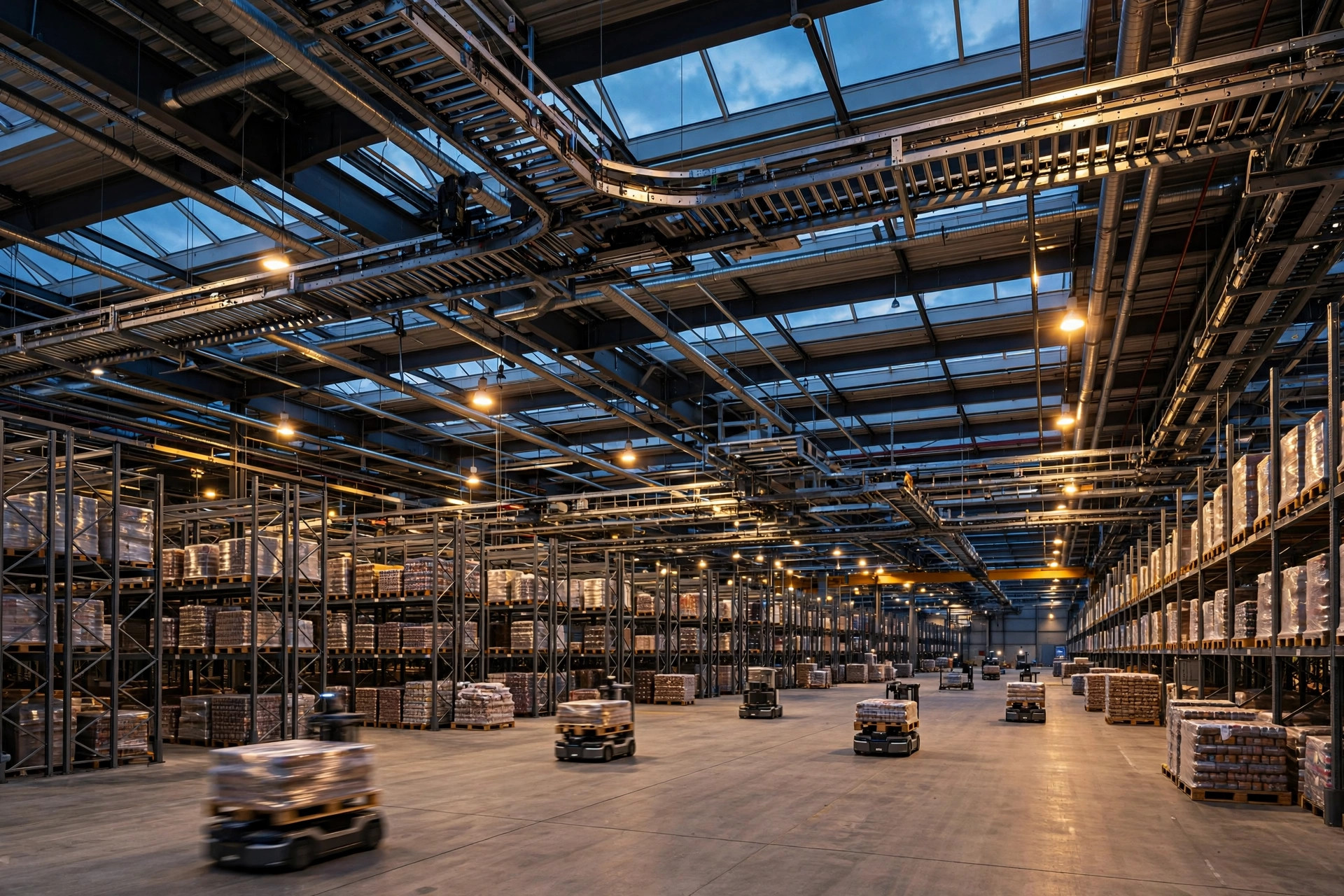
Here's my call: by 2027, whether your warehouse can actually use AI will have almost nothing to do with which algorithm you buy — and everything to do with how much clean, usable data is sitting in your systems. Algorithms are getting cheaper by the month. Data is the hard currency.
I spent a few days at Modex in Atlanta this past spring. The AI booths were packed. Vision picking, demand forecasting, smart labor scheduling — every demo looked flawless. Then I went for beers with a few old friends who sell WMS, and we kept circling back to the same point: those demos run on lovingly prepared, spotless datasets. Drop the same software into a real customer warehouse, and nine times out of ten it trips over the data.
The Algorithm Is No Longer the Bottleneck
Five years ago that sentence would have gotten me laughed out of the room. Today it's just true. A vision-based picking module costs less every year. Demand forecasting models are sitting in open-source repos. The gap between algorithms is shrinking; the gap between data estates is widening.
And what does a real warehouse look like underneath? Last year I walked a 300,000-square-foot 3PL facility in the Inland Empire. They were on their third WMS in a decade, and the historical data came in three mutually unintelligible formats. Picking records said "done" — not who picked it, which aisle they walked, or how many minutes it took. The AMR fleet did generate data, but it lived in the equipment vendor's cloud, and the contract never spelled out who owned it. IT wanted an export; legal had to get involved.
On a foundation like that, the most expensive AI is just a pretty shell over dirty data. Models amplify whatever you feed them: good data becomes efficiency, bad data becomes confident, automated mistakes — wrong at machine speed, in perfect formation.
Here's the tell: the WMS vendors figured this out before most of their customers did. Lately they aren't selling feature modules anymore; the pitch is all "data platform" and "AI-ready." Translation: let us clean up your data first. When the software sellers start selling shovels, maybe stop expecting to strike gold on day one.
What a Data-Starved AI Rollout Actually Looks Like
A couple of years back, an apparel 3PL I know paid serious money for an "AI labor scheduling" platform. The pitch was seductive: forecast labor demand from order history, auto-generate schedules, never be short-staffed in peak or overstaffed in the trough.
It was decommissioned after three months. The root cause was almost embarrassing: their WMS had no reliable units-per-hour-per-person figures, because picking was only tracked at the order level. Nobody had ever captured labor data at the person level. The algorithm scheduled against order totals and produced shifts worse than what the floor supervisor drew up from gut feel. Peak season day one was chaos; the supervisor rebuilt the schedule by hand overnight, and the system became shelfware from that day on.
The money was spent, the data was still dirty. That's the most common AI failure mode I've seen — not bad algorithms, but no foundation. And the cruelest part: after a failure like that, the owner concludes "AI doesn't work," which kills the budget for the data infrastructure they actually needed. One botched rollout can set a company back three years.
They could have dodged the whole thing. Before buying the AI, spend three months fixing pick-data capture: log the person, the timestamp, and the location on every pick task — three new fields in the WMS. Three months of that data is enough to validate whether the scheduling model is even directionally right. Skip the small investment, pay for the big lesson.
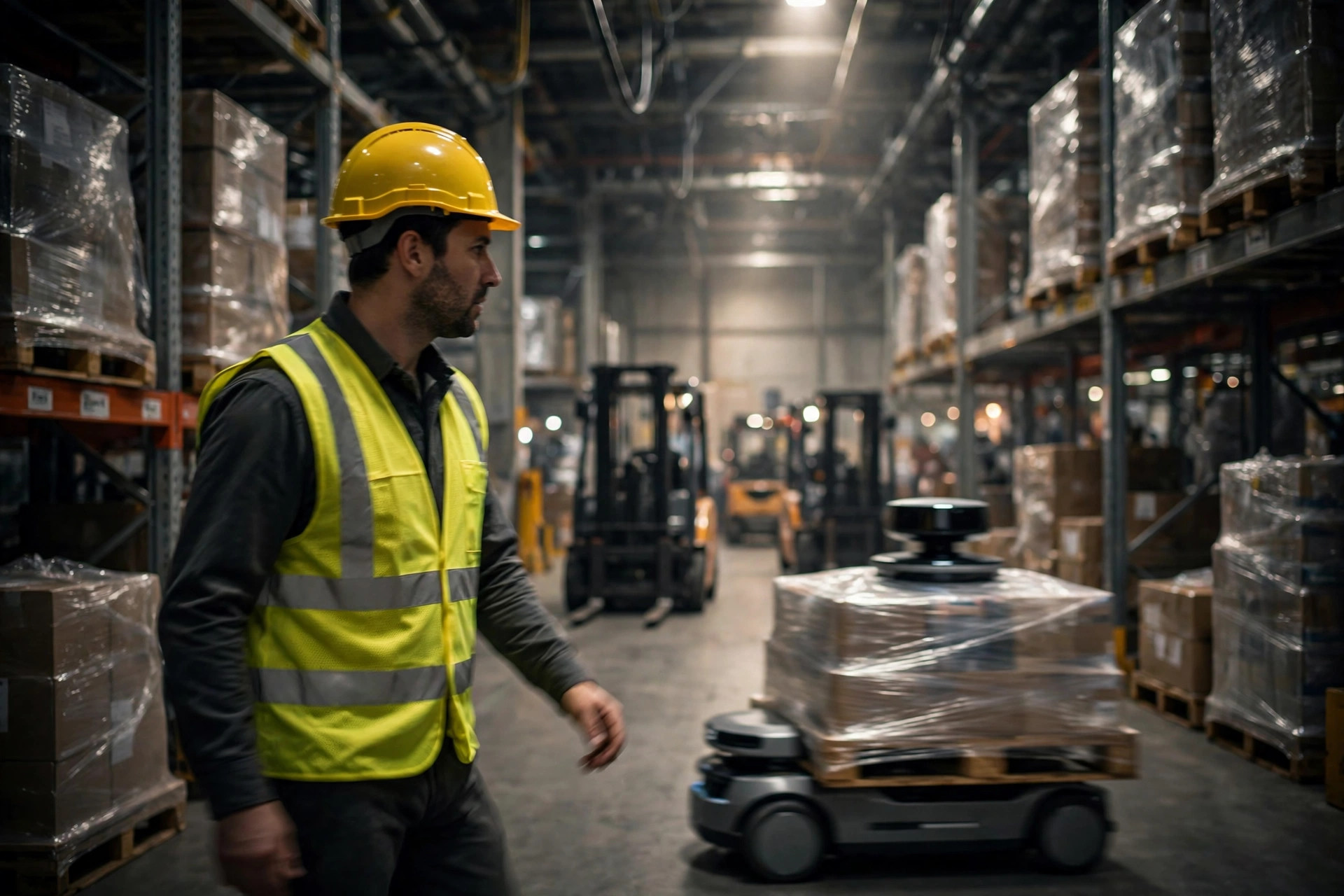
The Timeline: Why the Window Is Now
Here's how I see the next eighteen months playing out. From late 2026 through the first half of 2027, we're in the data-infrastructure window. At ProMat in Chicago next spring, you'll see AI vendors start qualifying customers on data readiness — warehouses with clean data get three-month pilots that actually work, and vendors fight to make them reference accounts. Warehouses with a data mess can't get a POC off the ground, and the sales rep figures that out in the first discovery call.
By the second half of 2027, the split becomes visible. Leading 3PLs and big-box retail DCs will be running AI for dynamic scheduling, predictive replenishment, and predictive maintenance on equipment. Their cost curves start separating from everyone else's. If a mid-size warehouse hasn't started by now, the gap only widens — not because the algorithms are unaffordable, but because accumulating data takes time, and time is the one thing you can't buy back.
The logic is simple arithmetic: data infrastructure pays back over roughly twelve to eighteen months. Start cleaning up and capturing data now, and you're ready when the AI wave breaks in 2027. Sit still, and you'll be fighting spreadsheets while competitors run pilots.
You don't need a data lake on day one. The unglamorous first step: export data from the WMS, TMS, and equipment systems on a daily schedule, normalize the formats, land it in one place where you can query by time and join on order number. Forget "lakehouse architecture" for now — get to "findable, extractable, joinable" first.
So what exactly should you be capturing? Three data streams, in priority order.
First, order and inventory behavior data. Not "we shipped 20,000 orders today" — but who picked what, in which location, at what hour, how many units, how many minutes. That's the raw material for every labor and slotting model. Without it, any workforce AI is fiction.
Second, equipment operations data. Runtime hours, charge cycles, fault codes, and downtime for forklifts, AMRs, and conveyors. That's the foundation of predictive maintenance and capacity planning. In too many warehouses this data sits with the equipment vendor — negotiate data ownership and access rights in the purchase contract, not three years later when you finally need it.
Third, ABC velocity and slotting history. How long did it take that SKU to slide from A to C? How many times was the slot moved, and did it help? Your WMS probably holds this already; nobody treats it as an asset, and it has a habit of getting lost in version migrations.
Don't buy AI yet. Ask your IT team three questions first: can you export the last twelve months of picking data broken down by person, location, and hour? Are equipment failure records structured, or scribbled in spreadsheets? Did the last WMS migration lose any historical data?
If the answer to any of those is "I don't know," the 2027 AI dividend isn't for you — not yet. Dig the data lake first. Once the water's there, the AI will come.