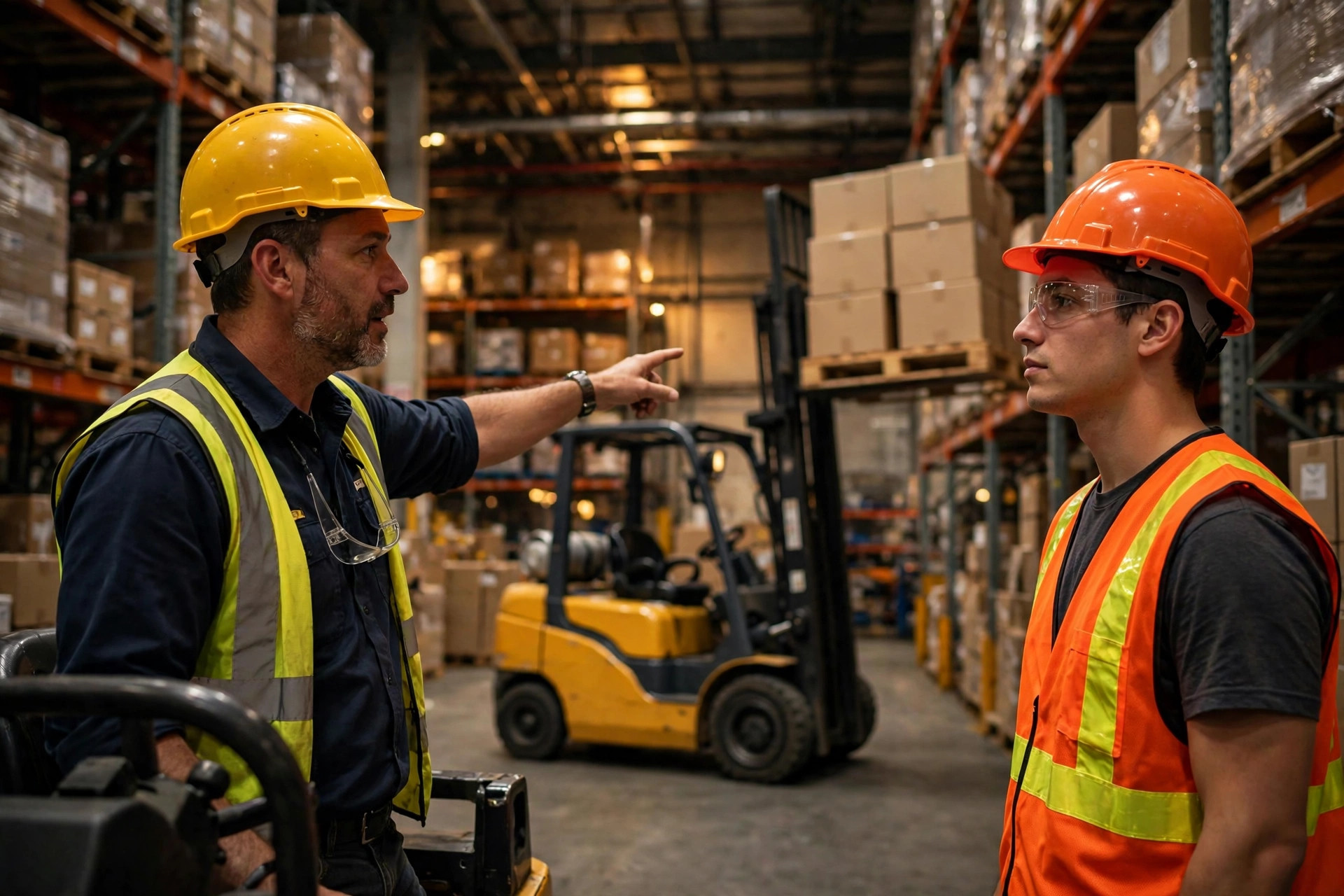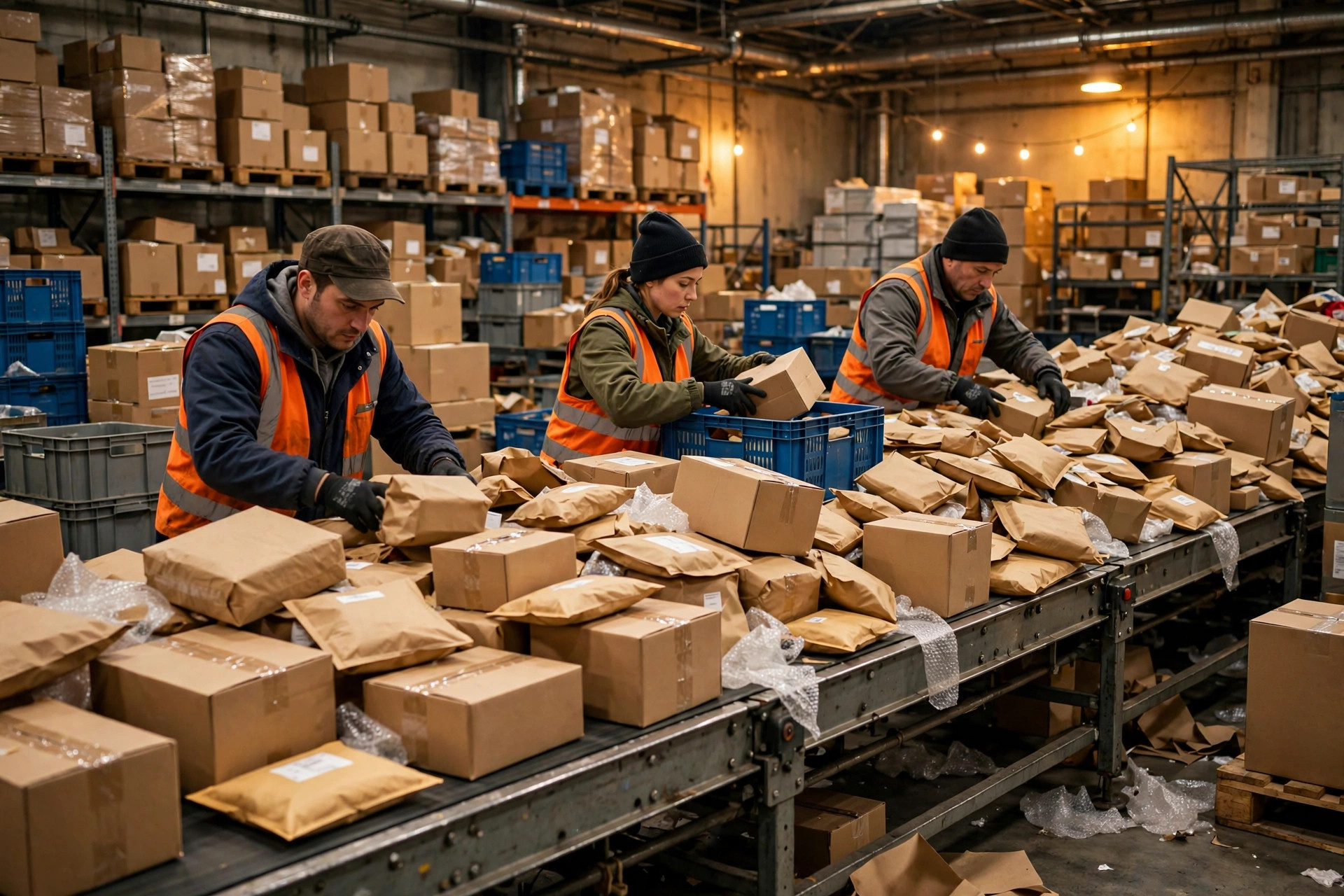
Six weeks remain until this year's US holiday peak — Black Friday through Cyber Monday, November 27 to 30. Over the past year, the warehouse-AI narrative has run hot: vision-based verification, AI scheduling, demand forecasting, voice picking, each with a vendor demo more impressive than the last. As someone in the habit of looking at data first, I'd like to start with the question plainly: in the six weeks left, which of these four directions can genuinely help you absorb more orders, and which merely look busy?
First, the Phenomenon: AI Has Entered the Warehouse, but Peak Season Hasn't Tested It Yet
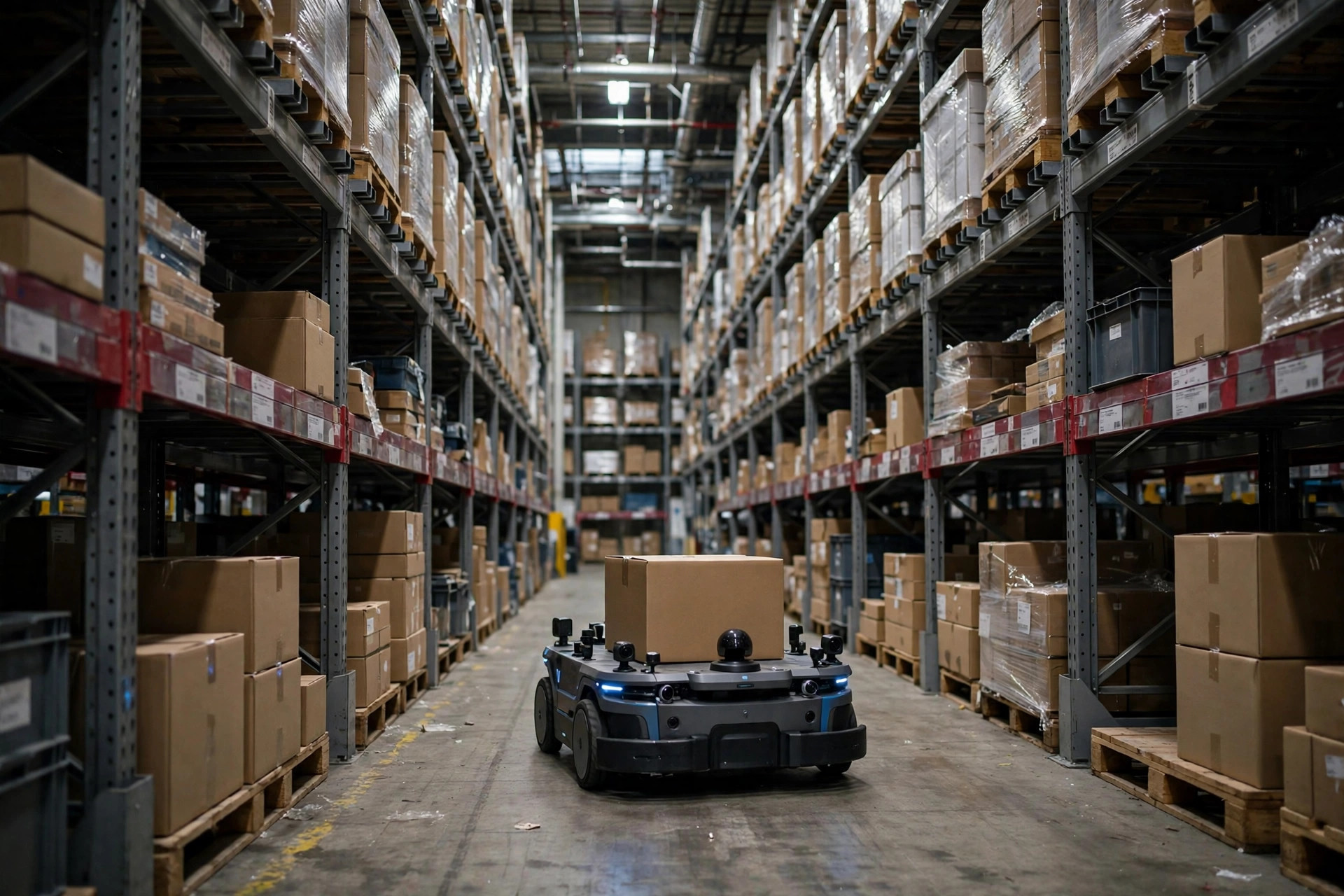
According to industry press coverage over the past year, penetration of vision inspection, AMRs, and voice picking in large US warehouses keeps climbing. But one timeline detail deserves attention: most of these deployments happened in the off-peak window between late 2024 and the first half of 2025, which means the first full peak season to truly test them is this Q4. In other words, we are about to witness AI's first real examination in the warehouse — and the results won't be in until the January post-mortem.
The demand-side pressure, meanwhile, is certain. Per Adobe Analytics' public data, US online sales for the 2024 holiday season (November 1 through December 31) reached $241.4 billion, up 8.7% year over year, a new record. If this year grows at anything like that pace, fulfillment volume pressure will exceed last year's — while, by the experience of recent years, peak-season temp hiring has not gotten any easier. That is this Q4's baseline: more orders, scarce labor, and AI as the only new variable.
There is a second, quieter phenomenon worth noting. The AI projects getting funded right now skew heavily toward the "visible" kind — dashboards, copilots, demo-friendly vision systems — because they photograph well in board presentations. The unglamorous work of instrumenting dock timestamps, cleaning SKU master data, and labeling training images gets deferred. When peak hits, it is usually the unglamorous layer that determines whether the visible layer works at all.
Four AI Directions, Taken One by One
Vision-based verification is the fastest-deploying of the four. Cameras plus AI verify item, label, and quantity before packing, catching mispicks before they ship. In August 2025, an apparel 3PL in New Jersey switched on vision verification and drove its mispick rate from six per ten thousand down to under two per ten thousand during peak rehearsals. But note the labor logic carefully: it doesn't save picking labor — it saves customer-service and returns cost. A single mispick typically costs two to three times the forward-fulfillment cost once return shipping and service time are counted. So its ROI should be booked against "fewer errors," not "fewer heads" — two entirely different ledgers.
AI scheduling feeds historical volume, promo calendars, and worker skill tags into a model that outputs two-to-four-week schedules. Of the four directions, this is the one where "starting now still works," because it touches no hardware and can run in two to three weeks. The counterintuitive judgment: AI scheduling doesn't save total hours — it saves the overtime peak. It shaves 10 to 15% off the labor spike, and that 10% is precisely the hours billed at the 1.5x overtime rate mandated by US federal law. It saves the most expensive hours, which is the only math that matters here.
Demand forecasting is the one most in need of cold water. Intuitively, better forecasts mean calmer staffing and stocking. But peak season is exactly when forecasting models are at their worst — Q4 volume is a promo-driven, non-stationary pulse, and models trained on history systematically underestimate a Black Friday running five times the daily average. During the 2024 peak, a food distributor in Pennsylvania saw its AI forecast undershoot Black Friday week's volume by nearly 40%, and temp workers arrived two days late. My judgment for this Q4: don't ask AI forecasting to carry your quarterly labor plan. Use it for rolling 72-hour short-horizon forecasts, paired with AI scheduling, and nothing more ambitious.
Voice picking is the least "AI-looking" of the four and the most solid per dollar invested. Headset-guided picking frees hands and eyes, with accuracy typically above 99.5%. It's unglamorous, but its peak-season value lies in being temp-friendly — onboarding shrinks from two days to half a day. Against the November reality of being unable to hire experienced hands, that property matters more than any algorithm.
A comparison frame for the four:
| Direction | Deployment lead time | What it actually saves | What to expect this Q4 |
|---|---|---|---|
| Vision verification | 4–8 weeks | Returns and service cost | Start with high-value, high-error SKUs for immediate effect |
| AI scheduling | 2–3 weeks | The priciest overtime hours | Still time to start now |
| Demand forecasting | 3+ months | Planning variance | 72-hour rolling forecasts only |
| Voice picking | 3–6 weeks | Training cost and mispicks | Full temp coverage, most reliable payoff |
Starting Now: What Can Still Be Done for Q4
Counting back from six weeks out, my judgment falls into three tiers:
- Still in time (results in 2–3 weeks): switch on AI scheduling, extend voice picking to the full temp workforce, put vision verification on high-value and high-mispick-rate SKU lanes first.
- Out of time (needs 3+ months): a major rebuild of the demand-forecasting model, full-warehouse AMR expansion, any project that touches conveyor hardware.
- Don't touch: a major WMS version upgrade within four weeks of peak — any upgrade, any.
An Open Question
After this Q4, the industry will hold its first complete report card on "AI carrying peak season." The question worth asking then won't be "does AI work," but rather: in the face of a volume pulse, which matters more — "predict and plan" AI, or frontline "execution-layer" AI in verification, voice, and dispatch? My hypothesis leans toward the latter, but the data isn't in yet. We'll see at the January post-mortem.
By Dr. Chen, Supply Chain Researcher