At 6:30 in the morning I walk into the warehouse and the first thing I look at is the warehouse cross-training skills matrix on the wall. It tells me in one glance who can cover which job today. Folks, let me be straight with you: that chart is not there to impress visitors. It is there for 2 a.m., when somebody calls in sick and peak-season orders are piling up.
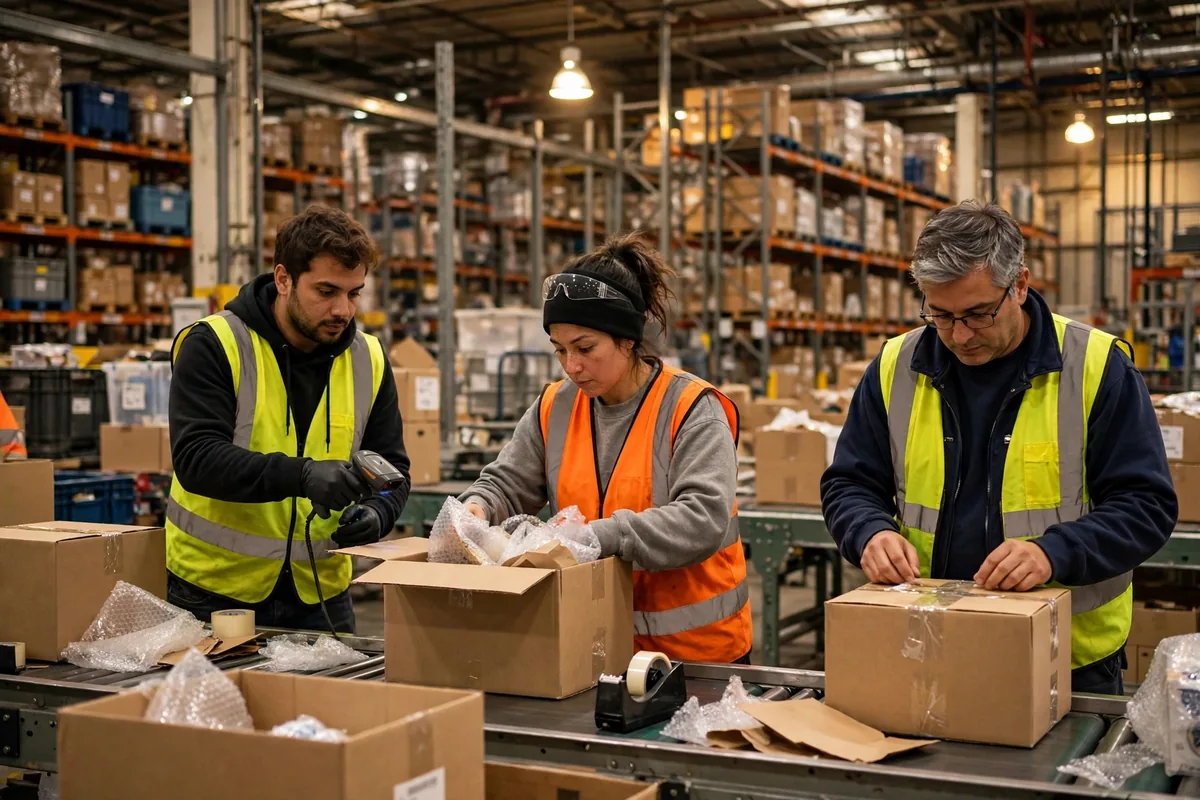
It was a Tuesday night last peak season, around 11 p.m. Lao Li from the checking team suddenly had stomach trouble and went straight to the hospital. A stack of orders was still waiting to be checked, and the morning truck was already booked. Two years ago I would have just stood there staring at it. We only had a handful of checkers, nobody else knew the job, and nobody dared to touch it. That night was different. Xiao Wang from picking stepped up. He had finished checker cross-training three months earlier. He covered the station for three hours and cleared the queue by 2:30 a.m. The truck left on time. He is not a superhero. We had simply built that chart ahead of time, and it paid off when we needed it.
What the warehouse cross-training skills matrix actually looks like
Put simply, a warehouse cross training skills matrix is a big grid. Jobs across the top, people down the side, and each cell says how far that person has got. Our grid uses only four levels, and I keep it that simple on purpose: blank means cannot do it, half means trained and can do it with a mentor watching, full means can do it alone, and a star means can train others. Picking, forklift, checking, packing, putaway, cycle counting, all six jobs listed, one row per person, and the whole warehouse can see where everyone stands.
Here is a simplified version of it. The names are illustrative:
| Employee | Picking | Forklift | Checking | Packing |
|---|---|---|---|---|
| Xiao Wang | Star: can train others | Half | Full | Full |
| Lao Li | Full | Blank | Star: can train others | Full |
| A Fang | Full | Half | Half | Star: can train others |
| Xiao Chen | Half | Full | Blank | Half |
Here is the counterintuitive part: we do not try to make everyone able to do everything. A person who can do everything usually does nothing well, and in peak season you end up with a warehouse full of half-trained people. What we aim for is coverage depth of two on every job, not four. Depth two means every job has at least two people who can do it alone, and every critical job has at least one person who can train newcomers. If one person drops out, someone steps in right away. Depth four sounds impressive, but the training time it costs is not worth it, and the staff hate it.
The money side matters too. Here is an illustrative example, just to show the logic. Imagine a warehouse with forty people, where picking normally needs twelve. The old way is to keep exactly twelve pickers. One calls in sick and you pay overtime. Two call in sick and you pull people from other teams who do not know the job, and they slow everyone down. The matrix way is different: in normal times, three people from packing and three from putaway each train up to full picking level. That gives you six people who can step into picking at any time. Training those six costs about two hours a week each with a mentor, for about two months. The cost is roughly twelve hours a week of training time, and what you buy is a peak season where one absence never forces the whole warehouse into overtime. I have run those numbers, and it is worth it.
The three traps that kill cross-training
The first trap is asking experienced staff to train newcomers without giving them time. An experienced worker already has a full day's work. If you ask them to train someone on top of that, the newcomer just stands and watches for three days and still cannot do the job. Our rule is simple: in the week someone is training a newcomer, their own quota comes down, and when the newcomer can work alone, the trainer gets a bonus at month end. Do not lecture me about dedication, folks. If training time is not written into the roster, training is just a slogan.
The second trap is getting careless with licensed jobs like forklift driving. A forklift is not something you learn by watching. No licence, no driving. That is a red line. In our warehouse, forklift cross-training starts with getting the licence. Once the licence is in hand, the trainee practices with a mentor, and only after the mentor signs off can they drive alone. Last year a new hire told me he had driven forklifts back home and wanted to work the high racks on day one. I stopped him. His licence had expired long ago. Honestly, cross-training can move fast, but licences and safety are not places to cut corners, not by one step.
The third trap is pinning the matrix on the wall and thinking the job is done. A matrix that is not updated for three months is waste paper. Someone learned a new skill and it never got added. Someone changed teams and their old boxes never got cleared. Then at night, when you really need cover, the chart says someone can step in, and they arrive and cannot do the job. We have a fixed routine now: on the first Monday of every month, the team leaders meet for fifteen minutes and do one thing only, go through the matrix. Who moved up, who moved down, change it on the spot. Fifteen minutes. Not much. But the chart stays alive.
How our warehouse cross training skills matrix works now
A new hire learns their own job first. After a month, when the team leader is confident they are steady, they start cross-training on a second job. The second job is always adjacent to the first: pickers learn checking, packers learn putaway, forklift drivers learn cycle counting. Adjacent jobs are faster to learn, and when something goes wrong, people can understand each other's work. Nobody trains on more than two jobs at once. Bite off more than that and nothing sticks.
For mentoring, we have an unwritten rule: the mentor picks the apprentice, the manager does not assign it. People teach better when they chose to teach. While training, the apprentice checks in with the mentor before clocking out each day: what did I learn today, what do I practice tomorrow, three lines in the handover book.
Before peak season we run a stress test with the matrix: suppose checking loses two people at once and forklift loses one, can the night shift still ship normally? If not, we train ahead of the gap. We do this once a year, before peak, and after the test we know where we stand. Last peak season our on-time shipping held up, not because we had more people, but because the chart had plugged the holes in advance.
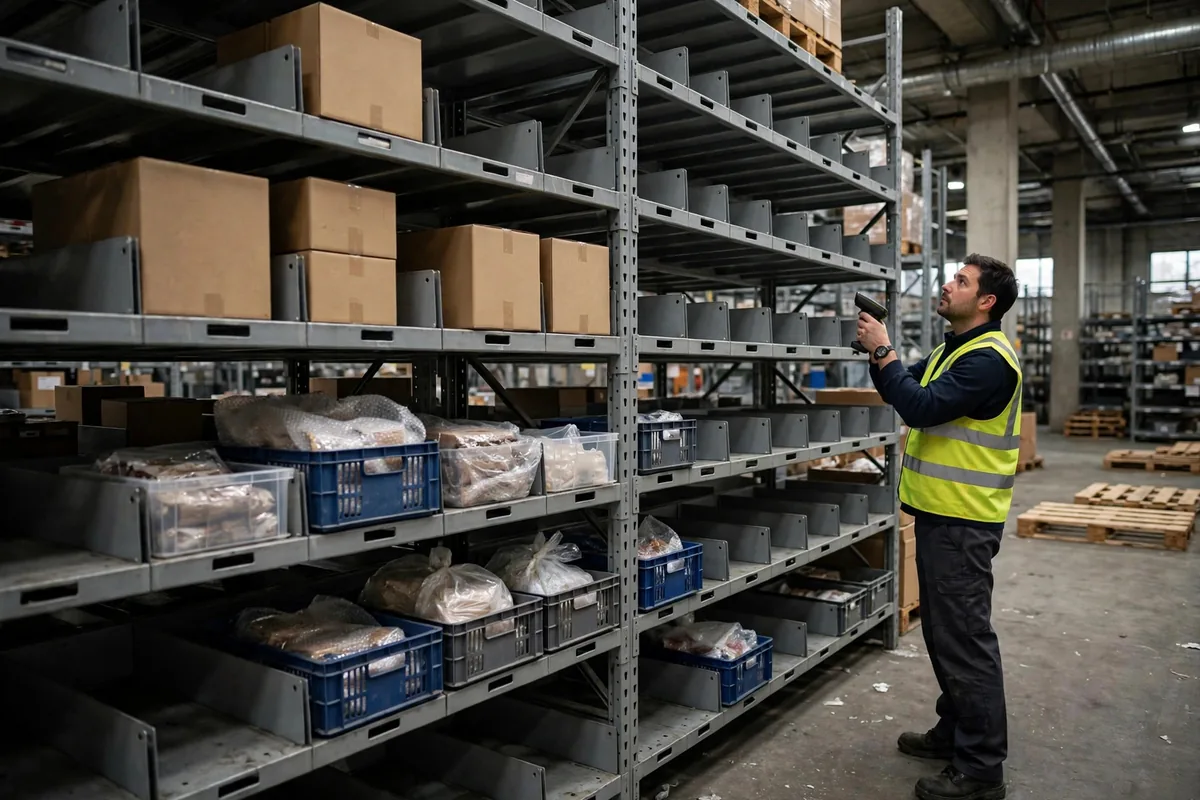
Cycle counting is also good training ground. Every month we deliberately mix the counting teams: a picker paired with a forklift driver, one calling out numbers, one driving to fetch the stock. After a few rounds, pickers understand why drivers complain about narrow locations, and drivers understand why pickers keep asking for replenishment. One count done together teaches that better than a hundred lectures.
One more thing: do not treat cross-training as a fire brigade you only remember in peak season. Quiet season is training season. Peak season is harvest season. Our rule is at least two cross-training sessions a month in the quiet season, and in the month before peak, no new training, only review. Learning something new in peak season makes the learner nervous and the teacher nervous, and that is when accidents happen. Train slowly when it is quiet, and just use the skills when it is busy.
Honestly, there is no high tech in cross-training. It is one chart, a group of experienced staff willing to teach newcomers, and fifteen minutes a month to keep it current. The chart is dead paper. The people are alive. The question is whether you, the manager, are willing to write training time into the roster. Write it in, and when someone calls in sick at 2 a.m., you can sleep. Leave it out, and your phone will ring at 2 a.m. So tell me: is the chart in your warehouse alive, or is it just gathering dust on the wall?
By Chen Feng, Warehouse Operations Manager