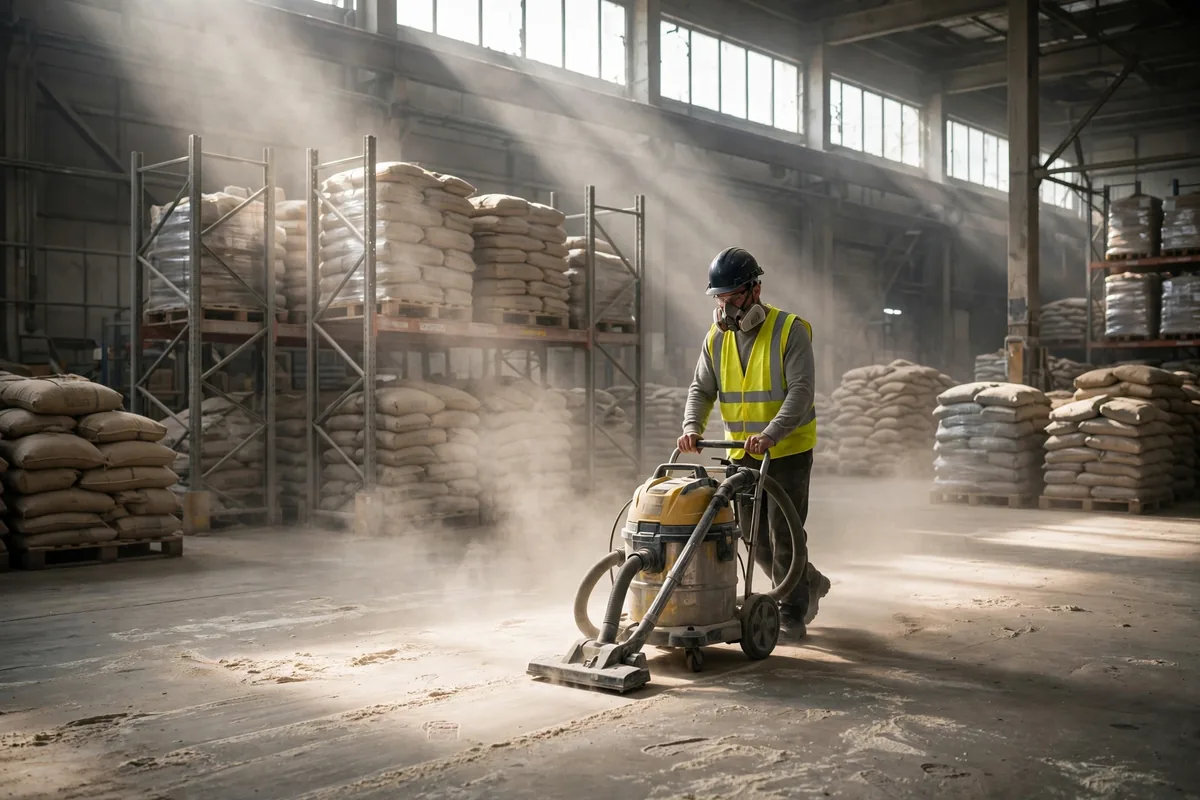
On February 7, 2008, the Imperial Sugar refinery in Port Wentworth, Georgia, exploded. Fourteen people died and 36 were injured. Two years later the settlement came to $6.05 million — $4.05 million for the Georgia plant and $2 million for the company's Gramercy, Louisiana, plant. One company, two plants, one combustible dust explosion, a $6.05 million bill. Now ask the question that matters: how many years of housekeeping would that money have bought? That is the whole subject of this article. Combustible dust compliance is not spending. It is spending a little to avoid a very large invoice.
Start with how hard OSHA looks. The agency's Combustible Dust National Emphasis Program runs under instruction CPL 03-00-008, revised effective January 30, 2023, replacing the March 11, 2008 version. Between fiscal years 2013 and 2017, OSHA conducted more than 2,500 combustible dust inspections and issued 3,389 violations — about 1.4 violations per inspection. Inspectors rarely leave empty-handed. The human cost is just as concrete: the U.S. Chemical Safety Board counted 119 deaths and 718 injuries from combustible dust incidents between 1980 and 2005, close to five deaths a year, every year, for a quarter century. This is not a remote tail risk. It is a recurring line item.
What Counts as Combustible Dust
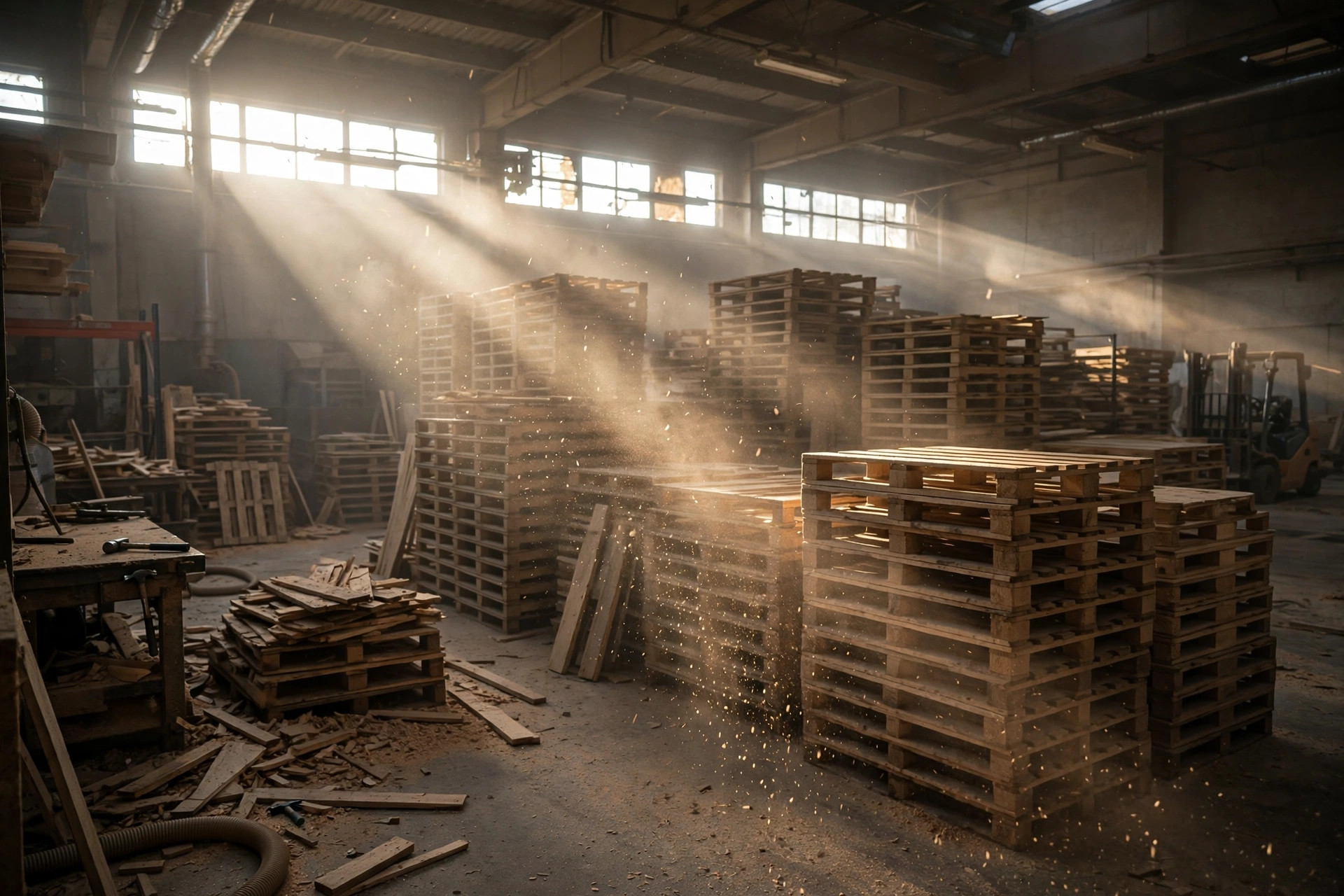
Flour, sugar, grain, wood dust, plastic powder, metal powder — most of the dust a warehouse actually handles can burn. The test is not whether the floor looks dirty. It is whether the material, ground fine and suspended in air, can ignite and explode. NFPA 652 is the fundamentals standard, NFPA 654 covers chemical dusts, NFPA 664 covers wood processing, and NFPA 660 has consolidated the related standards since 2025. The first step is not buying equipment. It is a dust hazard analysis that maps every dust-generating point: the feed inlet, the packing line, conveyor transfer points, crushing and screening stations. Without that map, housekeeping is guesswork, and money spent on guesswork is money wasted.
One blind spot to check: auxiliary materials. The packaging trimmings, the pallet debris, the residue left by a previous tenant — all of it can explode. The analysis must cover what is actually in the building, not what the business license says the company does.
Where the Money Actually Goes: Combustible Dust Compliance Costs
| Cost item | Pattern | Scale |
|---|---|---|
| Dust hazard analysis | One-off, in-house or third-party | The price of one consulting report |
| Housekeeping labor | Recurring, per shift | One or two cleaning posts |
| Industrial vacuum equipment | One-off plus consumables | Starting at the price of one industrial vacuum unit |
| Explosion-proof electrics and grounding | One-off, dust zones first | Scales with the size of the dust area |
| Testing and training | Recurring | Once or twice a year |
| Shutdown cleaning | Hidden cost, billed by the hour | The largest item in high-dust zones |
The big money is not the equipment. It is labor and downtime. A vacuum unit is bought once and lasts years. A cleaning worker is paid every shift, and every hour of shutdown cleaning burns capacity. So the savings lever is not "buy a cheaper vacuum." It is the cleaning rhythm. Get the rhythm right and labor and downtime fall together. Get it wrong and the best equipment in the world will not save the budget.
Take a worked example, clearly illustrative: put $100,000 a year into housekeeping — two cleaning posts, one industrial vacuum amortized over its life, two shutdown cleanings — and divide by the $6.05 million settlement. The break-even is about 1.7%. If your warehouse's annual chance of a serious dust incident is above that, the money is justified before counting downtime, insurance hikes, or lives. That is the whole calculation, and it is why "spending a little to avoid a very large invoice" is not a slogan. It is arithmetic.
The Combustible Dust Housekeeping Rhythm: How Often Is Often Enough
Three tiers, simple enough to run on a shift board. High-dust zones — feed inlets, packing lines — get cleaned every shift. Medium-dust zones get cleaned daily. Low-dust zones get cleaned weekly. The decision framework is three factors multiplied together: dust generation rate × accumulation area × number of ignition sources. A zone that scores high on all three gets cleaned every shift. A zone that scores low on all three is fine weekly.
Here is the counterintuitive part: a spotless floor does not mean a safe building. An explosion needs dust suspended in air at a sufficient concentration; the thin layer on the floor cannot burn by itself. The most wasteful operation in the business is blowing the floor clean with compressed air — the floor ends up spotless, but the settled dust is now airborne, which is exactly the condition an explosion needs. The work was done, the money was spent, and the risk went up. That is money spent badly. The correct method is vacuum collection: remove the dust without putting it into the air.
The other trade-off is frequency against downtime. Clean more often and shutdowns eat capacity; clean less often and risk climbs. The balance point is not "as clean as possible." It is "dust never accumulates to a depth that can explode." Keep the records — date, zone, who cleaned. When OSHA walks in, the records are the first thing they ask for. With records, the rhythm is provable. Without them, even diligent cleaning cannot be proven.
One Accident Against One Year of Compliance
| One accident | One year of compliance | |
|---|---|---|
| Direct bill | Imperial Sugar settlement: $6.05 million | A few vacuum units plus one or two cleaning posts |
| Downtime | A destroyed plant rebuilt over months | A cleaning window of minutes each day |
| Follow-on cost | Insurance increases, lost orders, liability exposure | Testing and training once or twice a year |
| Lives | 14 dead, 36 injured | Zero |
Here is a conclusion you can calculate. Anchor the cost of a single accident at the Imperial Sugar settlement of $6.05 million — and remember that is only the settlement, before downtime and lost orders. The formula is: break-even annual accident probability = your warehouse's annual compliance spend ÷ $6.05 million. If you believe your warehouse's chance of an incident in a given year is higher than that number, the housekeeping money is well spent. Plug in your own labor, equipment, and downtime figures and run it once. The compliance bill answers for itself.
By Lao Zhou, Logistics Cost Analyst