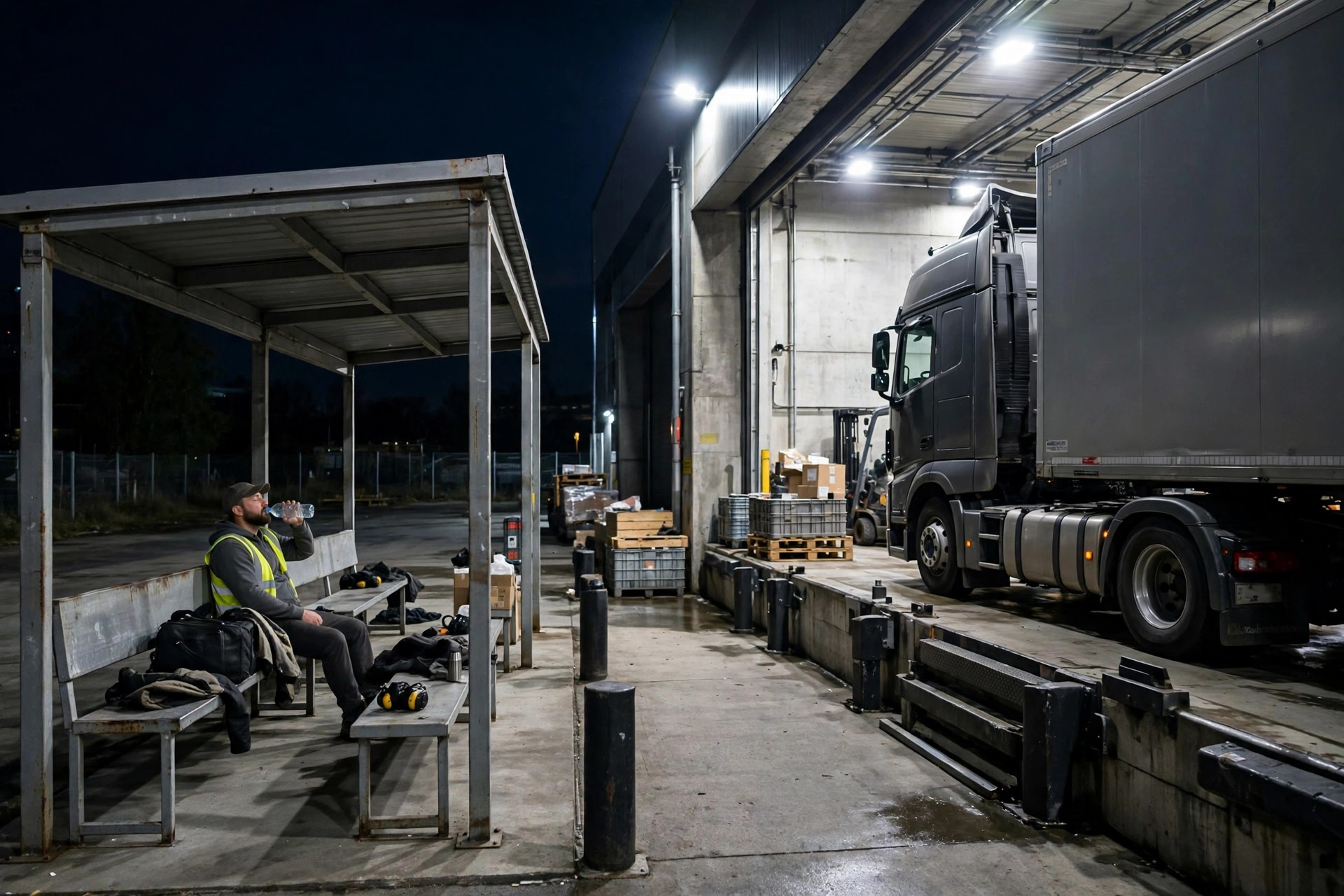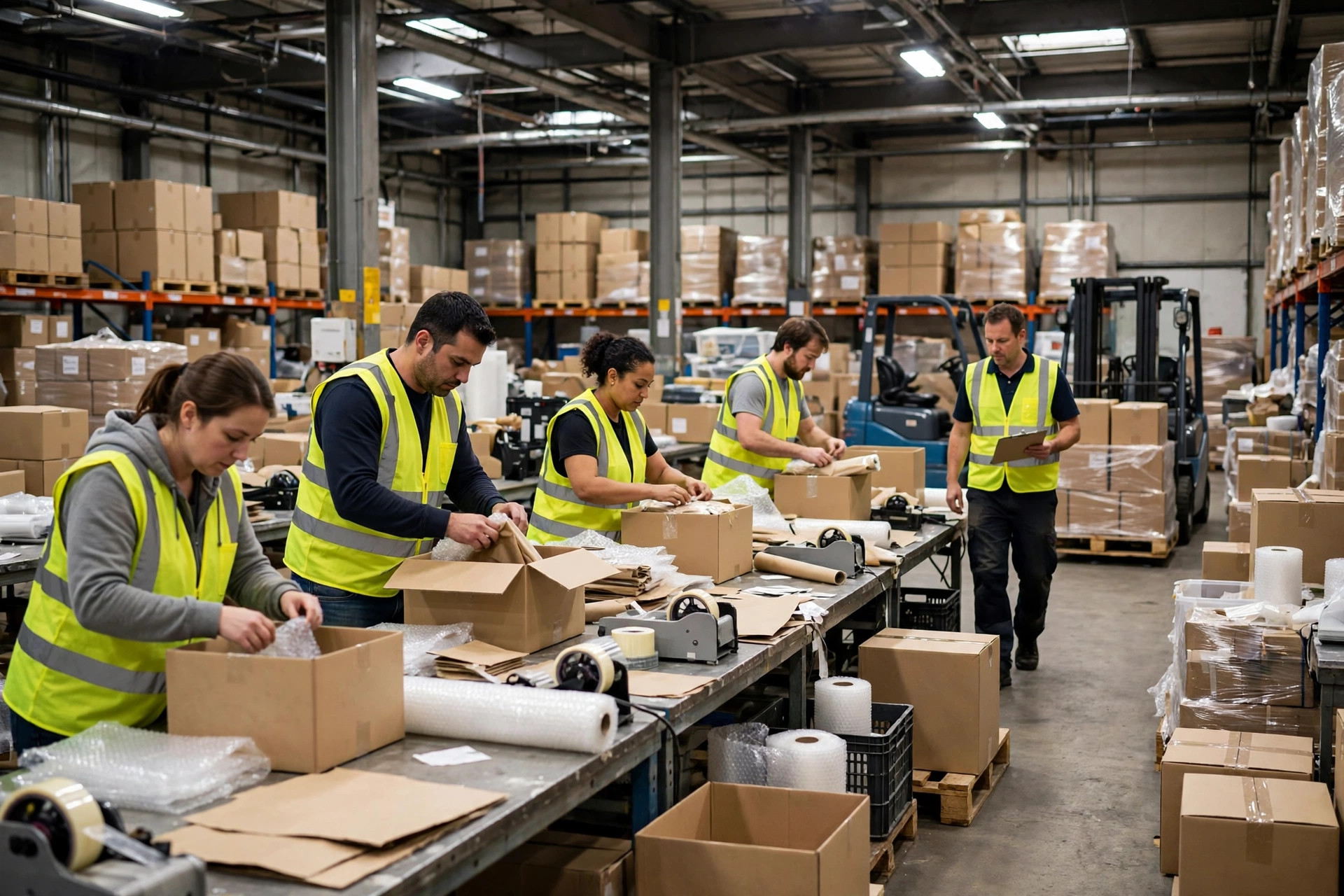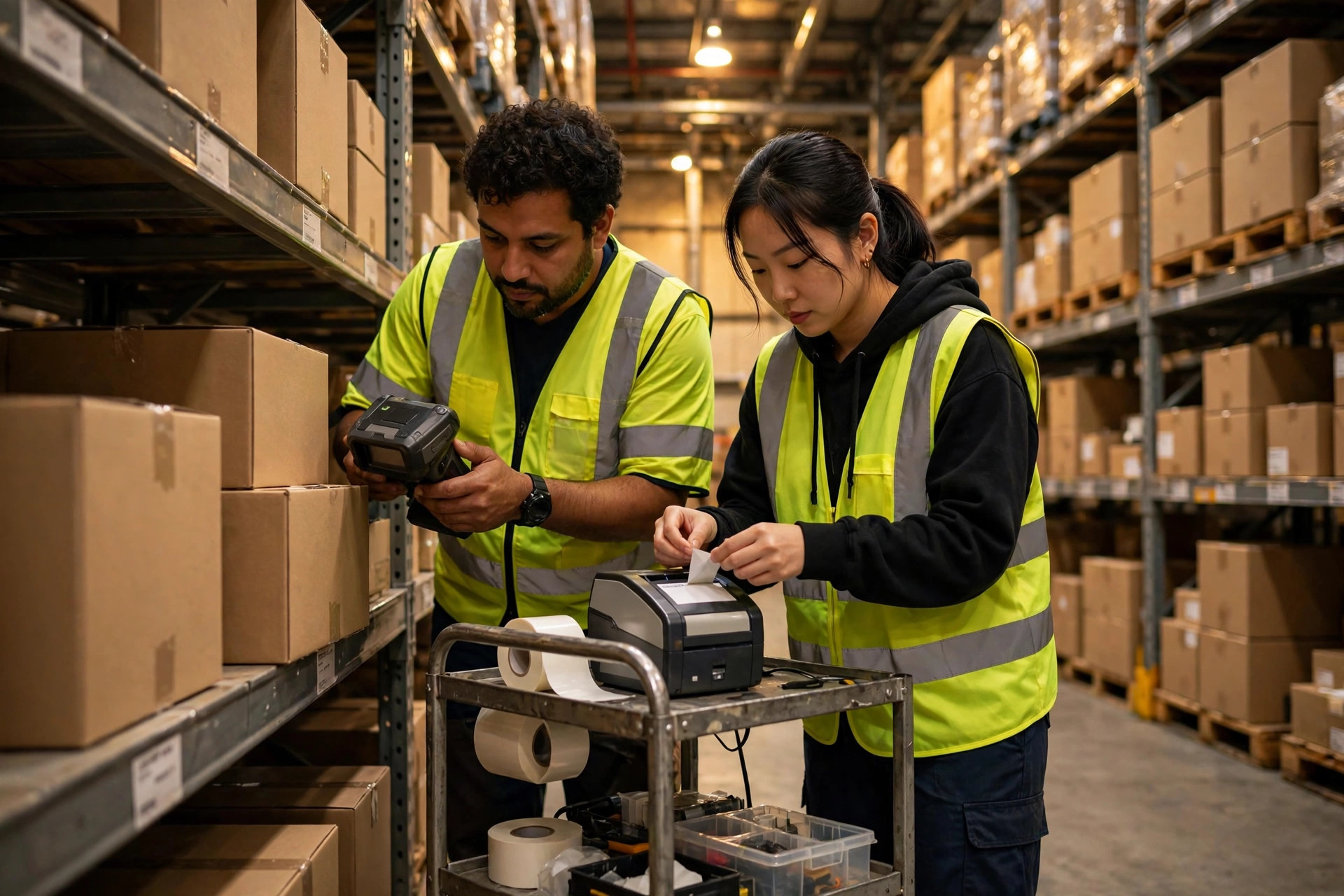
It was 6:40 on a Tuesday morning, peak season, and night-shift lead Lao Zhao met me at the door. Three pickup trucks had been waiting at the gate for close to an hour, and the night shift still had 42 orders unpicked. If I had opened the warehouse KPI dashboard that morning and read all 30 numbers top to bottom, the drivers would have been on the phone to the customers before I finished. Let me be straight with you: in a 15-minute morning meeting, you can only act on a handful of numbers.
I have run a warehouse with 200 people and one with 40; the lesson was the same both times. A dashboard is not an exhibition wall. It is the starting gun for the day's work. A number earns its place on the wall only if it comes with an action attached. A number with no action is decoration.
The Warehouse KPI Dashboard Gets 8 Numbers, Not 30
Our board used to carry more than 30 numbers, red and green all over the place. The result? The leads glanced at it in the morning and learned nothing. We cut it to 8, and the morning meeting got faster. The cut had exactly one rule: if this number goes over the line, do we have to move people, trucks, or freight this morning? If not, it goes to the weekly report.
These are the 8 numbers and the lines we use in our warehouse now. This is our practice, not an industry standard, so do not copy our lines blindly.
| Number | Our line | First move when it breaks | Owner |
|---|---|---|---|
| Night-shift leftover unpicked orders | Over 30 orders | Day shift clears leftovers before opening new orders | Shift manager |
| Orders due out today | Over one normal day's capacity | Add people or agree split shipments with customers | Manager |
| Picking errors yesterday | Over 5 orders in one day | Stop and check which zone and which people the errors cluster in | Team lead |
| Locations waiting on replenishment | Over 10 locations | Replenishment team fills the shortage zones first, not the whole floor | Replenishment lead |
| Trucks waiting at the dock | Over 3 trucks | Release the quick loads first, and tell the slow-load drivers the honest wait | Dock lead |
| Absent staff on shift | 3 or more missing | Pull in off-duty staff or temps immediately, not at 9 a.m. | Manager |
| Problem orders stuck over 2 days | Over 5 orders | Go through them one by one: stuck on system or stuck on stock, decide today | Team lead |
| New hires starting today | Over 4 people | Veterans pair one-to-one with them; no new hire picks a full order alone | Team lead |
Read the numbers together, not one at a time. Lots of leftovers plus lots of absences is not a "work harder" problem; it is a cut-orders-or-add-people problem. Lots of errors plus lots of new hires means you check the training first, not the attitude.
What We Tried Before Cutting to 8
Here is how the problem started. In peak season two years ago, we got a new dashboard and the software vendor loaded it with more than 30 numbers, practically every step of the operation in real time. For two weeks everybody stared at it. By the third week, nobody looked at it, because the morning meeting had turned into a reading session: the leads took turns reading numbers out loud, 20 minutes went by, the trucks were still at the gate, and no orders had been picked.
We tried two fixes. First, a different focus every day: picking today, shipping tomorrow. The leads had to relearn the priorities daily and never knew what to watch. Second, color-coding: talk about the red ones first. But there were a dozen red ones every day, so that was no filter at all. In the end we made a hard rule: the morning meeting covers these 8 numbers only.
Here is the counterintuitive part: the more numbers on the dashboard, the slower the floor reacts. With too many numbers, people cherry-pick the ones that look good. The most dangerous one is on-time shipping rate on its own, because it is so easy to flatter without meaning to. We had a month where our on-time rate looked fine, and at month-end we found out why: the hard, big orders had been pushed back, while picking errors and leftover orders both climbed. To be honest, a good-looking number is often bought with a bad-looking one somewhere else. So my rule is: on-time rate is only ever read next to leftovers and errors. If any one of the three looks bad, the meeting does not get to report only the good news.
There is also a people lesson in here. Last summer, a veteran who had been with us five years was training three new hires, and the new hires made 9 picking errors in their first week. The team lead read the error count out loud at the morning meeting, the veteran lost face, and that same day he said he did not want to train anyone anymore. We changed the rule after that: at the meeting we name the zone, not the person. Names are for private conversations. A dashboard is a tool for running the work, not for embarrassing people in public. Morale drops, and the error count climbs even higher, which is exactly what happened to us that week.
Running the 15-Minute Morning Meeting Off the Warehouse KPI Dashboard
Our meeting now runs exactly 15 minutes, in three 5-minute blocks. Not a minute longer.
The first 5 minutes cover only two things: what the night shift left behind, and how much has to go out today. If leftovers pass 30 orders, the day shift clears leftovers before opening new orders, and that order never flips.
The middle 5 minutes are about people. How many absent, how many temps showed up, how many new hires. If 3 or more are absent, the manager reassigns people on the spot. No "let's see how it goes." We paid for that once: 4 people short, the manager decided to wait and see, and by 10 a.m. there were 5 trucks backed up at the dock, and a driver was arguing with the dock lead at the gate. He had waited 2 hours and nobody had told him how much longer. Our rule since then: a truck can wait, but the driver must be told an honest wait time, and if we pass it, the lead goes out and says so again.
The last 5 minutes cover only the stuck orders and who owns each one. Every order stuck over 2 days gets one sentence: where it is stuck, and who pushes it today. Then we break. Three things are banned from the meeting: settling accounts, reopening yesterday's arguments, and debating the system. Any one of those turns 15 minutes into 40.
What We Check Weekly and Monthly Instead
Weekly, we look at three things: which zone the picking errors cluster in, whether absences follow a pattern, and whether overtime hours keep climbing. Errors clustered in the same zone for two weeks straight is not a people problem; it is a location, labeling, or lighting problem in that zone, and someone needs to go look at the floor. Overtime climbing week after week means staffing or process has hit its ceiling, and pep talks will not fix it.
Monthly, we look at three more: orders per person over time, whether new hires can work independently yet, and the trend in driver waiting time. A new hire who still cannot pick independently after a month with a veteran needs a real question asked: was the training thin, or is this person wrong for the job? Driver waiting time creeping up month by month means dock scheduling or the loading process needs changing, not that drivers suddenly got grumpier.
Let me be straight with you about the dashboard itself: the biggest risk is the manager falling in love with it. Numbers are dead things; people are alive. Fifteen minutes, 8 numbers, people, trucks, and freight lined up for the day, and then the rest of the morning belongs on the floor. Walk the aisles. Check whether the freight is leaning, whether the new hire's hands are unsure, whether a driver has been waiting too long. None of that is on the dashboard. That is what your two legs are for.
My advice to fellow managers is one sentence: cut the wall down to 8 numbers, and for every number you want to keep, answer one question: when this number breaks, what do you move this morning? If you cannot answer, take it off the wall.
By Chen Feng, Warehouse Operations Manager