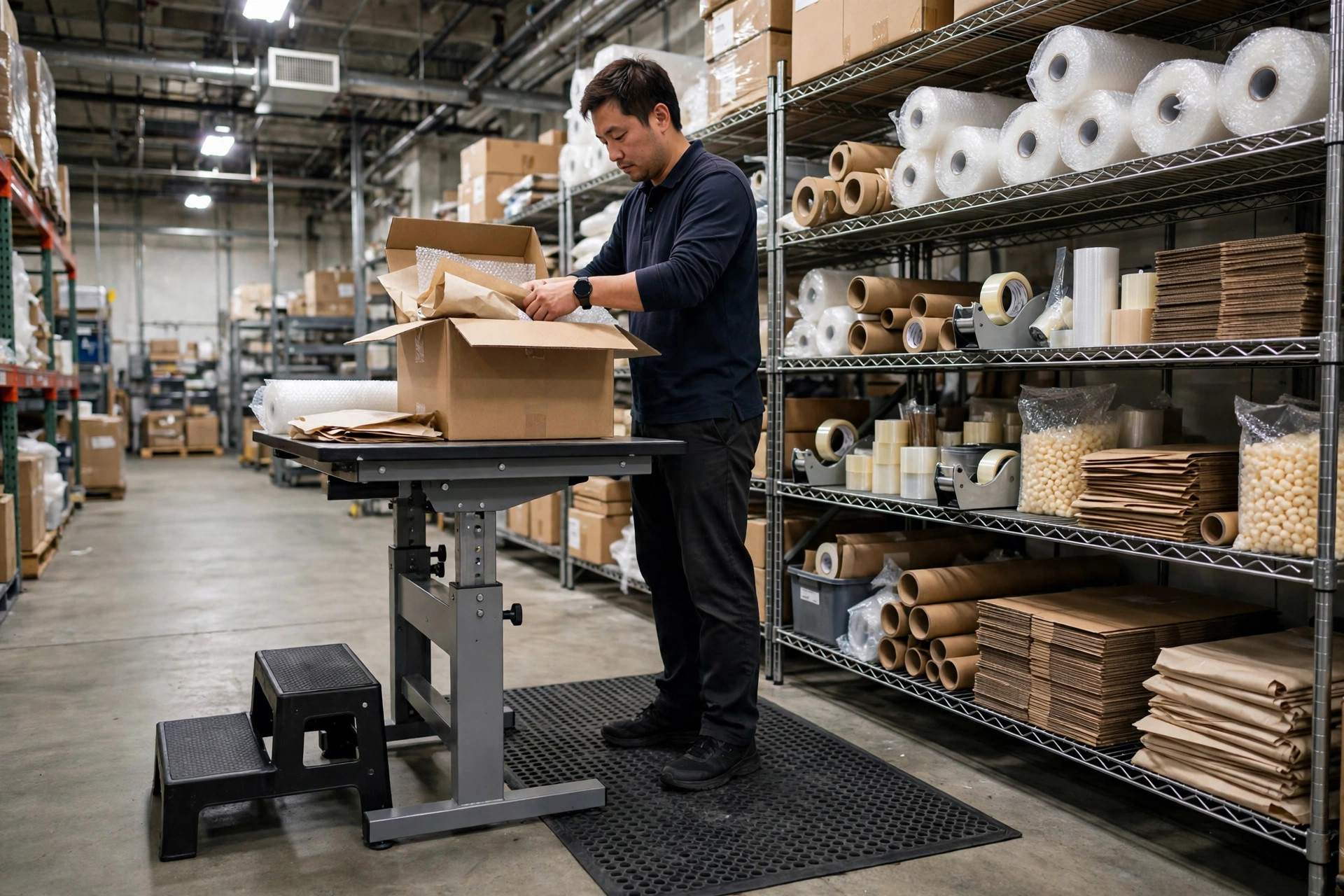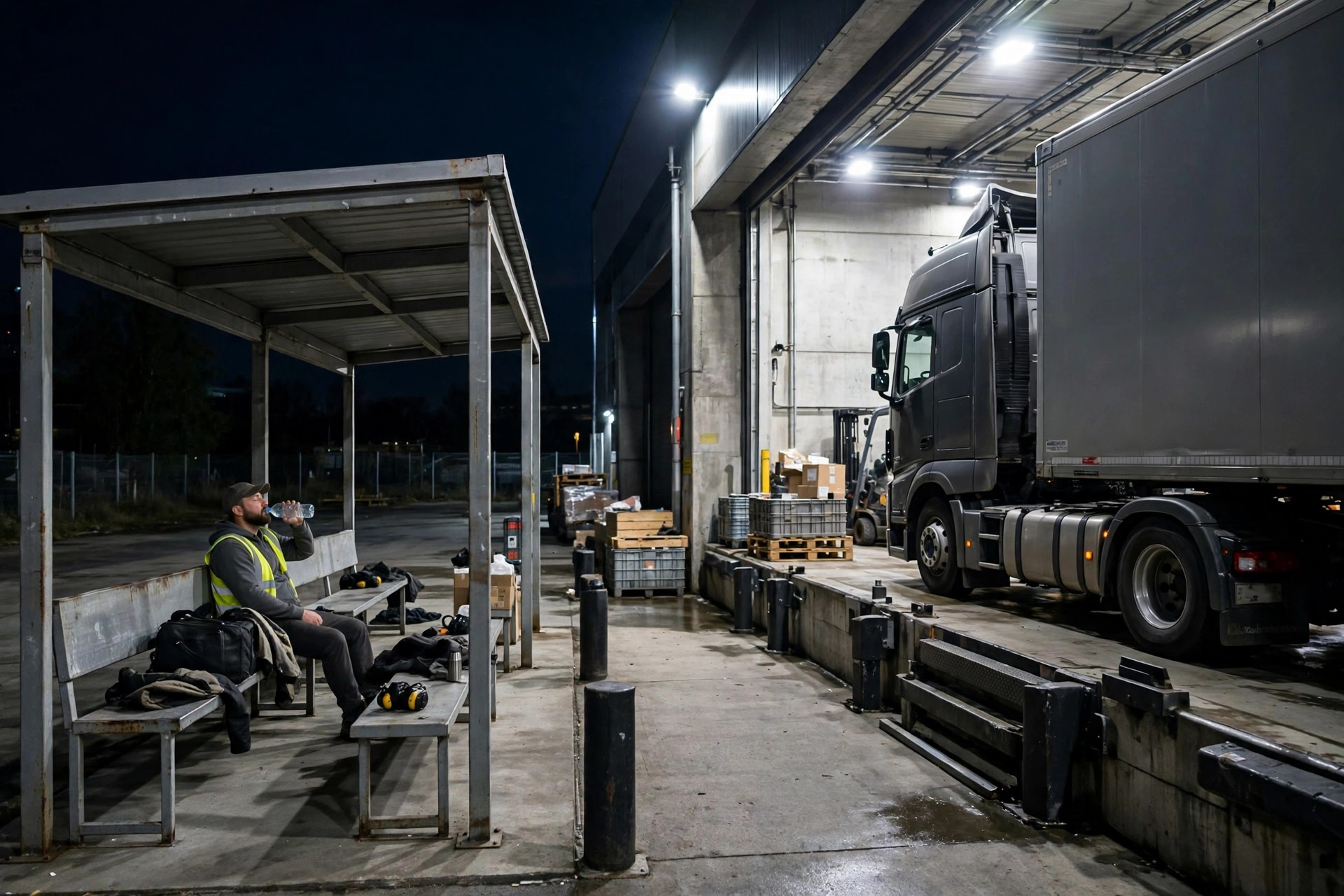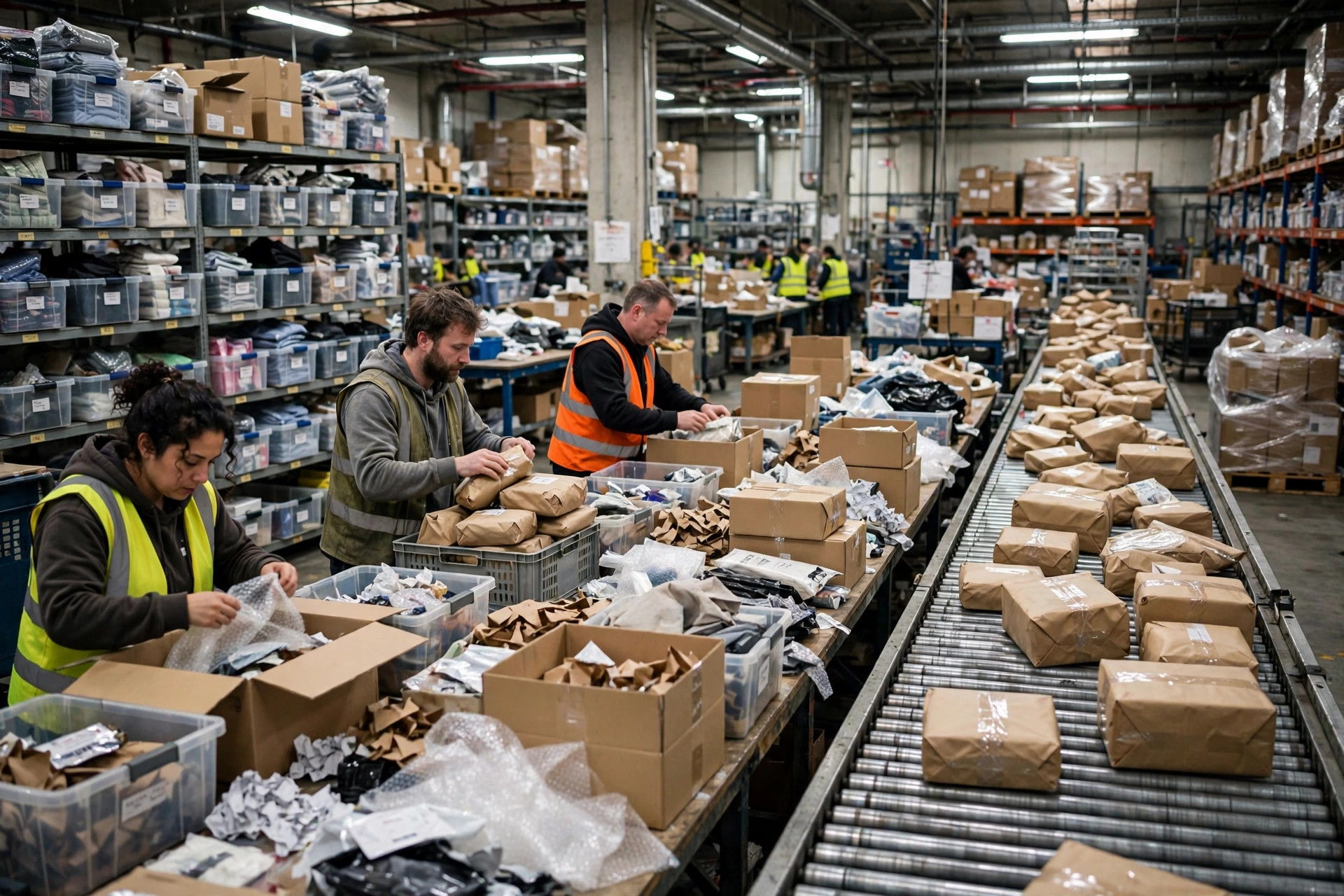
I first heard the peak-season temp hiring headache in a highway service area late one night last fall. I had just dropped a load, and at the next table a few warehouse supervisors were stressing out: the big sale started the next morning, their sort lines were short dozens of people, and every staffing agency they called answered with a price list instead of people. I have been driving freight for years, and I have seen this movie many times. When the freight arrives and the people do not, or the people arrive and quit a week later, the warehouse pays for it one way or another. Peak-season hiring is rarely about finding people. It is about whether the people you find stay through the whole peak, and what you actually paid to keep them.
Referral Bonuses: You Pay for Arrival, Not for Staying
The referral bonus is the trick I see most often. The setup is simple: an agency brings you a worker, and if that worker stays a set number of days, you pay a bonus, either to the agency or straight to the worker as a reward. It sounds fair. You only pay when someone sticks around. The catch is in what it actually rewards.
A couple of peak seasons ago, I delivered to a consumer-goods outbound warehouse in eastern China. The warehouse manager told me his story while we waited for the forklift. Desperate for the sale rush, they had hired dozens of temp workers with a bonus tied to completing one month. Within the first week, more than ten had quit. Night shifts were brutal, the sorting work was monotonous, and people walked. The workers who left got no bonus, the warehouse had wasted days training them, and the veteran staff had to go back and train replacements, which slowed the whole line down. Worse, the warehouse and the agency disagreed about who the bonus money belonged to and when it should be settled, and they spent the end of the month arguing over the invoice.
Here is the counterintuitive part: the bigger the bonus, the more workers treat the job as a short-term deal. Come, finish the required days, collect, leave. That is human nature, not bad character. A referral bonus fits short, simple jobs with a clear end date, where a crew disperses after one batch anyway. If you need people to last the entire peak, a bonus alone will not hold them.
One compliance note before anything else: referral bonuses must go through a legitimate agency with a written contract. The amount, the conditions, and the settlement date should all be in black and white. Wages, insurance, and working hours must follow the rules, and the latest official policy is the final word. A handshake deal saves ten minutes now and costs weeks in a dispute later.
Daily Pay in Peak-Season Temp Hiring: Workers Come Fast and Leave Just as Fast
Daily pay means the worker gets paid at the end of every shift. For the worker, it is the most reassuring arrangement there is: money in hand every day, no waiting. For the warehouse, putting the words "daily pay" on a hiring poster brings in applications immediately. In all my years on the road, I have never seen a service-area bulletin board without a daily-pay hiring flyer on it.
But the cost hides behind that convenience. That same warehouse later switched some roles to daily pay. Shifts filled up, but at morning roll call, two or three out of every ten people simply did not show up. Someone had found a closer job overnight, or was just too tired to come back. Daily pay carries no reason to return tomorrow, so the worker's cost of quitting is zero, and the warehouse gambles on attendance every single morning. Supervisors spent half their energy on roll calls, crash training, and watching new hands, and mis-shipments crept up with them.
Do the math this way: daily pay saves you waiting time on hiring, but you pay for it in management time and error costs. When a supervisor spends half the shift on headcounts and training new faces, that cost never appears on the payroll sheet, but it shows up in the error rate and the overtime. My judgment is that daily pay is a rescue tool, not a backbone. Use it to plug gaps and cover surges, but the core shifts of a peak season still need a relatively stable crew. Daily pay fills holes; it does not build a team.
Dorms in Peak-Season Temp Hiring: A Bed Keeps People, and Can Also Keep Trouble
The third trick is providing a dorm bed, either a room in the warehouse compound or a rented place nearby, so workers have somewhere to sleep from day one. For people who traveled from far away for a short-term job, this is genuinely persuasive. It removes rent, removes house-hunting, and lets a worker start the day they arrive. I have seen warehouses where the moment dorms were offered, most applicants were people from out of town, and hiring speed jumped overnight.
The hidden bill is real, too. First, the cost: beds, utilities, a dorm manager, worn-out bedding. Spread across each worker per month, it is not cheap. Second, the management: dozens of people living together means schedules, hygiene, lost belongings, and arguments, and all of it needs someone in charge. If it is handled badly, it hurts next-day attendance. Third, and most important: dorms tie housing to the job. When someone quits, they lose the bed the same day, which makes workers feel trapped and can actually scare them off. And when someone leaves, the empty bed still costs rent, so the warehouse burns money on nothing.
So dorms fit warehouses far from town where renting nearby is hard, or crews genuinely arriving from other regions. The rooms need to be decent, and the housing arrangement should be written separately from the employment terms: how housing works, how move-out works when someone leaves, all agreed in advance, not argued over at the door. And as always, contracts and insurance are non-negotiable, with the latest official policy as the final word.
How to Mix the Three Without Wasting Money
No single trick wins a peak season. The right mix depends on what your warehouse is actually short of. Here is the framework I would use:
| What you are short of | Lead with | Watch out for | | Hands for a simple job that ends in days | Referral bonus, short-term terms | Workers leave once qualified, training wasted | | A gap for a day or two at the surge | Daily pay, gap coverage | Unreliable roll calls, higher error risk | | Workers from out of town, scarce nearby rentals | Dorm beds | Empty beds burning rent, housing disputes | | People to last the whole peak season | Stable shifts with solid base terms | No single trick carries this alone |
The counterintuitive judgment, once more: the three most expensive lines in peak-season temp hiring are usually not wages themselves. They are the training cost of people who leave early, the mis-shipments and delays caused by short staffing, and the time burned arguing with agencies over terms. Add those three in, and many "cheap" hiring tricks stop looking cheap at all.
Three practical suggestions to close. First, before hiring, build the full bill: wages plus bonuses, housing, management, training, and errors, then compare the tricks honestly. Second, whatever you use, go through a legitimate agency, sign contracts, cover insurance, and keep working hours compliant, with the latest official policy as the final word. Never trade compliance for speed in a peak rush. Third, retention still comes down to the job itself: clear schedules, honest night-shift premiums, and a real reward for finishing the whole peak. People stay where the job is worth staying for.
An old saying among drivers goes: keep the person, and the freight keeps moving. Treat people as passers-by for the peak, and your warehouse becomes a transit stop. Treat them as your own crew, and when the peak gets brutal, there will still be people on the line holding it together.
By Shifu Zhao, Trucking Veteran (15 yrs)