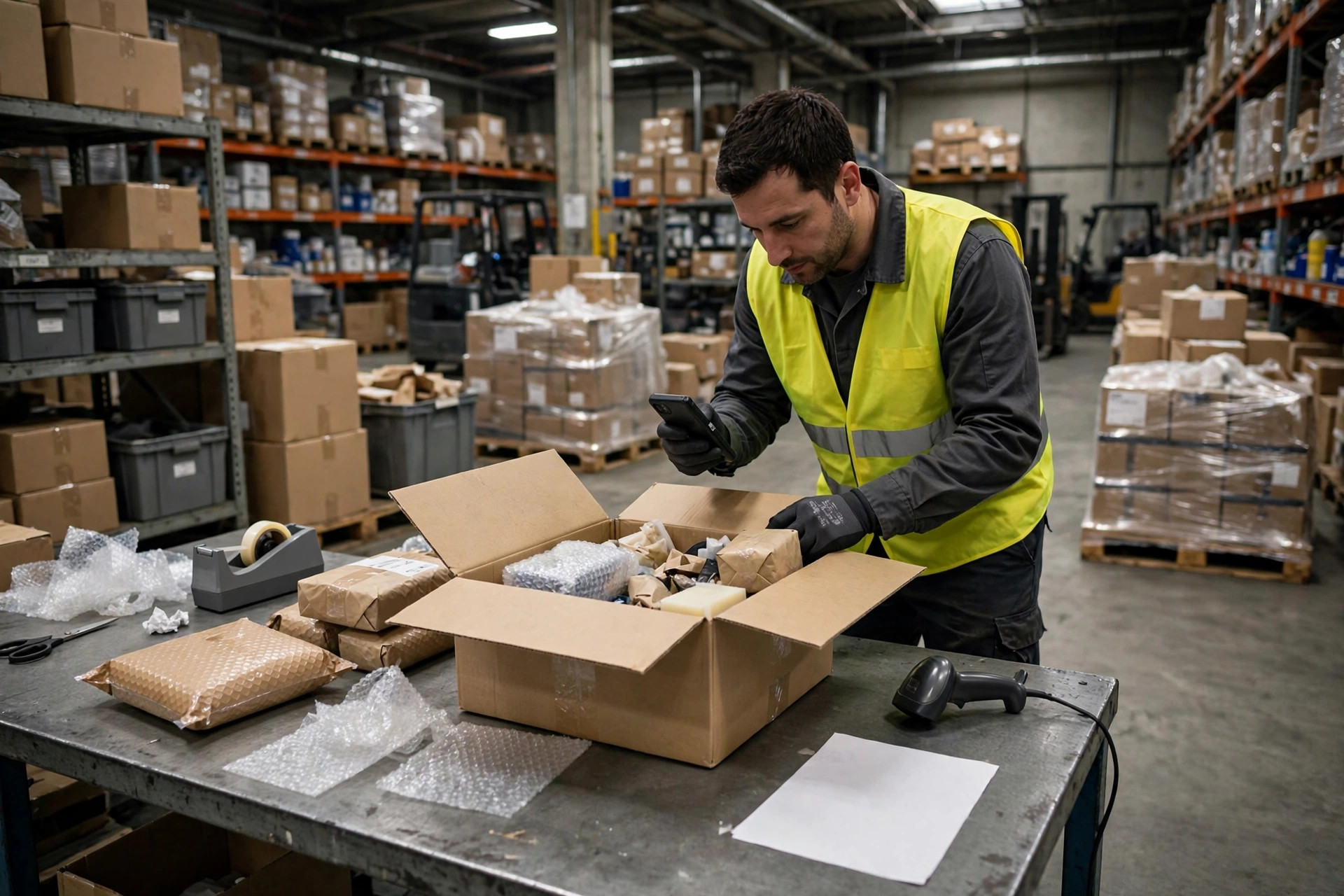
The email landed on a Tuesday morning, and my stomach dropped a little. A skincare brand we had been courting for months wanted to send two people to audit our warehouse before signing. Our warehouse is not big. Six people, one forklift that rattles when it turns left, and a back corner we all pretend is not a mess. A client warehouse audit preparation guide would have been nice about a year earlier, when I still thought an audit was something only big 3PLs worried about. It is not. If you store other people's goods, sooner or later someone is coming to look at how you do it.
Our first audit, two years ago, did not go well. Not a disaster, just embarrassing in the slow, quiet way. The auditor asked for our temperature logs and found a three-day gap where nobody had written anything down. Not because the warehouse had overheated, but because the person on that shift thought someone else was doing it. Then she asked for our pest control reports and the most recent one was two months old. We passed, barely, and the brand signed anyway, but only after a second visit. That second visit cost us three weeks of delay and a lot of nervous pacing. I have been through four audits since, and the difference between the first one and the last one was never money. It was a checklist, a route, and a habit of writing things down.
The Paperwork Comes First: Client Warehouse Audit Preparation Starts Before They Arrive
Here is the part small warehouse owners get wrong: we treat the audit as a visit, when the auditor treats it as a document review that happens to include a walk. Long before they put on a safety vest, they will ask for a file package. Ours now lives in one shared folder, and I can send it within a day of getting the audit notice. It holds our standard operating procedures for receiving, putaway, picking, packing, and returns; our insurance certificate; our fire inspection report; pest control reports for the last twelve months; temperature and humidity logs, if the client has any product with storage requirements; staff training records; and a one-page summary of our inventory accuracy from the last two cycle counts.
The rule I live by now: if a document has an expiry date, someone owns the renewal. Pest control is the classic trap. The service happens every month, the report goes into an email inbox, and nobody files it. We fixed that with the cheapest possible system, a shared calendar reminder and a paper folder by the office door. Every report gets printed and filed the day it arrives. It sounds old-fashioned, and it is, but in four audits nobody has ever found a gap since. Auditors do not expect a small warehouse to look like a pharmaceutical plant. They expect the paperwork to match reality. When the log says the temperature was checked daily, the log should actually show daily entries, including weekends. A gap does not prove your warehouse is bad. It proves nobody was watching, and that is worse.
One more thing about the file package: do not send everything you have. Send what they asked for, plus the two or three documents that answer the question behind the question. A brand selling cosmetics cares about temperature control and contamination. A brand selling supplements cares about lot tracking and recall procedures. Read their product, guess their worry, and put that document on top. That is not gaming the audit. That is understanding your customer.
Do Not Let Them Wander: Designing the Audit Walk
The floor walk is where small warehouses lose points they did not need to lose. Not because the operation is bad, but because the route is random. An auditor who wanders will find your worst corner first, because worst corners are magnetic. So we design the route now, every time: receiving, storage, picking, packing, shipping, and returns last. Returns goes last on purpose. It is the messiest zone in every warehouse on earth, and by the time we get there, the auditor has already seen five zones running properly. That context matters.
The day before the visit, we do what I call the one-hour sweep. Not a deep clean, not a repaint, just one hour: clear the aisles, move damaged stock to the quarantine area, label anything unlabeled, and put the returns zone into some kind of order. We also pick one staff member to walk with the auditor, someone who actually does the work, not the smoothest talker. Auditors can tell the difference between a rehearsed script and a person who knows where things are. Our picker, who has been with us three years, once explained our lot-tracking process better in two minutes than I could in twenty, because she does it every day. Let your people talk. It is the most convincing thing in the whole visit.
The most common deductions, in my experience, are boring ones: unlabeled locations, mixed lots on one pallet, no quarantine area for damaged goods, and blocked fire exits or aisles. None of these require capital investment. They require someone walking the floor once a week with fresh eyes. We do that walk every Friday afternoon now, fifteen minutes, clipboard in hand. It is the single cheapest audit preparation habit we have.
| Common deduction | What the auditor reads into it | Our low-cost fix |
|---|---|---|
| Unlabeled or mislabeled locations | Inventory accuracy cannot be trusted | Weekly label check, Friday walk |
| Damaged goods mixed with good stock | No quarantine discipline | One marked quarantine zone, nothing leaves it without sign-off |
| Gaps in temperature or pest logs | Nobody owns the routine | Named owner per log, calendar reminder |
| Blocked aisles or fire exits | Safety is not a daily habit | End-of-day aisle check, part of closing |
The Follow-Up Is Where You Win the Renewal
Here is the counterintuitive part, the thing I did not understand until my third audit: a clean audit with zero findings is not the best outcome. A good audit with three small findings, fixed fast and documented well, is better. Why? Because the auditor's report goes to someone at the brand who was not in the room. A report that says "no issues found" tells them nothing. A report that says "three minor findings, all corrected within ten days with photo evidence" tells them this warehouse takes problems seriously. Audits are not exams. They are a preview of what working with you feels like when something goes wrong.
So we treat the corrective action plan as the real product. Every finding gets an owner, a deadline, and a photo when it is done. We send the plan within a week, not a month. And we keep it, because the next auditor will ask what happened last time. Being able to say "last year they flagged our returns zone, here is what we changed" is worth more than any brochure. It shows a warehouse that improves, which is exactly what a brand wants from a long-term partner.
The trade-off small warehouses face is real: we cannot out-spend a big 3PL on gleaming floors and automation. A consultant once quoted us a five-figure fee to "prepare" us for an audit, and I laughed, because we could not have afforded it even if we wanted it. But here is the thing I learned: auditors rarely fail a warehouse for being small. They fail it for being sloppy, and sloppiness is free to fix. Records, labels, a clear aisle, a person who can explain the process. That is the whole game.
Small warehouses have their own way of surviving, and audits are part of it now. Get the file package in order, design the walk, fix the findings fast, and keep the evidence. The next brand that emails on a Tuesday morning will still make your stomach drop a little. That feeling never fully goes away. But at least you will know exactly what to do next.
By Xiao Ma, Small Warehouse Owner