At 5:40 one morning, warehouse bird control prevention stopped being theory: I walked into our food warehouse and my shift lead was already on the radio about bird droppings on the high racks. I looked up. Two birds were sitting on a beam, above a row of pallets that had not been fully covered. Brothers, I had only one thought: that stock was not moving any further. Warehouse bird control prevention sounds like a small job until it costs you a whole batch.
Let me be straight with you. Birds do not show up in one day. They slip in through the gaps we stop noticing. A dock door left open for ventilation, a door curtain rolled halfway up while trucks keep coming, a torn screen on a skylight nobody reported, a loose vent louvre rattling in the wind. That was our warehouse for a while. First one or two birds, then they settle on the beams, droppings fall, feathers drift into the goods area. By the time you notice, they have already decided this place is home.
How One Bird Can Hold Up a Whole Warehouse
In the big warehouse I used to run, with about 200 people on the floor, we had two incidents in one summer that taught us the lesson for good. During a morning stock count, a worker found bird droppings on an open carton on the second-level racking. We isolated that carton, explained it to the customer, arranged replacement stock, and rebooked a truck. The second incident was worse in a quieter way. Birds had been sitting on the beams for days, droppings falling in different spots, so the team spent most of a shift checking every affected area before anyone could be sure what was clean. That night shift lost two hours. Drivers waiting at the dock were not happy, and I cannot blame them. The work was still a mess.
A food warehouse is different from other warehouses. Bird droppings can contaminate food, and contaminated stock cannot simply be wiped clean and sold. Losing the whole batch is the normal outcome, not the worst case. One small bird creates trouble measured in batches, shifts, and customer trust.
One thing has to come before any action: if birds have already nested, check the local rules before you touch anything, and do not remove a nest yourself. Some birds may be legally protected, and pulling a nest down can create a bigger problem than the one you started with. Our rule: photograph it, record the location, and ask first.
Warehouse Bird Control Prevention in Three Layers
What we do now has three layers: physical blocking at the base, deterrents as backup, and routine inspection to catch what slips through. These are not three options to pick from. Get the first layer right, and the other two start to make sense.
| Method | Upfront effort | Day-to-day effort | How well it works | Best used when |
|---|---|---|---|---|
| Physical blocking: bird netting, spikes on beams, sealing door gaps, skylights, and vents | Higher, but once installed it lasts a long time | Low, mainly checking for damage or loosening | The most reliable: birds cannot get in or find a perch | Food warehouses and long-term storage; every warehouse should start here |
| Deterrents: laser bird deterrents, acoustic bird deterrents | Medium | Medium, someone has to run them, move them, and watch whether birds get used to them | Useful, but birds adapt, so it does not hold up alone | A transition period when birds are already inside and blocking is not finished yet |
| Routine inspection: weekly checks of beams, droppings and feathers, rechecking seals before the rainy season | Low | High, because the value is in doing it every week | Does not scare birds directly, but finds problems earliest | Everyday work in every warehouse, especially before rain and seasonal change |
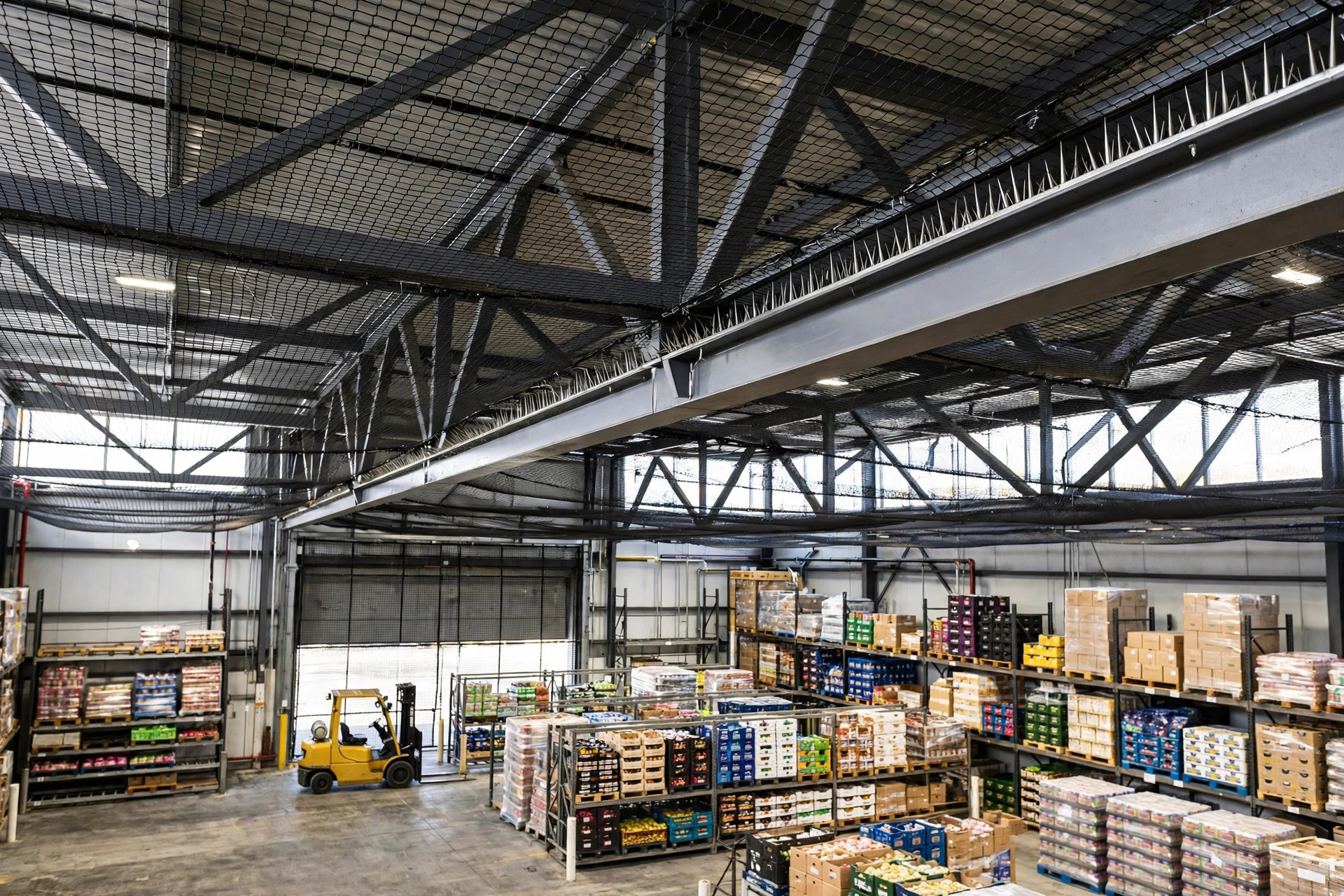
We learned this table the hard way. We once leaned on deterrents alone. A laser worked for a few days, then the birds just moved to another beam. Acoustic deterrents were the same: effective at first, then the birds stopped caring. Deterrents are not bad products. They are supporting players. Blocking is the lead: netting over the high areas, spikes so beams offer no perch, and every door gap, skylight, and vent sealed one by one.
Here is the counterintuitive part. The most expensive part of bird control is often not the equipment. It is the gaps nobody owns. Whose job is the door gap? The skylight? The vent? If no name is attached, the gap stays. We fixed that by writing every point into the inspection sheet with a named owner. Damage or loosening gets reported the same day. Look at the math this way: sealing one gap takes little work, but one missed gap brings back the risk to a whole batch.
Blocking First: The Practical Steps
Before you install anything, walk the building the way a bird would see it. Dock doors are the most common entry. During peak loading, doors stay open, and the answer is not to lock the building shut. It is to bring curtains, gaps, and seals back to working order, replace damaged parts the same day, keep someone watching while trucks move, and close idle doors promptly. That habit beats any device.
High places are the second front. Beams, pipe runs, and the tops of light fittings are all favorite perches. Netting should cover the high-bay area without leaving large openings at the edges. Spikes on beams need to follow the product instructions for direction and spacing. Leave one bare stretch of beam to save time, and every bird in the building will gather there. Skylights and vents need the same attention: replace torn screens, tighten loose louvres, and do a full recheck before the rainy season. Rain makes loose fittings looser.
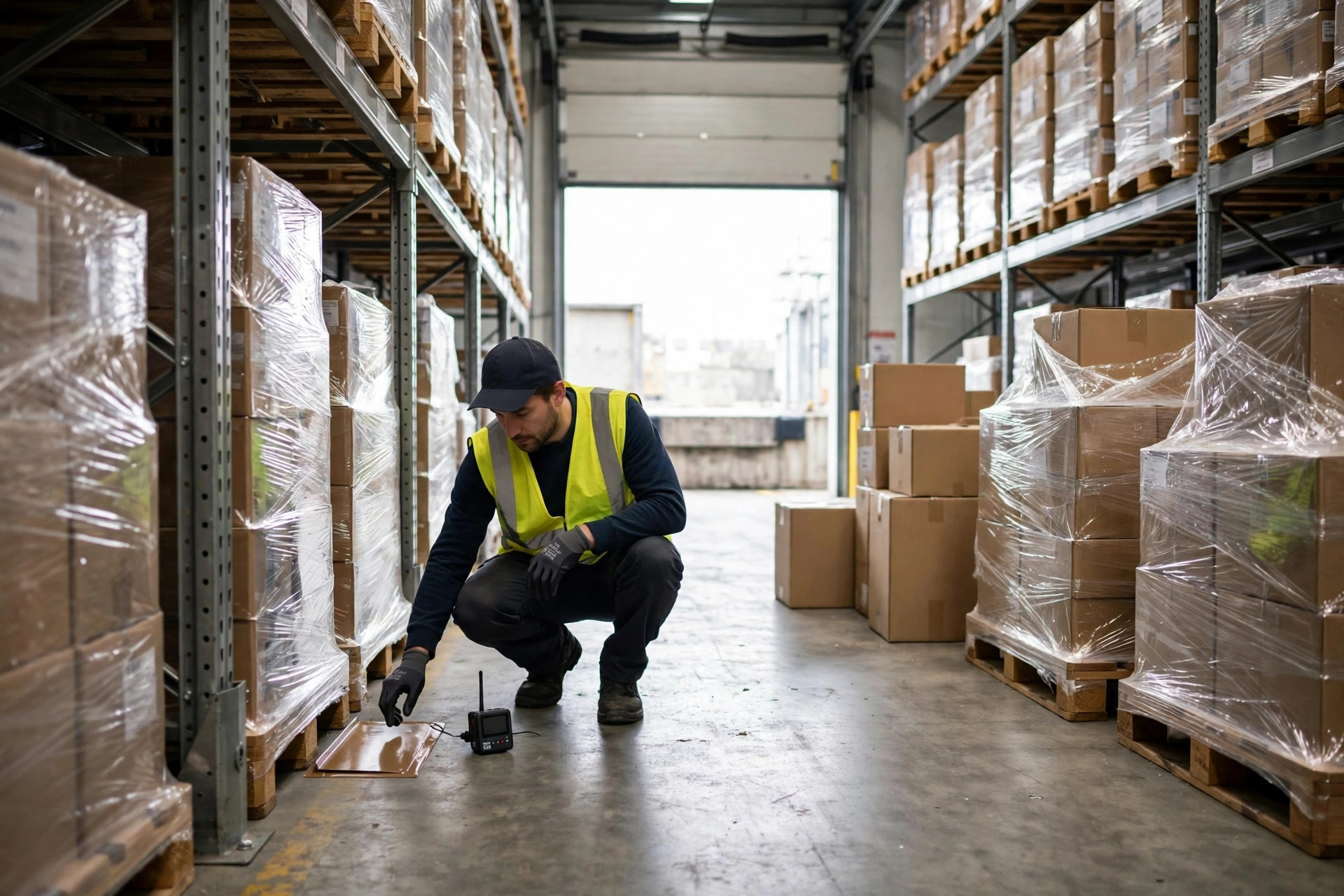
Birds get through gaps much smaller than people expect. Door bottoms, wall corners, and places where pipes pass through walls all deserve a check by hand. If your hand fits, a bird will probably find a way. After we finish sealing, the night shift checks again under the lights: any new feathers or droppings mean a gap is still open, and we keep looking the next day.
Bird Control Deterrents and Inspection: The Daily Work
Deterrents come after blocking. A laser deterrent works best when birds have just arrived and have not settled, and the operator needs proper training. Never aim it toward people's eyes or toward a forklift driver. Acoustic deterrents suit open high-bay areas, but watch out: the same position and the same sound, week after week, teaches birds to ignore it. We rotate positions and pair deterrents with manual inspection. When birds change perches, we adjust with them. The goal is to make this building uncomfortable to stay in, while blocking keeps them out.
Inspection is the layer that catches everything else. Our rhythm is weekly: check the beams, look for droppings and feathers, and check every sealed point for damage or loosening. Keep a record: date, area, what was found, and whether it was fixed. The record shows a pattern. Feathers in the same area two weeks running mean there is a gap or a perch nearby that needs focused attention. Add a full recheck before the rainy season, and another before a seasonal change or a peak period. Peak season is when gaps get ignored most.
Who does the inspection matters too. Do not send one person on a quick walk-through. Our shift lead walks with a newer worker and talks through it: why this beam has spikes, why that net cannot leave a gap. The new worker learns, and later, on his own shift, he can spot the problem himself. When work is taught properly and small problems get handled, people take small things seriously.
Let me be straight with you: there is no single move that solves warehouse bird control prevention. Blocking at the base, deterrents helping, inspection catching the rest — when all three are in place, the birds thin out. That is how we run it now: door gaps have owners, high areas have netting and spikes, someone inspects every week, and someone rechecks before the rain. A bird still wanders in now and then, but it gets found before droppings land on the goods.
Brothers, if you have seen birds on the beams in your warehouse, do not rush to buy the most expensive deterrent first. Walk the building, seal the door gaps, skylights, and vents, and put weekly inspection on the roster. When you add up the cost honestly, sealing the gaps is far cheaper, and far less stressful, than writing off a contaminated batch.
By Chen Feng, Warehouse Operations Manager