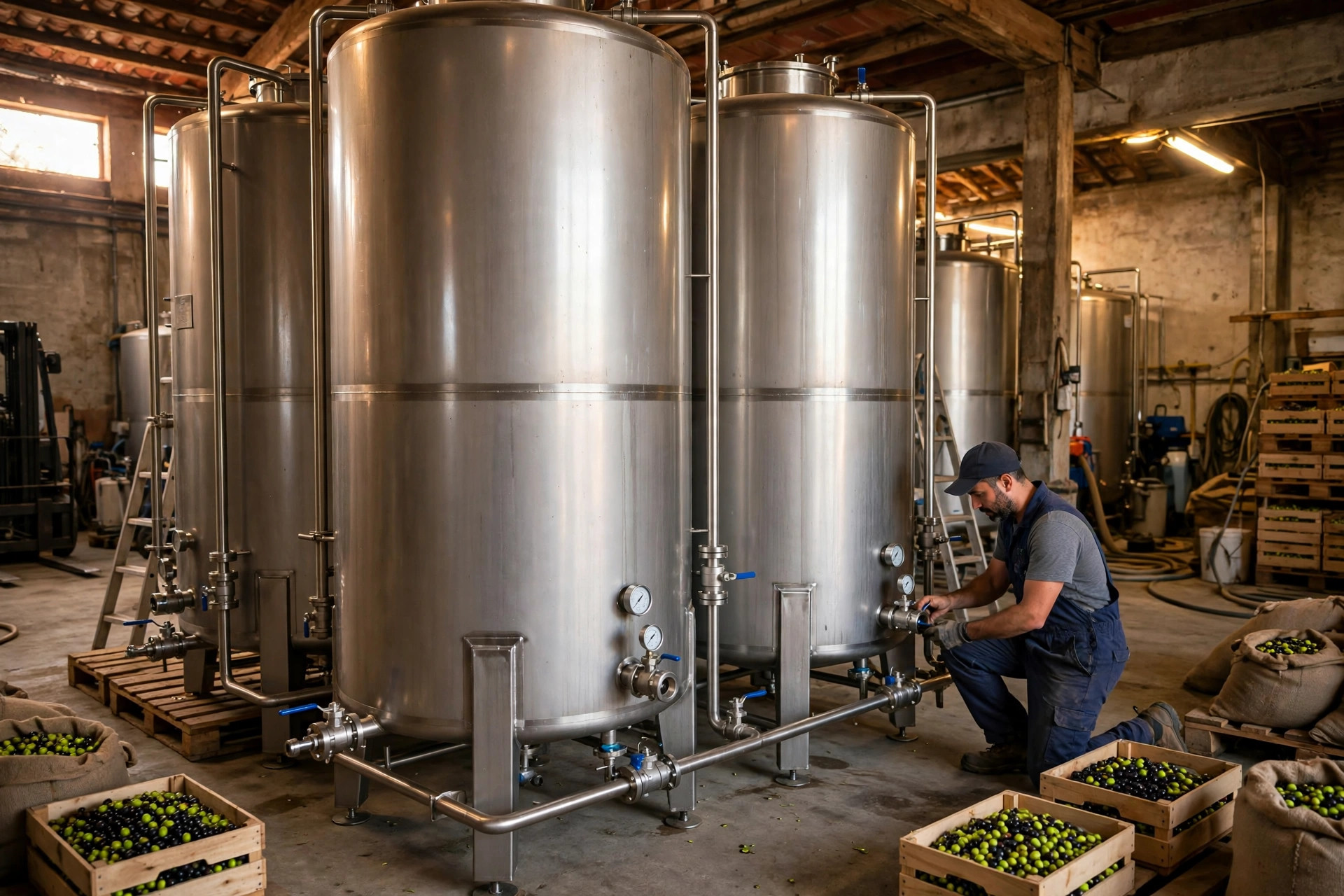
We had a client who bought extra virgin olive oil from Jaén for the first time last year. The contract looked beautiful. When the shipment arrived and the buyer ran its checks, the acidity was fine, but the flavor had dropped half a grade. The buyer docked the payment, and the client came to me asking whether the oil itself was bad. I asked him to pull the storage records. The problem was not the oil. It was the tank. The bulk oil had sat in the cooperative's tanks for four months, the nitrogen blanket had been topped up on and off, temperature control depended on the weather, and on the day of blending, several batches were mixed together. The oil was not spoiled. It was just no longer the oil the buyer had signed for.
Put bluntly, bulk olive oil storage comes down to three things: whether oxygen got in, whether temperature stayed steady, and whether batches got mixed up. Lose control of any one of them, and your loss is not "a little bit." It is a whole batch downgraded.
A cooperative's lesson
A mid-sized cooperative in Jaén takes in a dozen truckloads a day during harvest season. Its tank farm is stainless steel, built twenty years ago, with gaskets replaced twice. The manager told me their rule was "seal the tank when it's full, and top up the nitrogen when we have it." Sounds reasonable, right? The problem is in the words "when we have it."
One batch went into a tank filled to about eighty percent. The nitrogen blanket was charged once, and nobody measured the oxygen in the headspace again for three months. Before dispatch, a check showed the oxygen at the top of the tank had crept up, and the top layer of oil had gone flat. Worse, to fill a container, the team blended that batch with another batch of slightly higher acidity, calling it "blending for flavor." The two batches' flaws amplified each other, and the buyer tasted it in one sip.
The rules we set for that cooperative afterward were unglamorous, but they worked. First, nitrogen blanketing is not a one-time charge; measure headspace oxygen every week and top up whenever it crosses the internal limit. Second, a tank that is not full does not get sealed and forgotten; tanks with a large headspace ship first. Third, blending requires a bench trial first; a batch that fails the trial never enters the big tank. Those three rules went onto the warehouse work order, with a signature on each line. Since then, that cooperative has not had another batch-wide downgrade.
The math on nitrogen, temperature, and blending bulk olive oil
The nitrogen math is the easiest to get wrong. Many people treat nitrogen as a cost to cut. Let me show you the other side of the ledger. Take a 200-ton tank: a month of nitrogen costs a fraction of what a single downgrade claim costs. One downgrade deduction is often several times the annual nitrogen bill. Whatever you save by skimping on nitrogen will not even cover the deductible on one claim.
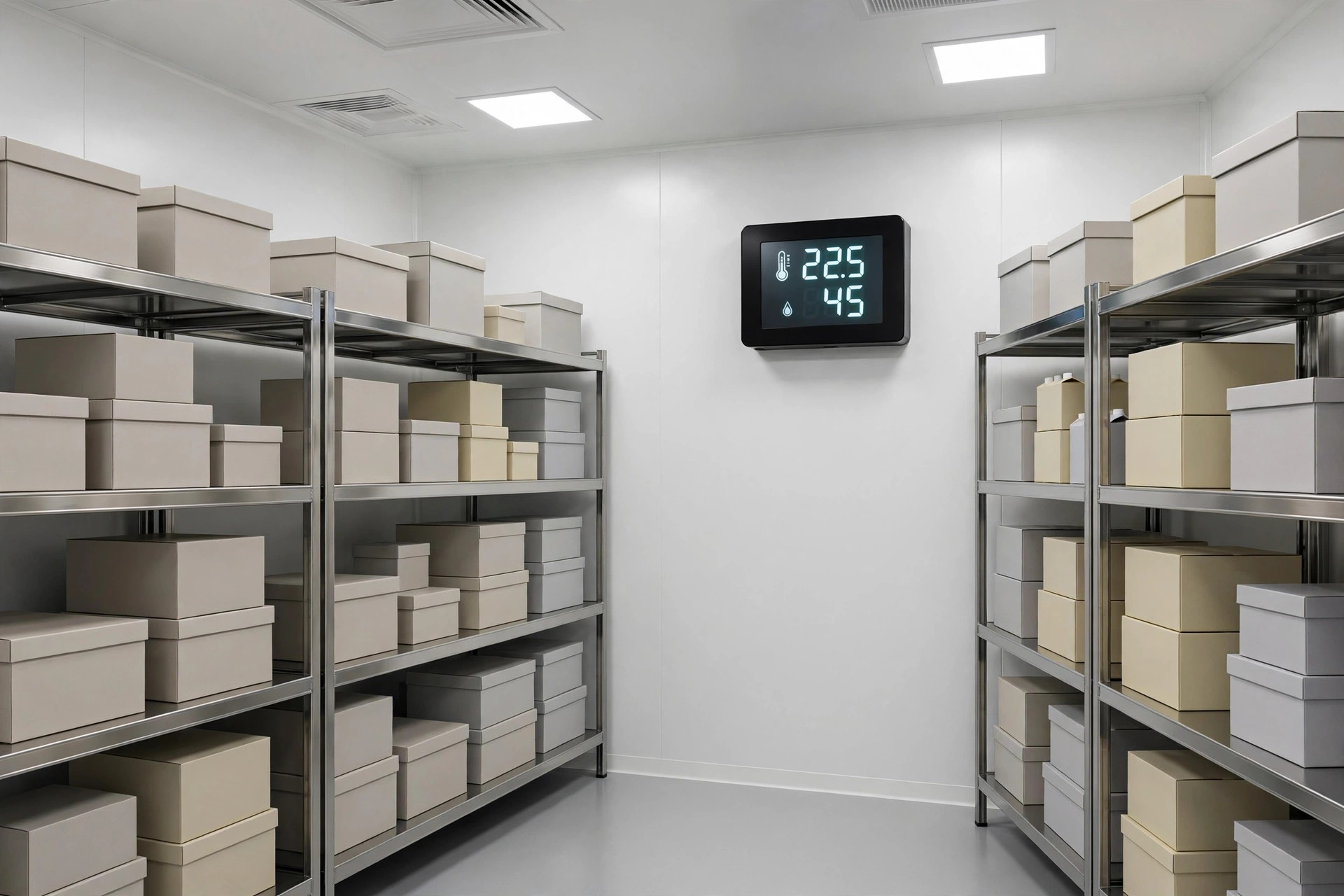
Temperature is the same story. In a Jaén summer, a warehouse without shade and ventilation can push past 30°C, and tank temperature follows. The legal acidity ceiling for extra virgin is 0.8 percent under the International Olive Council's current standard, and acidity does not jump with temperature overnight. But the flavor compounds leave fast. My advice is to keep storage temperature steady within a range, not chasing the lowest number. Set that range from your own operating procedure and your buyer's contract, not from an equipment vendor's brochure. One mill I know holds its tanks around 16 to 17°C. That is their operating choice, not an industry standard. Before you copy it, ask whether your tanks, your climate, and your turnover match theirs.
Blending is where judgment matters most. Blending is not pouring weak oil into good oil to "average it out." Blending is flavor design. The right way is to keep a sample of every batch, test each one separately, run a bench trial at the intended ratio, and only scale up once the trial's flavor and acidity check out. The trial record must match the dispatch batch one to one, so that when a buyer asks, you can show which tanks went in at what ratio. If you cannot show that, any problem becomes your problem.
| Step | What failure costs | What works |
|---|---|---|
| Nitrogen blanket | Headspace oxidation, flavor loss across the batch | Weekly oxygen checks, top up on crossing the limit, signed records |
| Temperature | Flavor compounds fade faster | Shade and ventilation, stability over extremes |
| Blending | Batches drag each other down, downgrade deductions | Bench trial first, no trial pass means no blending |
Do not forget the two ends: intake testing and pre-dispatch retesting for bulk olive oil
The storage bill cannot only cover the months in the middle. Both ends cost money too. On intake day, what the cooperative tests and how it tests decides the starting point of every batch. My rule is to sample every incoming truck for acidity, peroxide value, and sensory checks before it enters a big tank, and to isolate any truck that crosses a line instead of mixing it with good oil. One year, a cooperative skipped testing to save time and poured three untested truckloads into one big tank. One of those loads had a flavor defect, and the whole tank had to be downgraded. Testing one truck costs a fraction of downgrading one tank.
The same applies before dispatch: retest 48 hours before loading out, and check whether the top layer and the bottom layer are still in the same condition. Bulk oil sitting for months can stratify, and signing off on a top-layer sample alone is shipping blind. Staple the retest sample record to the dispatch note, so that when a buyer asks, you can say exactly what condition the shipment was in when it left. That is where storage records earn their keep. They are not for passing inspections. They are for proving, when something goes wrong, that you did every step.
The counterintuitive part: a pricier tank does not mean safer oil
I have seen too many people spend on tank material and then refuse to spend on testing and records. The best stainless tank in the world will not save oil if the gaskets are old, the nitrogen goes unmeasured, and blending goes unmanaged. Flip it around: an old tank farm with tight gasket maintenance, on-schedule testing, and clean batch discipline will ship good oil. In storage, equipment is a one-time spend. Management is a daily spend. The daily spend is what decides your loss rate.
Next time you negotiate a contract, ask these three questions. First, how often is the nitrogen blanket checked, what is the internal oxygen limit, and will the buyer see the records? Second, what is the storage temperature range, and what happens when it is exceeded? Third, can the bench-trial records for blended shipments travel with the goods? Get clear answers to those three, and you already hold at least half the bulk storage risk in your own hands.
By Susan, 3PL Sales Director