Let me be blunt: a warehouse power outage contingency plan is not something you write while the lights are out. It is something that is already on the wall, already practiced, before anyone needs it. I have seen too many warehouses that talked a good game about readiness and then fell apart when the power went down: someone climbing a rack in the dark, someone propping open a cold-room door, someone shipping from memory. The next morning, nobody could reconcile what had actually moved. This is a two-sided problem. On one side is the hard floor: no one gets hurt, and temperature-sensitive product does not spoil. On the other side is the quieter loss: a blackout that turns into a mess of inventory variances, disputed shipments, and customer claims. My conclusion up front is simple. Manage an outage in three phases: triage before, freeze during, and reconcile after. Skip any one of them, and you will pay for it twice over.
Before the Blackout: A Warehouse Power Outage Contingency Plan Starts with Triage
When the power fails, the worst thing a crew can do is for everyone to improvise at once. Triage stops that. I divide everything into three tiers, and each tier gets a different first move. Tier one is people: emergency lighting, clear aisles, anyone working at height brought down safely, forklifts parked where they do not block an exit. This tier overrides everything else. Tier two is product: cold rooms and temperature-controlled zones first, ordinary dry goods can wait. Tier three is systems: orders that were mid-flight, handheld scans that never uploaded, servers and network gear that may need a controlled shutdown. That third tier decides whether you will spend the next day reconciling or the next week.
Put the tiers on a card, on the wall, in every supervisor's pocket. I once walked a warehouse whose plan ran to dozens of pages, filed in an office drawer, unseen by the floor. That is no plan at all. Three lines are enough: people first, product second, data third. Get the order wrong and everything after it gets harder. One more thing that is easy to miss: name the person in charge before anything happens. A blackout is the worst time for a debate. If the shift lead says seal the doors and a supervisor says keep shipping and a customer is on the phone demanding a load, the floor will fracture. The first line of the plan should say who commands the floor during an outage, and everyone else should know to follow that person.
| Tier | Protect first | First move on the floor | Never do this |
|---|---|---|---|
| People | Staff on the floor, anyone at height | Switch on emergency lighting, clear aisles, park forklifts | Climb racks in the dark, enter a dark zone alone |
| Product | Cold rooms, temperature-controlled zones | Keep cold-room doors shut, log every opening | Open doors repeatedly to peek at product |
| Systems | Unuploaded scans, in-flight orders | Freeze inbound and outbound, start paper tickets | Recreate orders from memory, rewrite records later |
The card works because training stops being a lecture: run through it twice and hands know what to do. Honestly, writing tiers, printing cards, running drills, and stocking paper tickets takes time and looks like money spent on nothing. But that small effort buys a crew that does not panic, mis-ship, or lose paperwork. That is a cheap trade.
During the Outage: Freeze the Floor, Not the People
Here is a pit I lived through. One summer evening, during a peak outbound wave, a warehouse lost power completely. For a few minutes the floor was chaos: phones as flashlights, someone trying to roll up a dock door, someone else running to the server room. The real damage did not happen in the dark. It happened after power returned: dozens of pallets in limbo, some loaded but still awaiting pick, some tickets scanned halfway and never uploaded. Finance and the customer each had a different version, and the team spent two days lining them up. Since then, I have given every warehouse the same iron rule: when power fails, freeze first. Do not rush the work.
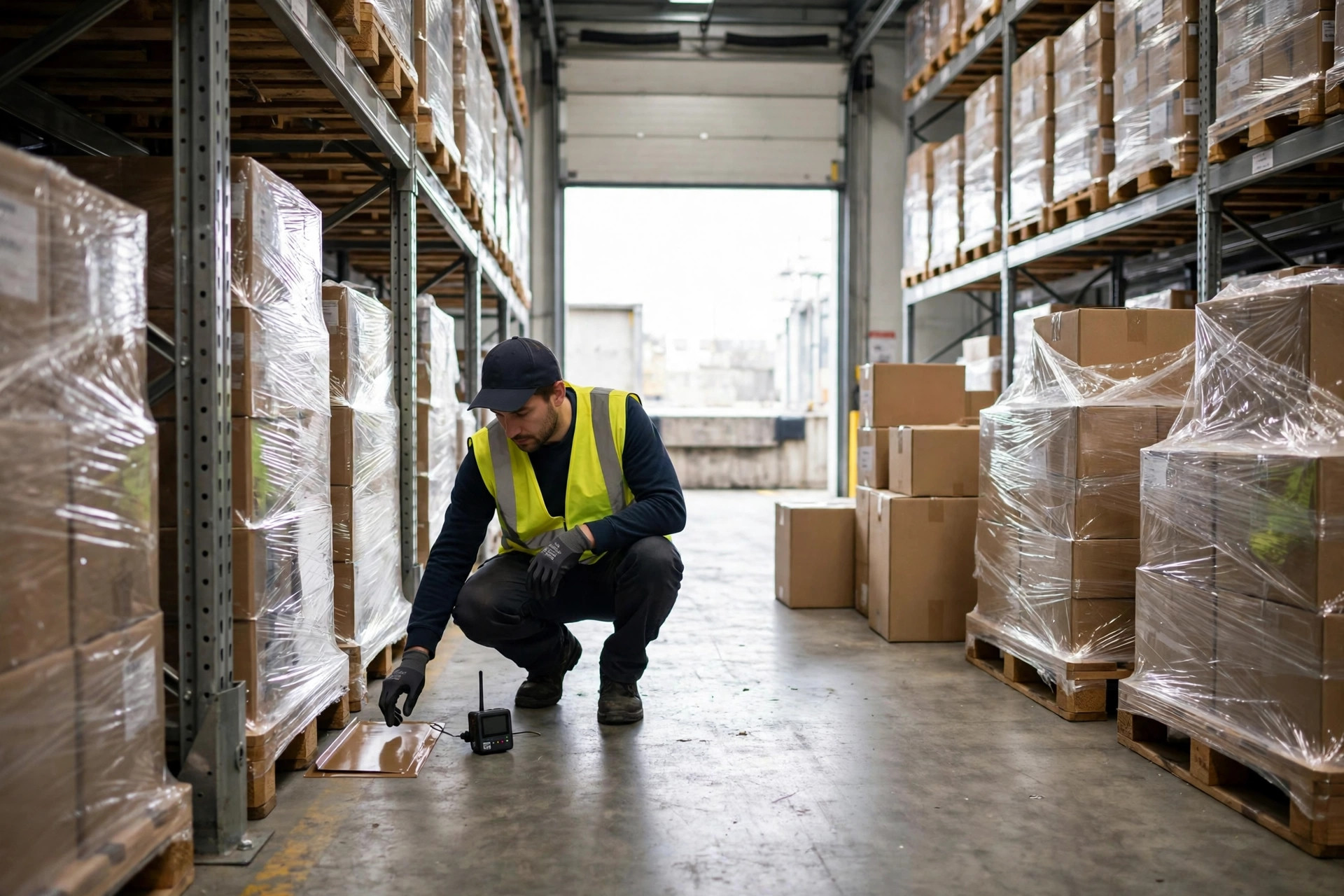
Freezing is specific. First, seal the doors. Stop new orders, stop new picks, leave a half-loaded truck where it is. Nothing moves in the dark. Second, freeze the count: whatever zone was being counted or moved stays exactly as it is, photographed or noted on paper, position and quantity recorded on the spot. A phone flashlight and a scribbled note are fine. What matters is that nothing moves after that record. Third, enforce cold-room door discipline. A cold room can survive a short outage far better than it can survive people opening its door again and again to look inside. Put one person on the door if you have to. Their job is to say no.
Paper tickets are the lifeline of the freeze: time, location, item, quantity, and handler, on every ticket, in duplicate — one copy with the goods, one on the floor. Handwriting can be ugly; it cannot be incomplete. I have seen warehouses fail with paper because tickets had a quantity but no time, so nobody could reconstruct the sequence. That is paper wasted. Also disconnect charging equipment before power returns, then bring systems up in stages — lights and systems first, then equipment, a few at a time.
The trade-off here deserves plain language. Freezing looks like lost shipping time and unhappy customers. But shipping blind costs more: mis-shipments, short shipments, and product you cannot account for. A customer can forgive one explained blackout. A customer will not easily forgive a wrong shipment that nobody can trace. Slowing down in the dark is often the fastest thing you can do.
After the Blackout: Your Warehouse Power Outage Contingency Plan Earns Its Keep
Power back on is not the end. It is the start of the second job. In that summer warehouse I mentioned, the crew rushed to make up every missed shipment the moment the lights returned. Half-finished tickets got re-entered from memory, some paper tickets got keyed twice, and the books got messier with every fix. Recovery has an order, and the order matters: reconcile systems first, then product, and only then resume normal shipping. Check that servers and networks are truly healthy. Check whether handheld scans that never uploaded are lost or recoverable. Key paper tickets in time order, one by one, and park anything that does not match in a separate exception list. Do not force it to balance.
A second scene shows the contrast. One winter night, an outside line fault cut power to a warehouse with only a small night crew. The lead did one thing right: instead of sending people to chase product, he took roll call, confirmed everyone was safe, posted two people on the cold-room door and one at the entrance, and held everyone else in place. After power returned, the crew reconciled from paper tickets, found only a handful of variances, each with a time and handler attached, and cleared them in half a day. One warehouse needed two days, the other half a day. The difference was not better equipment. It was whether the floor froze during the outage and reconciled in order afterward.
Write the after-action list within a few days, while memories are fresh. Five lines will do: when power failed and returned; how often cold-room doors opened; how many paper tickets were issued and whether any numbers are missing; how many variances appeared and how each was resolved; what to change next time, who owns it, and by when. Post it where the crew can see it.
Here is the counter-intuitive judgment at the heart of this. Most people think blackout readiness is about backup power and equipment spending. Bluntly, it is about whether the crew has practiced freezing and reconciling, and whether the books come out clean. No backup equipment can rescue records nobody can reconcile. A drilled crew can sit through a longer outage and still keep the loss visible and bounded. So do not wait for the next blackout to improvise: this week, put the triage card on the wall, print the paper tickets, and drill the freeze and the reconciliation once. The blackout may never come. The plan cannot afford to be missing.
By Lao Mi, Supply Chain Veteran (20 yrs)