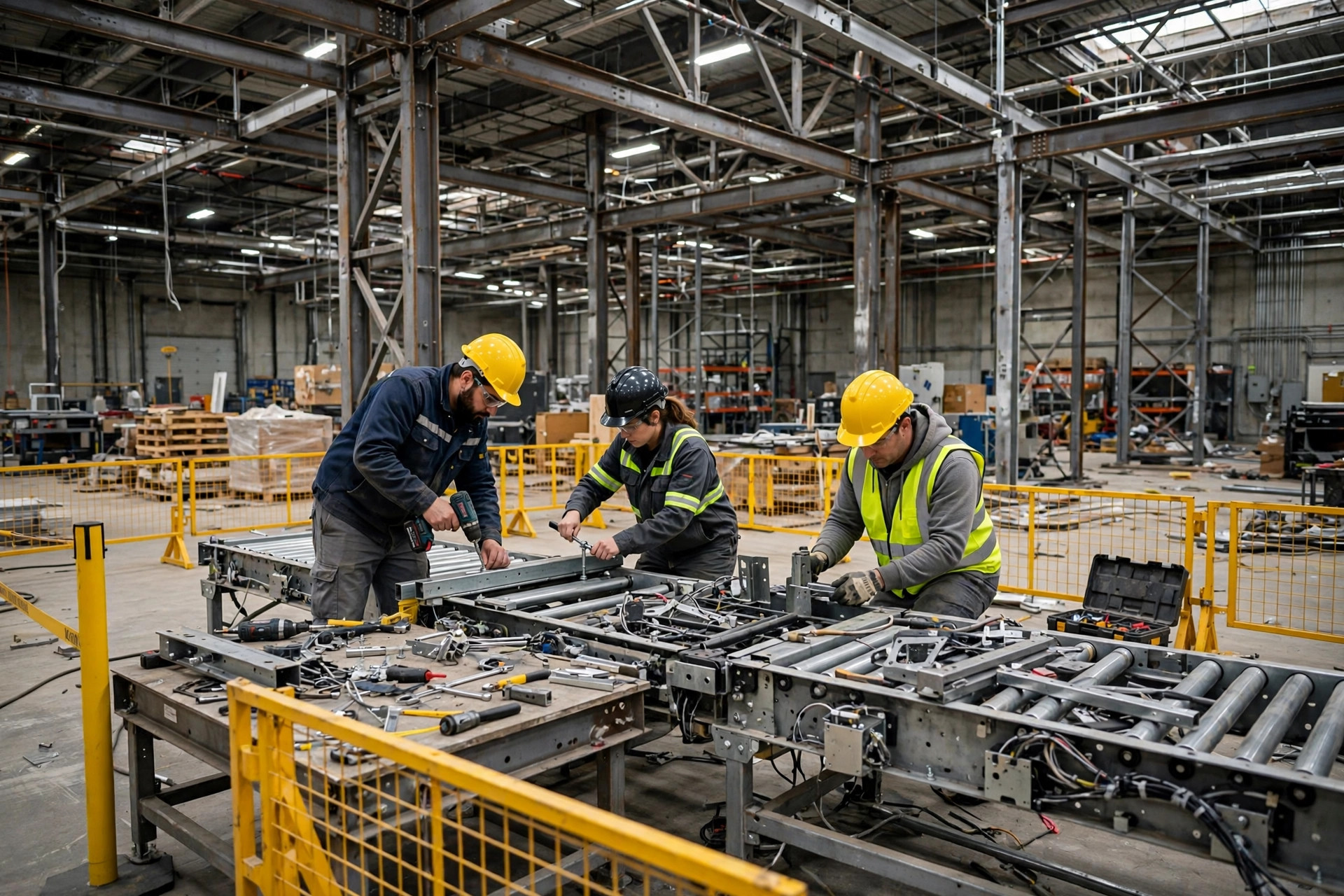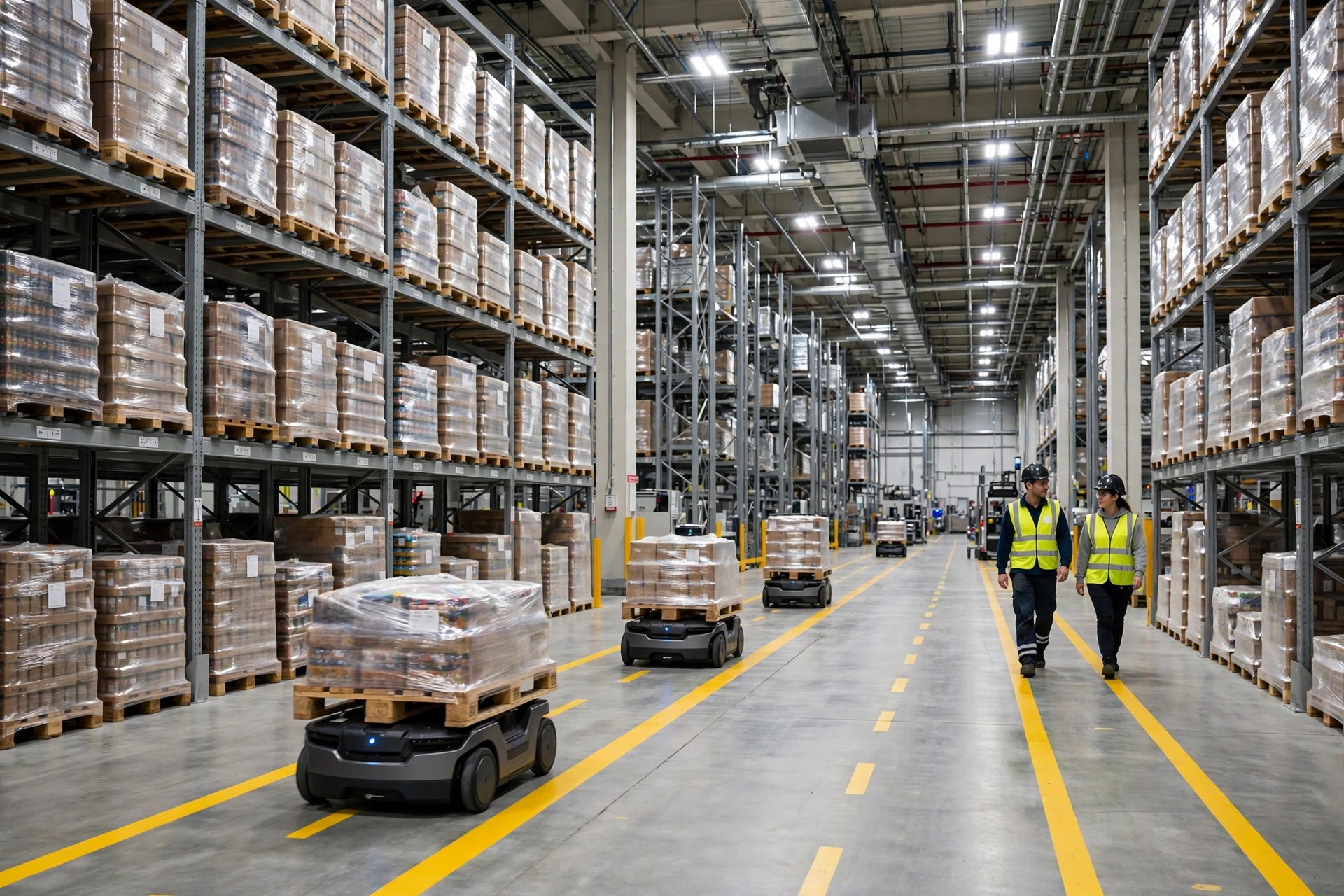
Start with the math. This is what the industry calls warehouse automation hidden benefits — the returns that never make it onto the payback table.
An 80,000-square-foot 3PL warehouse in 2024 installed automated conveying and sortation: $2 million invested. The ROI sheet was crystal clear: 15 fewer workers, $600,000 a year saved in wages and overtime, a 3.3-year payback. The CFO signed off.
The math was finished — and wrong. It only counted the wage line. Three much bigger line items never made the sheet: client audit scores that win orders, hiring costs that disappear, and injury payouts plus insurance premiums that drop. Add those three in, and the same project's payback compresses from 3.3 years to 1.6.
Here they are, converted into dollars, one by one.
Benefit #1: Audit Scores (The Hidden Benefit With the Highest Price Tag)
Anyone in 3PL knows: a big client's audit is not a formality. Score above the line and orders come in; score below it and you don't even get to quote. In the scoring — safety, process standardization, traceability — automation hands you points almost for free.
The books of a 3PL warehouse in Ontario, California, in 2024 tell it best. The facility served one major e-commerce client on a $4.2 million annual contract. Its 2023 audit scored 76 — just above the 75-point pass line — and the renewal negotiation came with an 8% price cut. In 2024 the warehouse deployed AMR transport and electronic-fence zoning; the 2025 re-audit scored 91 and passed in one round. The price cut was reversed, and the warehouse picked up a new product category from the same client — about $550,000 in additional annual gross margin.
The formula:
Audit-score gain = renewal price protected + new-order gross margin − audit-specific spending
Note the last term: audit-specific spending is close to zero — electronic fencing and zoning come with the automation anyway. This gain is essentially free money.
The most wasted money I've seen: warehouses that hire consultants for three months at $120,000 to lift an audit score from 74 to 79 — while the automated warehouse next door scores above 85 without trying. That $120,000 was money thrown away.
Benefit #2: Hiring (The Less You Depend on Labor, the Harder Hiring Costs Fall)
What does it really cost to hire one warehouse worker? HR has a rule of thumb: the full cost of filling one blue-collar position runs about one to two months of that worker's pay. At a $20 average hourly wage in California — roughly $3,500 a month full-time — the direct cost of getting one person in the door (job ads, interview hours, onboarding) lands around $3,500–$7,000. That excludes the training period, when a new hire produces at maybe 60% of a veteran's output.
Then there's turnover. Frontline warehouse turnover commonly runs above 30% a year in industry surveys, hitting 50% at peak-season sites. A 100-person warehouse replaces 30–50 people a year — $105,000 to $350,000 in direct hiring cost alone. Do the multiplication yourself.
In 2025, a mid-sized warehouse of about 60 people in Columbus, Ohio, gave me another set of numbers: after AMRs went in, peak-season temp headcount dropped from 60 to 35 — 25 fewer hires in a single season. At $4,000 per hire, that's $100,000 saved in one quarter; nearly $300,000 over three years. That line item appears on almost no ROI sheet.
The formula is simple:
Hiring-cost reduction = (hires before automation − hires after) × cost per hire
Plug in your own HR numbers — ad spend, interview hours; finance has all of it. Don't use mine.
Benefit #3: Injuries (The Most Underestimated Hidden Benefit)
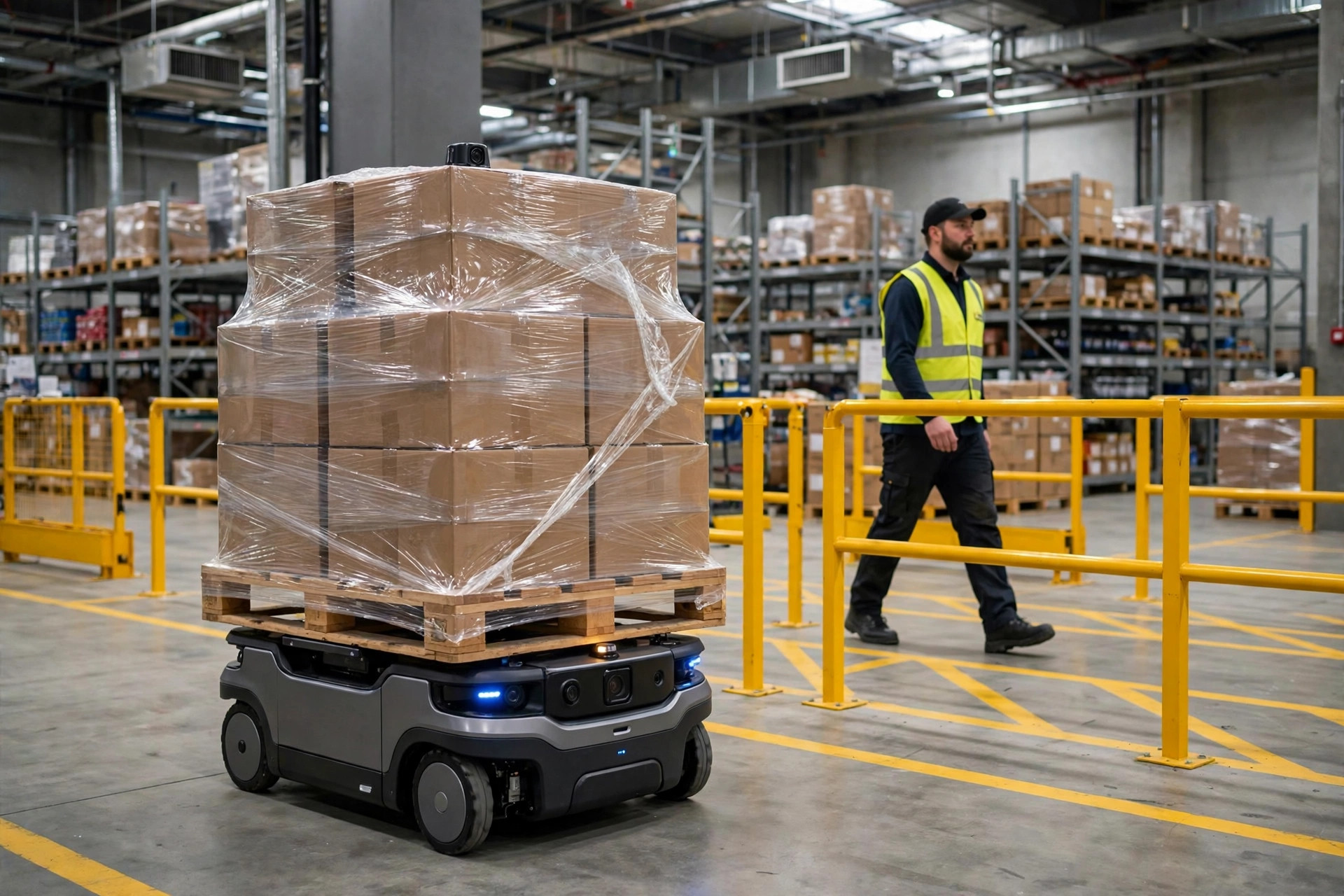
Injuries are the most expensive "surprise" in a warehouse. One lost-time injury routinely costs tens of thousands of dollars: direct payouts, medical bills, legal fees — and that's only the visible part. The invisible part is bigger: investigation downtime, morale, and next year's workers' comp premium hike.
Workers' comp pricing is multiplication: premium = base rate × EMR (experience modification rate). Drop your EMR by 0.1 and the premium falls by roughly 10% — that's arithmetic, not an estimate. A New Jersey warehouse's real books: after automated picking cut manual handling intensity, OSHA recordables fell from 11 a year to 3, and EMR dropped from 1.15 to 0.98. On a $400,000 annual premium, that's about $59,000 saved every year. Every year.
The formula:
Injury-cost reduction = (injury costs before − injury costs after) + (premium before − premium after)
Get your annual injury costs from your insurance broker — claim history and EMR records are all in their files. Don't guess.
The Full Picture: All Three in One Table
| Benefit | Formula | Typical mid-size warehouse | On the traditional ROI sheet? |
|---|---|---|---|
| Headcount savings (wages) | Fewer heads × cost per head | $500K–$800K/yr | Yes |
| Audit scores → orders | Protected renewals + new-order margin | Hundreds of thousands/yr | No |
| Hiring-cost reduction | Fewer hires × cost per hire | $100K–$300K/yr | No |
| Injury-cost reduction | Fewer payouts + lower premiums | $50K–$150K/yr | No |
See it now? The traditional ROI sheet only counts the first row — and the other three often add up to about as much. That's why so many projects "pay back in over three years on paper" but actually pay back in eighteen months. The project didn't overperform; your math was just incomplete.
The Counterintuitive Call: The Slowest Payback Can Be the Best Investment
Here's the counterintuitive one: the automation project with the ugliest payback on paper may be the most valuable investment in the company.
Take a conveying line that replaces just two forklift drivers — a five-year payback on the ROI sheet, the kind a CFO kills on sight. But the line's real value isn't headcount at all: it eliminates most of the pedestrian-vehicle mixing risk on the floor and turns "in-plant traffic safety" from a deduction into a bonus on client audits. Every dollar of that return sits outside the wage table — invisible on the ROI sheet, but real.
The reverse holds too: if a project still can't pay back after wages plus all three hidden benefits, it's genuinely not worth it. I never talk anyone into buying — if the numbers don't clear, it doesn't get my signature either.
The Closing Calculation
Stop reading only the wage line on the ROI sheet. Take this formula and plug in your own numbers:
True annual return = wage savings + audit-driven order margin + hiring-cost reduction + injury-cost reduction (incl. premiums)
True payback = total investment ÷ true annual return
Run the warehouse from the opening through it: $2M invested, $600K wage savings, $400K audit-driven order margin, $150K hiring-cost reduction, $100K injury and premium savings. True annual return: $1.25M. True payback: 1.6 years.
Same investment, different math, half the payback period. The project didn't change — your accounting did.
That's my conclusion: automation's biggest return was never about saving labor. It's about deleting the most expensive parts of "people" from the cost sheet — injury payouts, unfilled positions, failed audits. The money that can't fit on the ROI sheet is the most valuable money on it.
By Lao Zhou, Logistics Cost Analyst