A sorter bought for $800,000 can easily eat $600,000 in maintenance over ten years. I have seen that math more than once. The equipment vendor will not volunteer it, and finance does not like calculating it — but warehouse automation maintenance contract cost is exactly what quietly doubles the total cost of a machine while nobody is watching.
Let me be blunt: a maintenance contract is not insurance. It is time you are buying. How fast the machine gets fixed, who fixes it, and what one fix costs. If you cannot read those numbers in the contract, you are signing blind.
First, the bill for one breakdown
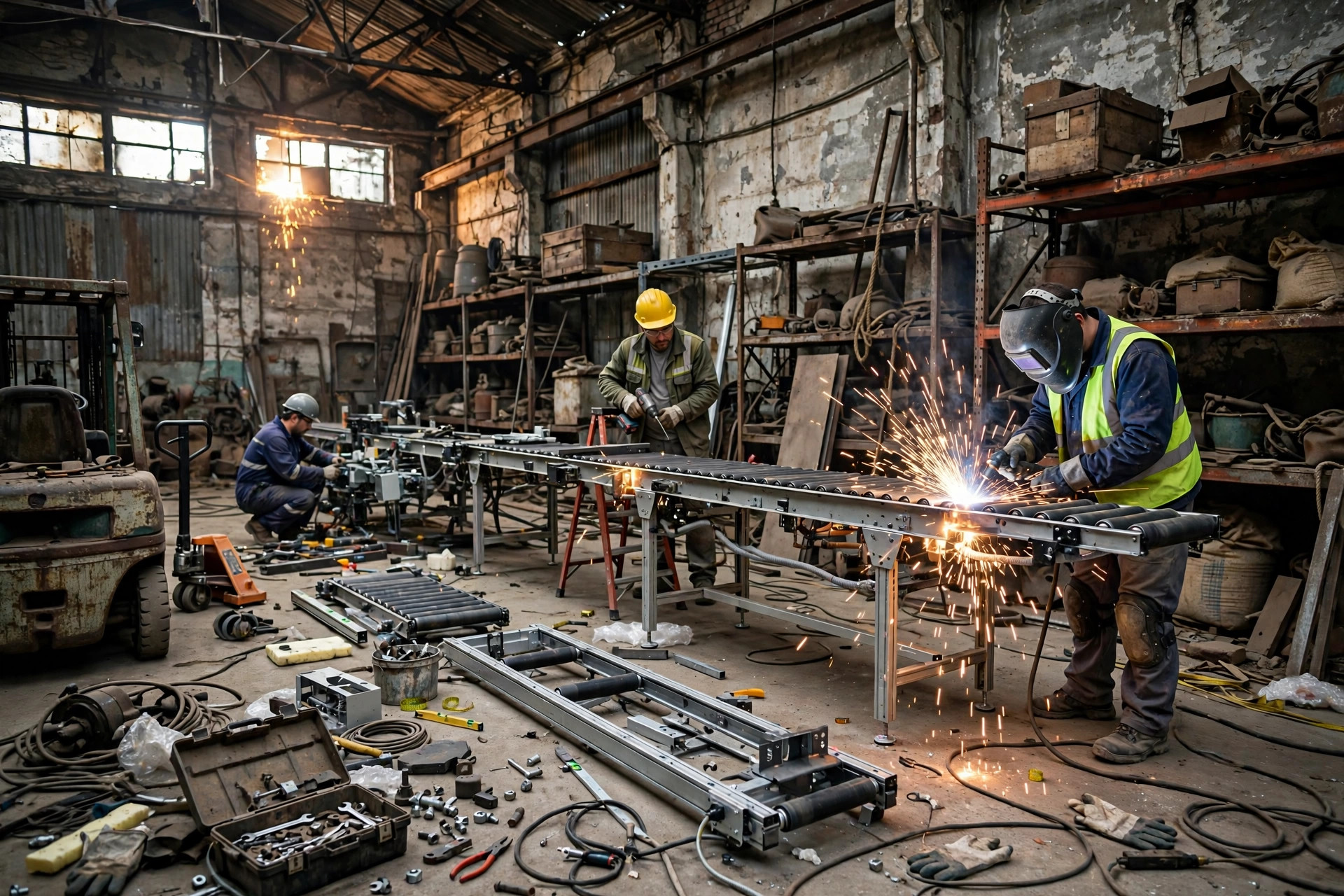
Early in 2026, a fast-moving consumer goods distribution center lost a drive motor on its main conveyor the week before peak. The part had to come from out of state. Two days of waiting, manual sorting brought in to cover, and late penalties paid to two retailers. Industry figures put the total cost of one major conveyor failure at $180,000–$420,000 — expedited freight, overtime, retailer penalties, and lost orders. That is not a vendor scare story. Every line item burns money while the line is down.
Now the other side of the ledger. In the same class of warehouse, an AMR fleet run to failure sits at 62–74% availability. Switch to scheduled preventive maintenance and availability rises to 94–98%, with conveyor uptime reaching 99.2%. The argument ends there. The question was never whether to maintain. It is which way of buying maintenance costs least.
Take a smaller machine as the yardstick. A preventive program for a mid-speed packaging line runs roughly $150–$300 a month in labor and consumables — $1,800–$3,600 a year. Unplanned downtime on that same line costs $2,000–$8,000 per hour. One catastrophic failure, a burned servo motor or a seized gearbox, runs $5,000–$20,000 in parts and service, plus two to five days waiting on parts. The two sides differ by more than an order of magnitude. That gap is what the contract is really pricing: not the parts, but the hours the line is dark.
Three warehouse automation maintenance contract models, cost structure opened up
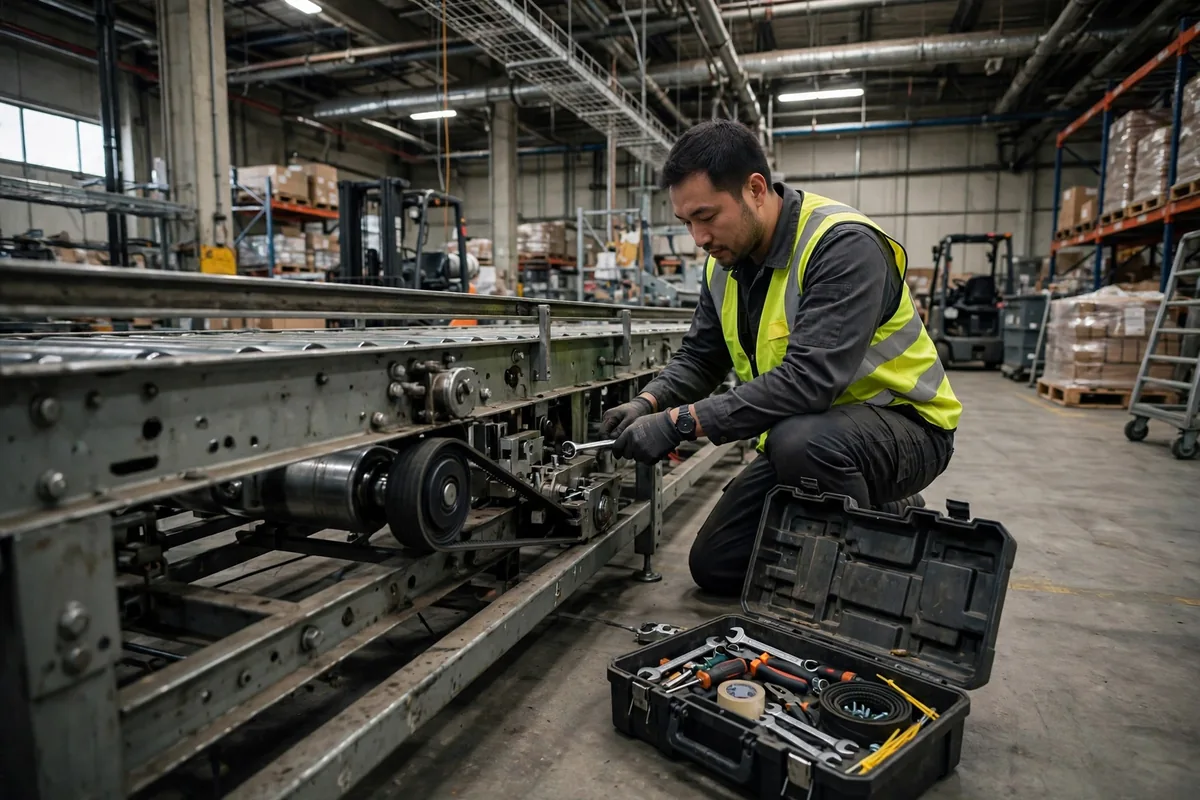
There are only three models on the market, whatever the sales rep calls them. Break-fix, annual contract, and on-site service — and their cost structures are completely different:
| Model | What you pay | Response | Fits whom |
|---|---|---|---|
| Break-fix | Call-out fee + labor + parts, per incident | Queued for a slot; days in peak season | Few machines, light duty, can afford to wait |
| Annual contract | One fixed yearly fee, scheduled maintenance included | Response window in the contract, usually 4–24 hours | Core equipment where downtime is expensive |
| On-site service | Fixed fee + resident engineer cost | Engineer on site, minutes | Multi-shift, large automated sites |
There are published rules of thumb for warehouse automation maintenance contract cost: preventive maintenance runs about 1–3% of equipment value per year, parts and labor 3–8%, full-service 8–15% or higher. On an $800,000 sorter: preventive-only costs $8,000–$24,000 a year; a full-service contract costs $64,000–$120,000 a year. Treat that band as the starting point for negotiation, not a standard answer — the more specialized the machine and the scarcer the parts, the closer you sit to the top of the band.
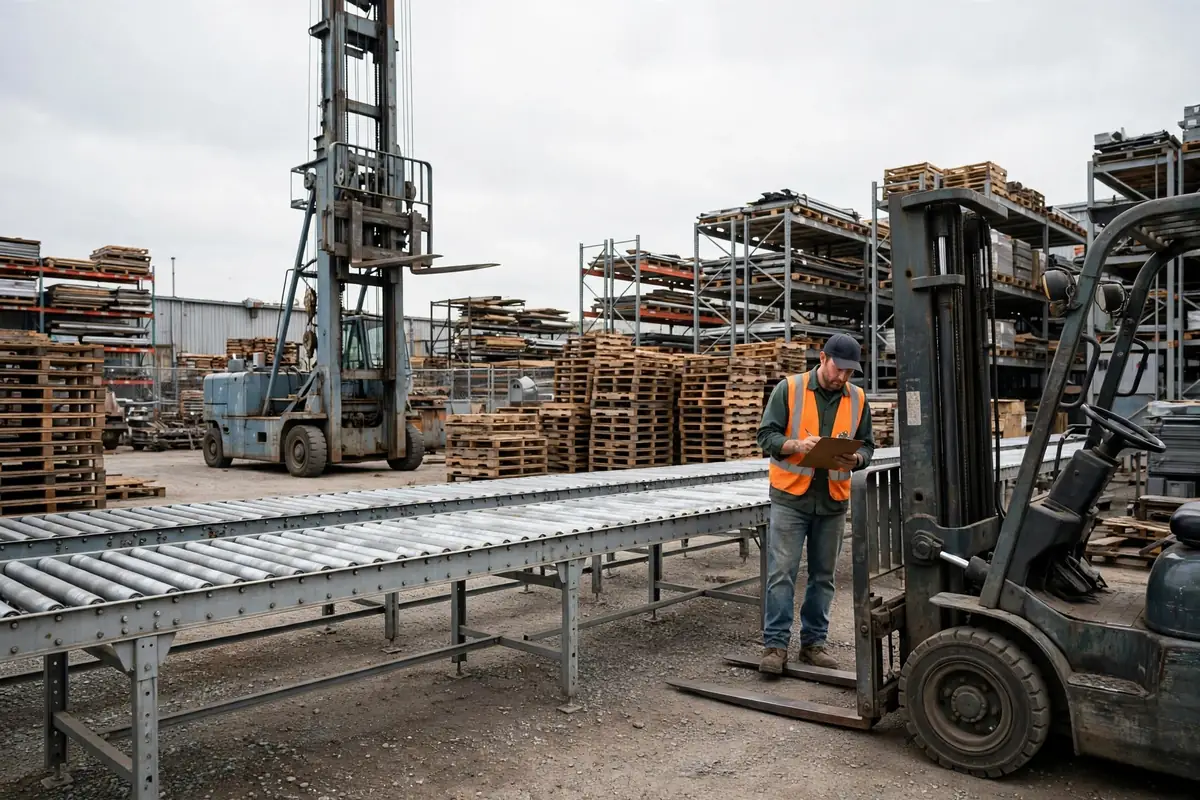
Forklift service gives a more concrete reference, with published rates: basic preventive service $150–$250 every 250 hours, full service $300–$500 every 500 hours, a service call $75–$150. One hour of forklift downtime costs roughly $400, and a deferred hose that becomes a pump failure can stack $12,800 of downtime onto a $2,200 repair. Automation equipment only runs more expensive than that, never cheaper.
Warehouse automation maintenance contract break-even: how many breakdowns make it pay
The worked example below is a scenario estimate, built from the published ranges above so you can rerun it with your own numbers. Take a conveyor line worth $800,000. A full-service contract at 10% of value costs $80,000 a year. Break-fix costs per incident: a routine failure averages $6,000 for call-out, labor, and parts; a major failure averages $30,000.
$80,000 divided by $6,000 is 13.3. So if routine failures pass 13 a year, the contract beats break-fix. But add just two major failures a year (2 × $30,000 = $60,000) plus four routine ones ($24,000), and break-fix totals $84,000 — already above the contract. The conclusion is clear: when failures are few but each one is expensive, the contract wins on the major-failure line, not on the count.
Before signing anything, pull your last two years of repair records and count three things: failures per year, average cost per failure, and whether you have ever had a single failure worth half a year of contract. A site with none of those three numbers should not sign an annual contract yet. Run break-fix for a year, collect the data, then negotiate — two years of failure records in hand will take at least 10% off the price.
The exclusions hiding in the contract
The money wasted is rarely in the price. It is in the exclusions. Ask about these five, line by line, and get the answers written into an appendix before you sign:
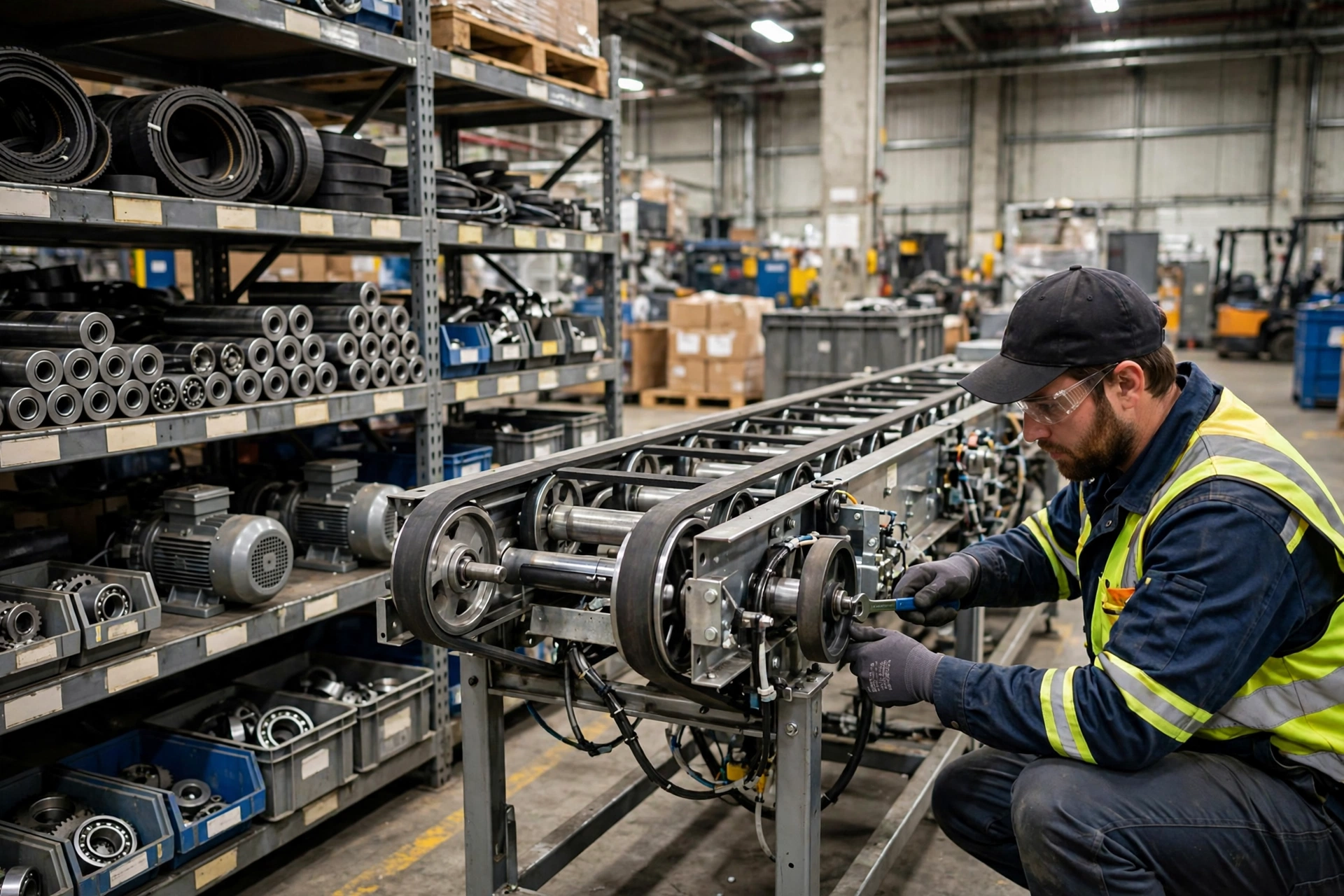
First, consumables. Belts, rollers, bearings — many full-service contracts exclude them, and you pay separately when they fail. Second, damage from misuse. A forklift hitting a conveyor frame: covered or not? Third, software upgrades. A WCS upgrade that needs the interface retuned: inside the contract or billed extra? Fourth, night and holiday call-outs. A machine that breaks at 2 a.m. in peak season and waits until Monday morning makes the contract worthless. Fifth, whether the response time means a phone call back or an engineer on site. Four-hour response and 48-hour arrival are two different promises.
There is one more lever most people miss: bundle several machines into one framework agreement instead of signing machine by machine; fix maintenance windows in the off-season to dodge overtime rates; and train one of your own operators to do first-level maintenance — belt changes, sensor cleaning — so the contract can drop from full-service to preventive-only. What that saves in a year often pays for half a headcount.
The conclusion is ready to calculate. A site with $800,000 of equipment and two major failures a year saves roughly $4,000 a year or more on warehouse automation maintenance contract cost versus break-fix, and buys out the risk of a peak-season stoppage. A site with few machines, fewer than three failures a year, each under $6,000, is cheaper on break-fix — the annual contract is a gift to the vendor. Which site are you? Open the repair records. The numbers will tell you.
By Lao Zhou, Logistics Cost Analyst