The Principle First
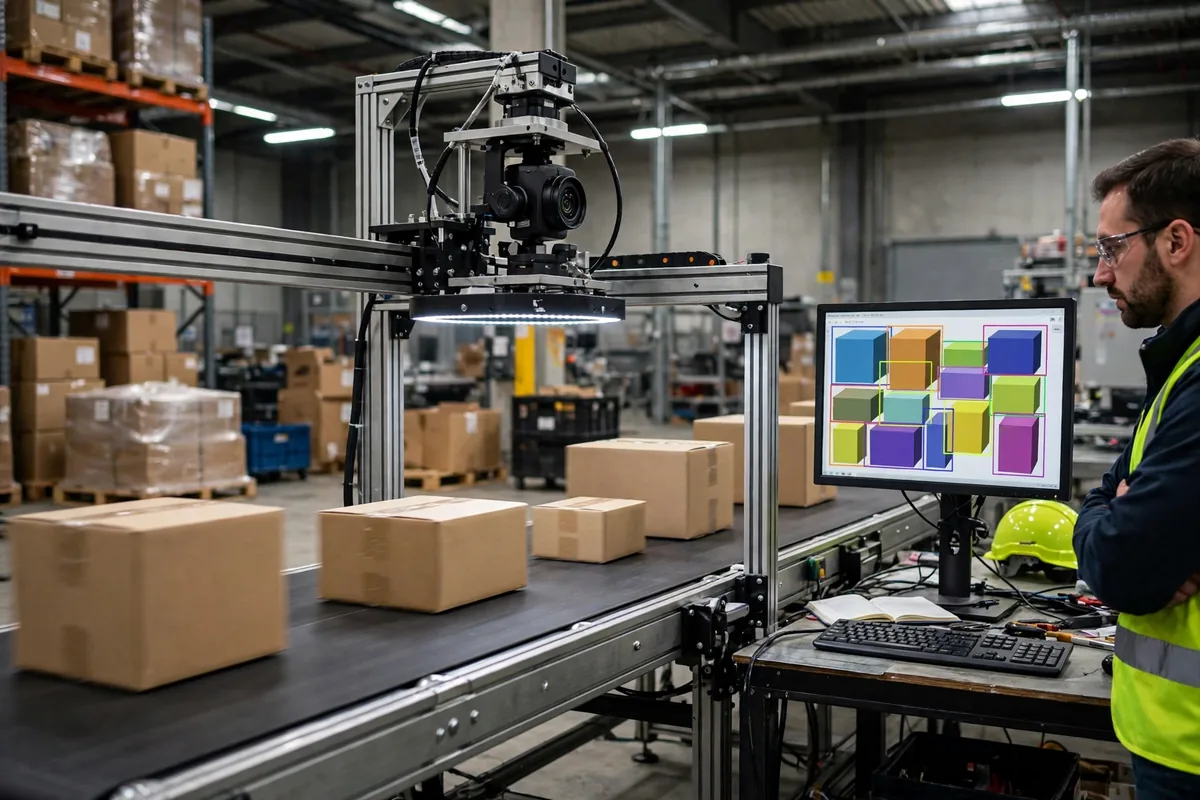
AI vision inbound damage inspection is not magic, and it is not a camera with a fancy label. It is a fixed procedure: a camera captures images of every carton as it arrives, software compares those images against rules for what good packaging looks like, and anything suspicious gets flagged for a human to confirm. The machine does the staring, the human still does the judging. Any vendor who promises otherwise is selling you a future product, not a present one.
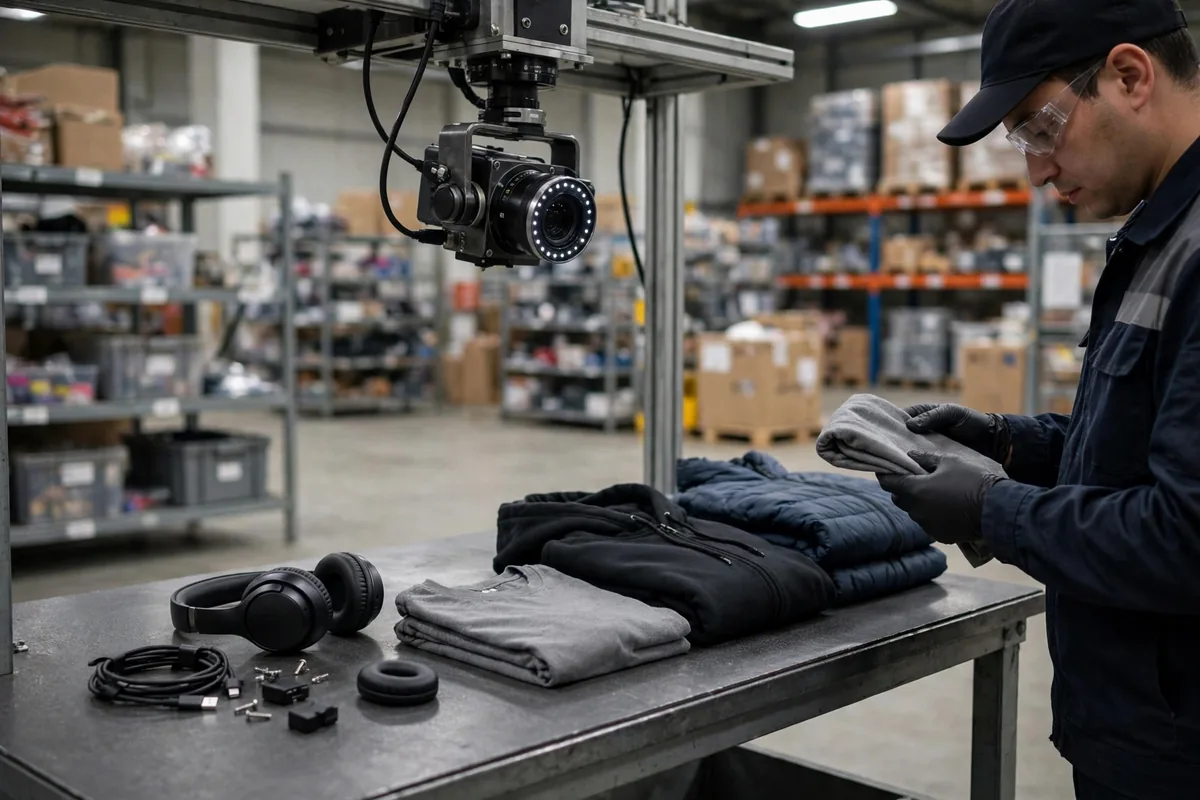
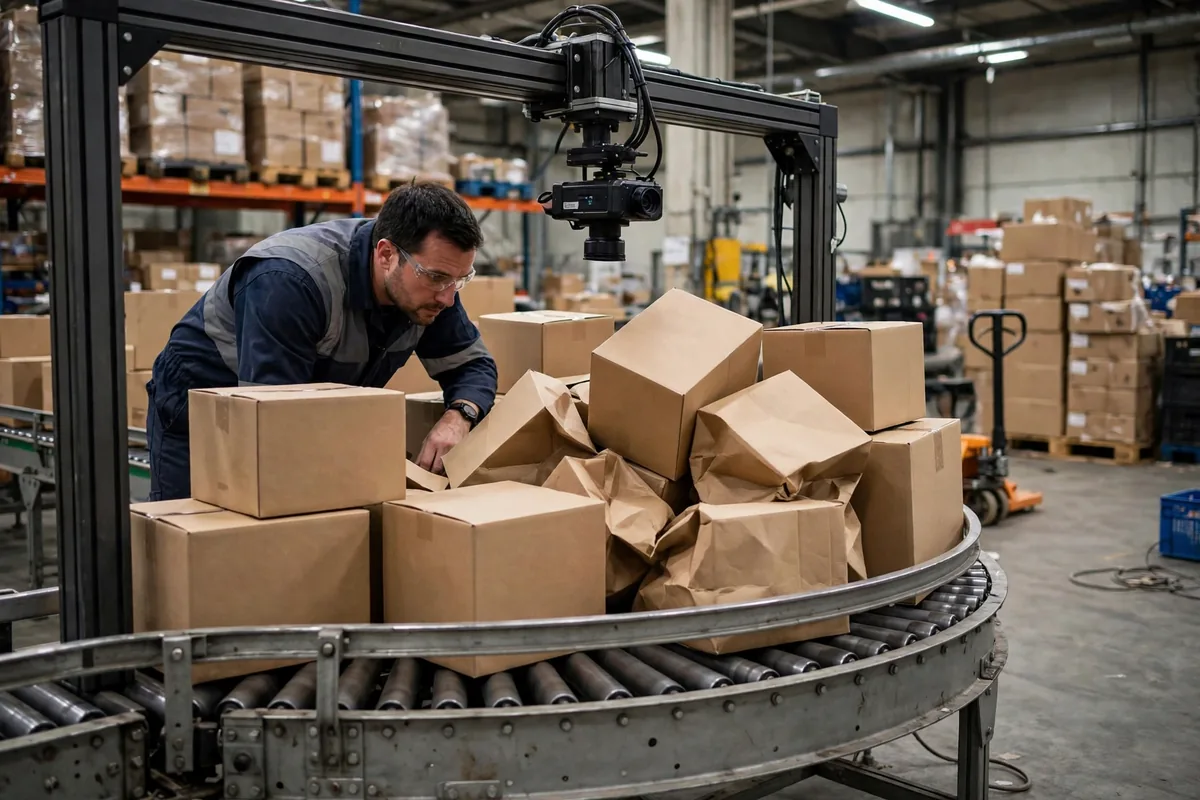
The inspection itself breaks into three jobs. First, count and identify: read the carton labels and match them against the advance shipping notice, so short shipments and wrong items surface before anything is put away. Second, check the outside: crushed corners, water stains, torn tape, tilted pallets, and broken strapping all show up in images before a human eye would notice them at unloading speed. Third, record evidence: every inbound load gets a photo record tied to the receipt, which ends arguments with suppliers about whether damage happened in transit or in your warehouse.
An analogy helps. Think of the system as a tireless junior inspector who never blinks, never gets tired at the end of a shift, and photographs everything, but who has no common sense at all. It will flag a perfectly good carton because a shadow fell across it, and it will miss a dent it was never shown. Your job is to give that junior inspector good lighting, good examples, and a human supervisor.
Two Real Deployments, Two Different Lessons
Consider an example. A home-appliance distribution center near Guangzhou started using camera inspection at two receiving docks in 2024. Before the system, damage claims against carriers were mostly settled on memory and handwritten notes, and the center recovered only a small share of what it claimed. After six months with photo evidence attached to every claim, the recovery rate on documented damage roughly doubled, not because the cameras prevented damage, but because claims stopped being arguments and started being paperwork.
A second example, from a different angle. An auto-parts warehouse in Ningbo installed a top-of-the-line camera setup in 2025 expecting it to catch mislabeled cartons automatically. It did catch them, but the bigger win was unexpected: the label-reading step exposed that one supplier consistently shipped cartons whose outer labels did not match the inner contents. The warehouse had been absorbing that supplier's picking errors for years without knowing it. The cameras did not fix the supplier, but they finally made the problem visible and measurable.
AI Vision Inbound Damage Inspection: The Selection Line
This is where most projects waste money. The dividing line is not price, it is the job you actually need done.
| Your situation | What fits | What to skip |
|---|---|---|
| High volume, uniform cartons, one or two docks | Fixed cameras over the dock door plus label reading | Mobile robots carrying cameras around the yard |
| Mixed cartons, many suppliers, messy labels | Label reading plus basic exterior damage flags, human confirms | Full defect-classification models that need thousands of your own sample photos |
| Low volume, under 100 cartons a day | A photo station: one camera, one light, one operator step | Any automated line, which will cost more than the labor it saves |
| Damage claims are your main pain | Photo evidence capture tied to receipts, even without AI judgment | Complex models, which add cost without adding claim evidence |
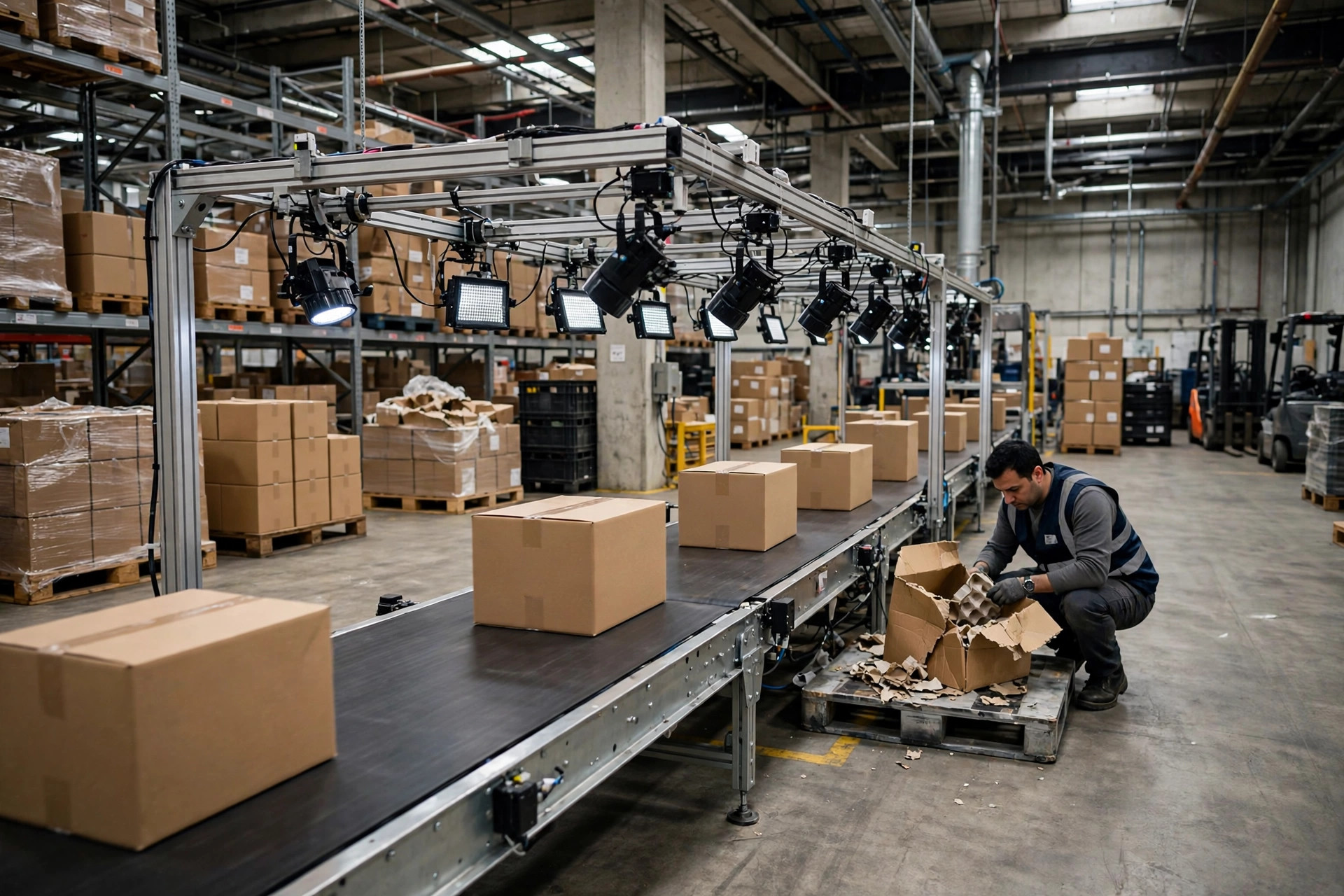
The counterintuitive truth is that a more expensive camera often buys you nothing. Once resolution is enough to read a label and see a crushed corner, extra megapixels mostly produce larger files and slower processing. Lighting matters more than the camera body, and lighting is cheap: even, shadow-free illumination from two sides beats a premium camera under a single flickering warehouse lamp every time.
The Math: Where the Payback Actually Comes From
Vendors love to sell labor savings: replace three inspectors with one system. Be skeptical of that pitch. In both deployments above, headcount barely changed, because someone still had to confirm flags, handle exceptions, and maintain the equipment. The payback came from elsewhere, and it is worth calculating honestly.
Take a warehouse receiving 400 cartons a day. Suppose documented damage runs at 2 percent of cartons, and suppose better evidence raises the claim recovery rate from roughly one-third of claimed value to roughly two-thirds. On a year of receipts, that difference alone can exceed the annual maintenance cost of a modest fixed-camera setup. Add avoided putaway of wrong items, which otherwise get discovered weeks later during picking, and the case usually closes without needing to fire anybody.
Run your own version of this math before signing anything. If your damage rate is low, your suppliers are reliable, and your claims are small, the honest answer may be a simple photo station, not an AI system. That is not a failed project, that is a project correctly sized.
AI Vision Inbound Damage Inspection Maintenance Traps
First trap: sample starvation. A damage-detection model trained on another company's cartons will perform poorly on yours until it has seen hundreds of your own examples, including your own tape colors, label styles, and pallet patterns. Budget the first two months for collecting and labeling your own samples, or the system will cry wolf so often that operators start ignoring it.
Second trap: lighting drift. A system tuned under summer daylight through dock doors will behave differently on a winter evening under artificial light. Recalibrate seasonally, and treat any dock lighting change as a system change that needs a check.
Third trap: label variety. Suppliers change label formats without telling you. A label reader that handled 95 percent of cartons last quarter can drop sharply after one supplier redesigns its labels. Monitor the read rate weekly, not quarterly, and keep a human fallback step for unreadable labels.
Fourth trap: the false-demand pitch. Be wary of any proposal that bundles damage inspection with grand promises like fully automated receiving, robotic unloading, and inventory forecasting in one purchase. Each of those is a separate project with separate risks. Buy the inspection job, prove it, and then decide whether the next job is worth buying. Vendors bundle because bundles are harder to compare, not because integration makes the inspection better.
The Bottom Line
AI vision inbound damage inspection works best as a disciplined assistant, not as a replacement inspector. Give it fixed cameras, good lighting, your own samples, and a human confirmation step, and it will do three valuable things: catch problems at the dock instead of at picking, create claim evidence that ends arguments, and expose supplier patterns you could not see before. Skip the expensive hardware race, skip the bundled mega-project, and start with one dock. If the photo evidence and the flag rate prove themselves there in ninety days, you have a case for dock two. If they do not, you have learned cheaply.
By Da Liu, Automation Engineer