Here's my verdict up front: warehouse AI diagnostics are a waste of money for nine out of ten small warehouses like mine — but for that remaining tenth, they're genuinely worth it. The trick is knowing which is which: when the AI is doing real work, and when it's just selling you a very expensive story.
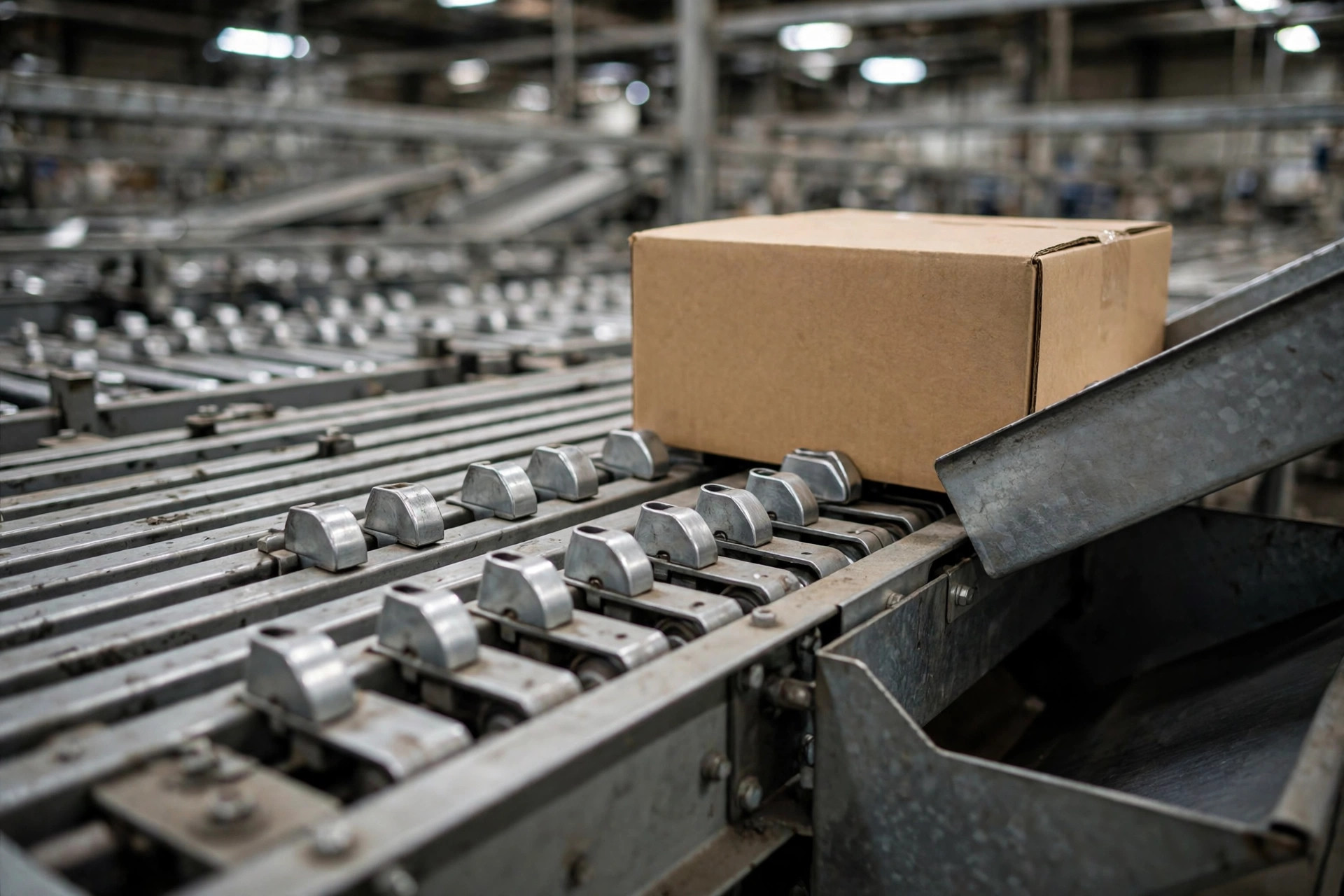
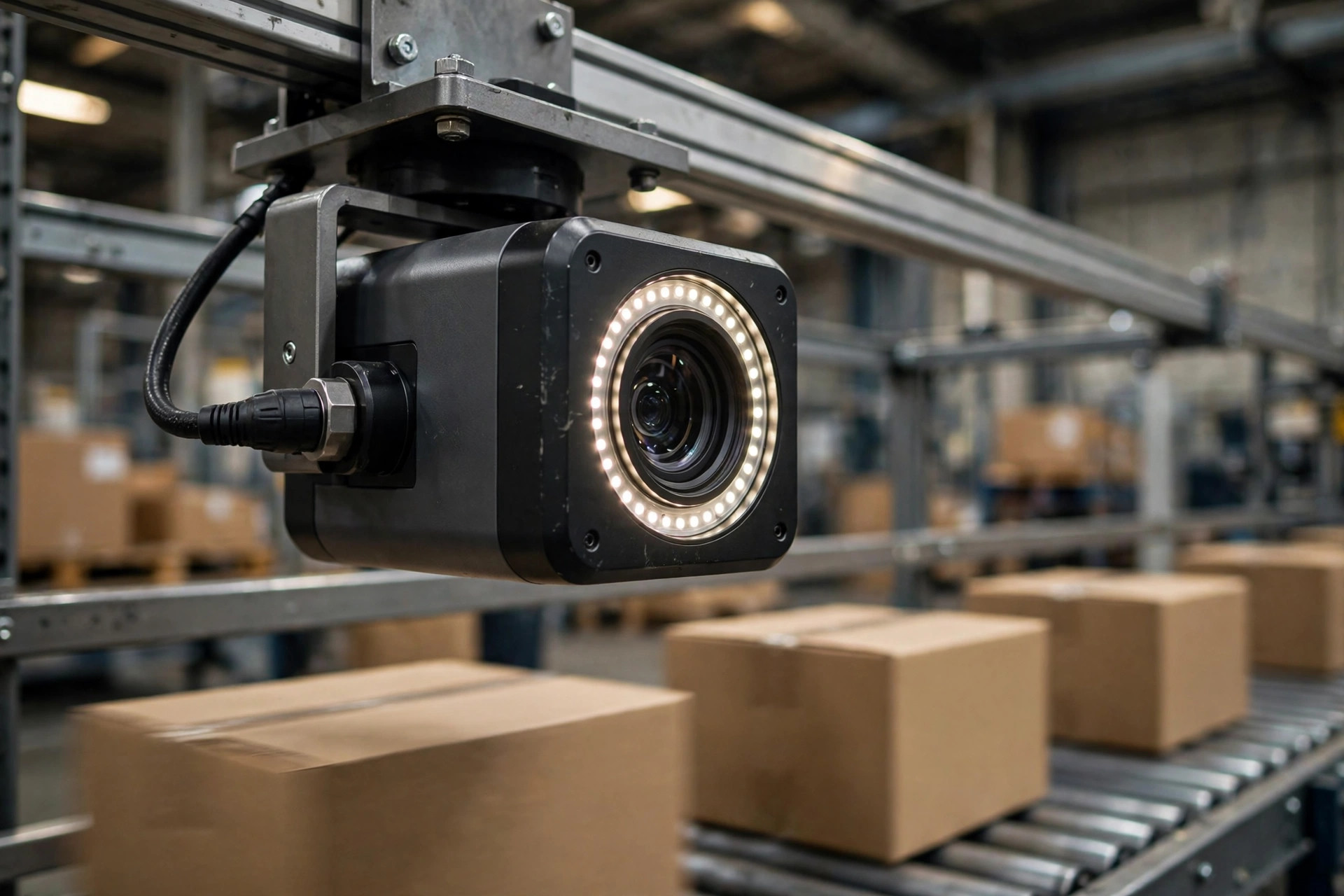
Let me tell you about the money I almost spent. Last winter, our six-year-old conveyor line started jamming every other day. Scanner stops, alarm light blinks, chaos on the floor. The sales calls came faster than the jams. One AI diagnostics vendor showed up with a live demo — camera on a tripod, and a beautiful dashboard that popped up "Root cause: belt drift at turn 3, high confidence." I was sold. Then came the quote: a one-year subscription that would cover most of a year's payroll for one of my guys. I smiled, folded the quote in half, and walked him out. "A warehouse our size can't burn money like that."
I'm not just being bitter. I did the math afterward. An AI root-cause system eats three things: cameras, sensors, and connectivity — none of them free. But the real cost is data hunger. It needs to be fed. With a few dozen alerts a day, what exactly is it supposed to learn the personality of my conveyor line from? The big guys feed it thousands of alerts a day, so of course their models look smart. Us? Twenty-something jams a month. At that volume the AI isn't finding patterns — it's guessing. When it guesses right, that's luck. When it guesses wrong, you get to chase its mistakes on your own dime.
During the demo, the rep even threw in the closer: "Mr. Ma, our AI diagnostics will cut your downtime in half." I almost believed him — until I asked which warehouse that "half" was measured in, and he mumbled "industry average." Industry average? Is my 3,000-square-meter shoebox the same species as a big-box DC? Come on.
The Dumb Fix: A Whiteboard That Beat "Root Cause Analysis"
After the rep left, I did something extremely low-tech. I bought a whiteboard and hung it by the sortation area. I told Xiao Li, our floor lead: every time there's an alert, snap a photo on your phone and stick a note on the board — time, location, symptom. Five minutes at the end of each shift, we review them together.
A month later the board had forty-some notes. One day I stood there staring at it and laughed: eight out of ten said "box stuck at turn 3." Look closer — almost all of them happened Tuesday and Thursday evenings. Pull the receiving log: those two days were the same supplier's new packaging, cartons about a finger wider than standard. Root cause found. Not belt drift. Not a dying motor. Oversized inbound cartons.
The whiteboard cracked a second case, too. A few red stickers (red meant jams) were scattered across Monday mornings. Xiao Li slapped his forehead: nobody walks the line on weekends, dust builds up for two days, and the rollers slip Monday morning. "I only connected the dots because it was all up there on the board," he said. You don't need much data. Put it in front of human eyes and the brain does the pattern matching for free.
One phone call to the supplier, packaging spec changed, jams dropped from twenty-plus a month to two or three. Total cost: one whiteboard and a marker. That's my first counterintuitive takeaway: you don't lack AI. You lack a log. In a small warehouse, nine out of ten anomalies are repeat offenses, and repeat offenses don't need an algorithm — they need eyes and a notebook.
When Is It Actually Worth Letting AI Find the Root Cause?
Don't get me wrong — I'm not here to trash AI. This spring we tried real AI diagnostics, and it genuinely delivered. Here's what happened: our handheld scanners started missing barcodes at random, two or three orders a day. Two weeks of troubleshooting — swapped guns, cleaned lenses, rebooted everything. Intermittent as ever. I was ready to give up when a friend pointed me to a pay-per-diagnosis service: a few hundred bucks a pop, no charge if they can't find the root cause. Nothing to lose.
Here's what they did: dumped the scanner logs, the WMS scan records, the facility temperature data, even the shift schedules into one analysis. The finding: every miss happened between 2 and 3 p.m., when afternoon sun blasted through the west windows straight onto the scan beds. Close the blinds. Problem gone. Xiao Li's comment: "I always felt the guns acted up in the afternoon." Human intuition is sometimes faster than an algorithm — but when intuition can't pin it down, that's exactly when AI earns its keep.
That experience taught me where AI root cause analysis actually pays: multi-variable tangles. A human brain can juggle two or three variables at a time; the AI can juggle a dozen. For a small warehouse deciding whether to pay for it, this table is all you need:
| What the anomaly looks like | Example | What to do |
|---|---|---|
| Frequent, repeatable, visible to the naked eye | Jams, crooked labels, mis-scans | Go low-tech: photos, a notebook, a whiteboard. Cheapest cost, best results |
| Rare, one-off, low damage | A glitch that shows up once or twice a year | Don't investigate. One investigation costs more in labor than the incident itself |
| Multi-variable tangle no human can untangle | Random mis-scans, intermittent system hiccups | AI diagnostics earn their money here; pay-per-use services are the sweet spot |
| Single obvious point of failure | Dead light, loose cable, cracked belt | Call the technician, not the algorithm |
The Kinds of "AI Root Cause Analysis" You Shouldn't Trust
And now, when not to trust it. First: don't trust it when you don't have enough data. With too few alerts, the AI can't find a real pattern, so it invents one — it turns coincidence into causation. Believe it, and you'll fix things in the wrong direction. Second: be skeptical of the full-platform, annual-subscription pitch. A small warehouse's anomaly volume can't feed a platform's appetite; pay-per-use is our posture. My buddy Lao Chen's warehouse bit the bullet on an annual platform. Six months in, half of its root-cause verdicts read "suspected improper manual operation." Well, duh — the whole warehouse IS manual operation. He now uses the system as a glorified alarm dashboard. The "root cause analysis" tab hasn't been clicked in months. Third: don't trust anyone chanting "99% accuracy" who can't tell you whose warehouse that 99% was measured in.
So my advice is simple: go low-tech first, high-tech second. Stand up the notebook, and eighty percent of your problems will reveal themselves. For the stubborn twenty percent that no human can figure out, spend a little money and let the AI take a look. AI isn't here to replace your root-cause hunting — it's here to see the variables you can't see.
Small warehouses have their own way of surviving: the big guys use AI because they have data to feed it; we use notebooks because we have eyes to look. Spend money where it counts, keep the log on the wall, and you'll do just fine. If this was useful, forward it to Lao Wang next door — he just got talked into a three-year contract last month and he's already regretting it.
By Xiao Ma, Small Warehouse Owner