Over the past two years I have interviewed more than twenty practitioners who ran warehouse AI pilots — 3PL operations directors, IT leads at e-commerce fulfillment centers, pre-sales engineers at automation vendors. When I asked how the pilot went, more than half did not answer with success or failure. They answered with a date: "it lasted about two months," "we shut it down in the third month," "it was killed at the 90-day review." The warehouse AI pilot has become the strangest object in warehouse digitalization: vendors announce success stories on stage while a much larger number of projects quietly die before day 90. This article is not about how to pick a pilot scenario or how to calculate ROI. It is a postmortem of three real failures — where exactly each one died, and why technology was not the cause of death.
Three warehouse AI pilots, three causes of death
Case 1: A vision-sorting system, killed by data drift.
In January 2025, a 3PL warehouse in the American Midwest that fulfills apparel orders launched a vision-based quality inspection pilot: two industrial cameras above the conveyor, an AI model flagging damaged parcels and obscured shipping labels, with the goal of replacing two full-time QC inspectors. The timeline was textbook. Weeks 1–4: installation and integration. Weeks 5–8: model tuning. Week 9: trial operation, with accuracy hitting the vendor's promised 98% — measured, notably, on peak-season standard carton profiles. The turn came after week 10. The off-season assortment arrived: irregular parcels and small-batch SKUs replaced the standard boxes, and the shapes, tape colors, and label positions the model had learned no longer matched reality. The false-alarm rate climbed from 2% to over 15%. Inspectors went back to checking every parcel by hand, and the system became decorative. At the week-12 review, the operations director pulled the plug. The project manager told me, verbatim: "The model didn't go bad. The warehouse changed first." The lesson is precise: the training distribution covered only peak season, while acceptance testing landed in the off-season. Data drift was not a technology problem. It was a scheduling problem.
Case 2: AMR picking optimization, killed by an organization that never wanted it to succeed.
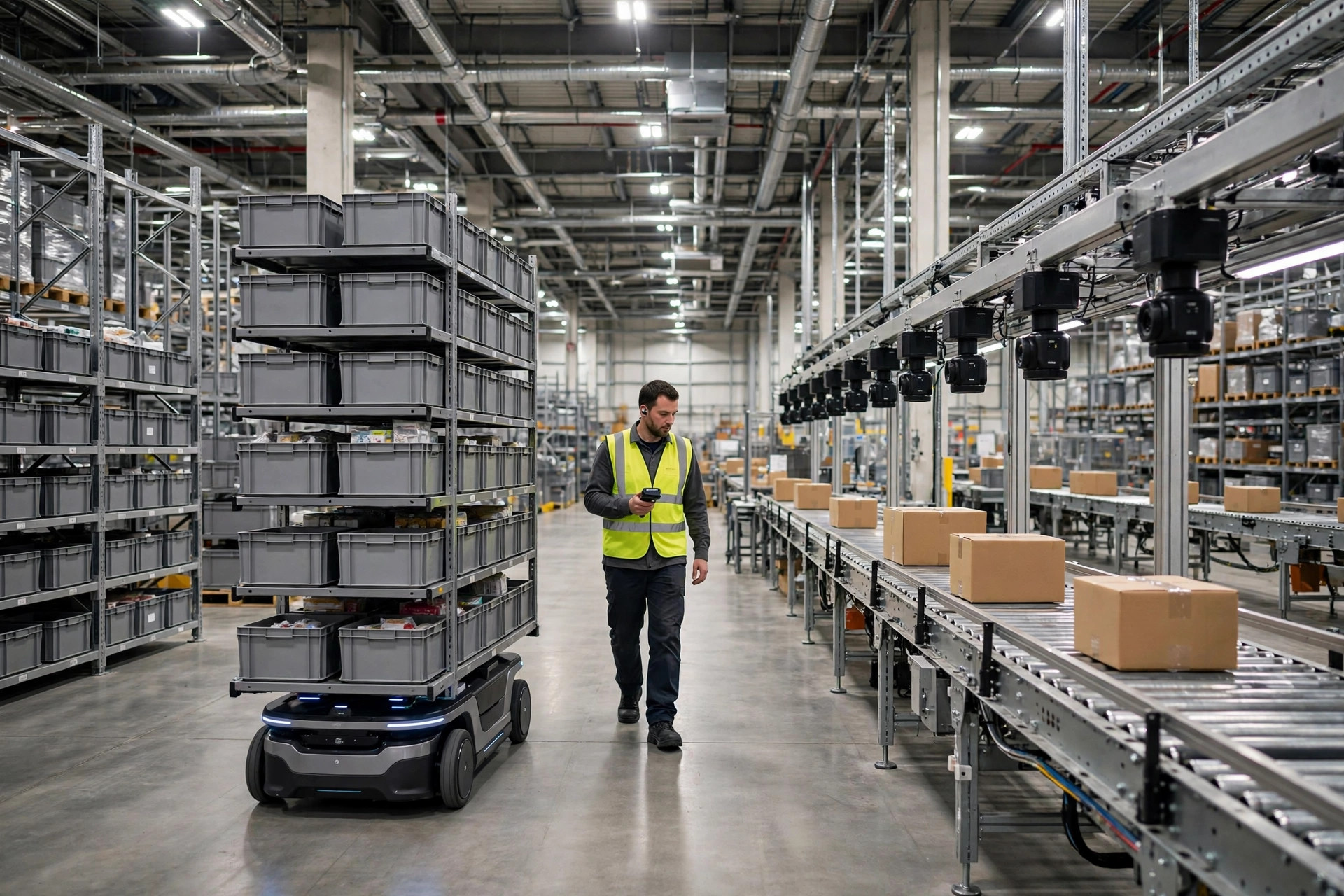
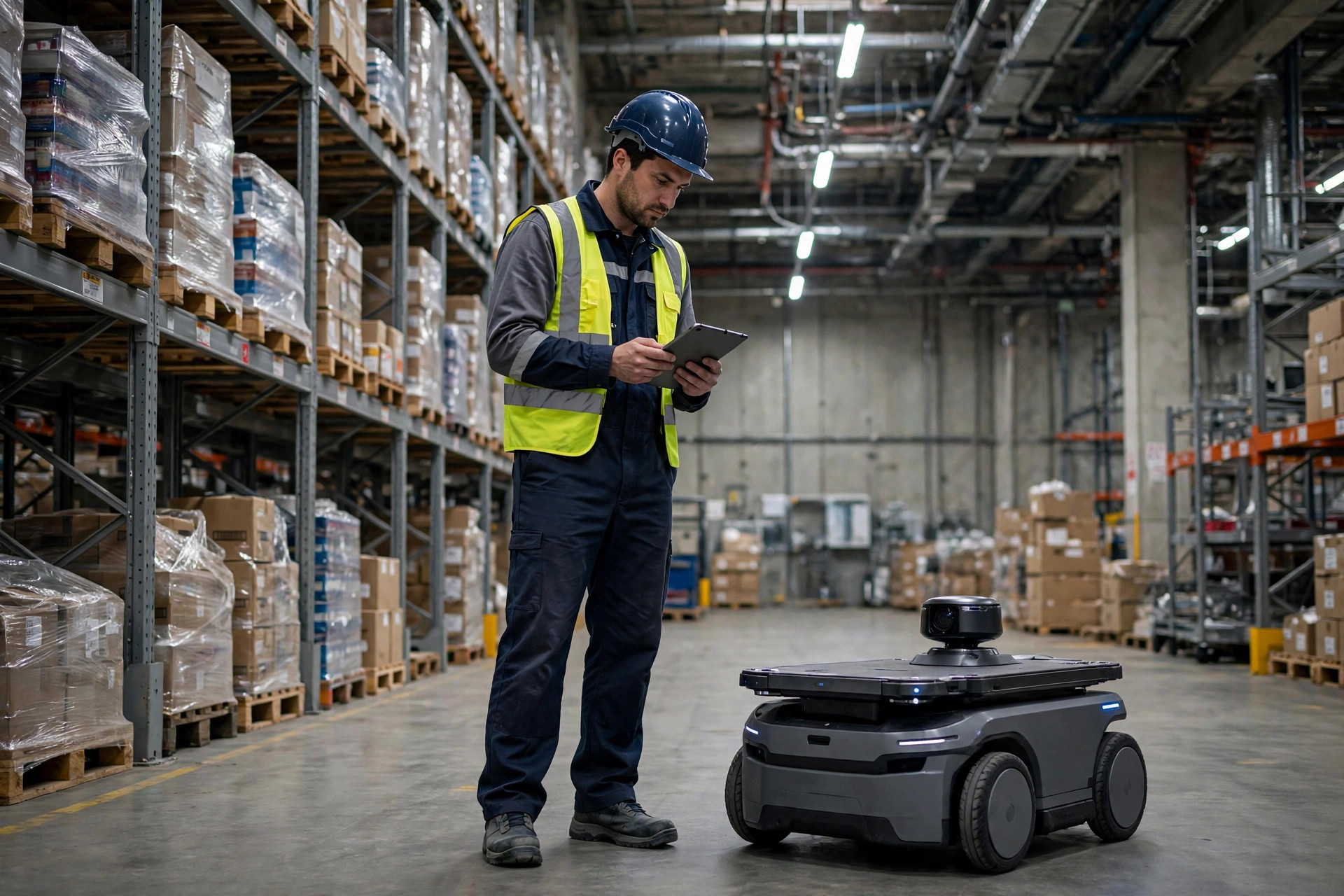
In June 2025, an apparel e-commerce warehouse in eastern China deployed six AMRs for AI-driven picking-task allocation. Technically it worked: in the first three weeks, average picker travel distance fell by roughly twenty percent, a figure verifiable in the warehouse WMS logs. Then the strange things started in week 4. Pickers began "forgetting" to charge the robots. Someone stacked idle totes across an AMR travel lane. A picking team lead put it bluntly in our interview: "The system assigns every task and records everything. Who knows whether that data gets used against us at year-end review." The pilot's KPIs belonged to the IT department; operations carried no accountability for the outcome. There was no business owner — nobody whose job depended on the pilot succeeding. By week 8, four of the six AMRs sat permanently in the charging area. The project died of neglect. Technology delivered 100%. The organization delivered zero.
Case 3: Demand-forecast replenishment, killed by a vendor's promise.
In November 2024, a European auto-parts warehouse signed an AI forecasting SaaS vendor whose pitch was "out of the box, live in two weeks." The WMS integration actually took nine weeks — historical outbound data had to be reworked on caliber, units, and missing values, item by item. Worse was the contract: the pilot was deemed successful upon go-live, with no data-quality baseline and no exit clause if forecast accuracy missed its target. The system finally went live in February 2025. Its replenishment suggestions repeatedly contradicted a planner with fifteen years of experience. Neither side trusted the other. By week 6 the planner was overriding the system from experience, and nobody opened the system's reports again. The pilot was frozen around day 60. The final payment was made in full — the contract said go-live meant acceptance.

An attribution framework: four categories of AI pilot mortality
Placed side by side, the three deaths sort into four categories:
| Category | Typical symptom | Case | When it strikes |
|---|---|---|---|
| Data | Training distribution drifts from live operations; no data-quality baseline | Case 1 | Trial phase (weeks 8–12) |
| Scenario | The "most painful but hardest" scenario is chosen; KPIs unmeasurable or unattributable | — | Project setup |
| Organization | No business owner; frontline incentives conflict with pilot goals | Case 2 | Throughout |
| Vendor | Promise–delivery gap; integration underestimated; no exit clause in contract | Case 3 | Procurement and go-live |
The scenario category did not strike in these three cases, but across my other interviews it is the most common setup-phase trap: applying AI to long-tail exception handling, where samples are few and rules are messy, makes a three-month pilot unjudgeable from the start.
A counterintuitive verdict: technology was never the main cause
In all three cases, the algorithm teams delivered working models on schedule, and the accuracy numbers "passed" on their respective test sets. What killed the pilots was pilot design itself: data unprepared, scenarios too hard, nobody owning the outcome, contracts leaving all the risk with the buyer. In other words, AI pilots rarely fail because "the AI doesn't work." They fail because the organizational act of piloting was never designed. According to a 2025 logistics-technology survey by an international consultancy, enterprises ranked "insufficient data preparation" and "internal coordination difficulty" as the top two barriers to AI adoption, with technology maturity trailing behind — a ranking consistent with what my interviews found.
Trend judgment: the pilot logic is changing in 2026
On the timeline, the 2024–2025 pilots mostly followed a "technology validation" logic: buy the technology first, figure out the use case later. Since 2026, the new projects I have encountered increasingly follow an "organization validation" logic: an AI-readiness assessment (scored on data, process, and people) comes before the pilot is even approved, and contracts are shifting from license buyouts to milestone-based payment — one tranche when data integration is complete, another when the agreed accuracy is met. The meaning of this shift: the market is redefining the pilot from a technology purchase into an organizational-change project. Technology will keep getting cheaper. The organization was always the hard part.
I keep returning to one question while reviewing these three cases: what if the 90 days were sequenced in reverse — 30 days preparing data and the organization, 30 days validating at small scale, and only then 30 days talking about expansion? Would so many projects still die on day 90? There is no standard answer. But it may be the most worthwhile question for anyone considering a warehouse AI pilot in 2026 to ask themselves before signing.
By Dr. Chen, Supply Chain Researcher