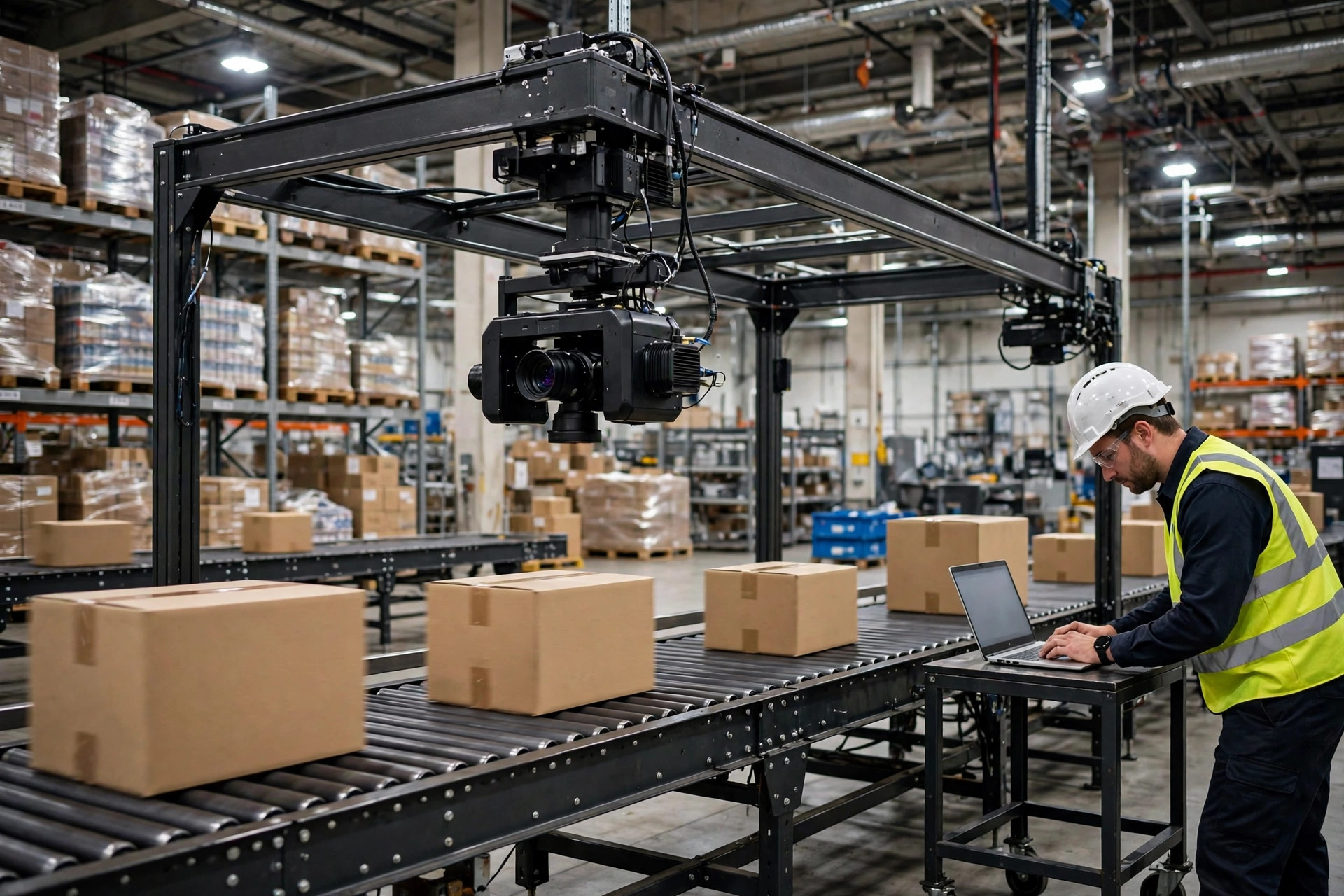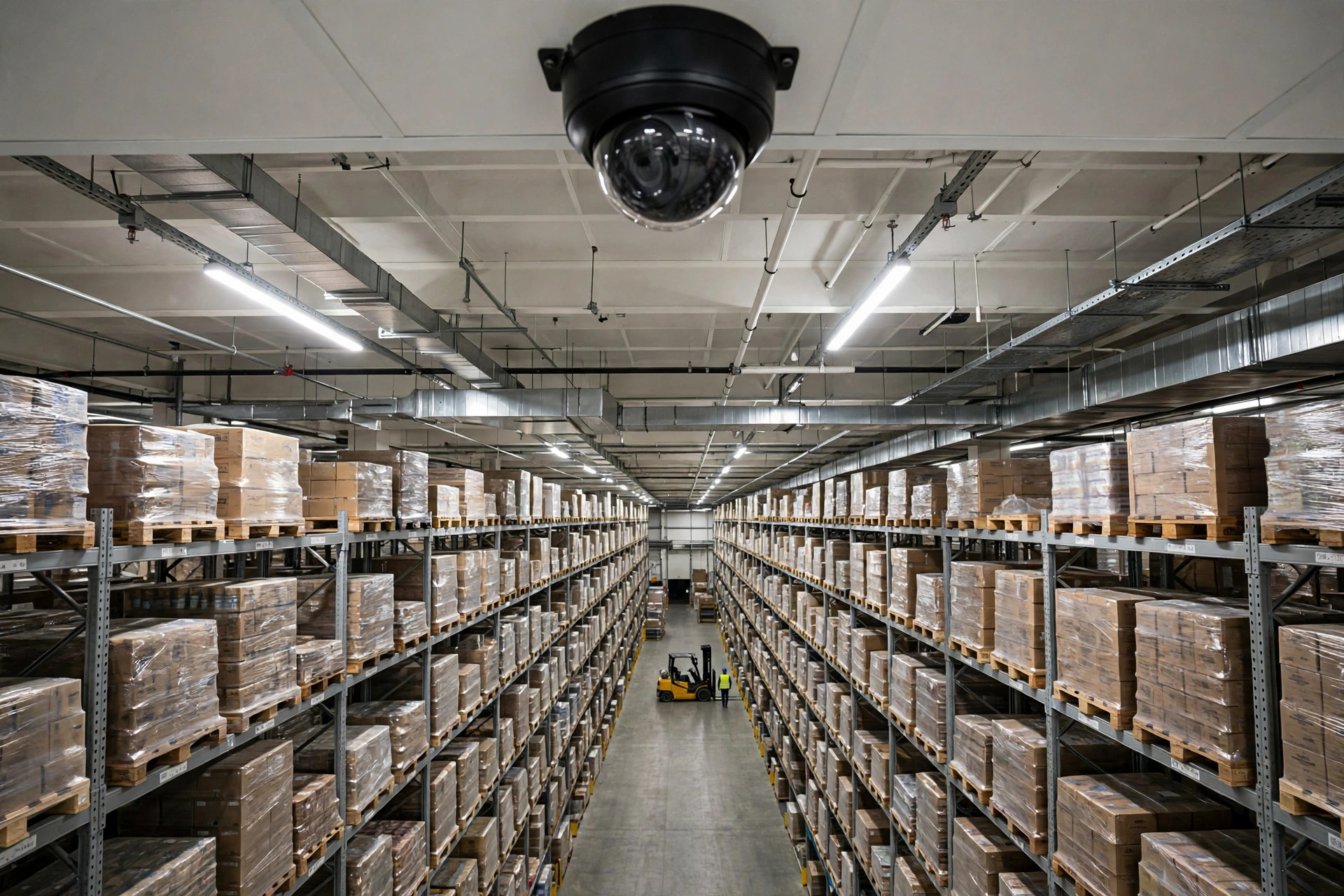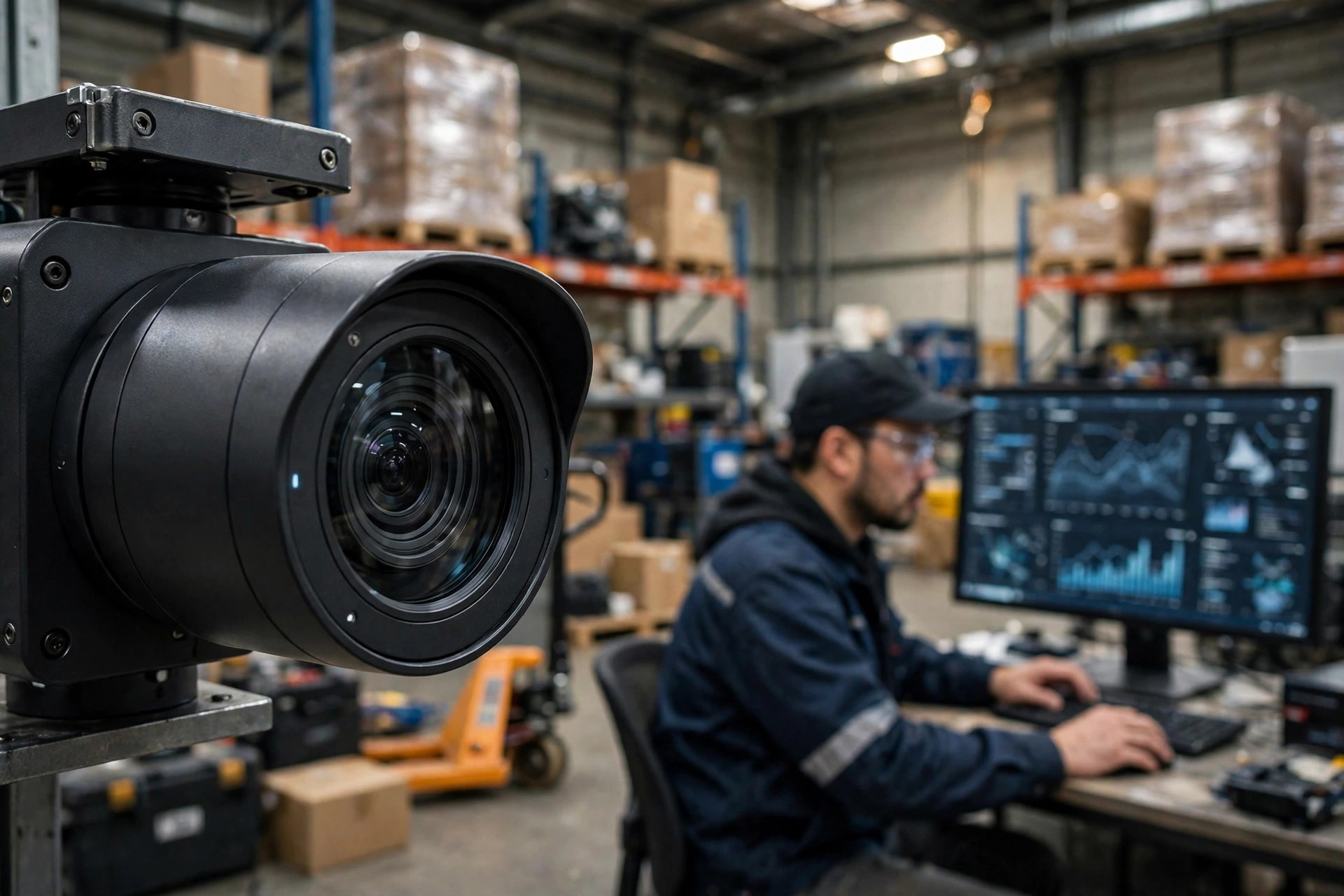
Late 2023, a 3PL sortation center in South China ran into a strange problem. Parcels were flying down the belt at 1.8 meters per second, and parcel recognition ran on cloud AI inference. Each round trip took 380 milliseconds — in which time a parcel traveled 68 centimeters. The divert chutes were only 60 centimeters wide. The mis-sort rate climbed from 0.3% to 4.7%: out of 80,000 parcels a day, more than 3,700 went down the wrong chute. That night, the engineers moved the model onto an edge box on site. Latency dropped under 60 milliseconds, and the mis-sort rate was back to 0.4% the next day.
Every warehouse eventually faces the edge vs cloud AI inference question. Here is the math, in three parts: latency, cost, and what happens when the network dies.
First, the principle: training and inference are two different jobs
Think of it like learning to drive versus driving. You learn at the driving school (the cloud — big compute, no rush). But once you're on the road, you react yourself, in real time (the edge — millisecond reactions). AI works the same way: training a model in the cloud is a no-brainer, but where inference runs depends on the workload.
Warehouse AI workloads come in three flavors:
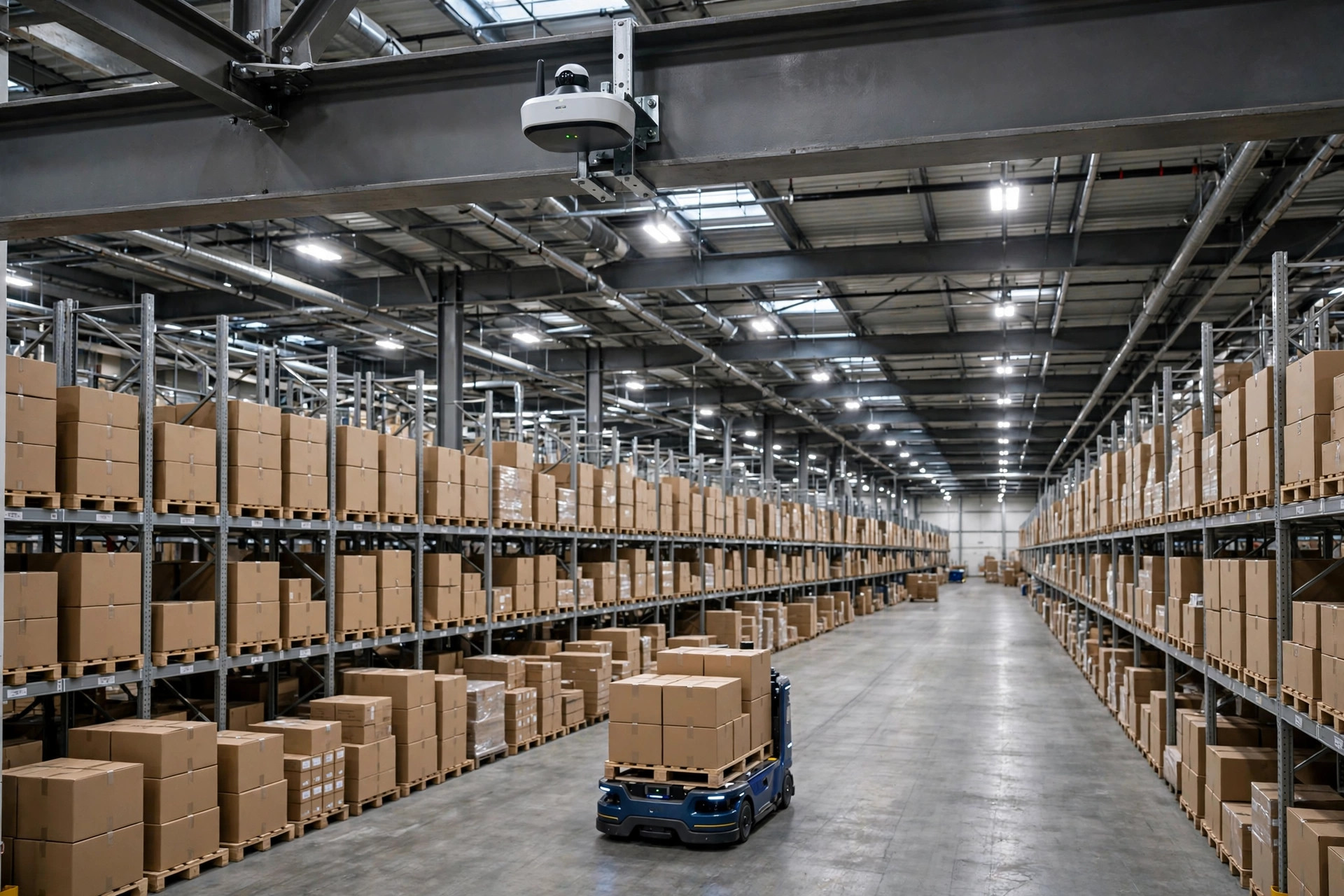
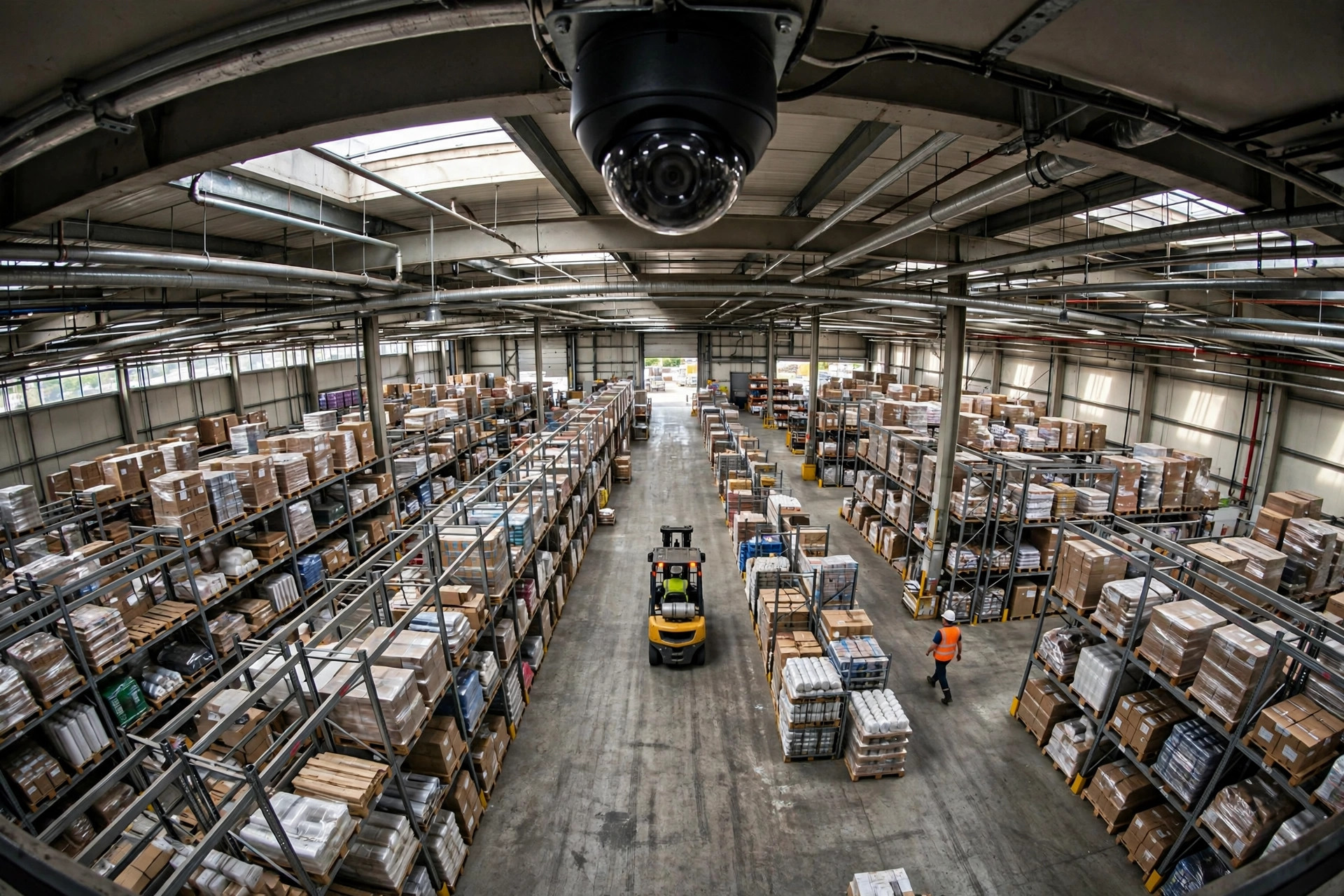
- Computer vision: barcode reading and re-scans, parcel damage detection, dimensioning, forklift and pedestrian safety detection. Big data (video streams pouring in), tight real-time requirements.
- Voice: voice picking, voice-to-text for exception reporting. The audio streams are actually tiny — but the interaction is a closed loop, and humans won't wait.
- Prediction: demand forecasting, replenishment suggestions, labor planning. Batch jobs; nobody cares if the answer arrives an hour later.
And a blunt word about fake requirements: a warehouse owner once asked me whether cloud AI could count parcels on a conveyor in real time. I told him a photoelectric counter costs a few hundred dollars, needs no network, and has effectively zero latency. AI is not a hammer; stop treating everything like a nail. Killed on the spot.
Edge vs cloud: the latency math — how many milliseconds can a warehouse not afford?
The first dividing line is the latency budget. Cloud inference latency = upload + cloud compute + download. In a typical setup, one round trip runs 100–300 ms, and over 500 ms during network jitter is nothing unusual. Edge inference runs locally, usually done in 30–80 ms.
Draw three lines by latency budget:
| Latency budget | Typical workload | Where it belongs |
|---|---|---|
| Millisecond closed loop (<100 ms) | Sorter diverting, AMR obstacle avoidance, safety e-stop | Edge, no discussion |
| Second-level interaction (<1–2 s) | Voice picking confirmation, scan verification | Edge or nearby node |
| Minutes or more | Demand forecasting, replenishment, reports | Cloud |
Do the latency math: sorter at 1.8 m/s, cloud round trip 380 ms, parcel displacement = 1.8 × 0.38 = 68 cm. The chute is 60 cm wide — by the time the recognition result comes back, the parcel has already passed its chute. That is not an algorithm problem, it is physics. No model accuracy can save you.
Here is the counterintuitive part: many people assume "the cloud has stronger compute, so recognition is more accurate." Wrong. Accuracy comes from the model and its training data — the same model running on edge hardware gives identical accuracy. The cloud is genuinely better at exactly two things: training models, and batch-crunching thousands of jobs at once. Choosing cloud "for better accuracy" is paying a stupidity tax.
Edge vs cloud: the cost math — bandwidth bills vs hardware bills
The second calculation is money. The cloud charges continuously for traffic and API calls; edge is a one-time hardware investment plus electricity. Different math.
Start with bandwidth. One 1080p camera, H.264, at 2 Mbps upload: 2 × 86,400 / 8 ≈ 21.6 GB per day, about 650 GB per month per camera. Twenty cameras means 13 TB of upstream traffic a month. I won't quote per-GB prices — check your cloud provider's latest published rates — but at the tens-of-terabytes scale, that bill buys several edge boxes outright.
In March 2024, an apparel warehouse in East China ran voice picking through the cloud. Workers spoke a quantity and waited 1.2 seconds for the confirmation tone; they re-spoke quantities hundreds of times a day, and throughput dropped below paper picking. Moving recognition to an on-site edge box cut latency under 300 ms. The subtle lesson: voice data is tiny, so bandwidth was never the bottleneck — interaction latency was. Make a human wait a second and they get annoyed, repeat themselves, and the whole system slows down. For "small data, tight interaction" workloads, the cloud is paying money to suffer.
The comparison formula is simple: for edge, take 3-year amortized hardware + electricity + maintenance labor, divide by total inferences over 3 years — that is your per-inference cost. For cloud, divide traffic + API fees by total calls. Whichever is lower wins. Stable 24/7 workloads amortize beautifully on edge; spiky, occasional batch workloads are cheaper pay-as-you-go on cloud. That is the cost dividing line.
When the network dies: can edge catch what the cloud drops?
The third calculation is the one everyone forgets: warehouse networks do go down. I have seen fiber cut by municipal roadworks, ISP outages, dead core switches. When cloud inference dies, everything dies with it. Edge inference on local hardware keeps running.
In August 2024, a warehouse in North China lost its fiber to road construction — six hours offline. Its inbound scan vision ran on edge, so it processed roughly 9,000 cartons in those six hours with zero downtime, while a neighboring fully-cloud warehouse spent the same six hours logging receipts by hand. Design your degraded mode up front: vision drops to barcode-only (skip damage detection), voice picking falls back to button confirmation, prediction jobs pause until the network returns. Degraded mode is not a compromise — it is part of the design.
The maintenance traps: three things that make edge hardware miserable
Principles covered, dividing lines drawn — now the maintenance traps, which are the real cost of edge.
First, heat and dust. A warehouse hitting 40°C in summer is normal; dust-clogged edge boxes running hot will see their rated 50,000-hour MTBF cut in half, easily. Put quarterly cleaning in the SOP — don't wait until thermal throttling to remember.
Second, model version consistency. Twenty edge boxes, box A running v2.3 and box B on v2.1, disagreeing on recognition results — debugging that will make you cry. You need OTA pushes to all boxes plus per-box version verification after each push, with alerts on mismatch. This is where edge deployments most often blow up.
Third, the monitoring blind spot. A dead cloud server pages someone within a minute; an edge box dying in a corner can go unnoticed for days. Heartbeat reporting plus a watchdog, auto-alert after 5 minutes offline — set it up on day one.
So is the money worth it? Watch this one number
Back to the opening line: per-inference cost. Three-year total edge spend divided by three-year total inferences; cloud traffic plus API fees divided by total calls. Lower number wins. The latency budget decides what is possible, per-inference cost decides what is economical, and the offline fallback decides what is survivable. Run all three calculations, and the edge-vs-cloud answer writes itself.
By Da Liu, Automation Engineer