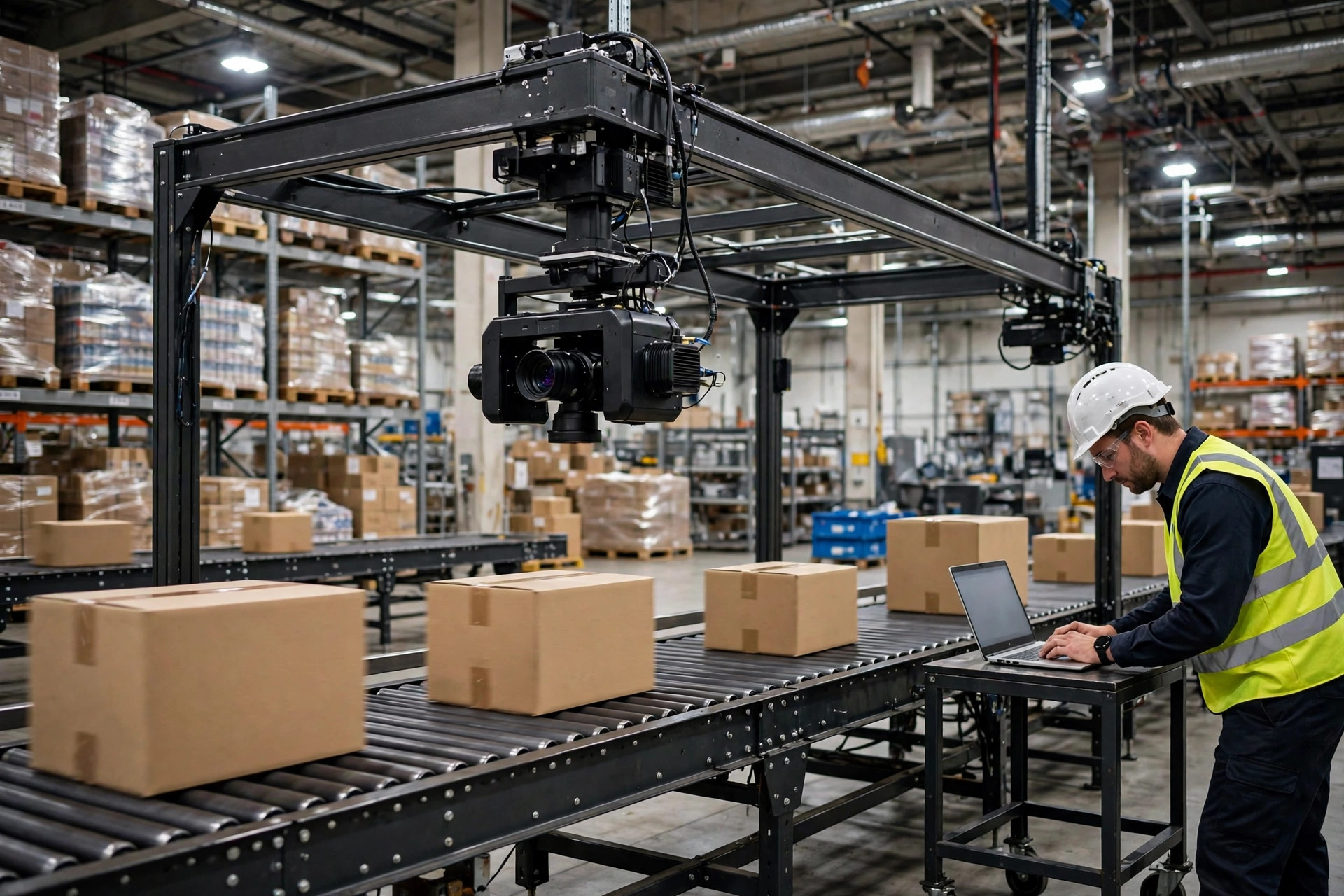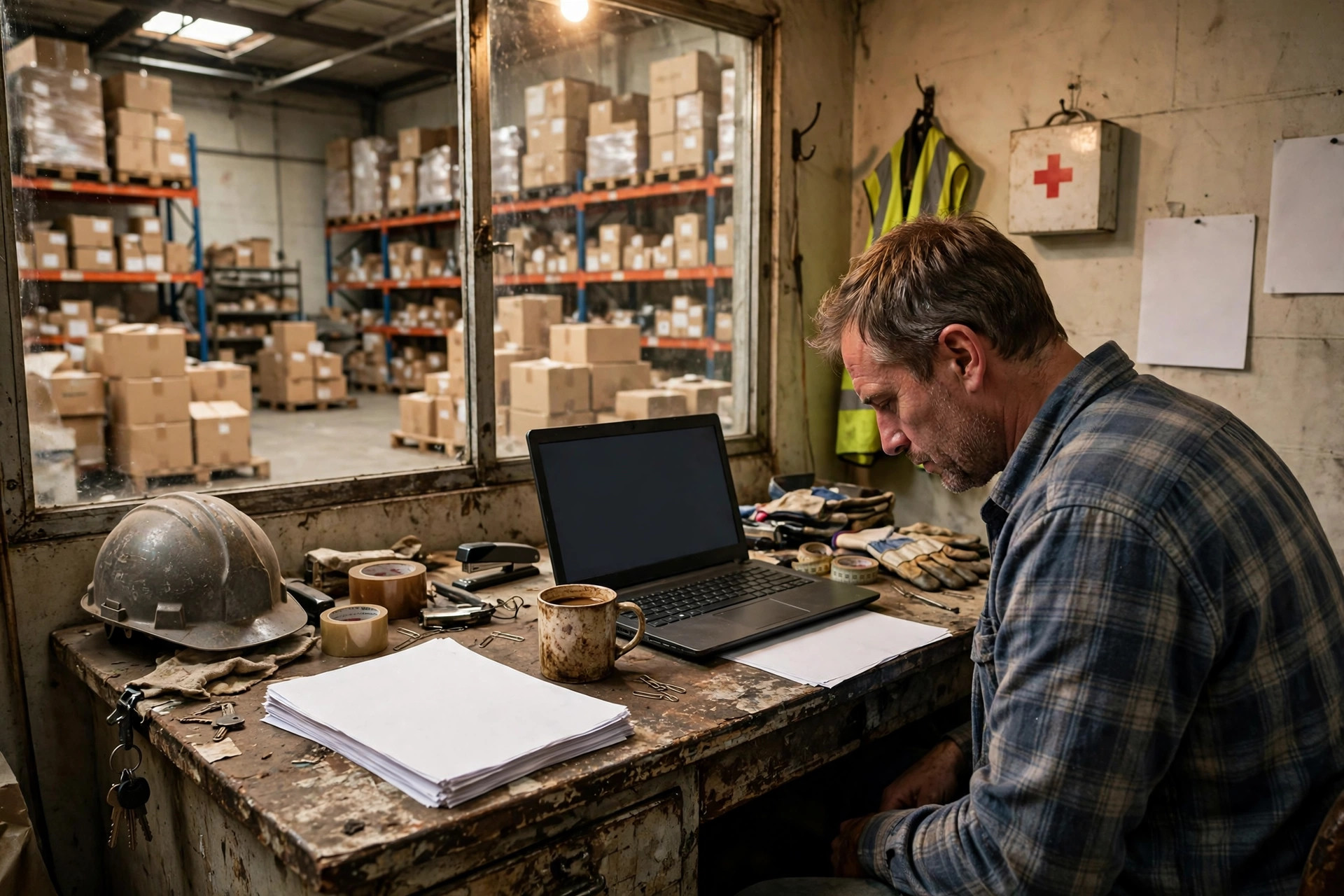
Last month an AI salesman showed up at my warehouse offering to install an "intelligent brain" for my operation. I asked what this brain eats. "Data," he said. How much? "The more, the better," he said. I told him: I've got a 3,000-square-meter warehouse, and the most I can give you is one Excel spreadsheet. Take it or leave it.
The look on his face was like going on a blind date, being asked how many houses you own, and answering that you have an electric scooter.
That conversation stuck with me, so let me answer the question honestly: how much data does warehouse AI need? Not with theory — with what actually happened to us small warehouse owners. We got scared off by the data bar, and we survived with homegrown workarounds.
Our Predicament: The Data AI Vendors Want Is Data I'll Never Have
Let me start with my neighbor Wang's story, as a warning to everyone.
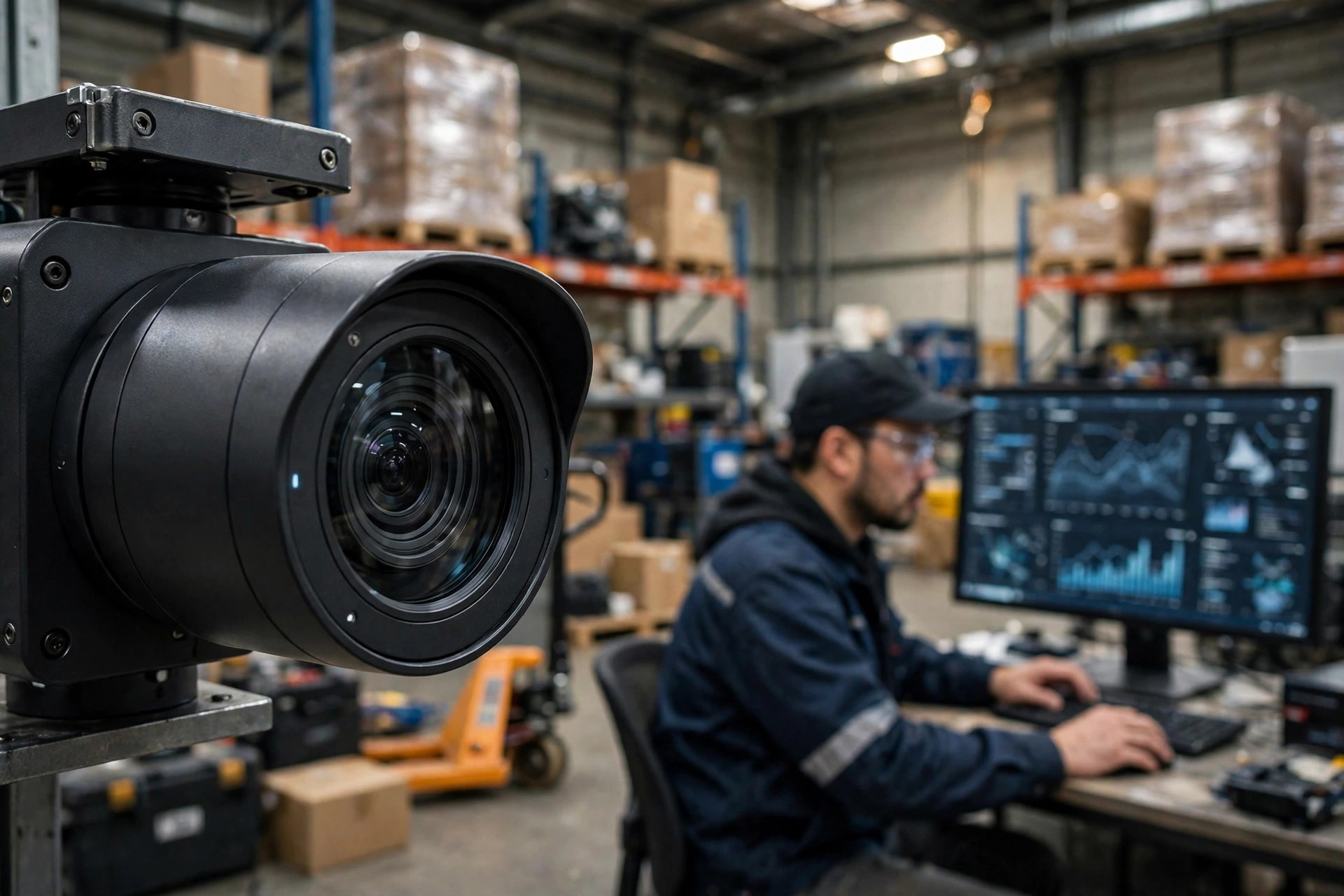
Wang runs an auto parts warehouse, smaller than mine, about 20 people. Last year a vendor pitched him visual recognition for automatic counting and inspection: "Install a few cameras, and it'll work in three months." Wang thought it was made for him. He signed on the spot.
Then came the requirements: install 6 cameras, record 8 hours a day, collect 3 months of footage, then pay someone to label every image before training could even start. Wang gritted his teeth and did it — nearly 100,000 yuan on cameras and installation, tens of thousands more on labeling. Three months later the vendor came back, glanced at the data, and said: bad lighting, not enough angles, do it again.
Wang lost it. Over 100,000 yuan spent, no AI in sight. The cameras now hang on the wall as very expensive security monitors.
The biggest lesson from Wang's disaster: what an AI vendor calls "not much data" can be an astronomical amount for a small warehouse. They want data that's clean, labeled, and covers every scenario. We small warehouses can barely spell "data" — inbound and outbound tracked on handwritten slips, inventory living in the old accountant's head, pick paths living in the veteran workers' legs.
So here's the uncomfortable truth up front: how much data warehouse AI needs depends entirely on which AI you're talking about. The table below is what I pieced together after being "educated" by round after round of salespeople. Every vendor-sourced number is labeled as such — don't treat them as gospel.
Three Flavors of Warehouse AI, Three Very Different Data Bars
| AI type | How much data (vendor claims, for reference only) | What my small warehouse actually has | My verdict |
|---|---|---|---|
| Computer vision (counting / inspection / anomaly detection) | Hundreds of labeled images per SKU to start; one vendor's rep told me "prepare 5,000 labeled images as a warm-up" | Under 800 SKUs total, and not a single labeled image among them | Highest bar by far. Labeling costs are terrifying. Small warehouses need not apply. |
| Demand forecasting (replenishment suggestions) | 12 to 18 months of order-line history, per one forecasting vendor's white paper | Order data exists — in Excel — but returns, promotions, and stockout flags are a mess | The data exists but it's dirty. Cleaning it costs more effort than collecting it. |
| Labor scheduling / wave optimization | 3 to 6 months of pick-task records with timestamps, headcount, and volumes | I have attendance sheets. I do not have task-level records. | Not enough dimensions. Even AI can't cook without ingredients. |
See the pattern? There is no single answer to how much data warehouse AI needs. Computer vision is a money pit, forecasting is a slow burn, optimization is a detail freak. When a salesperson says "the more the better," the translation is "whatever you have now, it isn't enough."
But that doesn't mean small warehouses are locked out of AI. In fact, I stumbled onto a counterintuitive conclusion.
The Counterintuitive Part: Small Warehouses Don't Lack Data Volume — They Lack Data Cleanliness
Last year I did something deeply unglamorous: I bought zero AI and handed every picker a barcode scanner, requiring 100% scanning on inbound and outbound. The complaints were immediate — "this is pointless bureaucracy," they said. Handwriting took 10 seconds; scanning took 15.
Three months later, our scan rate went from 60% to 98%. Then something magical happened: I ran an ABC velocity analysis on three months of scan data in Excel and moved our A-class SKUs (the 20% of SKUs behind 70% of outbound volume) to the slots closest to the pack stations. Pickers walked 1.5 fewer kilometers per day on average. Pick efficiency went up in a way you could see with your eyes.
That taught me the real lesson: AI doesn't eat "big data" — it eats clean small data. We small warehouses will never accumulate 18 months of data, but three months of clean scan data is entirely within reach. And three months of clean data is worth more than three years of messy handwritten slips.
A vendor's engineer once told me something honest off the record: "For warehouses your size, data volume is never the problem. The problem is your data is all wrong. Feed wrong data to AI and it just gets wrong faster, and more confidently." Crude, but true.
Our Homegrown Playbook: Three Steps, Digital First, AI Later
Hard-earned experience, shared with fellow small warehouse owners. Three steps — don't skip any:
Step one: get your scan rate above 95%. Don't buy AI. Buy barcode scanners. A few hundred yuan each; outfitting the whole warehouse costs under 10,000. This is the foundation of everything. Below 95% scan rate, your inventory data is Schrödinger's stock — it both exists and doesn't.
Step two: use rules instead of AI. ABC classification, reorder points, wave batching — Excel formulas and fixed rules handle all of it. No machine learning required. Our replenishment now runs on one crude rule: safety stock equals three days of average outbound. Stockouts dropped from seven or eight a month to one or two. Crude, but it works, and it's free.
Step three: once you have 12 months of clean data, then talk about forecasting AI. Note the word "clean." Our plan is that this time next year, armed with a full year of 98%-scan-rate order data, we'll be the ones choosing vendors — not the other way around.
Total investment for all three steps: under 20,000 yuan. Compare that to Wang's 100,000-plus-yuan visual recognition project that went down the drain. You tell me which was the better deal.
Three Honest Words on How Much Data Warehouse AI Really Needs
First, don't be scared by "data volume," and don't be dazzled by "AI." How much data warehouse AI needs has no universal answer — vision and forecasting differ by an order of magnitude. Nail down the specific problem first, then ask about the data bar.
Second, solve "do we have data" before "do we have enough data." Scanners, PDAs, even a decent Excel template all outrank AI software. Digitization is the prerequisite homework for AI. Fail that homework and AI shows up to nothing.
Third, dirty data is worse than no data. Twelve months of dirty data loses to three months of clean data. AI won't clean your data for you — it will learn your errors perfectly and then be wrong with total confidence.
And a self-deprecating closer: we small warehouses can't afford to burn money, so every yuan has to land where it counts. Big companies can burn cash collecting data first and worry about results later. We can't. We need results first, then data, then AI.
Small warehouses have their own way of surviving. We'll eat this data meal one bite at a time — and one day we'll sit at the AI table too. On our own invitation, not someone else's charity.
By Xiao Ma, Small Warehouse Owner