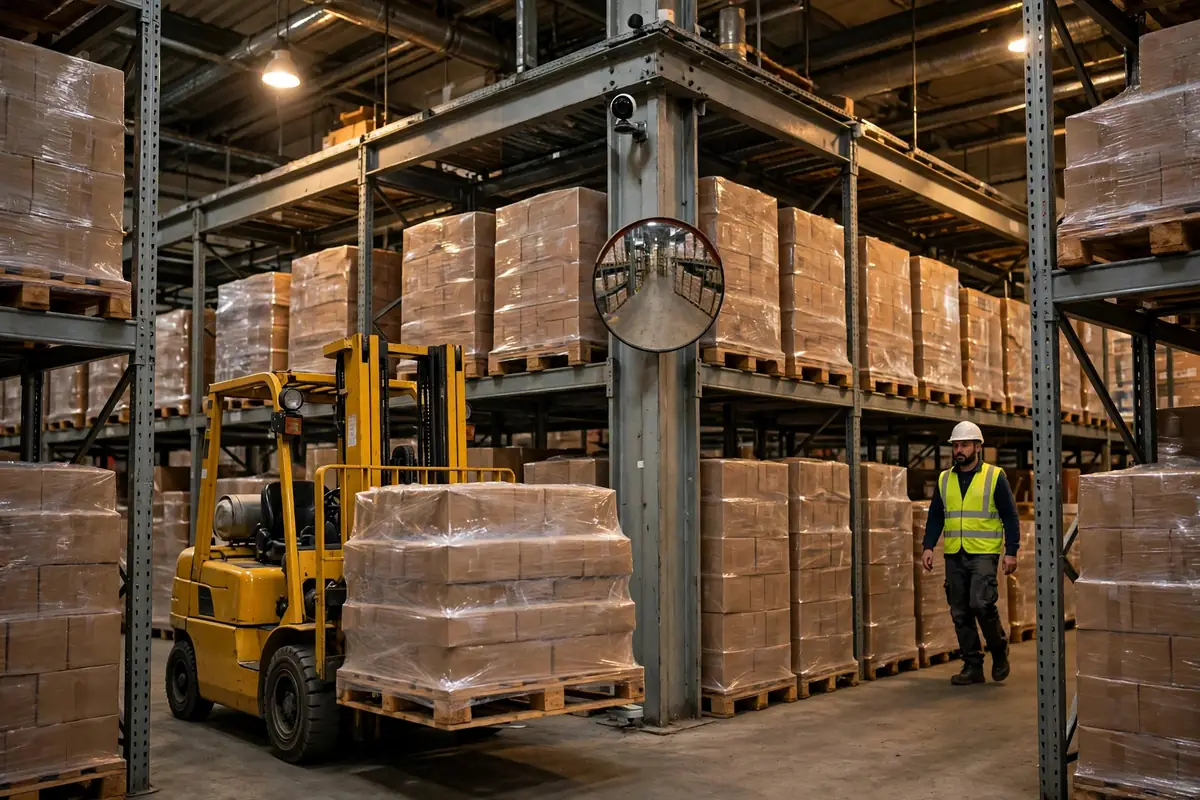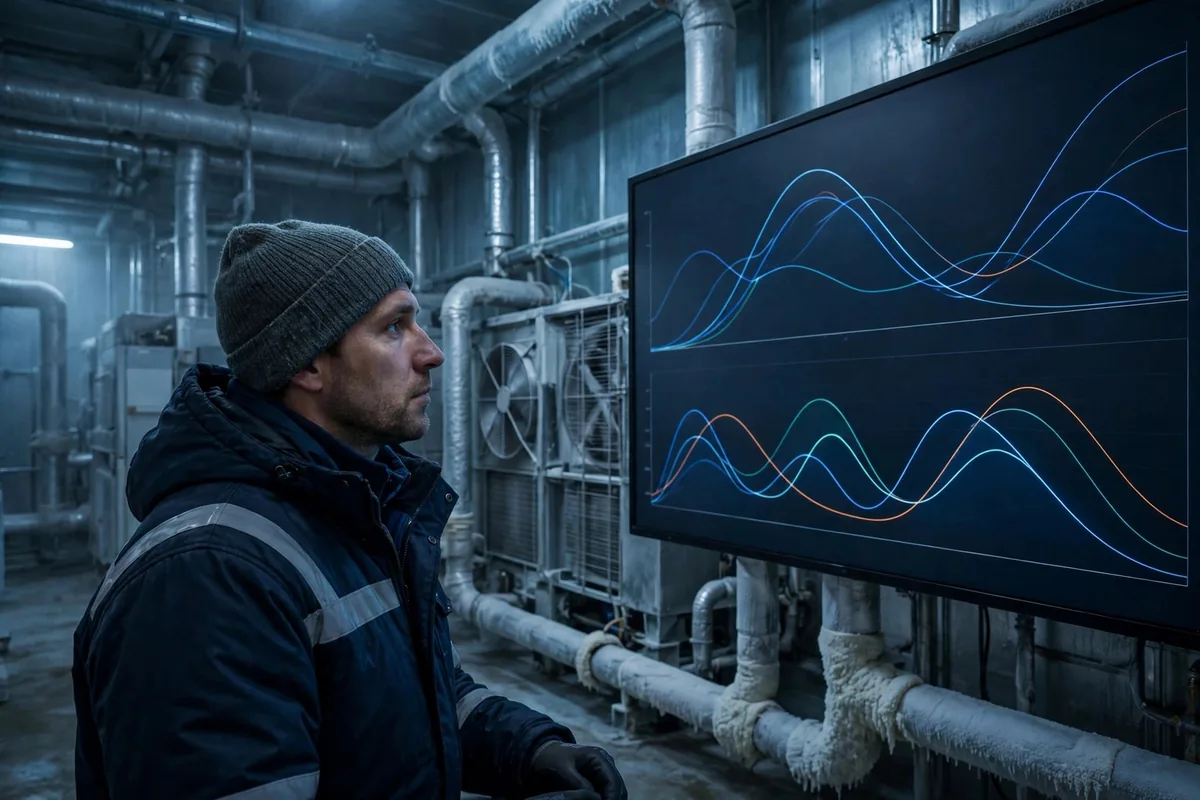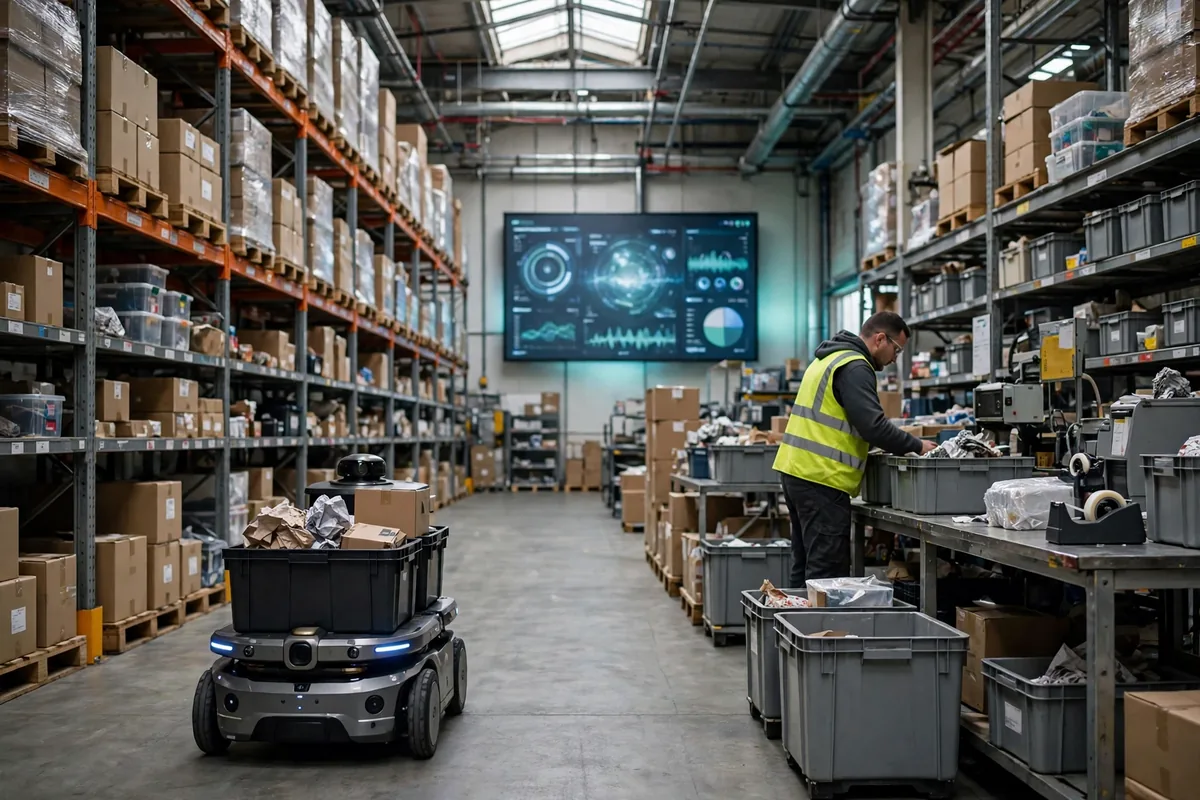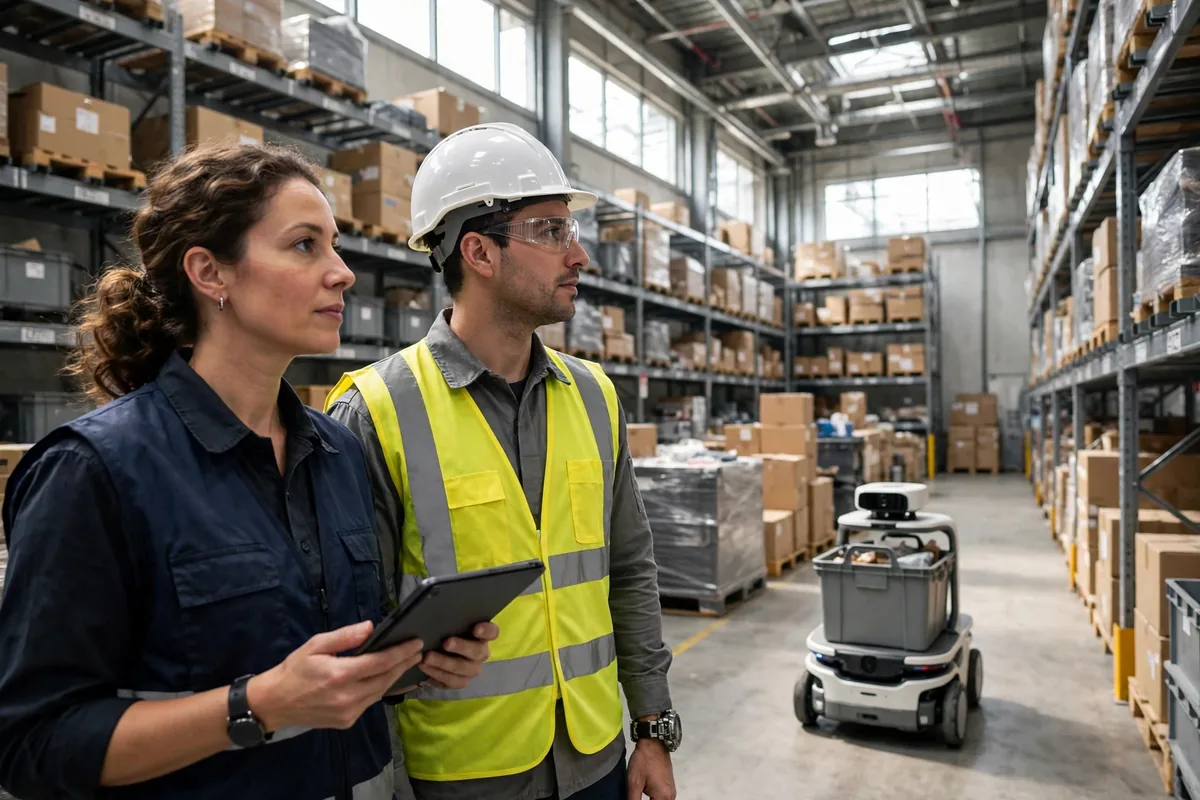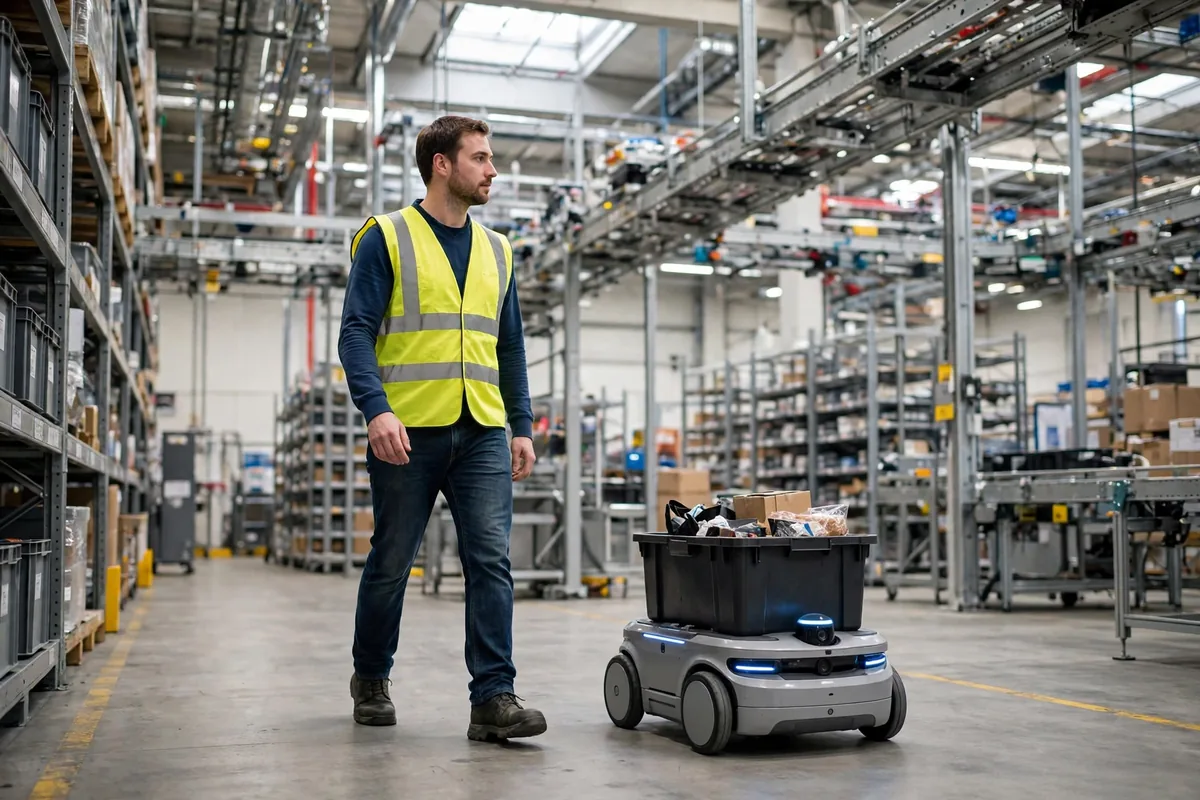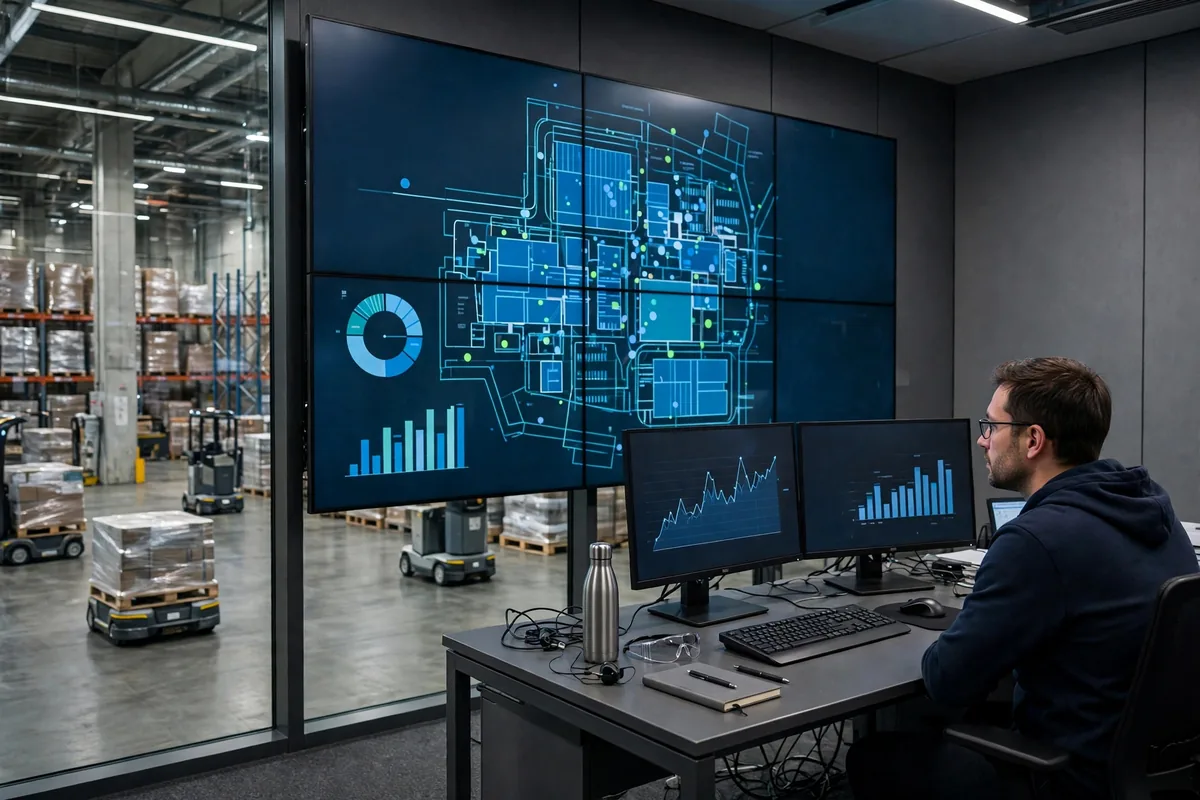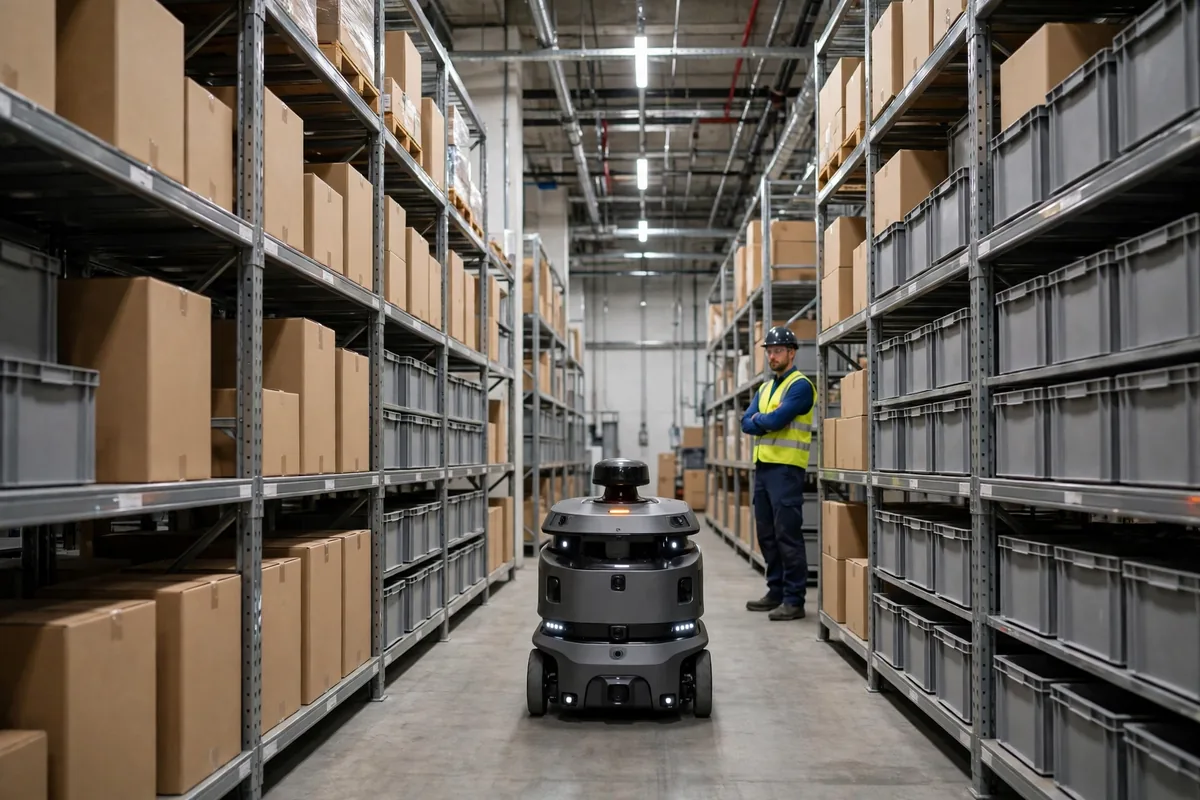
Let me start with the principle, because this is where most warehouses go wrong. You can think of the AI adoption stages warehouse teams actually follow as installing three layers. The first layer is eyes: computer vision. The second is a brain: forecasting and optimization. The third is hands: robots doing the work. Too many warehouses try to buy the hands first, before the eyes are installed and before the brain has any data to eat. The hands then only work in the vendor's demo video. It is like trying to run before you can walk. The fall is guaranteed.
A 2025 global study by MIT and Mecalux surveyed more than 2,000 supply chain and warehousing professionals, and the results are worth sitting with: 92.1 percent of firms are already implementing AI, and only 1.7 percent have no plans at all. The typical payback period is just two to three years, and 87 percent of firms expect to increase their AI budgets over the next two to three years. So the question is no longer whether to adopt AI. It is which stage you are in. Here are the three stages. Find yourself in them.
Stage One: AI Adoption Pilot — Prove One Number First
The goal of stage one is exactly one thing: prove that AI makes money in your warehouse, in a number you can measure. Not a slide deck. Not a demo. One use case, one metric, 90 days. Watch the number move or not.
Demand forecasting is the safest place to start. Industry implementation experience puts a mid-size forecasting pilot at 6 to 10 weeks: 3 to 4 weeks for data preparation and cleaning, 2 to 3 weeks for model training and validation, and 2 to 3 weeks for integration and testing. Cost runs roughly 20,000 to 50,000 US dollars for a pilot covering your top 20 to 50 SKUs or product categories. I can quote those numbers because they are public implementation benchmarks, not a vendor's price list. Computer vision is the other good starting point. A camera at the receiving dock photographs each inbound pallet, reads the label, and checks it against the ASN. A mismatch gets flagged in seconds instead of hours. In industry deployments, a drone or overhead camera system can count pallet locations across a 200,000 square foot warehouse in under an hour. Manual cycle counting takes a team of three people two days.
The exit criteria for stage one are concrete: the pilot metric hits its target, the data pipeline runs without babysitting, and at least one person on your team can read the model's output and explain it. If you cannot clear those bars, do not move on. Keep piloting, or pick a different use case. Plenty of warehouses die in stage one, and the cause is usually a wrong choice of scope: they start with "intelligent scheduling for the whole warehouse," and after 90 days there is no number to show. The boss looks at that, and AI is done in that building for years.
Stage Two: AI Adoption Scale-Up — Where Most Projects Die
Stage two takes one proven point and spreads it across a line and then a surface: forecasting goes from 50 SKUs to the full catalog, vision moves from receiving to quality control and cycle counting, labor planning and slotting plug into the WMS daily routine. Of the AI adoption stages warehouse teams actually follow, this is the hardest, and it is where the most projects die.
Why? Stage one can be carried by one project team working hard. Stage two tests your data and your process fundamentals. One number from that same MIT and Mecalux study is worth thinking about: 57.5 percent of organizations rate themselves at advanced or full automation maturity, while only 11.7 percent remain largely manual. In other words, most warehouses do not lack equipment. They lack clean data. Is your order data sitting in three different systems? Have customer names gone two years without being reconciled? If so, the model eats dirty data and produces dirty conclusions. The industry consensus is blunt: a forecast is only as good as its historical data, and if the data is dirty, you need a data hygiene phase before AI does anything useful.
Then there is the fake requirement. I have seen warehouses spend heavily on AI labor scheduling, only for the generated rosters to be worse than the ones the shift supervisor wrote by hand. The supervisor kept scheduling by experience, and the system became furniture. That is a textbook fake requirement: the problem was never an algorithm problem, it was a process problem, and no algorithm fixes that. My test is simple. Take AI out of the picture. Can process improvement alone solve half the problem? If yes, fix the process first and save AI for the places that genuinely need it.
Stage two has its own acceptance test: after scaling, cost per order or labor hours per order must be better than the pilot projection, not worse. If scaling pushes costs up, your data pipeline or integration is broken. Stop expanding and fix the pipes.
Stage Three: Autonomous Execution — Do Not Rush to Call It Lights-Out
Stage three is where AI stops advising and starts doing. Dematic's product team describes it as crawl, walk, run. In the crawl phase, AI provides decision support with humans in the loop. In the walk phase, AI proposes actions with confidence scores, and anything above a threshold, say 90 percent, executes automatically, while lower-confidence items go to humans for review, and the feedback trains the model. In the run phase, multiple specialized agents collaborate, making decisions and executing them, with humans setting strategy and guardrails. Gartner's warehousing AI roadmap, published in September 2025, follows the same logic in four tiers: traditional optimization, generative AI, semi-autonomous agents, and physical AI, each tier assuming the discipline of the one below it.
Put plainly, stage three is not a more expensive system. It is the trust you have accumulated in the first two stages finally being enough. The model has forecast accurately for several quarters in a row, the vision system's false alarm rate has stayed low, and the team is used to deciding from data. Only then is it safe to hand over execution. I have never seen anyone skip stage two and succeed at stage three.
And one honest word: the fully autonomous lights-out warehouse is not a 2027 thing, and it is not a 2030 thing either. General-purpose piece picking in unstructured environments is not there yet, and anyone telling you "unmanned by next year" is selling something.
Here is the three-stage comparison table. Use it to locate yourself:
| Stage One: Pilot | Stage Two: Scale-Up | Stage Three: Autonomous Execution | |
|---|---|---|---|
| Goal | Prove one number | Spread from a point to a surface | AI executes directly |
| Typical use cases | Demand forecasting, receiving vision | Full-catalog forecasting, QC, counting, labor planning | Confidence-based auto-execution, multi-agent collaboration |
| Time reference | 6 to 10 weeks | Expand scenario by scenario | After several quarters of validation |
| Exit criteria | Metric hit, pipeline running | Cost per order improves | Trust accumulated, false alarms stably low |
| Most common way to die | Scope too big | Dirty data, broken process | Skipping stage two |
So is the money worth it? Look at one number: after the 90-day pilot, did your cost per order go down? If yes, move to stage two. If no, do not buy anything new. Go back and check the data and the process. In the AI adoption stages warehouse teams actually follow, the hardest part was never the algorithm. It is whether you are willing to do the fundamentals properly first.
By Da Liu, Automation Engineer