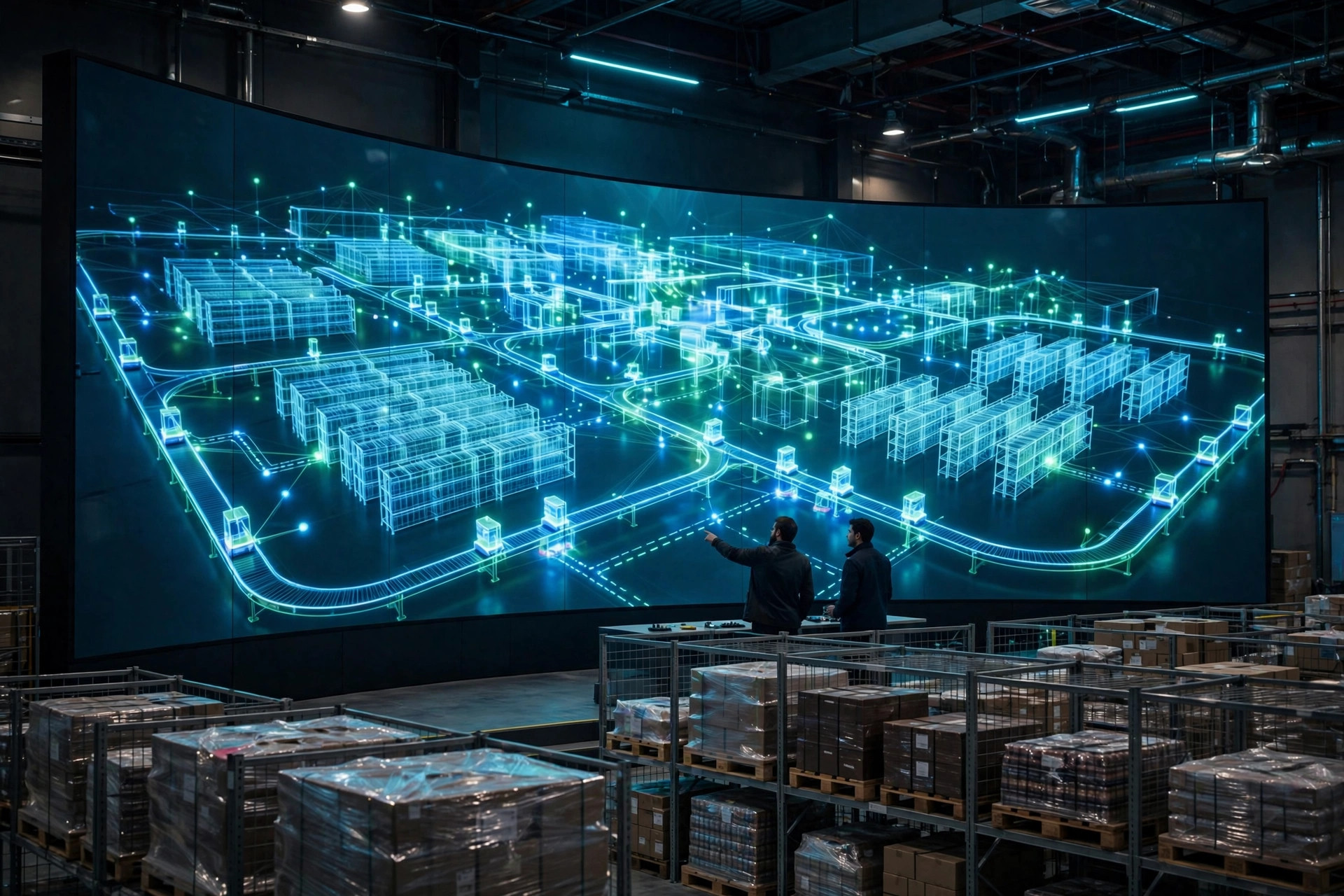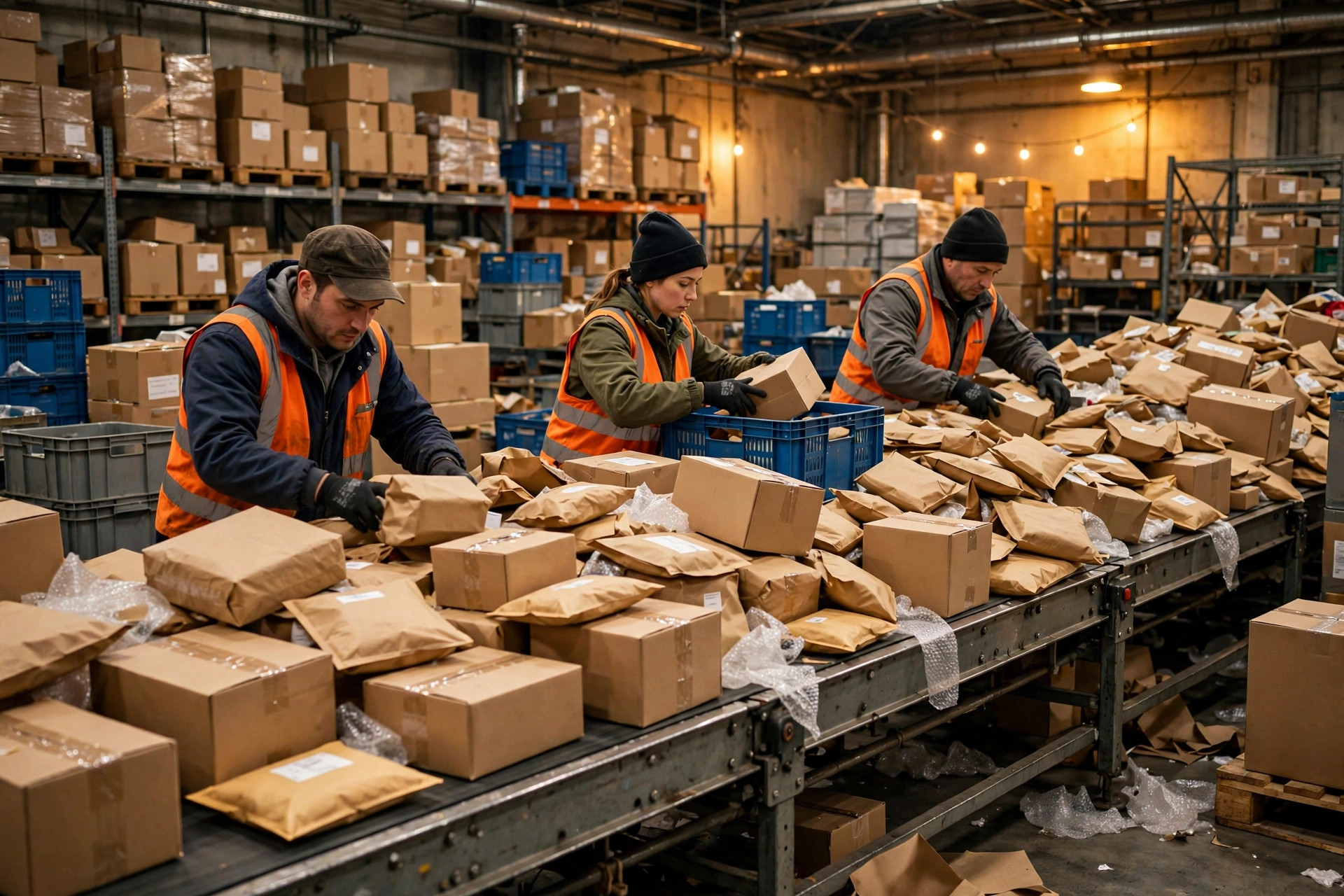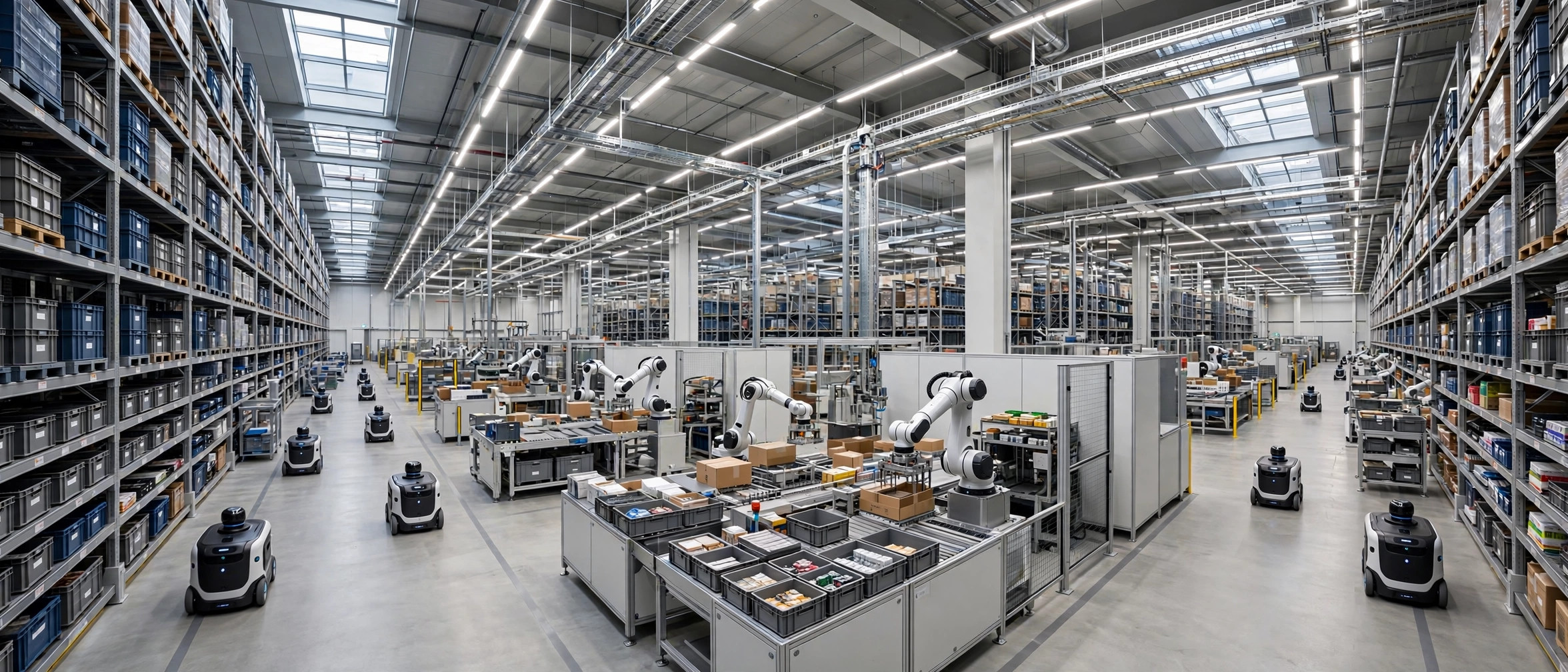
I toured more than a dozen warehouses this year, and the question I kept hearing has changed. Two years ago, operators asked me, "What can AI actually do in a warehouse?" This year they ask, "I've got a 50,000-square-foot building — where do I start, and will it pay back by next year?" That shift in the question is the story. AI in warehousing has moved from trade-show concept to a line item in the budget. The 2027 warehouse won't look like science fiction, but parts of it will be unrecognizable — here is my forecast of what lands, what doesn't, and when.
A quick note on my timeline. 2023 was the demo year, when everything moved on a show floor. 2024 was the pilot year, when big companies started spending real money. 2025 and 2026 have been the reckoning years — operators asking about ROI. Forecasting 2027 means looking one year past the reckoning: anything that can't clear the ROI bar won't scale, no matter how cool it looks.
Receiving: Cameras That Read Freight Before People Do
Receiving will change fastest in 2027, for a simple reason: it has the best ROI of any AI application in the building.
Today's receiving bottleneck isn't unloading — it's verification. A truck arrives, and someone has to match labels, count cartons, photograph damage, and key it all into the system. An hour or two per trailer is normal. Since 2025, vision AI has started taking over this work: cameras over the dock door read pallet labels, count cartons, snap damage photos, and flag exceptions for a human to review. Late last year I watched this running in a 120,000-square-foot 3PL outside Ontario, California — the receiving supervisor told me exception handling went from "discovered the next day" to "known before the trailer is empty."
(Quick aside: there's another reason receiving AI deploys easily — it doesn't touch the process. The cameras hang over the dock, workers do their jobs exactly as before, and the system learns by watching. AI that doesn't require process change is the easiest sell in the building.)
My forecast: by the end of 2027, more than half of mid-to-large 3PL warehouses in the U.S. will run some form of vision recognition at receiving. That's not a technology breakthrough — it's cameras and compute getting cheap enough that not installing them looks negligent. But don't expect perfection: label formats are a wild west, recognition accuracy hovers around 95%, and the remaining 5% of exceptions still need a veteran's eyes.
Where freight goes after receiving will change too. Plenty of warehouses still run on slotting decided years ago — ABC classifications done once and never revisited. I've seen a building where the best-selling SKUs sat at the far end of the aisle, adding a couple of kilometers of walking per picker per day. AI slotting optimization does exactly this job: it recommends slot moves based on outbound velocity, run once before peak season, and the savings show up in daily footsteps. My take: by 2027 this becomes a standard WMS module — no hardware, pure math, payback measured in weeks.
Picking Gets Smarter — and Humanoids Have Nothing to Do With It
On picking, let me pour some cold water first: humanoid robots won't be mainstream pickers in 2027.
The media loves this story. In 2024, a major automaker did deploy humanoids for parts handling at its South Carolina plant, and a 3PL in Georgia ran a humanoid pilot. I've seen these pilots up close, and my verdict is blunt: a warehouse is a highly structured environment — fixed rack heights, fixed travel paths, repetitive tasks. You don't need a general-purpose body here. You need the proven combo of fixed-station robotic arms plus AMRs doing goods-to-person, at a fraction of the cost and an order of magnitude more reliability.
The real 2027 picking story is AI inside goods-to-person systems. Robotic arms at pick stations are getting dramatically better at odd-shaped items: in May 2025, a major e-commerce company unveiled a picking robot with a sense of touch, deployed at fulfillment centers in Columbus, Ohio and Hamburg, Germany, that can feel how hard it's gripping — built for polybags and irregular items that used to require human hands. That's the honest path forward: not robots shaped like people, but grippers that got smarter.
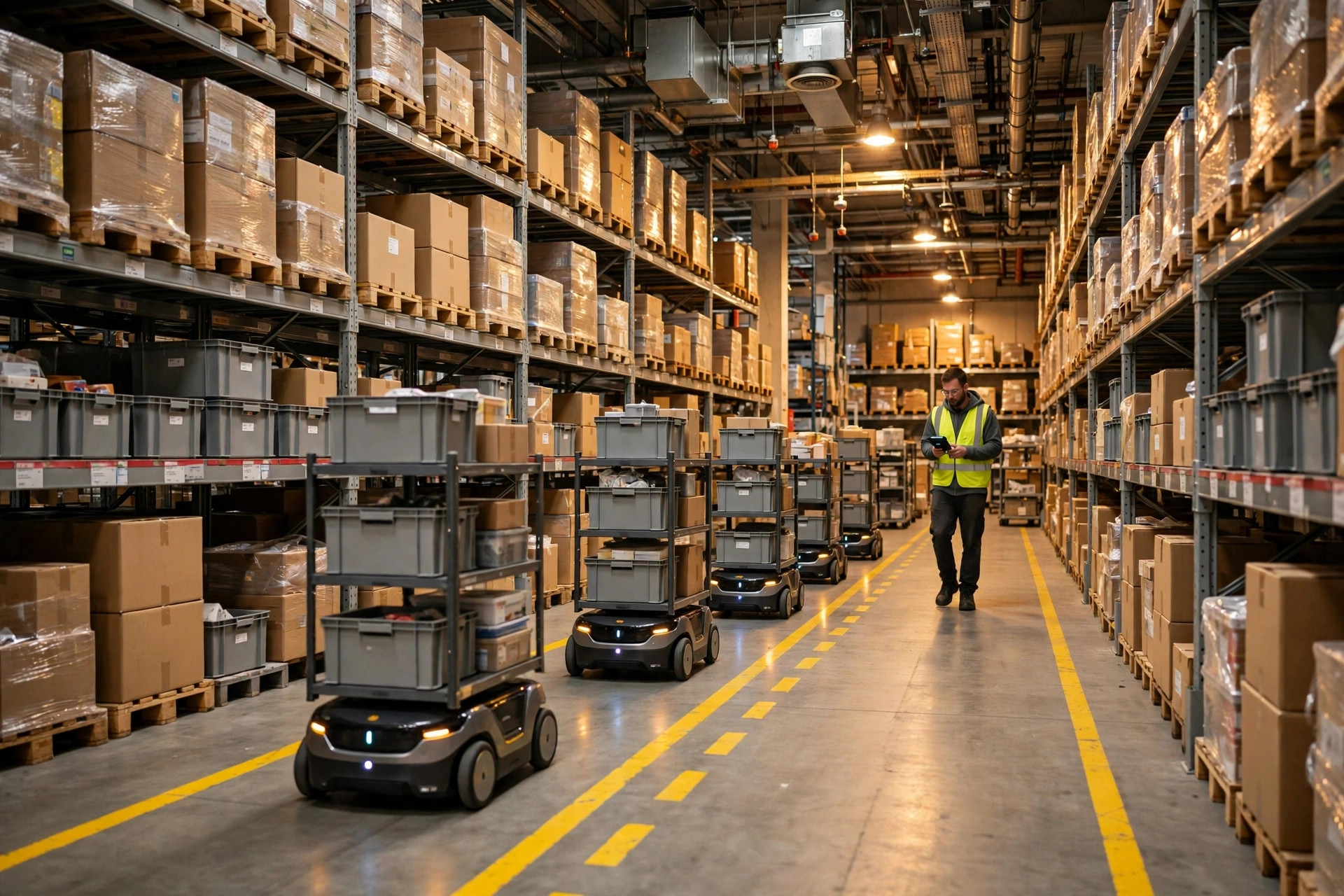
Meanwhile, AMR fleet orchestration is moving from rules engines to AI scheduling. In late 2024, that same e-commerce giant released an AI model for coordinating robot fleets, claiming roughly 10% reductions in fleet travel time — their claim, so verify it against your own numbers. My read for 2027: new AMR deployments will ship with AI scheduling as standard, with pick paths and replenishment waves planned by models in real time. The savings aren't in equipment — they're in the dozens of temp workers you don't hire at peak.
The opportunity for smaller warehouses is right here: you don't need to buy robots. By 2027, the AI dividend in picking will be sold as software to small operations — per-order pick-path optimization and wave-planning tools that bolt onto your existing WMS. Hardware is heavy capex; algorithms are light. Light spreads first.
Outbound changes show up at the pack station and in carrier selection. Vision verification will spread first: a camera scans the parcel before the box seals, matching items against the shipping label, catching mis-ships before they leave — far cheaper than paying for them in customer service later. Carrier selection gets more dynamic too, with systems recommending carriers from historical transit times and rates. My call: both spread fast in 2027 across warehouses shipping 5,000-plus orders a day, because the savings are real money in service costs and freight.
The Biggest Change May Be the Computer in the Office
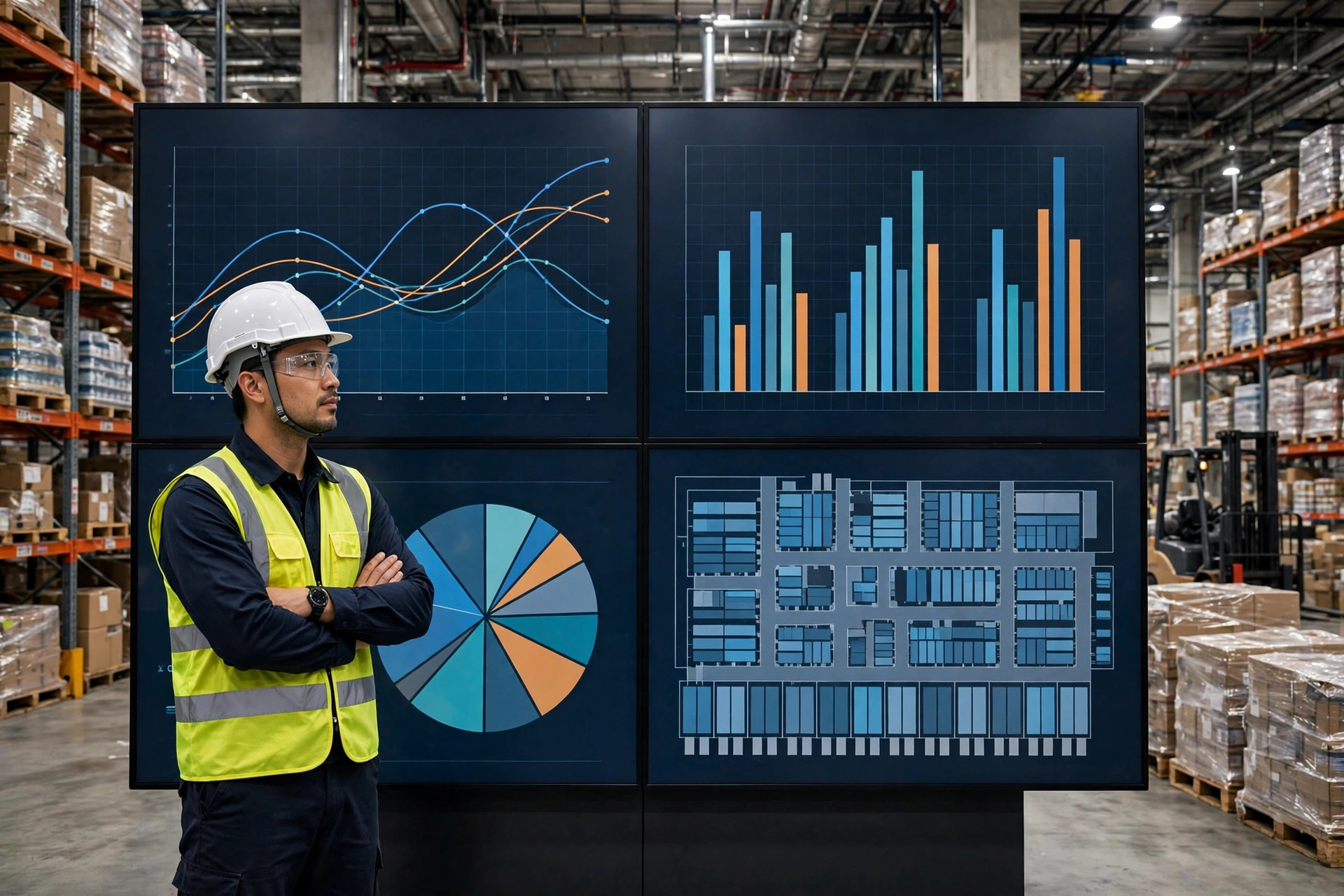
If I had to bet on one thing — the single biggest AI change in the 2027 warehouse — I'd bet on management decisions, not machines.
A warehouse manager's daily decisions — how many people to schedule tomorrow, which wave goes first, what to replenish early, which carrier keeps running late — are all "guess tomorrow from yesterday's data." In 2026 I've watched WMS vendors bake AI forecasting into standard features: two-week labor demand predictions from historical order volume, accurate enough that managers will schedule against them. Note the phrasing: "schedule against," not "blindly execute."
This is pure upside for small and mid-size warehouses. Robots cost hundreds of thousands of dollars; AI scheduling and replenishment suggestions cost a few hundred to a few thousand a month in subscription. The 2027 dividing line may look like this: big warehouses compete on system-level automation — think of the major retailer that started automating distribution centers in 2021 and expanded to all 42 regional DCs by 2024, a capex game — while small warehouses compete on decision intelligence: using AI to run a 20-person building with 30-person efficiency.
(One more aside: don't be dazzled by the AI dashboard. The dashboard is the result, not the cause. When you tour a warehouse in 2027, don't ask how pretty the screen is — ask who found the exception first: the system pushing an alert at 3 a.m., or the manager discovering it at 8 a.m. The answer tells you whether the AI is real.)
A 2027 Timeline: My Call
Let me close with a timeline for 2027.
In the first half, vision receiving and AI labor planning spread from early adopters to the mainstream — the tech is proven, so it's a sales-and-implementation race, and prices come down. In the second half, AI-scheduled AMRs and touch-sensing pick arms become standard in big operators' new builds — note "new builds," because retrofits stay slow; nobody redesigns travel paths ahead of peak season.
Humanoids, meanwhile, stay in the "pilots plus storytelling" phase through 2027. My call: they don't make it onto mainstream warehouse budgets before 2028–2029 — not because the technology fails, but because in structured environments, cheaper purpose-built equipment beats them.
Three practical takeaways. First, the 2027 AI worth buying is decision software — scheduling, forecasting, alerting — small spend, fast payback. Second, vision receiving is negotiable now, but write recognition-rate targets and exception-handling SLAs into the contract. Third, humanoids are worth watching, not worth redesigning your building for.
The 2027 warehouse won't belong to the coolest technology. It'll belong to whoever does the math best.