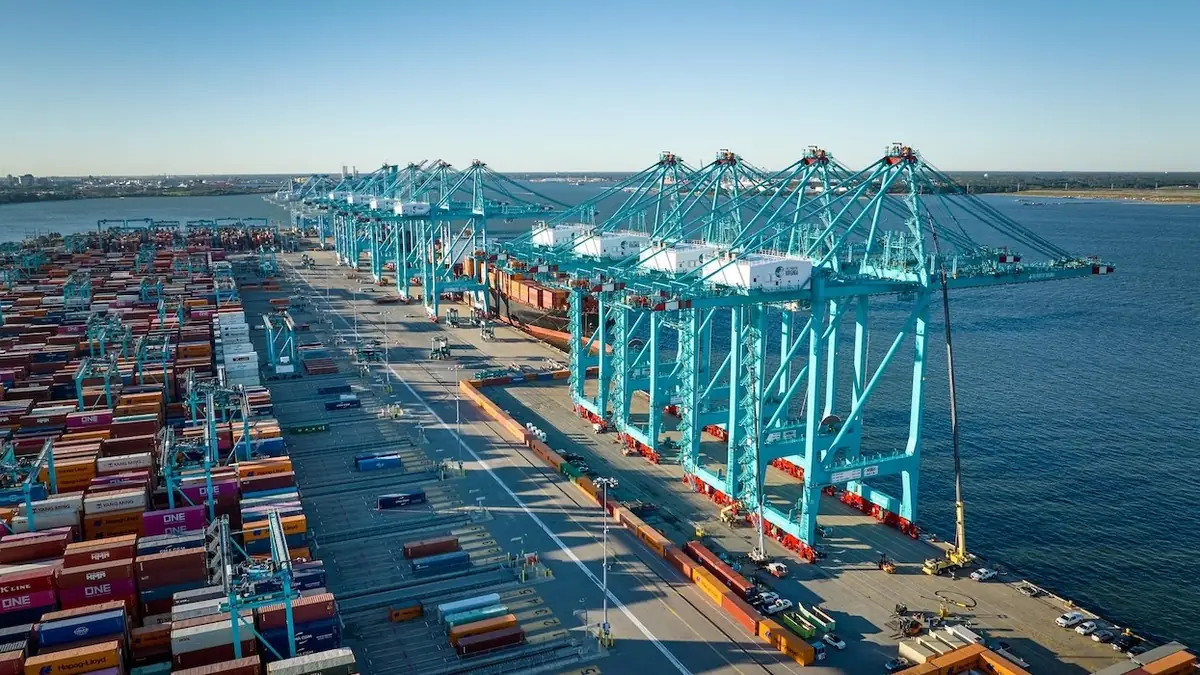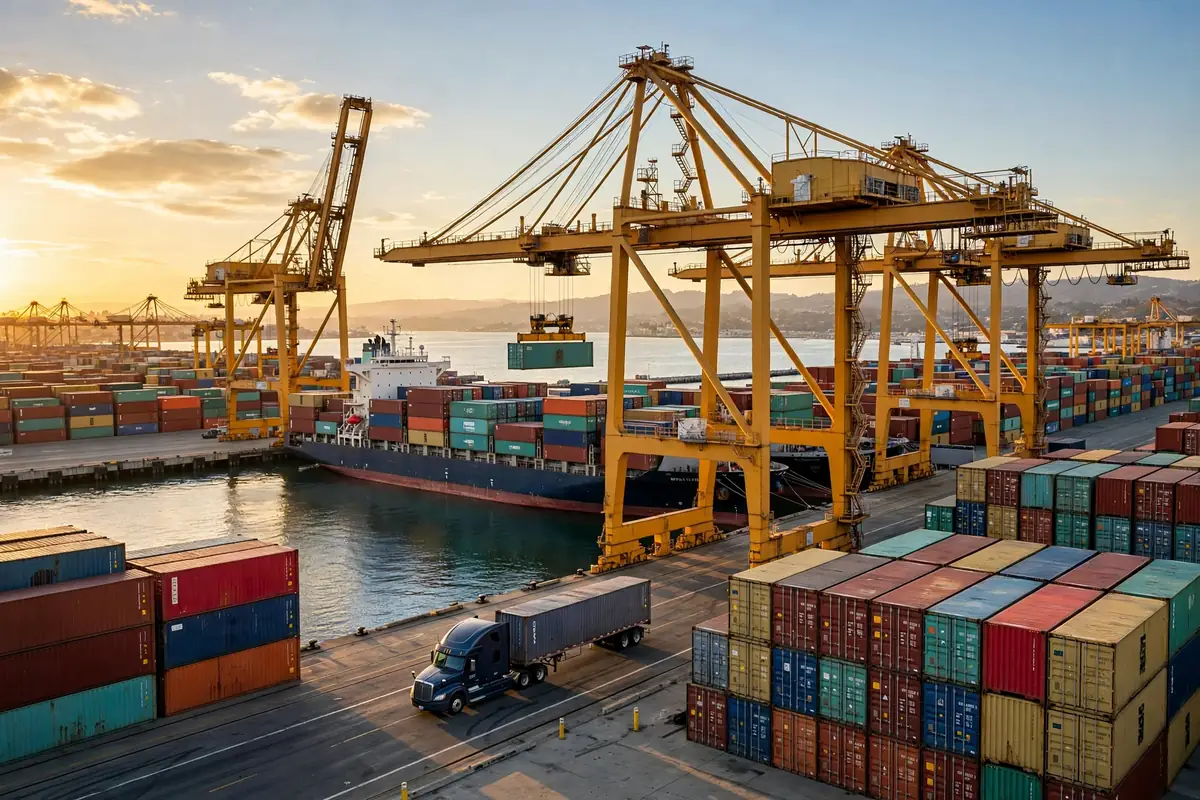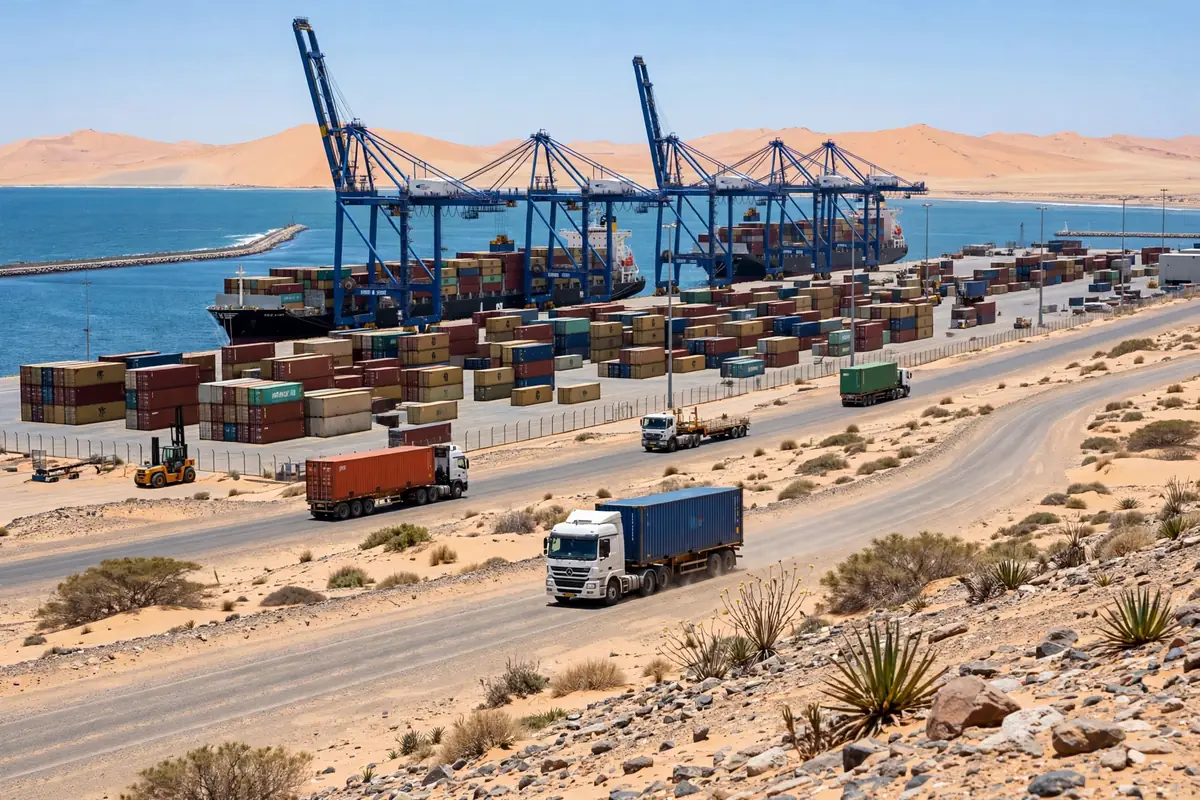
We have a client who supplies mining consumables. At the end of 2025 he routed through Walvis Bay for the first time — cargo shipped from China to Namibia, then onward to a mine site in Zambia. Before signing anything he was full of confidence. "Susan," he said, "Walvis Bay volumes have more than doubled in two years. The port must be running smoothly by now." I poured cold water on that right away: "Volume growth is the port's report card, not a guarantee that your cargo moves fast." Six months later he agreed with me. The cargo arrived — but the warehouse, the road, and the transshipment math each turned out different from what he had imagined. Today I am laying all three ledgers on the table, along with a few things only the sell side usually knows.
First, the baseline numbers. Walvis Bay handled 365,000 TEU in fiscal year 2025/26, up about 113% in two years, and the port's annual handling capacity is over 8 million tonnes. Impressive figures, right? But the most common mistake shippers make is treating port growth as their own smooth sailing. When container volumes double, it means everyone is crowding into the same place — busy berths, tight yards, trucks queuing. That is what your cargo actually faces every day. In February 2026, Sarens opened a new logistics centre of more than 4 hectares near the port area, which is good news for project cargo and heavy equipment — but for an ordinary container shipper, none of the queues disappear.
The Walvis Bay Road: A 2,500-Kilometre Corridor Carried Entirely by Truck
Walvis Bay's real value is not the port itself; it is the road behind it. The Trans-Caprivi Corridor runs about 2,500 kilometres, crossing the Katima Mulilo Bridge to connect Zambia, southern DRC, and Zimbabwe — one of the shortest routes from those inland mining regions to the sea. It sounds beautiful until you read the next sentence: Namibia currently has no railway to Zambia, the DRC, or Botswana, so corridor cargo moves mainly by road.
What does "no railway" actually mean? My mining-consumables client can tell you. Once his cargo landed, it had to be loaded onto trucks for a journey of roughly 2,500 kilometres to a Zambian mine site. Road transport carries far more variables than rail: drivers, fuel prices, border queues, rainy-season road conditions — any one of them slips and the delivery date slips with it. Worse, return loads are unreliable, so when trucks run empty on the way back, the one-way rate gets pushed up, and that cost lands in your landed cost. So when you negotiate a transshipment transport contract, do not just ask "how much per container." Ask how return loads are matched, who pays for empty running, and who bears the cost of border delays. On a sell-side quotation, those three lines are often worth more than the freight rate itself.
Here is the contrarian point: most people assume that booming port throughput means the lane has matured. The opposite is often true — the faster volumes grow, the more likely the supporting infrastructure lags behind. Berths, yards, trucking, border posts: if any one of them expands half a step late, congestion lands on your cargo. Walvis Bay's volumes more than doubled in two years, which means its supporting capacity is catching up, not leading. When you plan, budget for peak-season congestion as the default, not for the port's glossy statistics.
The Walvis Bay Warehouse and Transshipment Bill: Three Hidden Charges in the Contract
Now the warehouse. My client's second lesson came when he rented storage near the port. An agent assured him the site was "close to the terminal, easy pickup," and he nearly signed a three-year deal. I told him to ask three questions first, and after asking them he cooled right down: first, does the storage fee include demurrage for overstaying containers? Second, who handles the customs and transit paperwork for transshipment cargo, and who pays if something goes wrong? Third, when the yard is full in peak season, does my cargo get priority pickup?
Behind those three questions sit the three most common fuzzy charges in transshipment warehousing. The first is storage fees: the vessel arrives, the truck is not booked yet, the cargo sits in the yard a few extra days, and the charges roll daily until they dwarf the freight bill. The second is transshipment paperwork: Walvis Bay cargo often transits onward to inland countries, and documentation, bonded handling, and inspections add a whole extra layer — any snag there means storage keeps ticking while the schedule slips. The third is peak-season priority: if it is not in the contract, your cargo queues behind everyone else's. The sell-side rule of thumb is simple — big clients on long-term contracts get picked up first, and spot shippers wait their turn.
I once ran a comparison for this client, Walvis Bay against the route he used to take:
| Item | Walvis Bay transshipment route | The old route |
|---|---|---|
| Getting to port | More sailings as volumes grow | Fewer sailings, less choice |
| Inland leg | About 2,500 km corridor, all by road, many variables | Possibly longer, but rail sections steadier |
| Warehousing and storage | New logistics centre nearby, but yards tight in peak season | Mature warehousing, but farther from the mines |
| Total cost feel | Cheap ocean leg, but road and storage easily overrun | Pricier ocean leg, but the total bill is predictable |
See the pattern? Walvis Bay wins on the ocean leg and on proximity to the mines, and loses on an all-road inland leg and on unpredictable total cost. When you budget, do not mistake the ocean quote for the total cost — road, storage, transshipment paperwork, and a delay reserve added together are the real bill. In 3PL sales, the quotations we fear most are the ones where the client only stares at the ocean rate. Eight out of ten clients who sign smiling and argue at settlement time got caught exactly there.
One more insider note: port handling capacity of over 8 million tonnes a year is the port's number, not yours. Whether your cargo moves smoothly depends on whether your shipping line, your trucking company, and your warehouse can align their schedules. A sell-side rep's favorite line is "our port has strong capacity" — the unspoken part is "don't blame me if your cargo gets stuck." Before signing, get all three parties' schedules aligned and written into an annex: who is responsible when things jam, and how much they pay.
Next Time You Negotiate, Ask These Three Questions
After six months on the lane, my mining-consumables client summed it up himself: "The Walvis Bay route is not bad — it just cannot be negotiated the old way." I could not agree more. So here are the three questions, boiled down. Next time you negotiate a contract, ask these three:
First: "How are storage overstay charges calculated, how many free days do I get, and at what rate do they roll after that?" Do not let storage fees jump out at you at month-end. Second: "Who handles the transshipment documents and inspections, and who bears the storage and truck-waiting costs when there is a delay?" Transshipment cargo carries twice the paperwork of direct cargo, and unclear responsibility is where disputes begin. Third: "Does my cargo get priority pickup and priority loading in peak season, and in which clause is that written?" A spot shipment without priority is just one more member of the peak-season queue.
Walvis Bay's volumes are still climbing, and Trans-Caprivi Corridor cargo will keep growing. For those of us on the sell side, that is good business; for shippers, it is a good opportunity — but only if the contract is negotiated properly and the math is done honestly. The port's report card belongs to the port. Whether your cargo reaches the mine site on time and on budget depends on whether you asked the right questions when you negotiated. Dear client, before the next shipment leaves, ask those three questions out loud.
By Susan, 3PL Sales Director