Voice picking vs barcode scanning accuracy is not a number you can read off a spec sheet. On paper both look clean: near-perfect recognition in a quiet room, a barcode that scans every time. A real warehouse is not a quiet room. Forklift reverse alarms, conveyor roar, cold-storage fans, and the picker in the next aisle calling out check digits all pile into the same air. Accuracy has to be judged in that noise, not in the demo.
How Voice Picking and Barcode Scanning Fail in Different Places
The two methods work on different principles, so they break in different places. Think of it this way: one navigates by ear, the other by matching a code with your eyes.
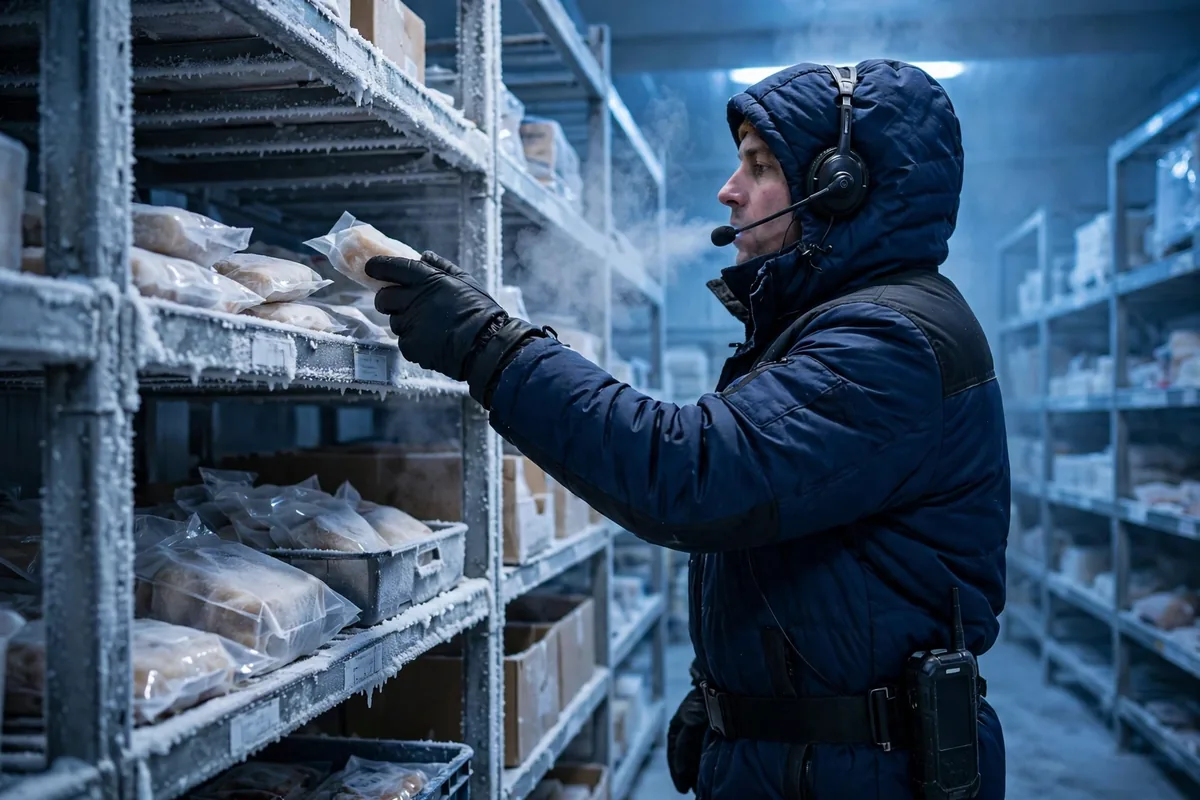
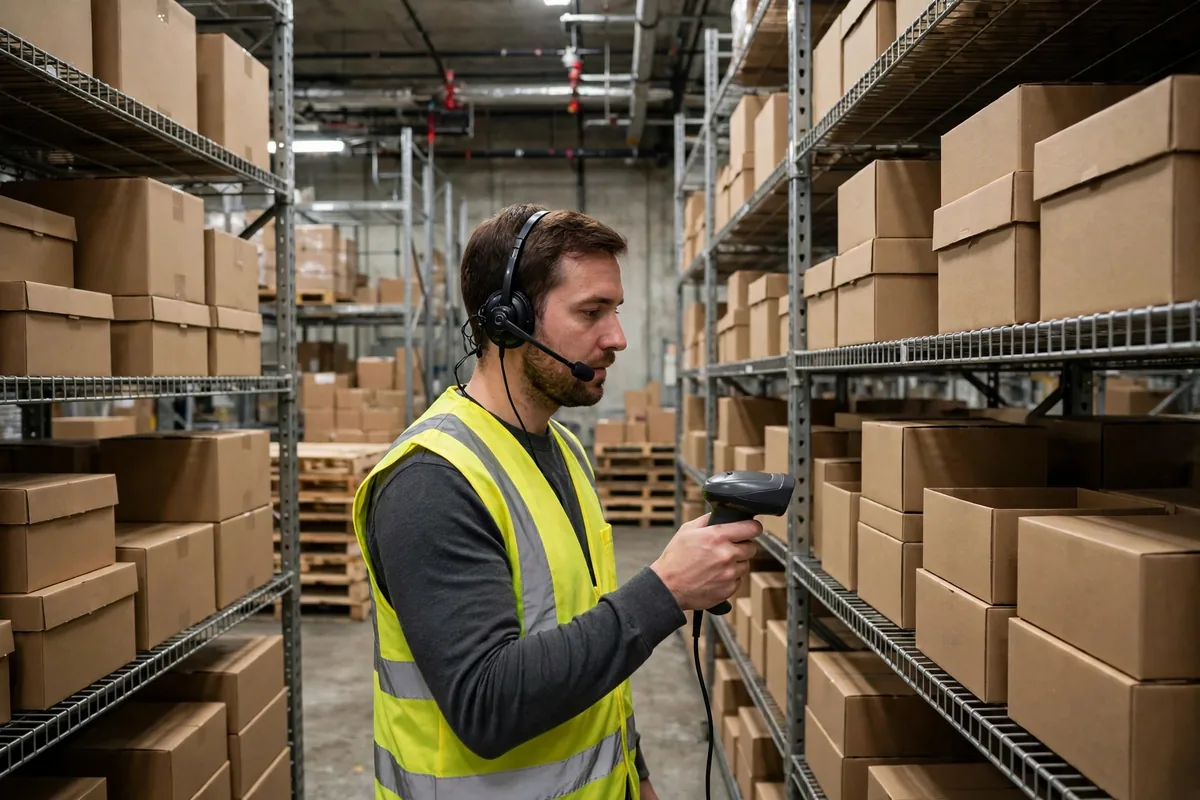
In voice picking, the system speaks a location and a quantity, the picker walks there, takes the goods, and reads back a check code of two or three digits. The system only moves on when it recognises that code. Errors gather at two ends of that exchange: the system mishears the picker, or the picker mishears the system. The check code is there to catch the slip, and it usually does. What it cannot catch is a mistake made one step earlier, when the wrong quantity was heard and then confirmed with a correct code.
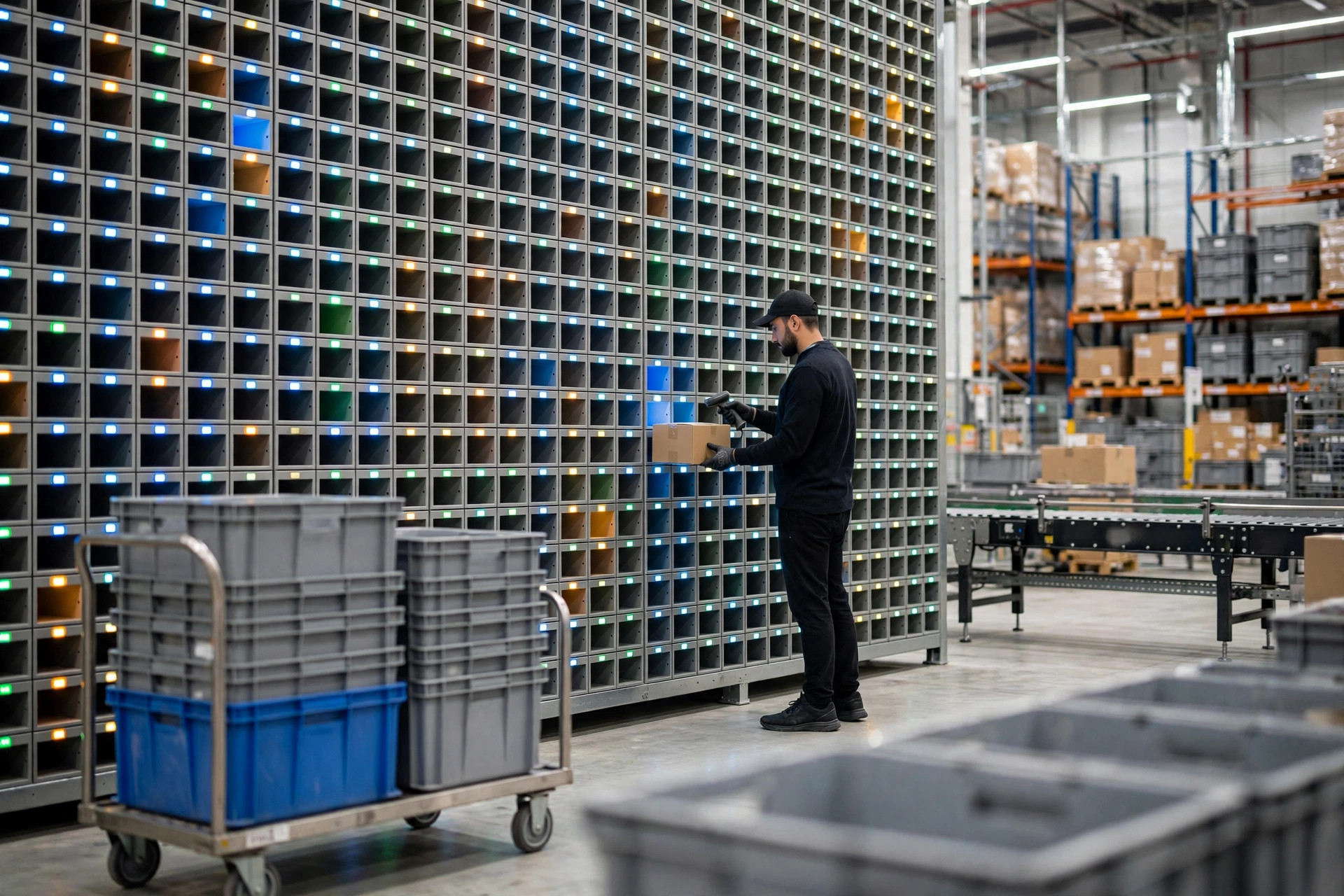
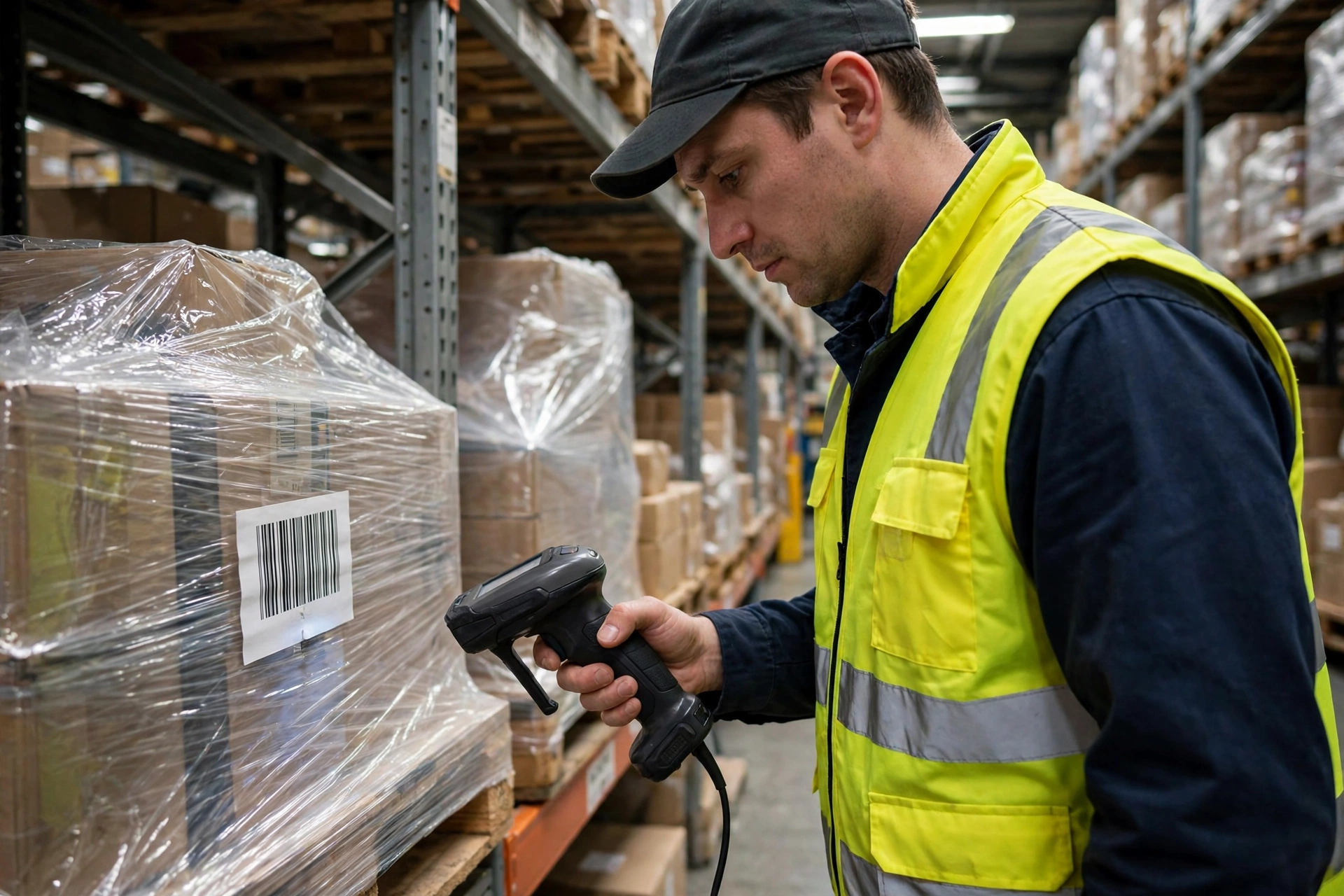
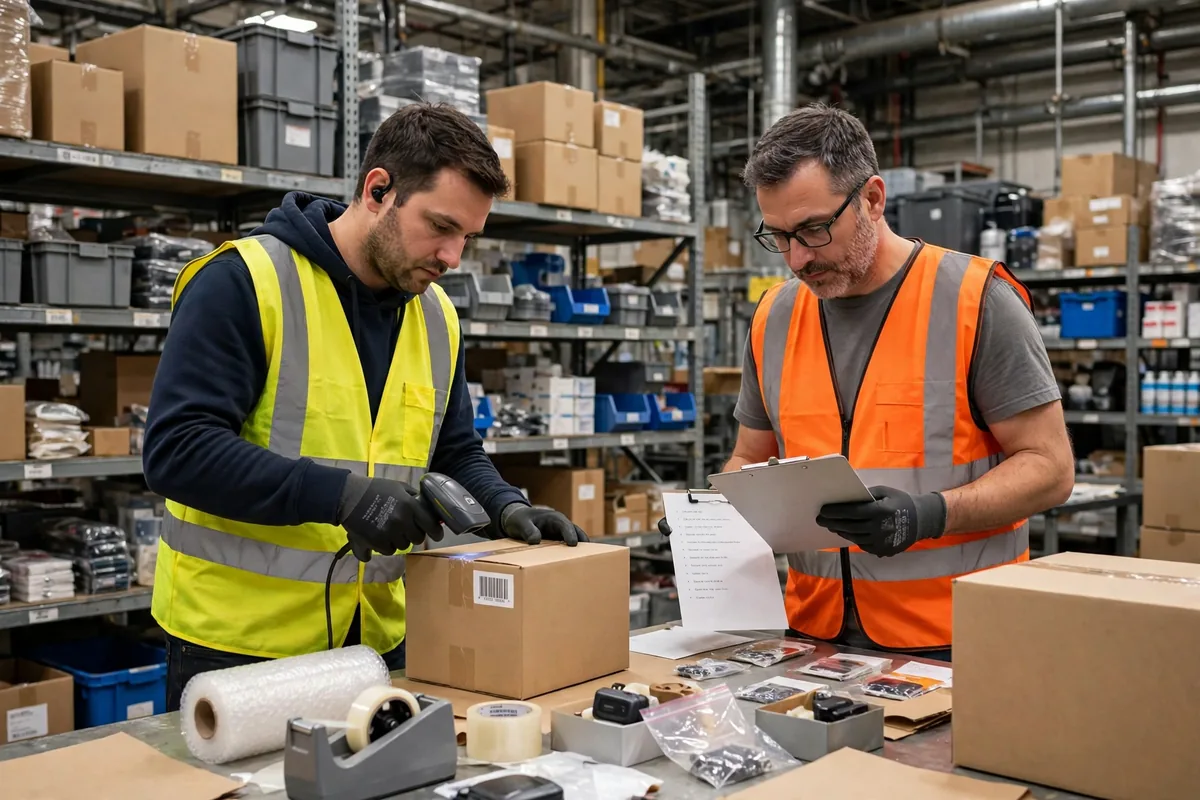
In barcode scanning, the picker scans the location code, then scans the product barcode, and the WMS only clears the line when both match. Errors gather in the label and in the hand. A barcode can be scuffed, stuck on crooked, or washed out by glare. Two lookalike products can sit side by side, and a picker grabbing the wrong one by habit will get stopped by the scan. The scanner itself rarely misreads a code. It is far more likely that a person picks up the wrong item than that a scanner reads the right item wrong.
Voice puts its whole verification on one spoken confirmation. Barcode spreads verification across every item touched. That is the structural difference, and it decides what happens when the warehouse gets loud.
Voice Picking vs Barcode Scanning Accuracy When the Noise Rises
In November 2024, a third-party cold-chain warehouse in eastern China switched on voice picking. The site covered about 20,000 square metres, split between ambient and chilled zones, running roughly 8,000 pick lines a day. The numbers below come from that project alone. They are a single case, not an industry average.
In the quiet ambient zone, the crew made about 2 to 3 errors per 1,000 lines, with first-pass voice recognition around 97 percent. Near the cold-store doors, where fan noise ran at 85 to 90 decibels, the same crew on the same system made 9 to 12 errors per 1,000 lines, and first-pass recognition fell to about 91 percent. Pickers started raising their voices to be understood, and by the end of a shift half the team was hoarse. Hoarse voices recognised worse the next day, so the problem fed on itself.
The counterintuitive part is that the decibel level was not the real killer. Steady fan noise is something a recognition engine can learn to filter out. Human voices are the problem. A neighbouring picker calling out digits sits in the same frequency band as your own check code, and it bleeds straight into the recognition. The worst spot in that warehouse was the cold-store doorway, where two teams worked back to back and their check codes crossed in the air. We tried noise-cancelling headsets. They cut the fan hum and left the crosstalk untouched. A headset can block background noise. It cannot block the person standing next to you saying numbers.
There is a hidden cost on top of the errors. A failed recognition asks for a repeat, and after two failed repeats the line goes to a manual recheck. Each repeat looks like a few seconds. At peak outbound, the recheck station grows a queue, and the whole line loses its rhythm. When accuracy falls, speed falls with it. Voice loses on both counts at once.
Barcode Scanning Looks Slower Until You Count the Rework
In March 2025, an e-commerce warehouse in Guangdong ran a promotion at about 12,000 orders a day, with conveyors, packing machines, and forklifts all running at once. The noise was no kinder than in the cold-chain site. This project used barcode scanning. Every line took one or two extra scans, roughly 3 to 4 seconds slower per line than voice. Measured on a stopwatch, barcode lost. Measured on errors, it came in at about 1 to 2 per 1,000 lines, with no visible difference between peak hours and quiet hours. Noise does not change a barcode.
The math settles the argument. Take a warehouse picking 5,000 lines a day. Voice in a noisy zone at 10 errors per 1,000 lines against barcode at 2 per 1,000 leaves 40 extra errors a day. Correcting one wrong pick in that project, from spotting it to finding the stock, swapping it, and rechecking, took about 15 minutes of labour on average. Forty errors is 10 hours, roughly one and a half people spending the whole day fixing mistakes. Over a month, that is a full-time role spent on rework. That is before returns and customer complaints, which widen the gap further.
| Dimension | Voice picking | Barcode scanning | | Accuracy in noise | Falls with noise and crosstalk; this case ran 9 to 12 errors per 1,000 lines | Barely touched by noise; this case ran 1 to 2 errors per 1,000 lines | | Speed per line | Faster once recognition passes first time | Slower by about 3 to 4 seconds per line from extra scans | | Where errors come from | Mishearing, crosstalk, wrong check-code readback | Wrong item grabbed, damaged barcode, bad label placement | | Demands on people | Needs consistent pronunciation; new hires run lower recognition for weeks | Almost no pronunciation demand; a new hire is productive on day one | | Equipment cost | Headsets, voice terminals, server licences; higher cost per worker by an order of magnitude | Scanners plus handheld terminals; far lower cost per worker |
Voice is not unusable. Its speed depends on recognition passing the first time. Once the first-pass rate drops, rework and rechecks eat every second it saved. Barcode slowness is visible on the surface. Voice slowness hides inside the rework.
Where to Draw the Line, and the Maintenance Traps
The line can be drawn in concrete terms. Under 3,000 lines a day, under 2,000 SKUs, physically separated zones, and a stable crew with consistent pronunciation, voice can use its speed advantage. Flip those conditions, with high daily volume, many lookalike items, aisles packed tight enough that teams hear each other, and fast staff turnover, and barcode is the safer choice. Turnover is the factor most buyers forget to price in. A voice system builds a model per worker, and a new hire's recognition runs low for the first two weeks. During that window the error rate goes up, not down.
Maintenance splits the same way. Voice breaks at the headset and the battery. Cables in a warehouse typically need replacing every two or three months, batteries fade and leave terminals dead at shift change, and voice models need retraining when a batch of new hires arrives. Skip the retraining and recognition quietly slides downhill until a batch of errors gives it away. Barcode breaks at print quality. A supplier barcode printed faint or stuck on crooked will not scan no matter how good the gun is. Label placement has to be consistent, or pickers waste time hunting for the code on every carton. A scanner lens worn cloudy shortens the read distance, and workers start leaning in to compensate, which changes their posture and slows the line.
Whether the money is worth it comes down to one number: the cost of correction per thousand lines. Fold in correction labour, recheck station time, and returns from wrong shipments, and work it out separately for voice and for barcode. Whichever number is smaller fits your warehouse. There is no need to argue over voice picking vs barcode scanning accuracy on a spec sheet. The correction cost will choose for you.
By Da Liu, Automation Engineer