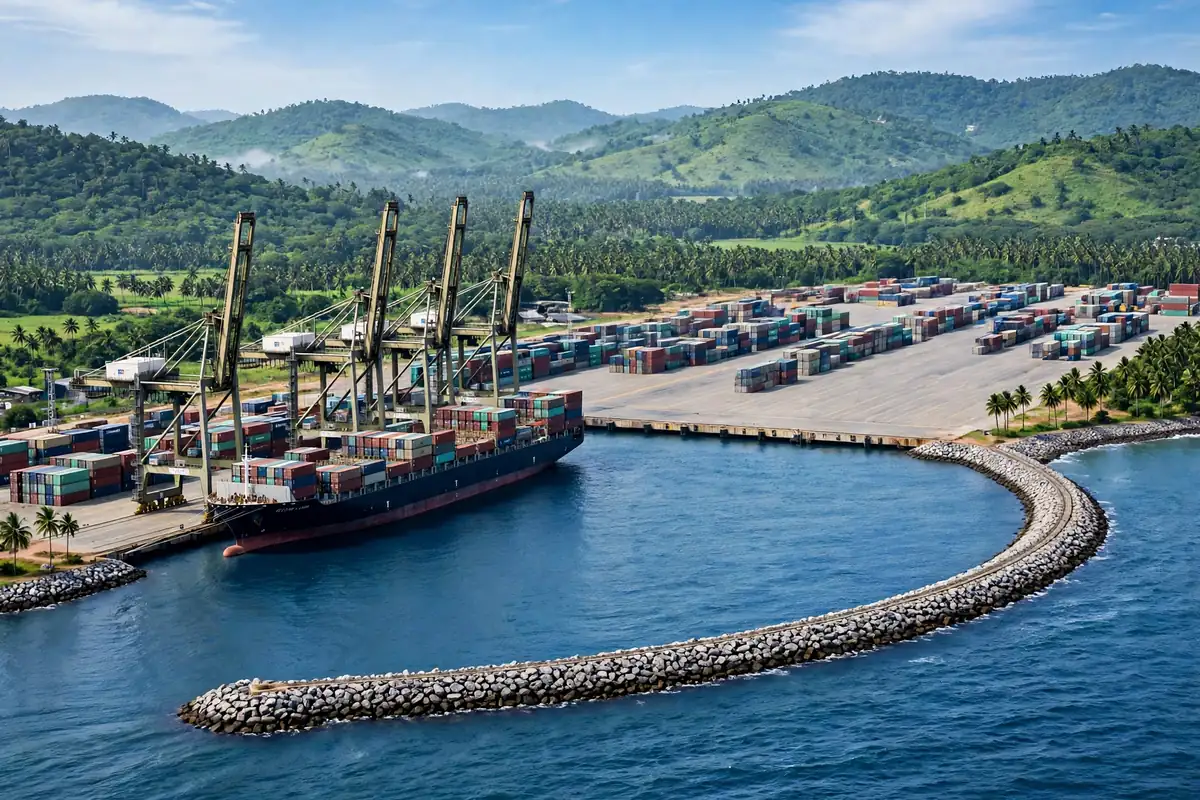
Let me be honest with you up front: a small warehouse like mine cannot afford to burn money on this. Vizhinjam port is a brand-new deep-water mega port — phase one capacity of 1 million TEU, phase two adding another 4.1 million TEU on an investment of about 16,059 billion rupees, finishing in 2028. That is not a game for a 3,000-square-meter warehouse owner. But that does not mean it has nothing to do with us. Quite the opposite: the more a port looks like "great port, empty warehouse map," the more worth thinking about how a small warehouse survives there. Big ports eat the meat. Can a small warehouse get a sip of the soup? My answer is yes — but the soup is not inside the port. It is outside it.
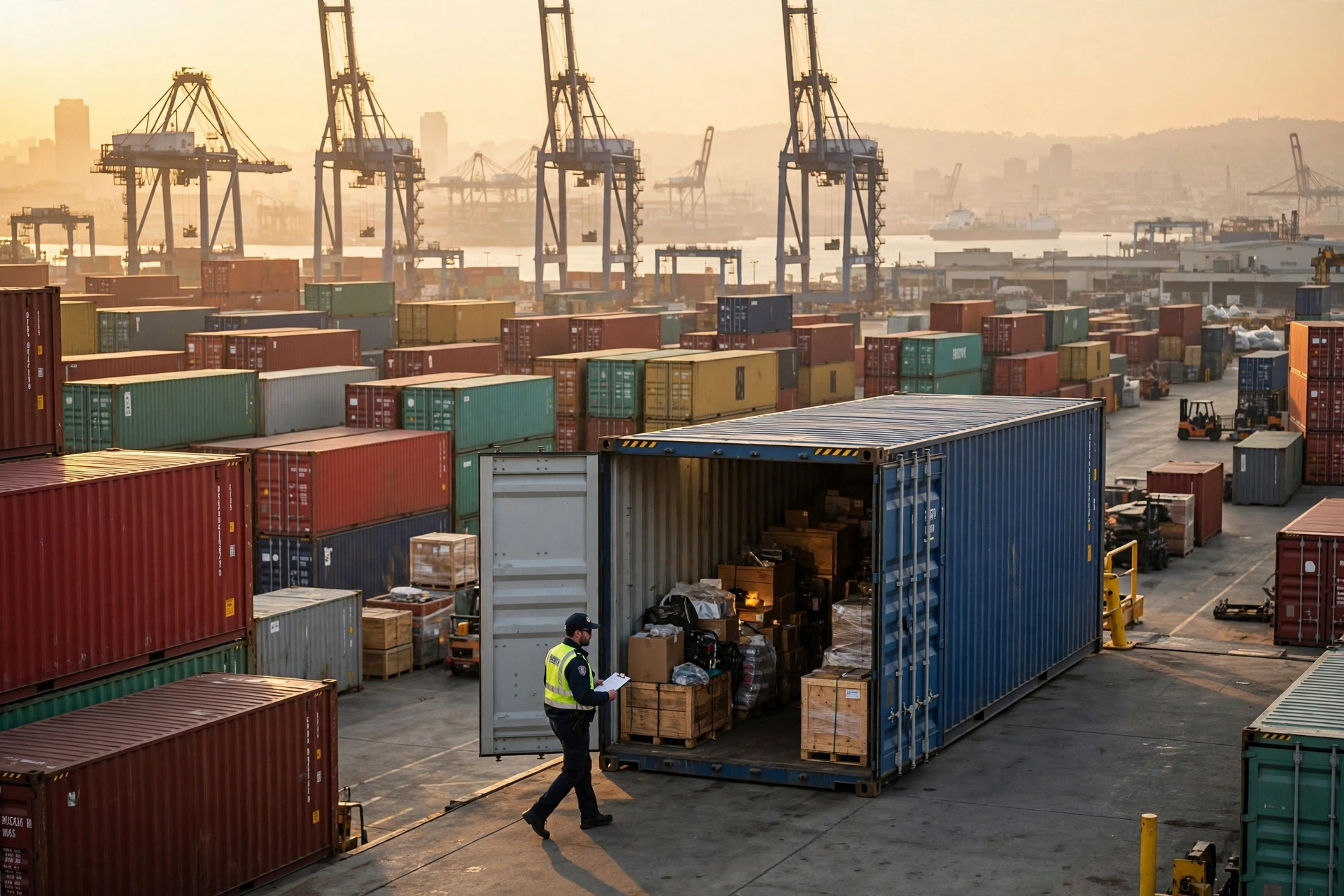
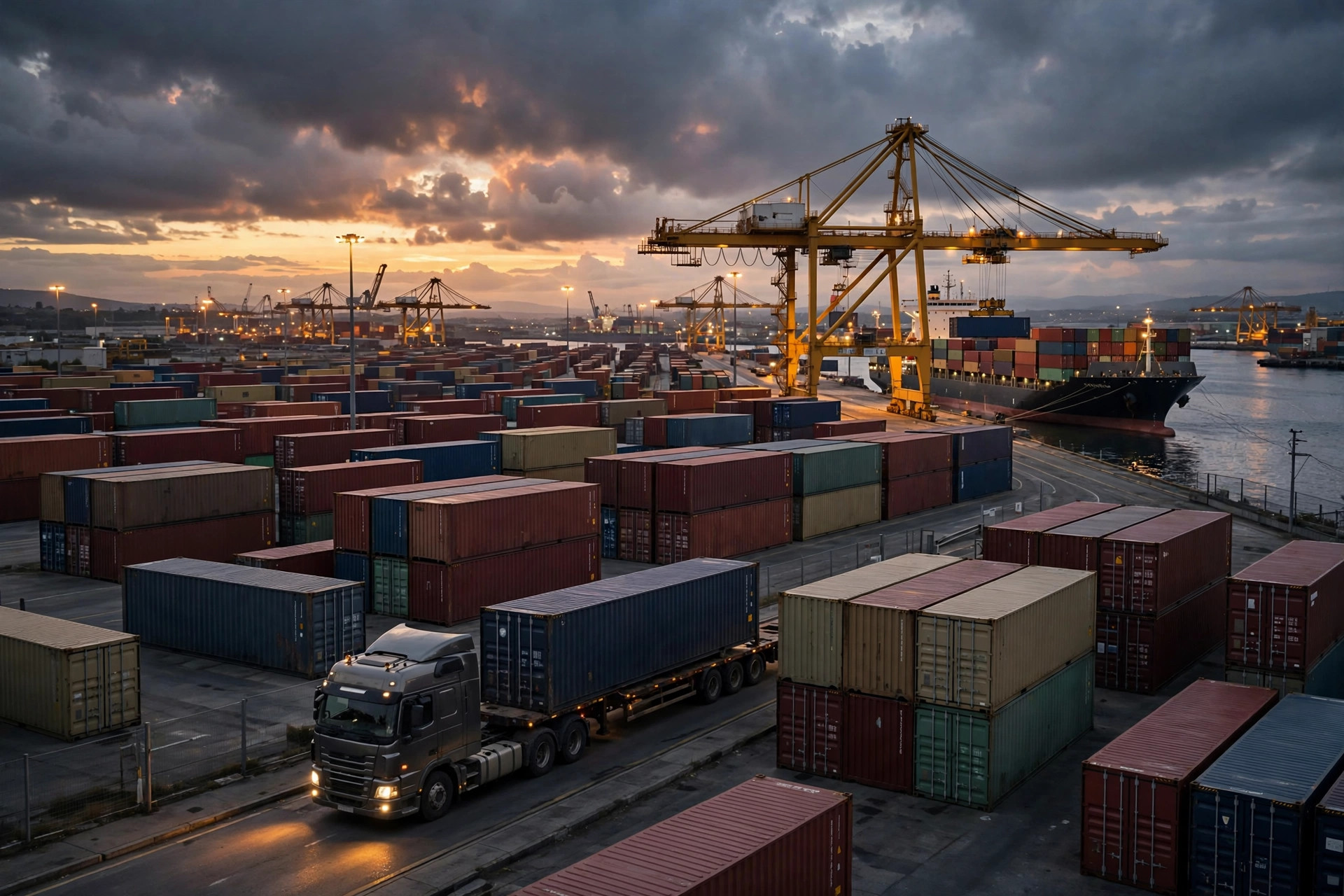
Vizhinjam port's resume is honestly a bit intimidating. Commercial operations began in December 2024. In fiscal year 2025-26 (April 2025 to March 2026) it handled 1.296 million TEU across 607 vessel calls, becoming the fastest Indian port ever to pass 1 million TEU — it got there in August 2025. First year in total: 615 vessel calls, 1.32 million TEU, and 41 ultra-large container vessels over 399 meters. Natural water depth of about 20 to 24 meters, just 10 nautical miles from the East-West main shipping route. Prime Minister Modi came to inaugurate it on 2 May 2025. December 2025 set a monthly record of 121,000 TEU, and cumulative volume passed 2 million TEU within 18 months of opening. On 31 October 2026, the port received its very first import box.
At this point you are probably thinking: with a port this strong, surely warehousing is easy money. Here is the catch — local gateway cargo is only about 150,000 TEU. Out of 1.32 million boxes, more than a million are transshipment: ships come, ships go, boxes never land. The industries around the port have not caught up yet, so cargo has no reason to stop locally. That is the warehouse angle of this whole story: where exactly does a transshipment port's warehouse live?
The Vizhinjam port warehouse hides in three unglamorous places
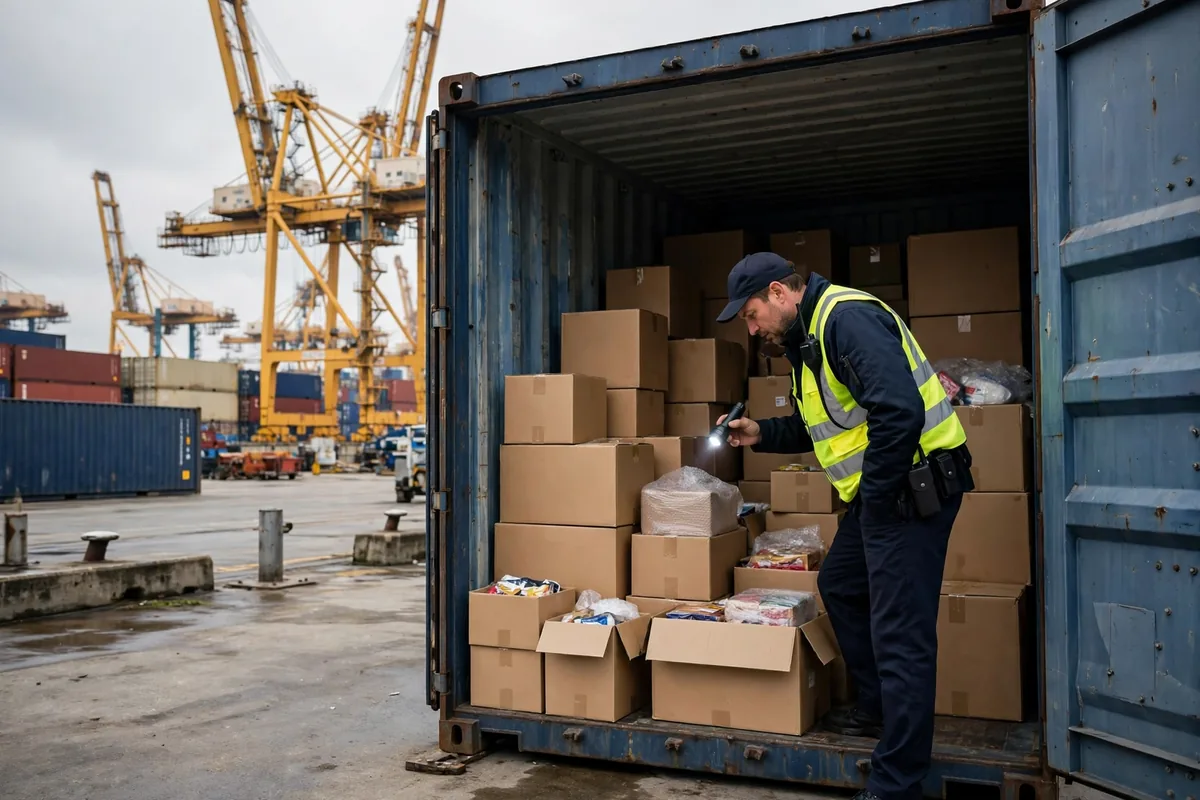
First, the empty container yard. The most solid warehousing business at a transshipment port is often not a warehouse at all — it is a yard. Shipping lines need to reposition, repair, and wash empty containers here, and a yard plus a simple repair shed is enough to open for business. Mediterranean Shipping Company (MSC) has carried all of the port's cargo so far and has bought a 49% stake in the terminal. One line dominating means empty-box repositioning volumes are stable and payment terms are stable — your biggest yard customer is already at the table. A small operator should not start by dreaming of a high-spec warehouse. Ask first: can I eat the yard business? Cheap land, light investment, payment depending on one shipping line's mood — but with only one line in town, you do not hold many cards at the negotiating table. That is the trade-off, and you have to own it.
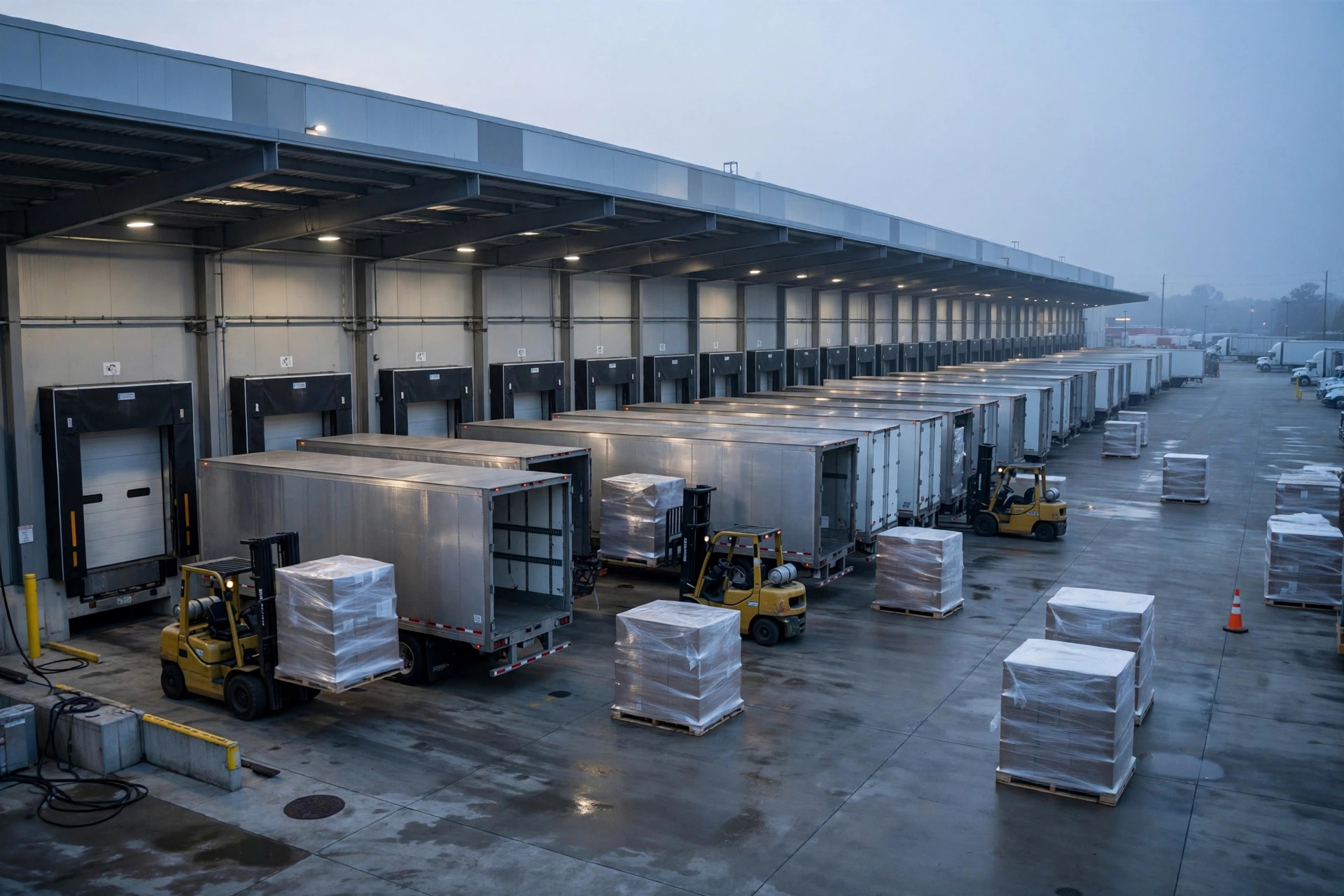
Second, deconsolidation and bonded warehousing. Transshipment cargo does not land, but a slice of it always needs to be opened up locally, reconsolidated, and sent onward, or parked in a bonded warehouse waiting for the next vessel. This work is small in volume, high in value per shipment, and demanding in execution. A 3,000-square-meter shed with a few experienced hands, eating exactly this kind of "small but precise" ticket, is more flexible than a big warehouse. Our advantage as small operators was never scale — it is how fast we turn. Here is a worked example, clearly labelled as a hypothetical scenario: a 3,000-square-meter deconsolidation shed handling, say, 400 boxes a month with an average dwell of four days — whether revenue covers rent and labor comes down to turnover rate, not floor area. Every number in that example is hypothetical; a real project must be recalculated with live local quotes. But the method is right: in a transshipment port, a small warehouse earns on turns, not on hoarding.
Third, the "wait for industry to grow" part. Local gateway cargo of only about 150,000 TEU means the factories, processing zones, and e-commerce warehouses around the port are still mostly missing. For anyone thinking of setting up warehousing, that cuts both ways. The bad news: there is no ready-made local cargo today. The good news: whoever arrives first gets to pick locations and negotiate terms. Once the industrial base actually grows, warehouse rents and land prices will not be what they are today. Of course, "waiting" is the most expensive word in this business — renting land three years early while you wait for industry to arrive will bleed you dry on rent alone. So the small-warehouse way is: start with light-asset work that follows the ships — empty yards and deconsolidation — keep yourself alive, and expand only when local industry shows up. Do not bet heavy assets on day one.
The rail and road links have not caught up — that is a real pit
One more thing about Vizhinjam, and I have to say it up front: the rail and road connections have not caught up. The port itself is world-class — depth, shipping lane, cranes, all fine — but getting cargo from the quayside into India's interior still depends on land links that are being built. What does that mean? It means the port's role today is basically pure transshipment: cargo comes off one ship and onto another, barely touching land. If you build a big warehouse beside the port now and wait for inland cargo, you are waiting on air.
My rough-and-ready rule for judging a new port: do not look at the terminal first. Look at two things. One, has a shipping line put real money in? MSC carrying all the cargo and taking a 49% stake is real money — those ships are not leaving lightly. Two, is there a firm timetable for the land links? Until the links open, warehouse business only does "ship business" — empties, deconsolidation, bonded — not "land business" like inland distribution and regional warehousing. When the links open, then talk about distribution warehousing. Mix those two up and your money lands in the time gap.
Here is the counter-intuitive call: most people think a brand-new port is the biggest opportunity, because "everything is waiting to be built." I think the opposite — for a small warehouse owner, the biggest opportunity at a new transshipment port is not in the first two years after opening, it is after year three. The first two years are the shipping lines' honeymoon: volumes look great but it is all transshipment, and the warehousing work is thin and light. After three years, local gateway cargo starts to grow, the land links connect, and warehousing finally has something worth storing. First-year volume of 1.32 million TEU sounds impressive, but remember: of that 1.32 million, the cargo that can actually enter a warehouse starts with the roughly 150,000 TEU of local cargo, plus the odd lots of deconsolidation and empties. The other million-plus has nothing to do with you.
Three honest words for anyone thinking of setting up near Vizhinjam port
First, do not be fooled by total box volume. Two million TEU in 18 months, a monthly record of 121,000 TEU — those are the ships' achievements, not the warehouse's. Your customer list can only name three groups: the shipping line's empties and repairs, forwarders' deconsolidation, and cargo waiting to enter bonded storage. If you cannot name specific customers, do not sign a lease.
Second, enter light. Yards, simple sheds, deconsolidation operating areas — work that is cheap to start and easy to exit — go first. High-spec warehouses and automation equipment wait until local cargo volumes and the land links are clear. A small warehouse like mine cannot afford to burn that money, and whoever can afford it is not a small warehouse.
Third, watch two things: when shipping lines other than MSC start calling — one dominant line is good for yard business and bad for your bargaining power — and when the rail and road links open, because that is when the distribution-warehouse window actually opens. Watching those two beats refreshing port volume numbers every day.
Vizhinjam is a good port. Depth, location, shipping-line backing — it has all of it. But a good port does not equal good warehouse business. A transshipment port's warehouse always grows out of the answer to one question: why does cargo stop here? Today's answer is empties, deconsolidation, and bonded storage. Tomorrow's answer might be local industry and inland distribution. Eat today's answer first, survive, and then you earn the right to wait for tomorrow.
By Xiao Ma, Small Warehouse Owner