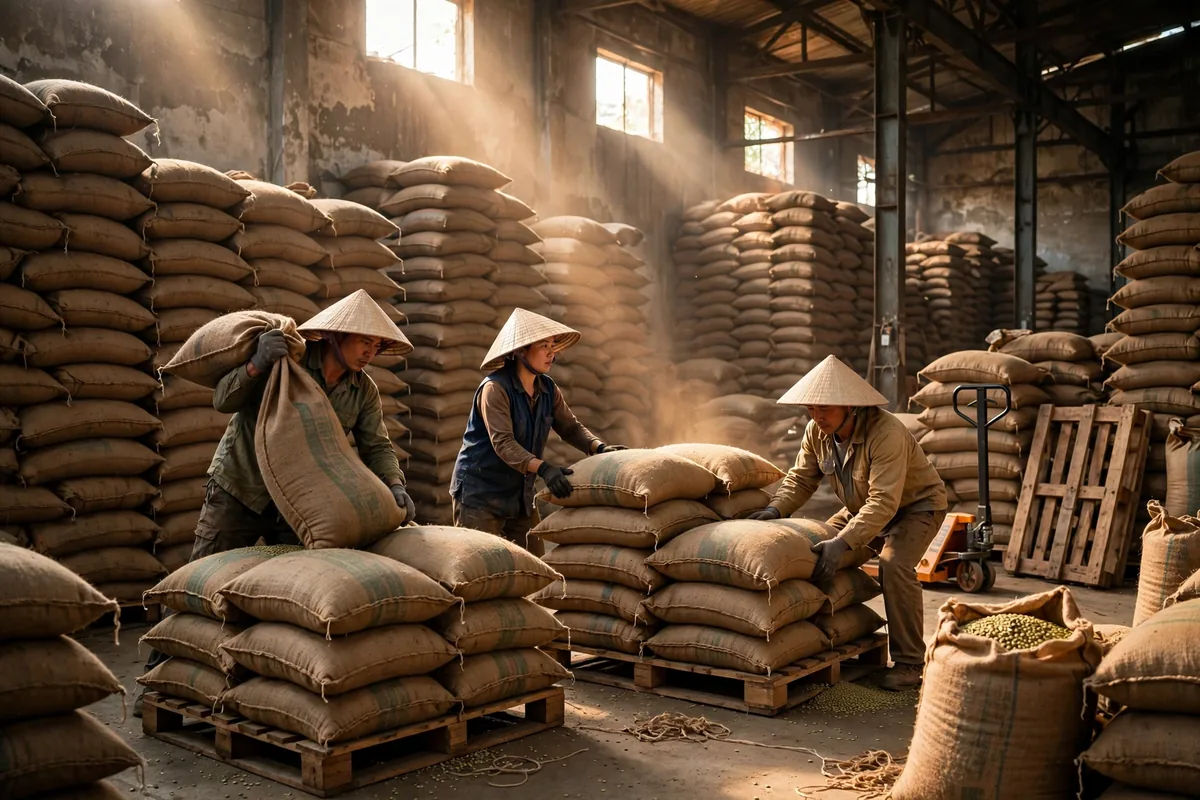
We have a client who exports Vietnamese coffee, and his first container taught him the lesson most exporters learn the hard way. He bought good beans in Dak Lak, trucked them to Ho Chi Minh Port, and loaded a container bound for Europe. The coffee was fine. The warehouse work was not: moisture crept in during storage, and the buyer at destination knocked money off for quality. A vietnam coffee export warehouse plan has to cover moisture, consolidation, and timing, not just freight. In this trade, beans rarely lose you money. Warehouses and containers do.
Vietnam coffee and the moisture bill
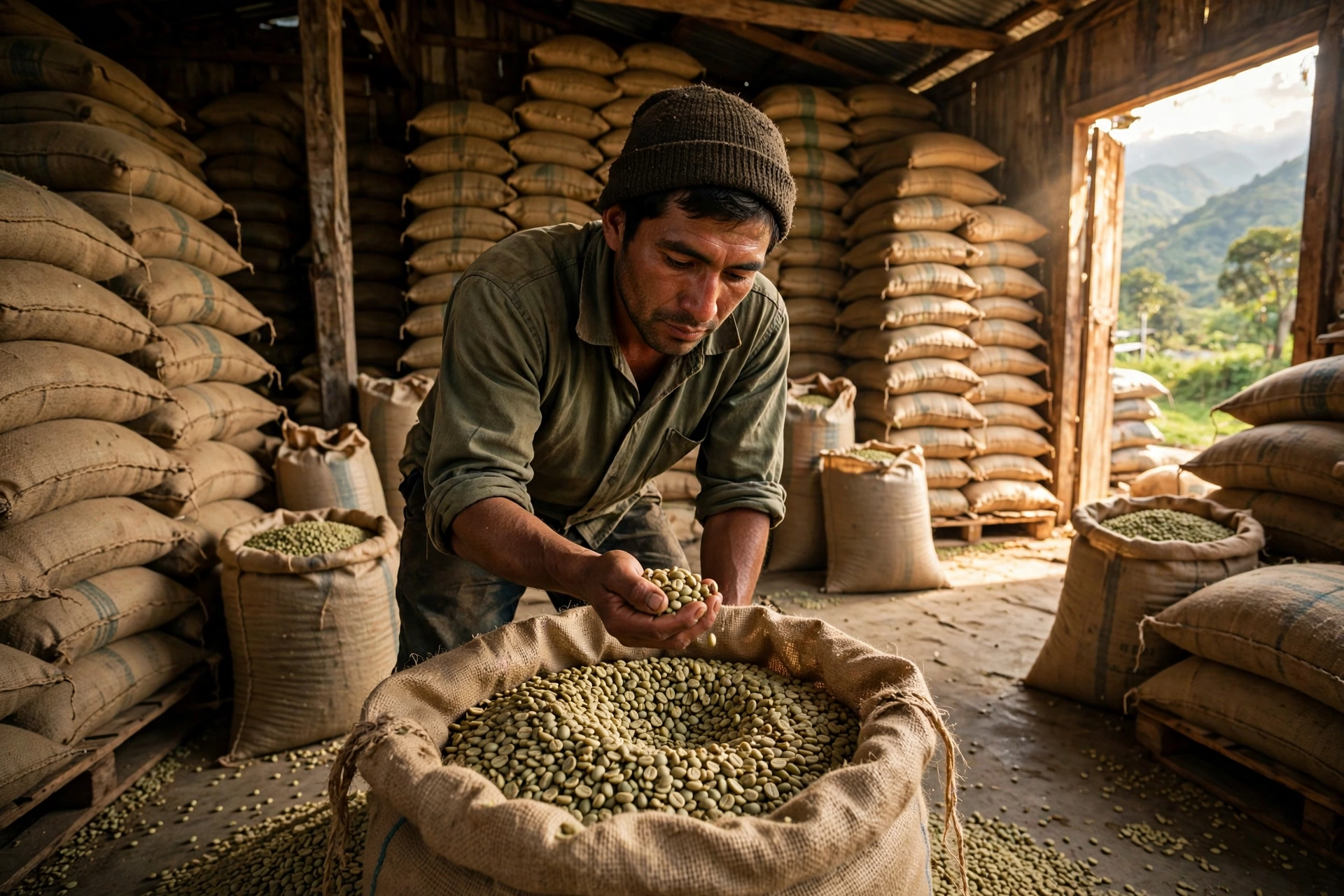
Vietnam is the world's second-largest coffee exporter and the largest exporter of robusta, which makes up more than 90% of the country's coffee output. Dak Lak is the largest robusta province. That scale is the opportunity and the trap: huge volumes move through collection warehouses that vary wildly in quality, from ventilated sheds to bare tin roofs. Green beans fear two things, damp and stuffiness, and every extra week in a weak warehouse adds risk. A vietnam coffee export warehouse plan is only as good as its moisture discipline.
My rule is simple: test moisture at intake, write a retest clause into the contract, and deal with over-limit beans in the producing region. Fix it at the port and the cost doubles. Fix it at destination and you simply accept the deduction. Collection warehouses should sit close to the producing area, so beans travel a shorter damp road. Inside the warehouse, the discipline is unglamorous: separate lots, keep bags off the floor and away from walls, sample regularly, and isolate any lot that looks wrong before it drags the rest down.
The figures in the examples below are hypothetical, for illustration only. Our client's first container was 30 tonnes of green beans held for two weeks in a Dak Lak collection warehouse, right through a stretch of rainy days. A pre-loading check found moisture above the contract limit. He paid for moisture-proof bags and extra desiccant and made the closing date, but the buyer's retest at destination still took a quality deduction. The lesson is precise: moisture money spent in the producing region is the cheapest money in the whole chain. Spend it at the port and it costs twice as much. Spend it at destination and it is gone.
Vietnam coffee consolidation: sharing one container
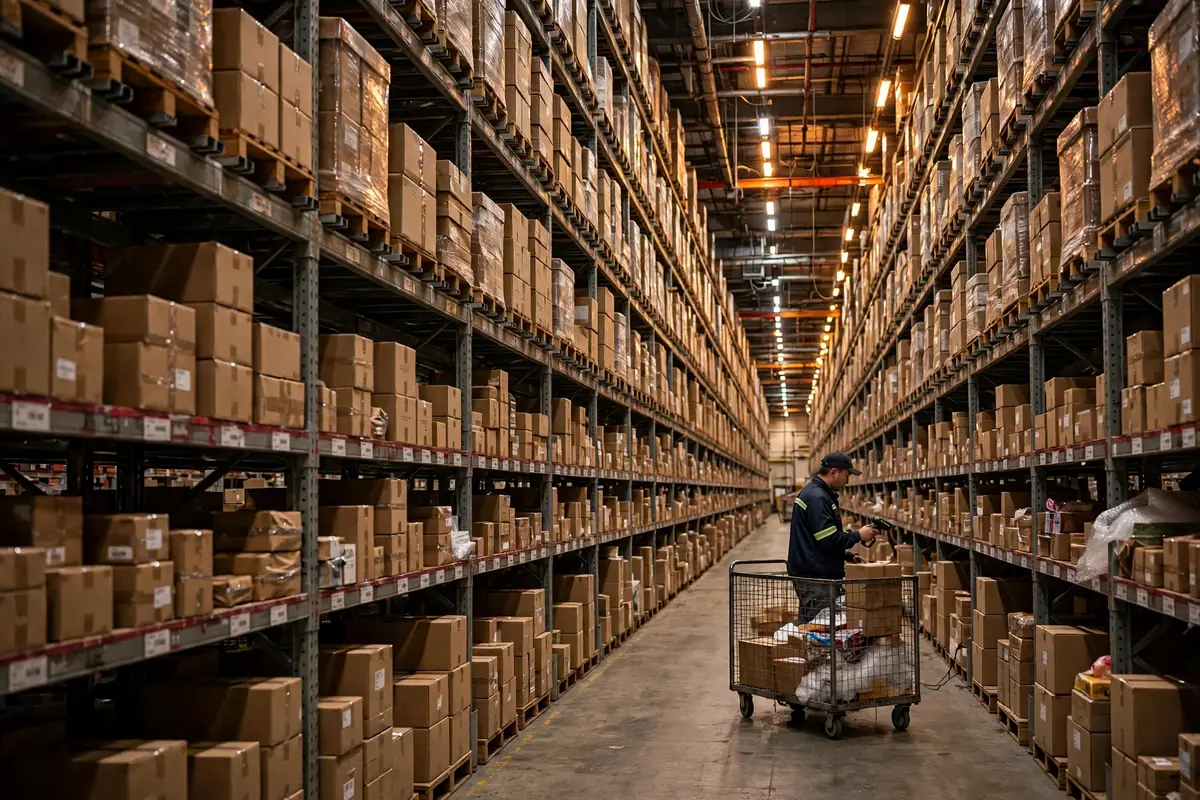
Small exporters rarely fill a container alone, so consolidation is the norm. The costing question is not only the freight split. Who loads first, whose cargo sits at the bottom, what happens if flavours mix, and what happens when one shipper's cargo gets held and the whole container waits? From the collection warehouse to the port warehouse, the short haul, the consolidation work, and the document check before closing all need someone watching. The consolidation discipline decides whether a vietnam coffee export warehouse plan holds together or falls apart at the port.
My advice is to negotiate the liability split before the freight split. The money saved on freight can vanish in a single mixed-cargo incident.
Take a hypothetical case: a client shared a container to Germany with two other shippers, three lots from different batches. The port warehouse stowed them by batch and the documents carried each batch number. In Hamburg, one shipper's lot was pulled for inspection and the container waited several extra days. The three shippers split the extra port charges under terms agreed before loading. Without that clause, they would still be arguing. Consolidation runs on trust, and trust belongs on paper.
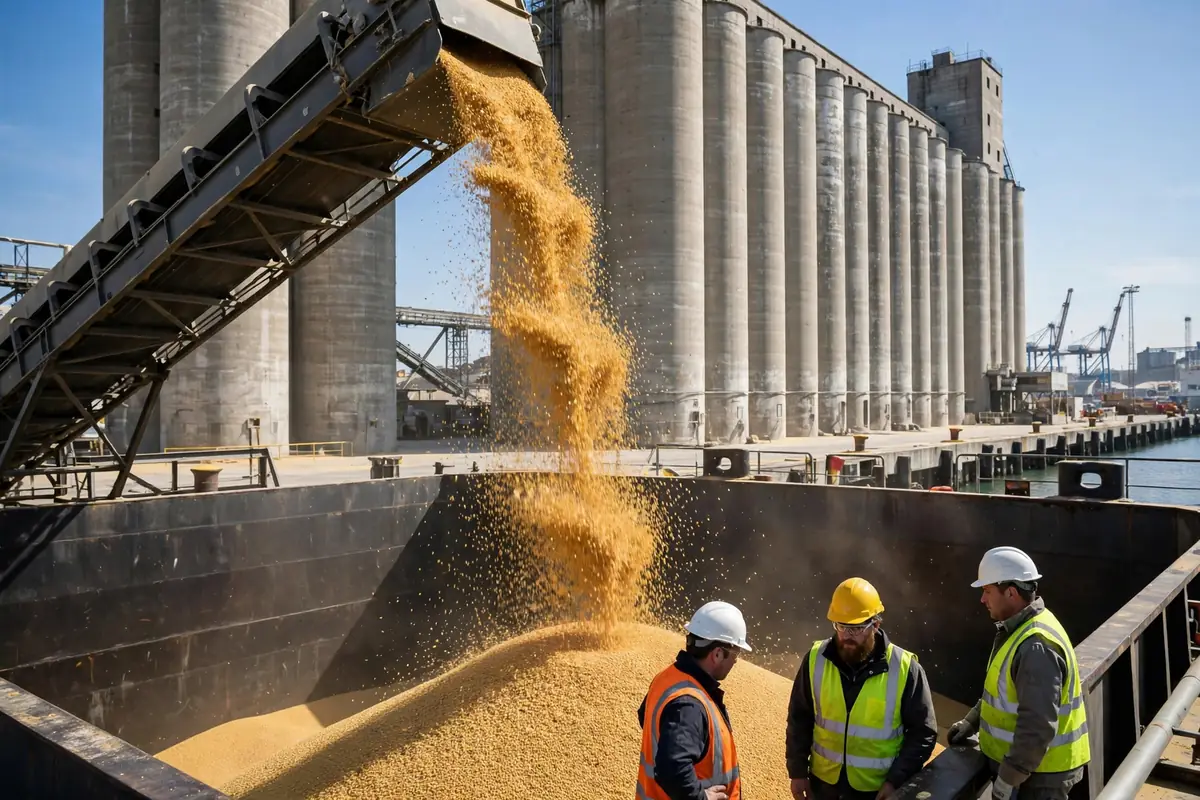
Leave slack in the short haul from the collection warehouse to the port warehouse. The time set aside for document checks before closing is the window where a shipment most easily goes wrong: booking details, batch numbers, weights — one mismatch and the container can miss the vessel. A missed vessel costs more than a new sailing date, because port storage and the buyer's delivery claim follow. Do the document check a day early rather than on the night of closing.
When prices are high, how fast should you move?
Vietnam exported more than 1.5 million tonnes of coffee in the 2024/25 season, a record 8.4 billion US dollars. Calendar 2024 alone was about 1.32 million tonnes and 5.48 billion dollars. When prices run high, every exporter wants to hold more stock. The counterintuitive call is to hold less. In a high market the risk is not failing to sell. It is the price turning while your cash sits in a warehouse, plus storage fees and quality risk piling up month by month. Win the bet and you earn a little more. Lose it and you give back the profit and then some. My rule is to buy against orders, move fast, and shorten the stock cycle precisely when prices are highest.
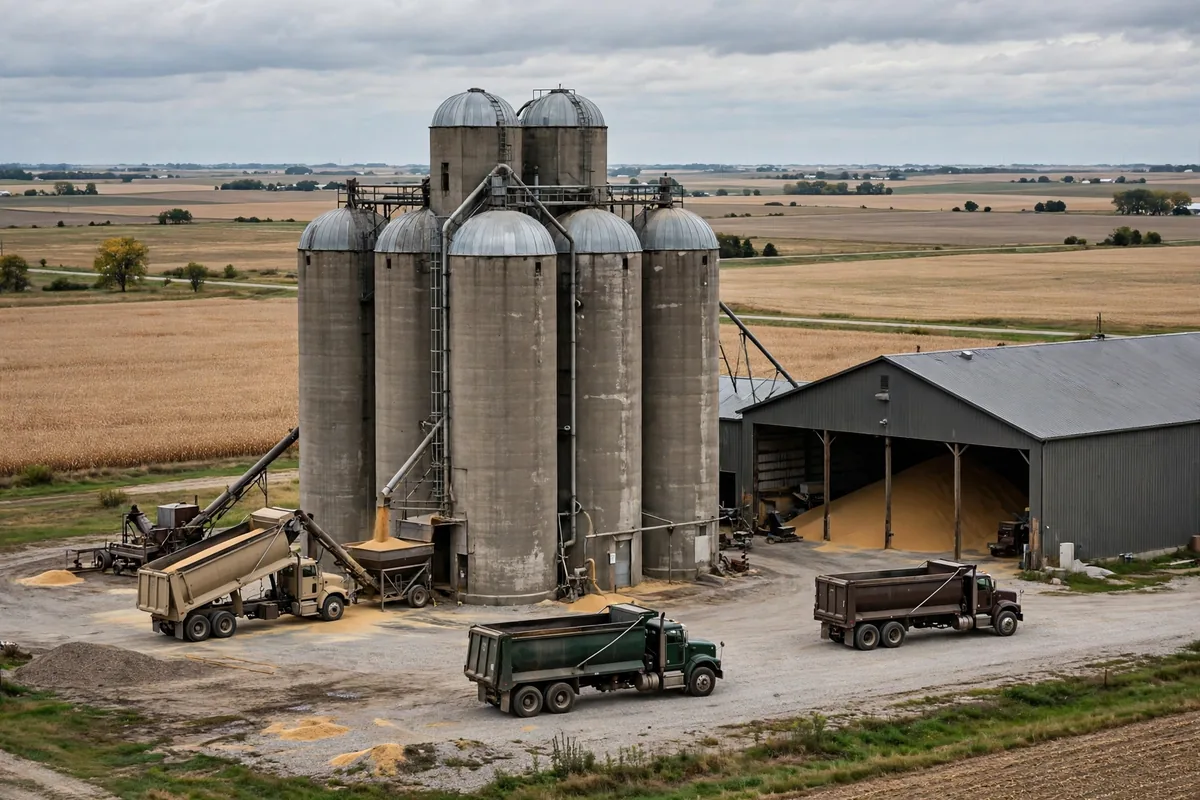
Harvest timing shapes the whole plan. Beans move out of the Central Highlands in a short window, and every exporter is booking trucks and warehouse space at once. The exporters who do best are the ones who lock collection warehouse space before the harvest, not during it. Waiting until beans are already piled at the farm gate means paying more for worse space, and the moisture risk starts the day the beans leave the farm, not the day they reach the port.
The main markets are Germany, Italy, the United States, Belgium, and Japan, and they do not buy the same way. European buyers prize batch stability and traceability, American buyers are sensitive to delivery dates, and Japanese buyers are the strictest on quality defects. Stocking rhythm should follow orders, not feelings. When orders from different markets sit side by side, look at delivery dates and quality requirements first, then set the warehouse shipping order. Stock that moves has value; stock that sits is cost.
Next time you negotiate a contract, ask three questions: who is responsible for the moisture retest, and what happens when beans test over the limit? How is liability split when a shared container goes wrong? How is a destination quality deduction written? Get those three answers in writing, and half the risk in a Vietnam coffee export warehouse plan is locked down before the first bag moves.
By Susan, 3PL Sales Director